



Number sense is the foundation the rest of math is built on. Before students can add, subtract, or make sense of place value, they need to understand that a number is a quantity, that the same quantity can be shown in different ways, and that two quantities can be compared. Kindergarten is where that understanding gets built, and it takes a lot of repetitions in a lot of forms before it holds.
Apple week is a good place to build it. The theme already has your students’ attention in September, and the same apples running through your crafts, read alouds, and science lessons can carry your math centers too.
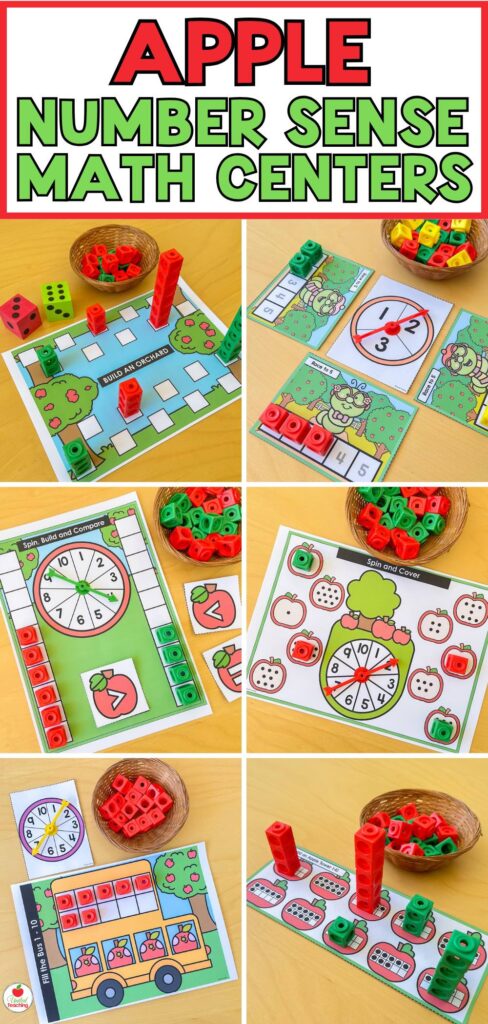
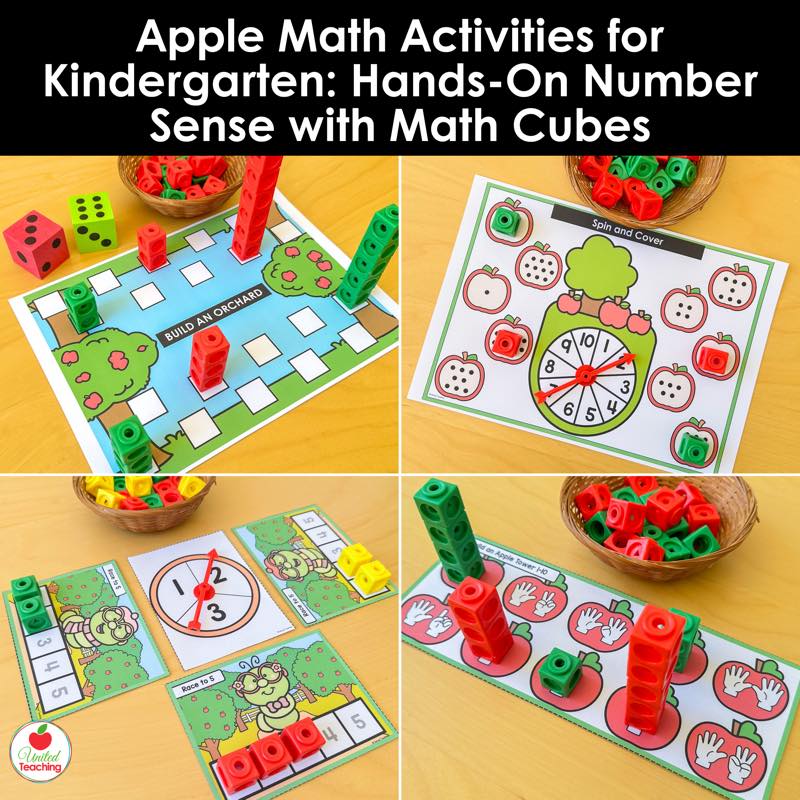
These apple math activities for kindergarten all use one manipulative your classroom already has: math cubes. Students count them onto apple orchard cards, stack them into towers, fill ten frames with them, and build two sets side by side to work out which is greater. Same cubes, same routine, a different skill each day.
Why Apple Math Activities Work So Well in Kindergarten
Apples arrive at exactly the right moment in the kindergarten year. Students are six weeks into school, routines are finally holding, and they are ready for center work that asks a little more of them than the first weeks allowed.
The math matters here too. Early number sense is not one skill, it is a cluster: counting with one-to-one correspondence, recognizing numerals, seeing quantities in ten frames and dot patterns, and comparing two amounts. Kindergartners need all of these, and they need to meet each one many times in different forms before it sticks.
Start With One Manipulative: Math Cubes
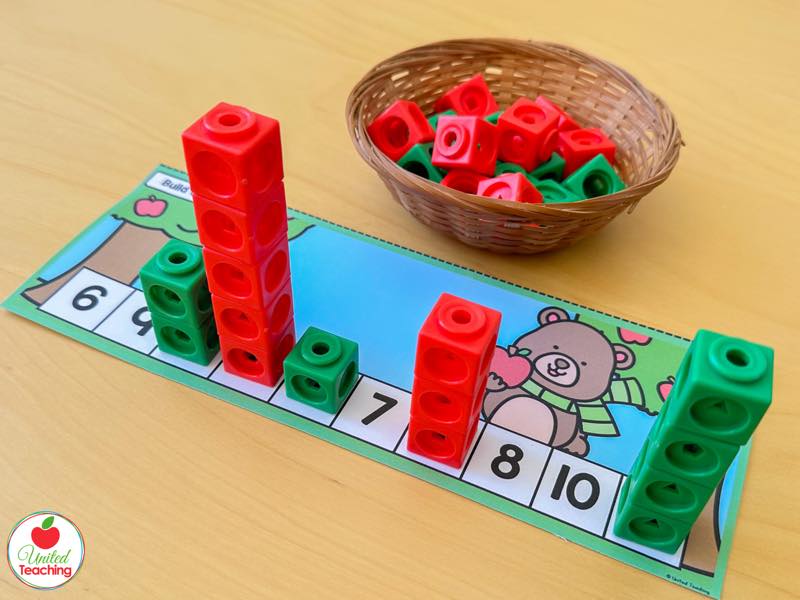
It helps to build an entire theme week around a single manipulative. Math cubes (sometimes called unifix cubes or connecting cubes) are the ideal choice, for a few reasons.
Students can already use them. There is no new tool to teach, so the first two minutes of every center go to the math instead of to the rules.
They work for every number sense skill at once. Cubes count, they stack into towers that show magnitude at a glance, they fill ten frames, and they snap together into two lines that make comparing obvious without any counting at all.
And they make quantity visible. When a student builds a tower of 8 next to a tower of 5, the answer to “which is more?” is sitting right there in their hands. Seeing and holding the difference first gives students something concrete to draw on later, when they meet that same comparison written as two numerals on a page.
Inside the Apple Number Sense Activities with Math Cubes
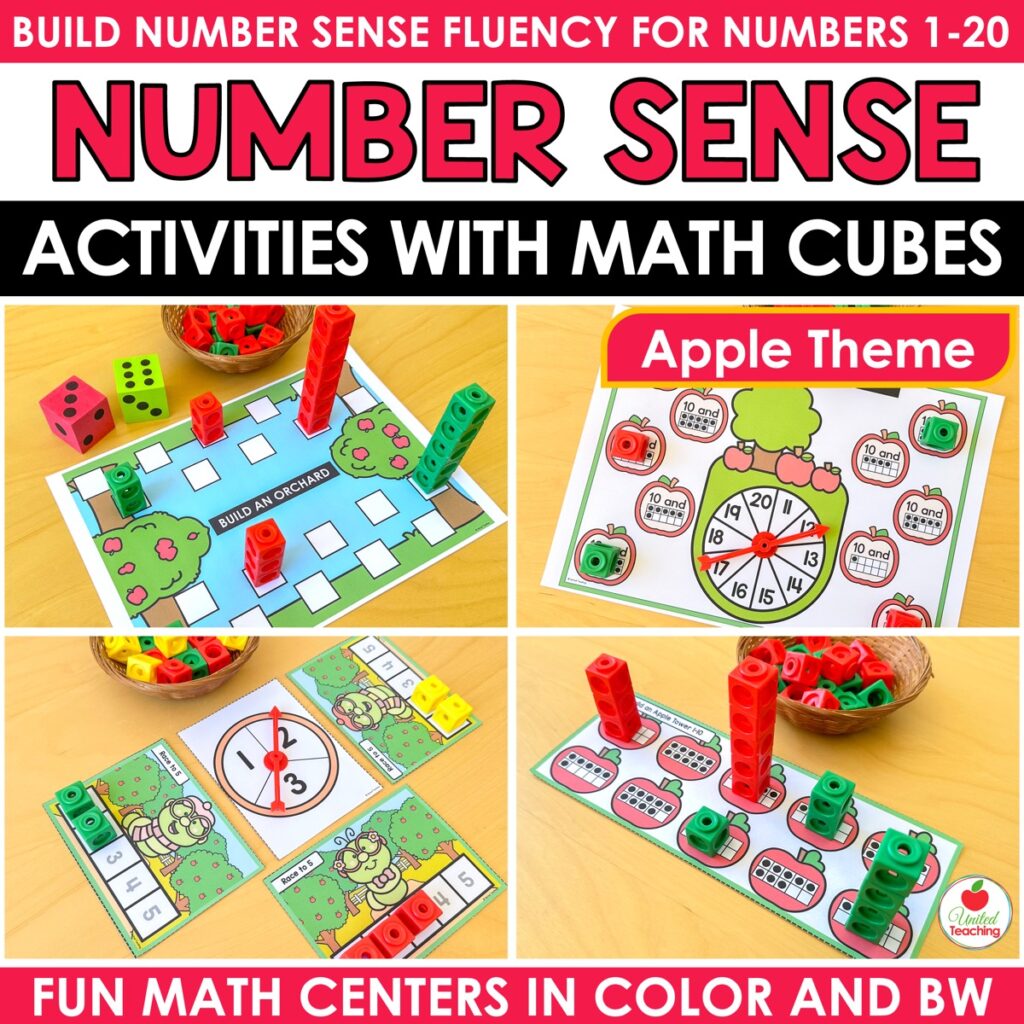
The Apple Number Sense Activities with Math Cubes packet was built around exactly that idea. One manipulative, 53 pages of mats, task cards, and games, covering numbers 1 to 20 in color and black and white.
Here is what’s included:
Apple orchard counting cards – a number in the corner of an orchard scene with that many spaces beside it, so students place one cube per space and build one-to-one correspondence
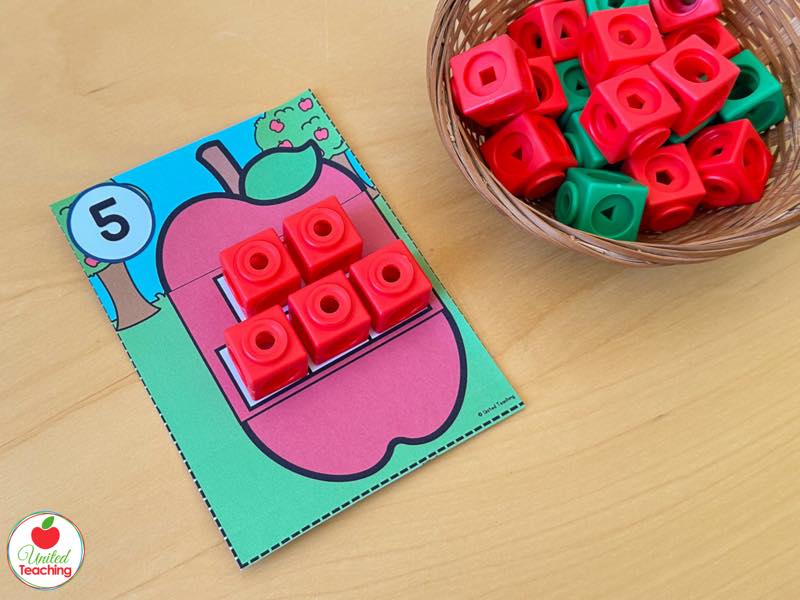
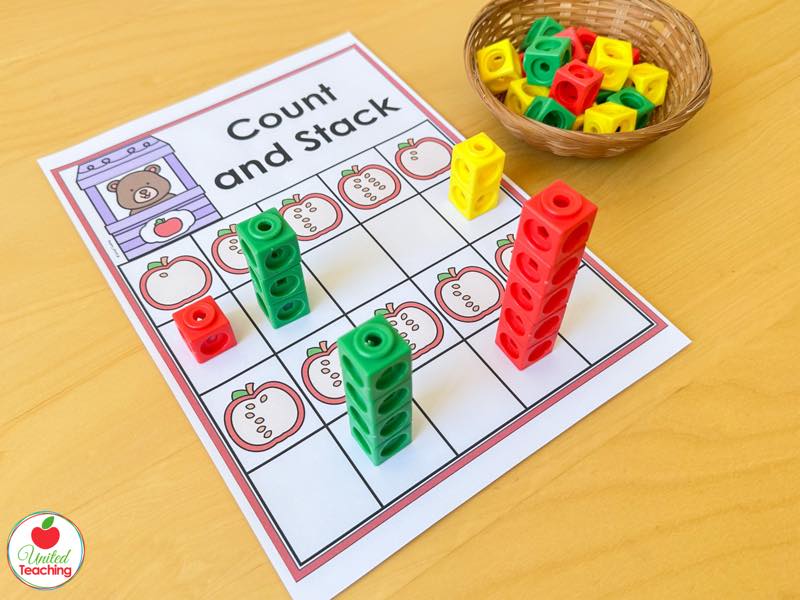
Count and Stack mats – count the seeds in an apple or the apples on a tree, then build a tower with the same number of cubes.
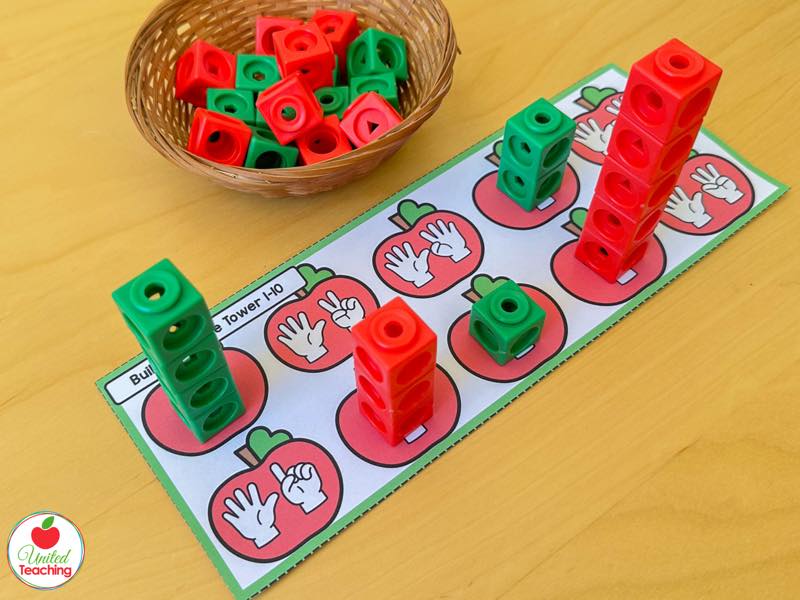
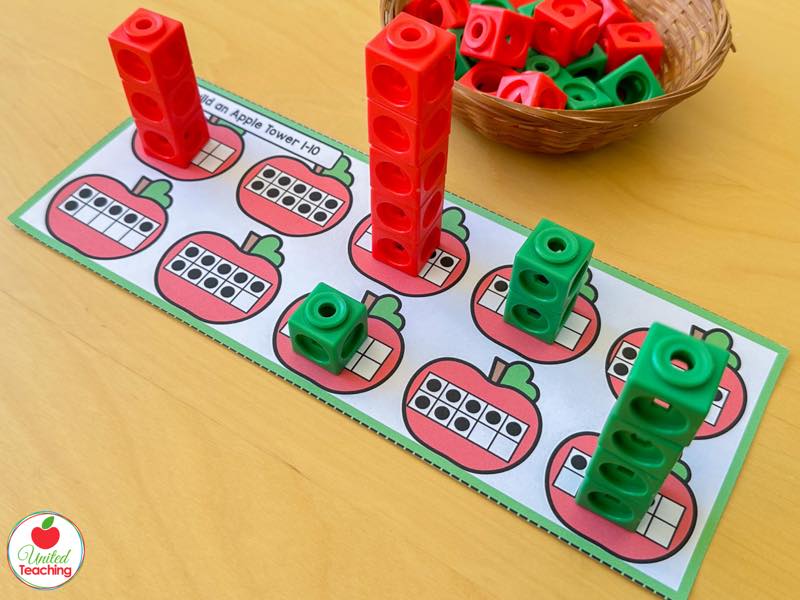
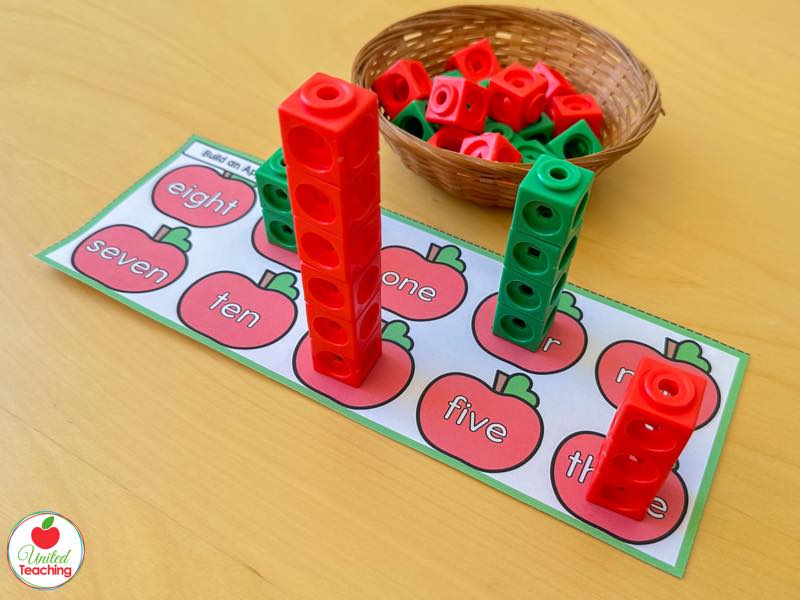
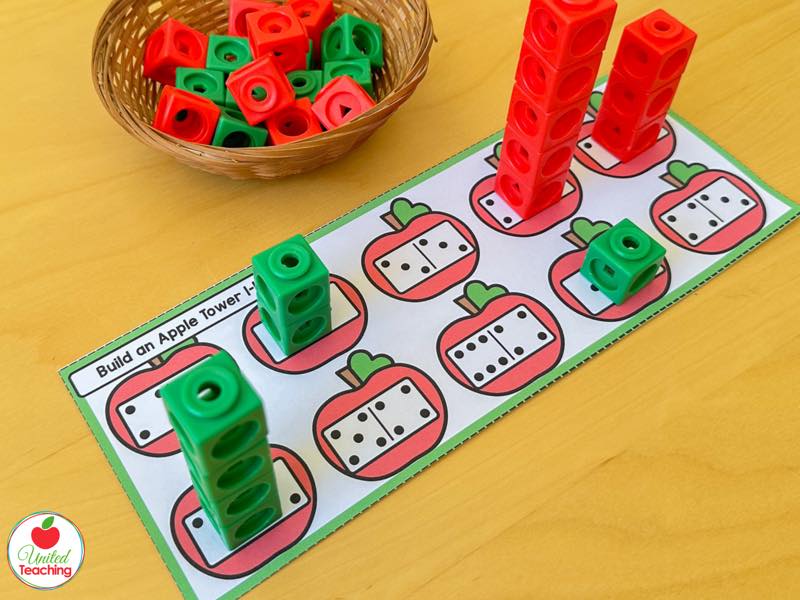
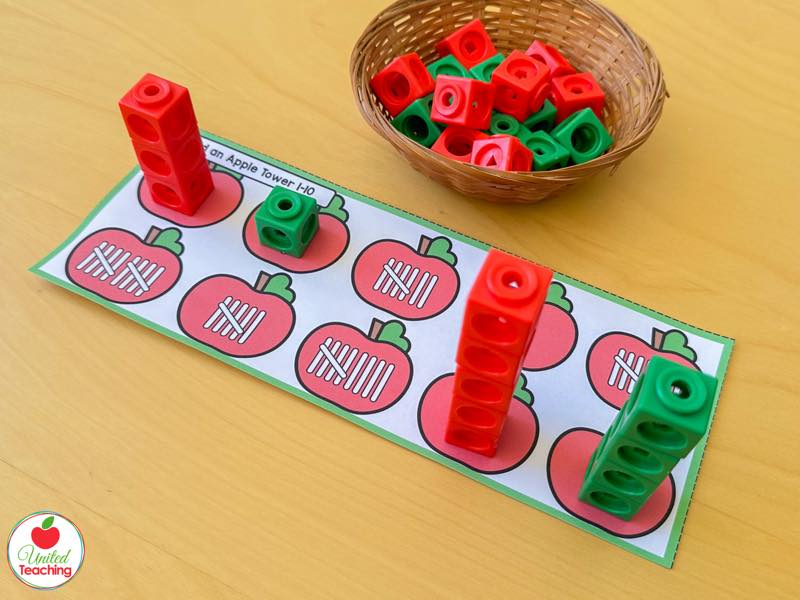
Build an Apple Tower task cards (5 sets) – the same numbers 1 to 10 shown as fingers, ten frames, dominoes, tally marks, and number words
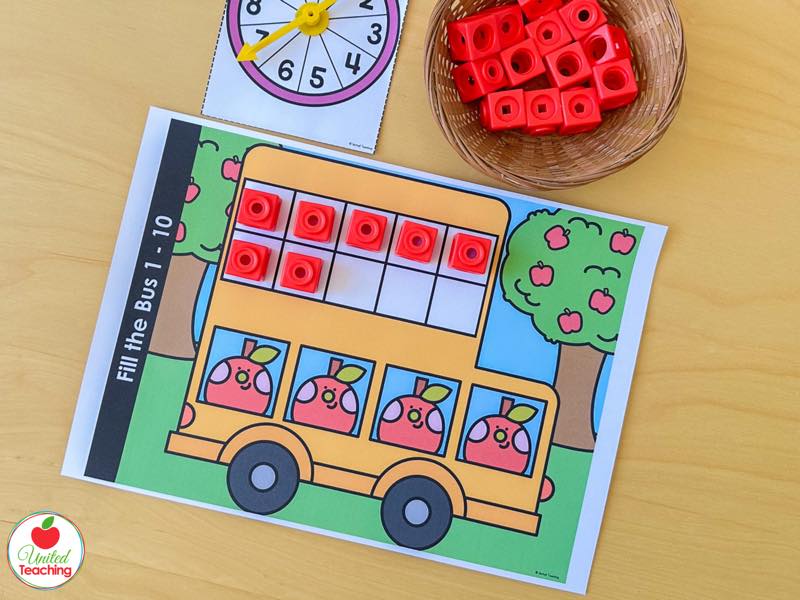
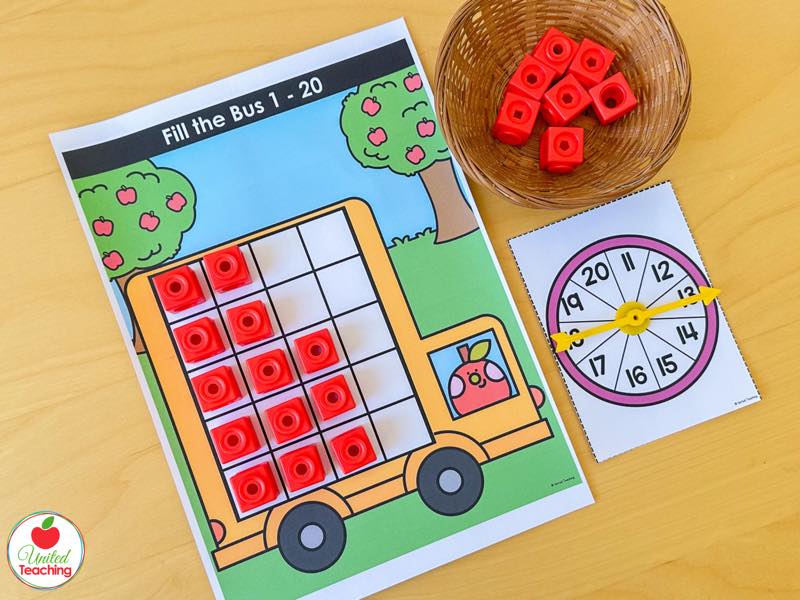
Fill the Bus mats (1-10 and 1-20) – ten frame practice with the bus windows as the frame
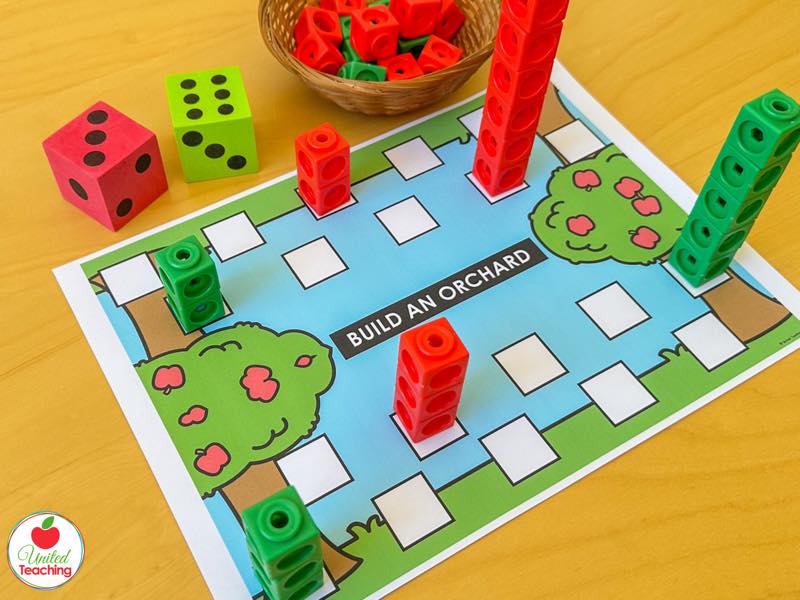
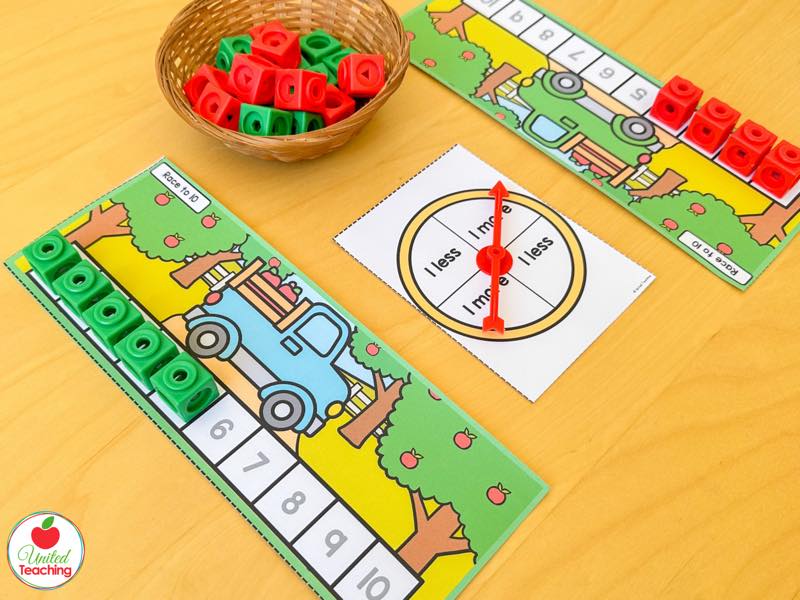
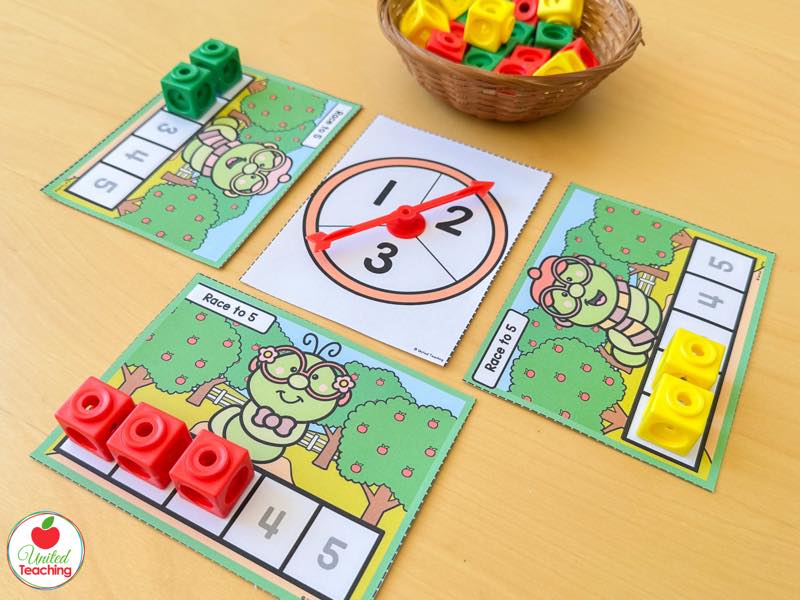
Race to 5, Race to 10, and Race to 20 – number line and ten frame games for small groups
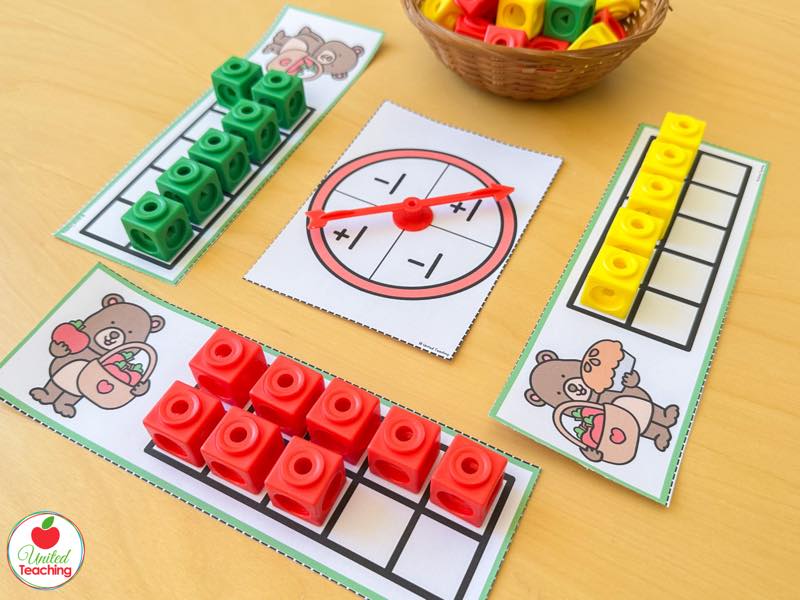
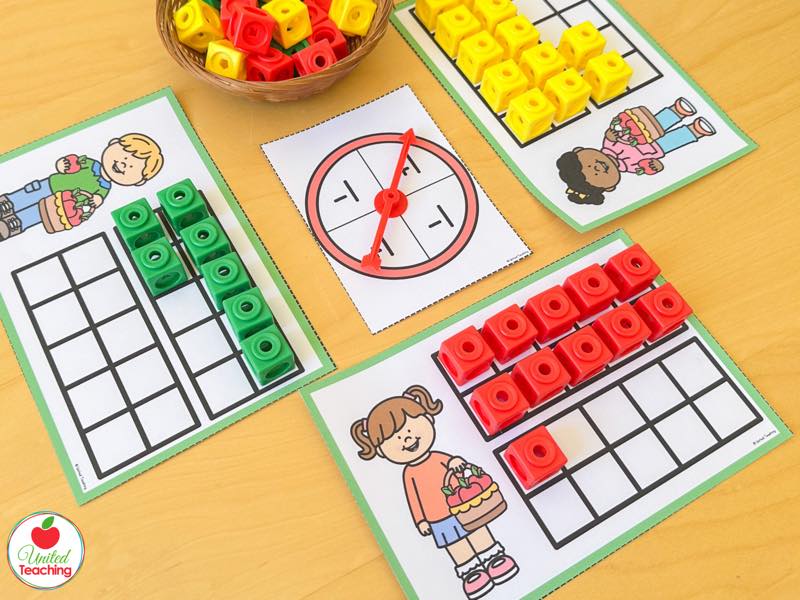
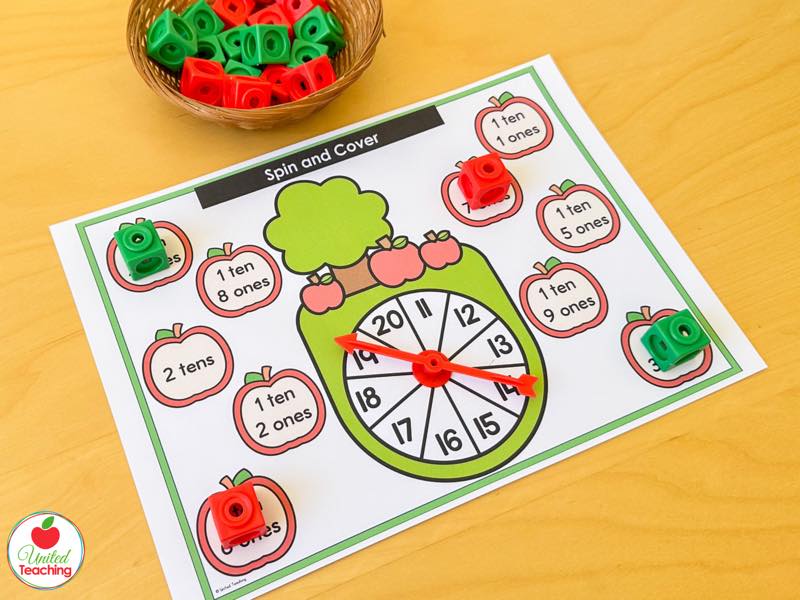
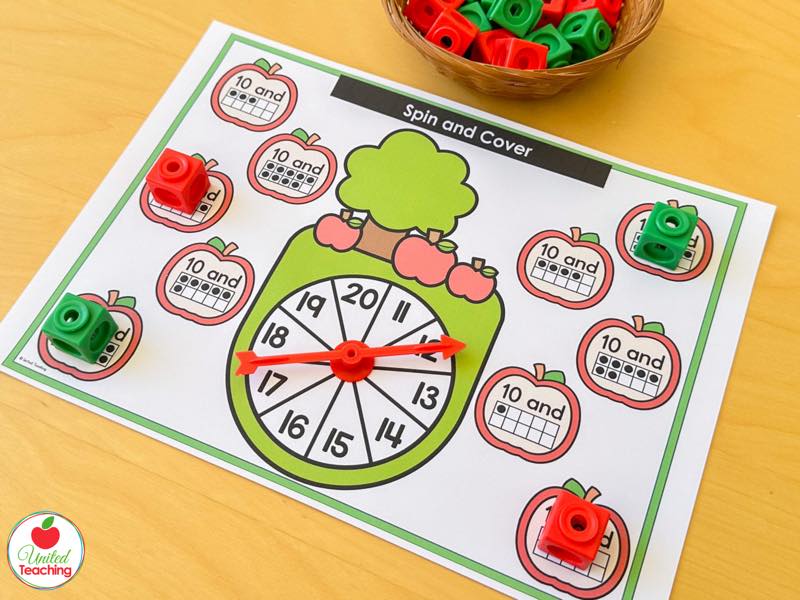
Spin and Cover mats – numeral versions plus ten representation mats covering dots, dominoes, tallies, fingers, double ten frames, and tens and ones
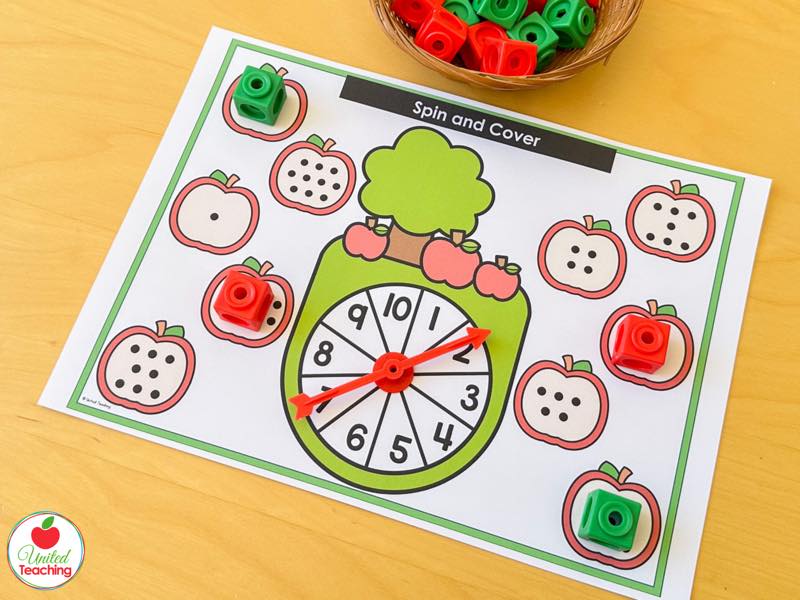
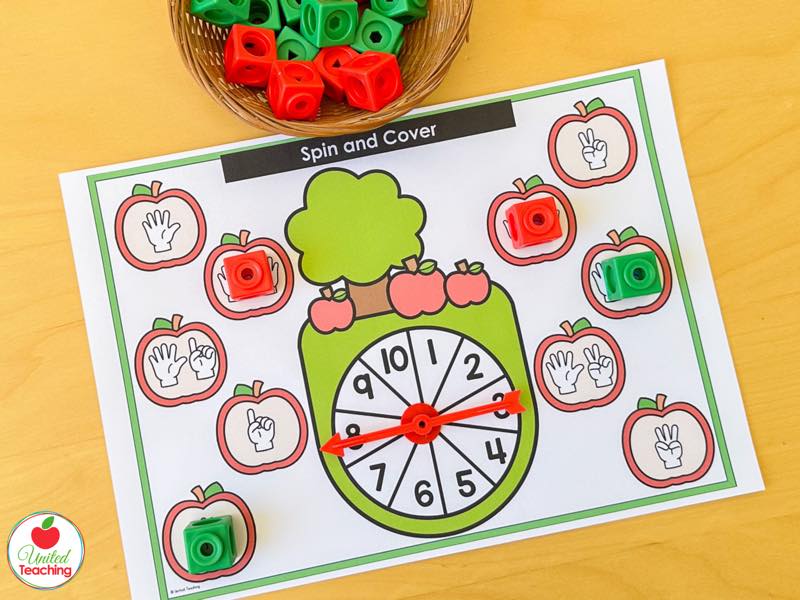
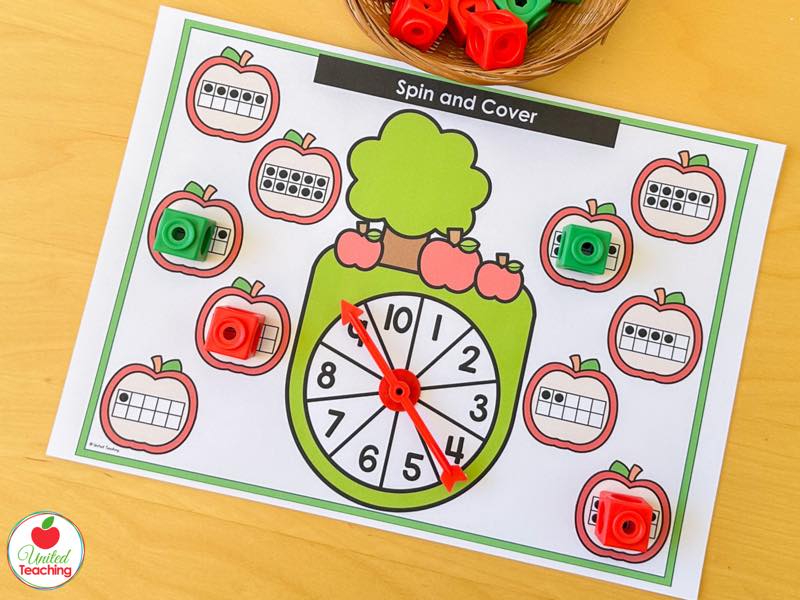
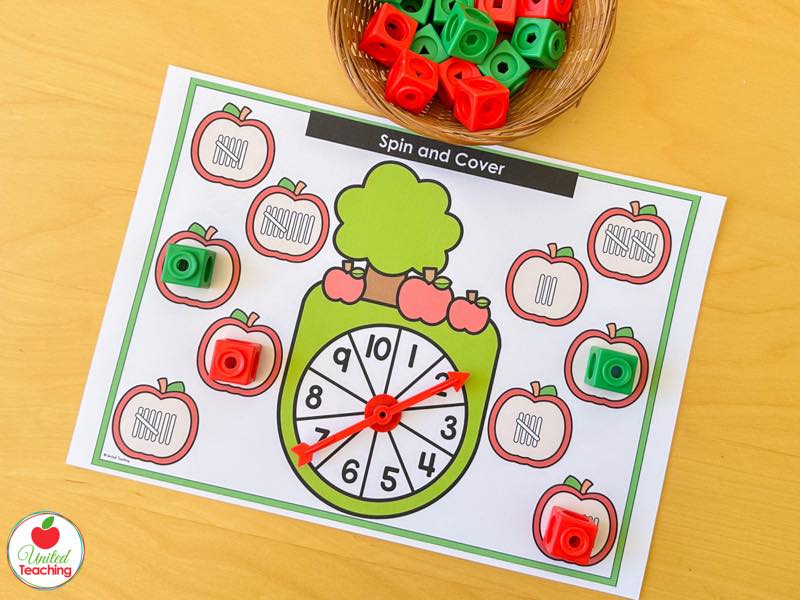
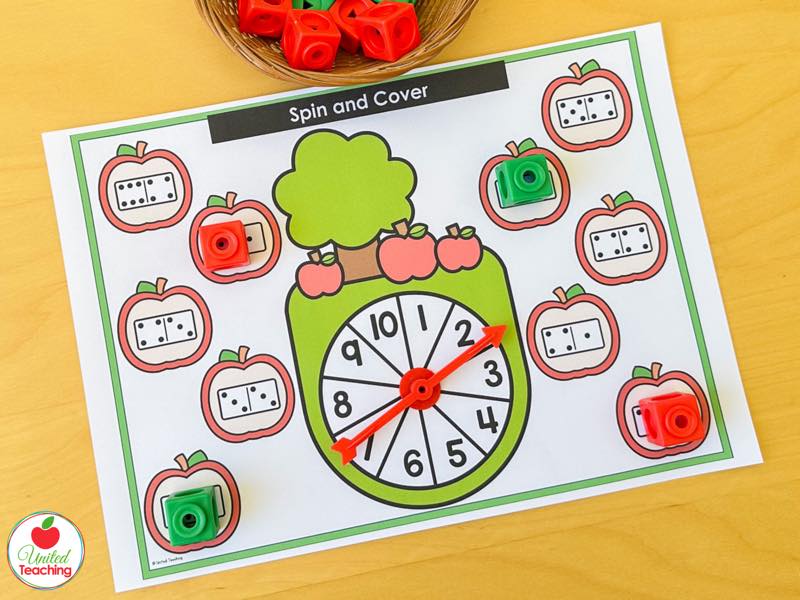
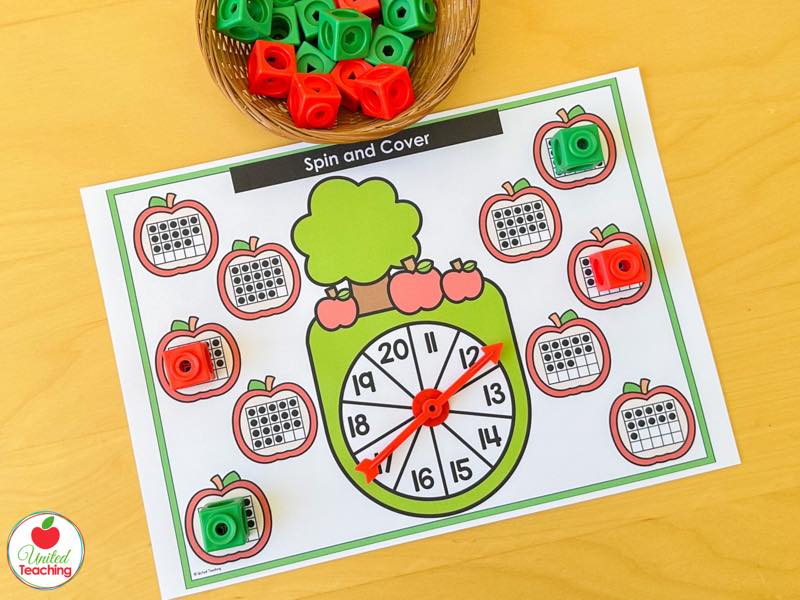
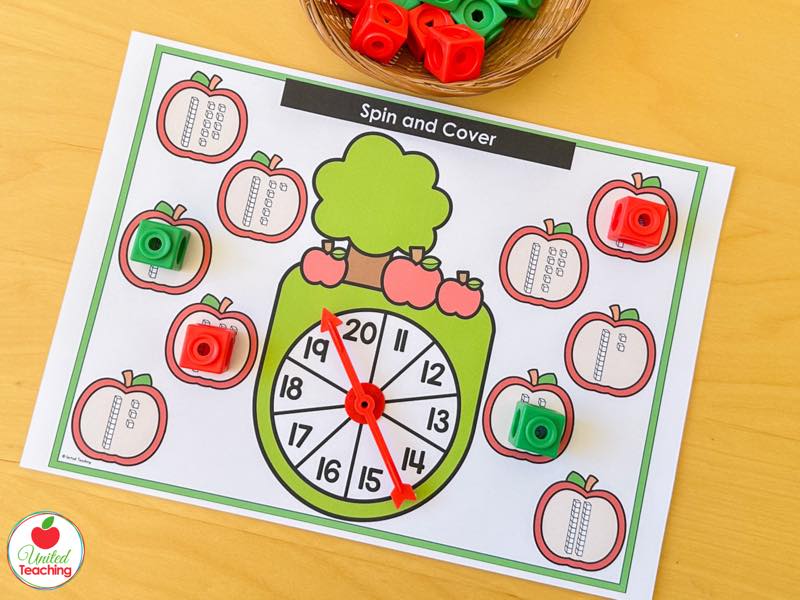
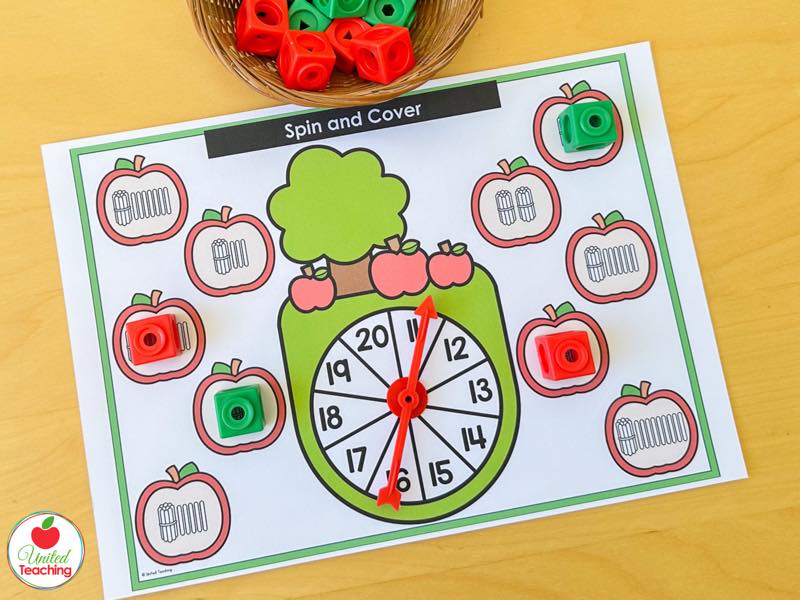
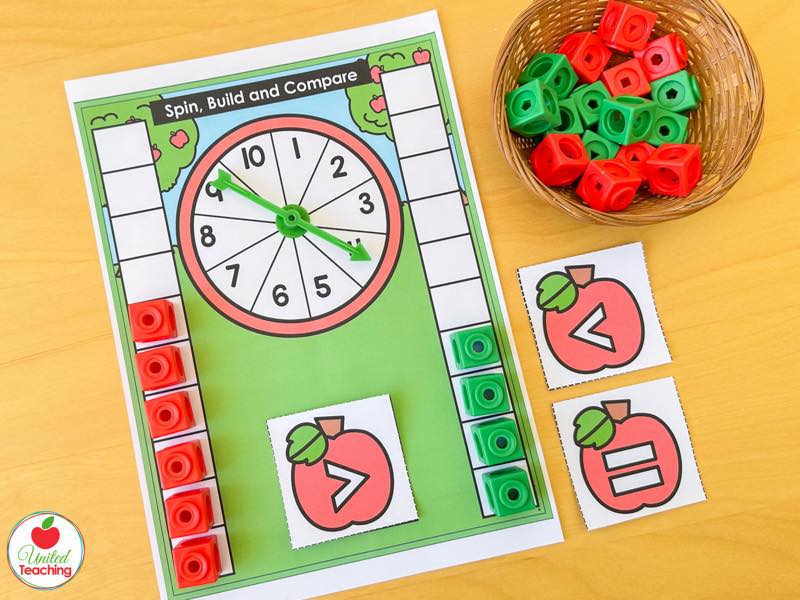
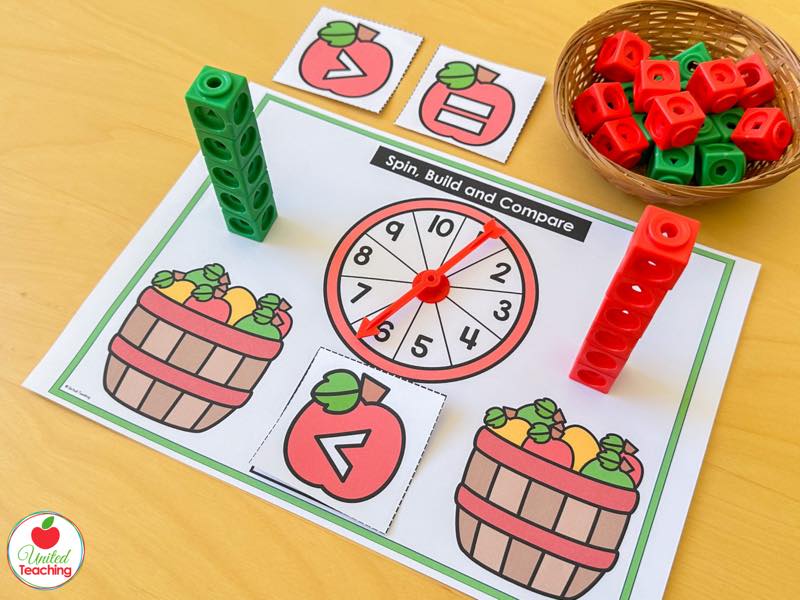
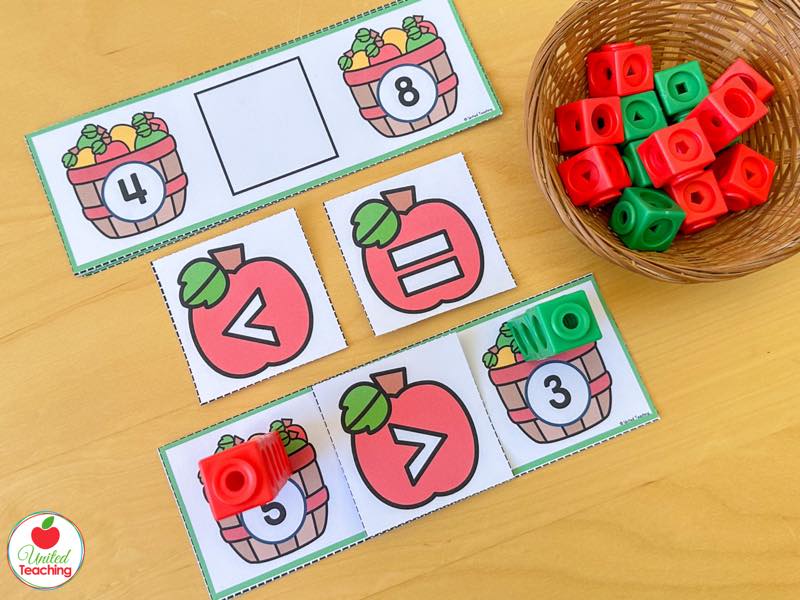
Build and Compare cards and Spin, Build and Compare – build two towers, then place the greater than, less than, or equal to apple card between them
Six spinners, number cards 1-20, and extension spinners for one more, one less, and plus or minus
The spinners are the part that does the most work. Swapping a 1-5 spinner for a 1-10 spinner changes the difficulty of any game in the set without changing the activity, which means one printed center serves your whole class.
Five Apple Math Centers to Set Up This Week
Monday: counting. Apple orchard counting cards with cubes. Students count out the number shown and place one cube per space. No spinner yet, just careful counting.
Tuesday: ten frames. Fill the Bus with the 1-10 mat and the 1-6 spinner. Students spin, count, and fill the frame.
Wednesday: quantity in different forms. Build an Apple Tower task cards, starting with the ten frame set and adding the domino set once students are confident.
Thursday: partner game. Race to 10. Two players, one spinner, first to fill the number line or ten frame wins.
Friday: comparing. Build and Compare cards. Students build a tower for each number and place the correct comparison card between them, then say the comparison out loud.
That is a full week of math centers from one printed packet and one tub of cubes.
Differentiating Across the Whole Class
The number range is the lever. Students still working on counting to 5 use the 1-3 or 1-5 spinner and the 1-5 mats. Students solid to 10 use the 1-10 spinner. Students ready to stretch use the 1-20 mats, the 11-20 spinner, and the tens and ones representation mats that break teen numbers into a ten and some ones.
For a stronger group, add the one more or one less spinner after the first spin. Students then build the tower for one more or one less than the number they spun, which turns a counting game into early addition and subtraction without any new materials.
If you want a deeper look at the skill progression behind all of this, the guide to hands-on number sense activities for kindergarten walks through each skill in order and what to teach when. The post on subitizing cards is worth a look too, since instant recognition of small quantities underpins most of these games.
Pair the Mats With No-Prep Apple Worksheets
Hands-on mats are the right tool for center time, but they are not the right tool for every slot in the day. Early finishers, sub plans, and independent practice all go better with something students can finish on their own and hand in.
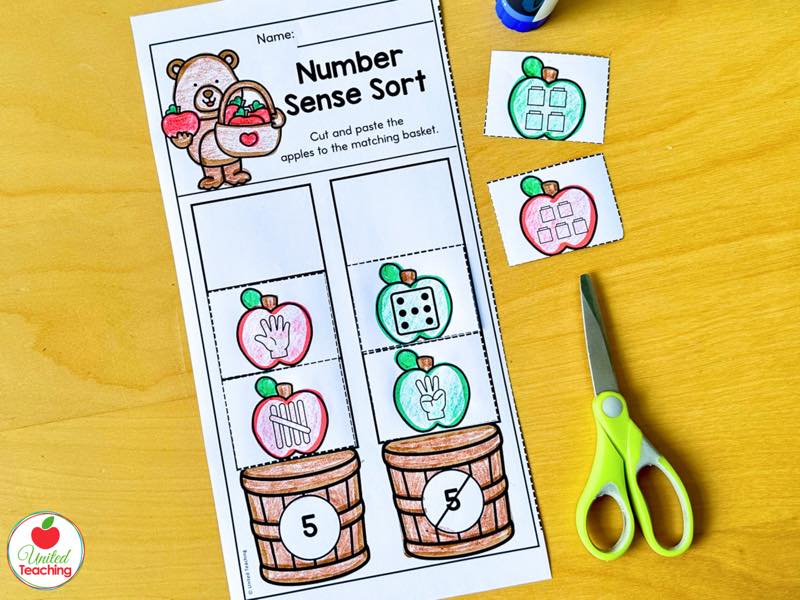
The Apples Number Sense Sorting Worksheets cover the same ground as the cube mats in a cut and paste format, with subitizing and number representation across numbers 1 to 20. Students sort dot patterns, ten frames, and numerals onto the matching apple, which is the paper version of what the spin and cover representation mats do with cubes. Running both in the same week means students meet the same skill in two formats, which is what helps it stick.
If your apple unit stretches past number sense, three more sorts cover the rest of the math block: Apples 2D Shape Sorting and Apples 3D Shape Sorting for geometry, and Apples Addition and Subtraction Sorting for combining quantities to 20 once students are ready. All four math sorts, plus the literacy ones, are in the Apple Sorting Worksheets Bundle.
Start With a Free Apple Math Center
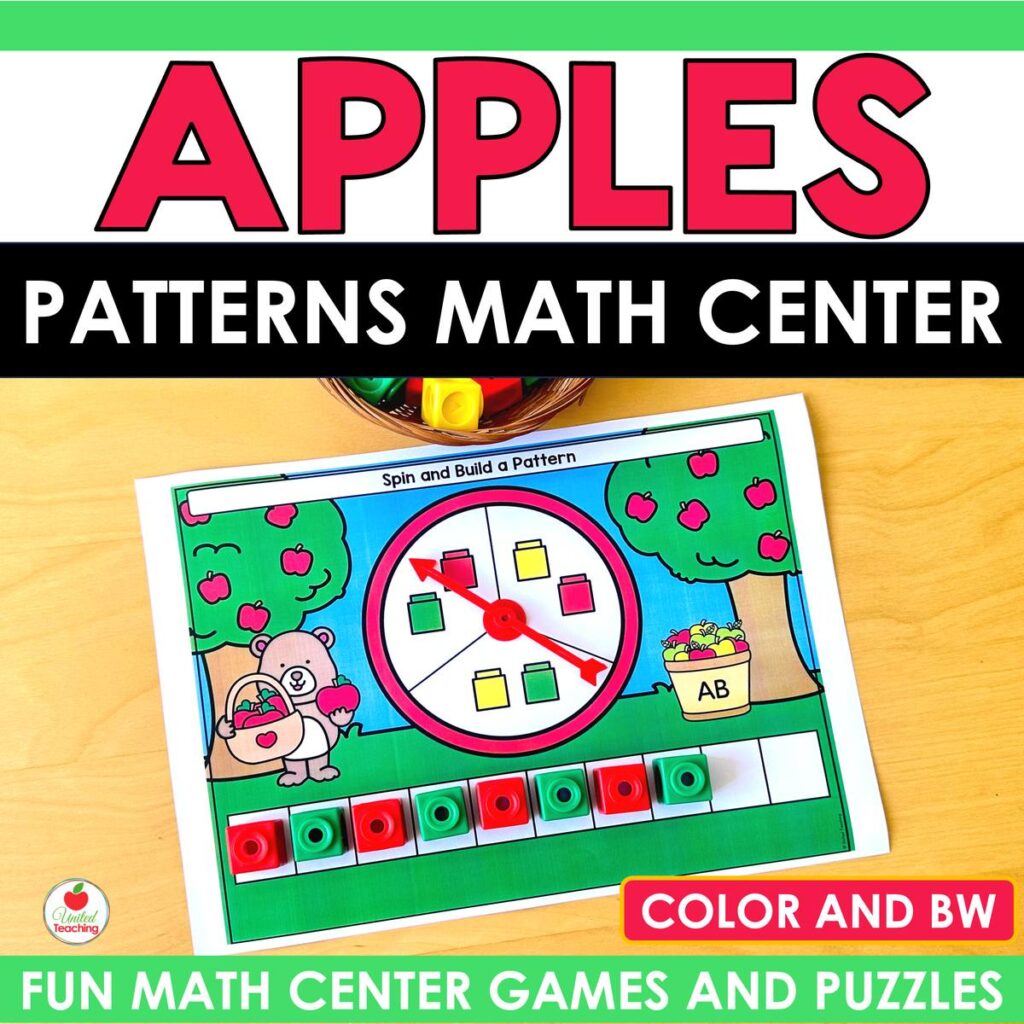
If you want to try an apple math center before committing to the full packet, the Apple Patterns Math Center is free and sets up in minutes. It is a good first center for the start of apple week while students are still settling into routines.
Get the Apple Number Sense Activities with Math Cubes
When you are ready for the full set, the Apple Number Sense Activities with Math Cubes packet gives you 53 pages of counting, ten frame, representation, and comparing activities in color and black and white, with every number range from 1 to 20 covered. Print once, laminate, add cubes, and your apple math centers are ready for the rest of the season.
Save for Later