


October is when kindergarten number sense starts to come together. Students can count, and now they need to prove what they know: that a number means a quantity, that 7 looks the same whether it is a numeral, a ten frame, or seven fingers, and that one group can be more than another. These hands-on pumpkin math activities give students practice all month long, with a theme they are already excited about.
Every activity here uses one manipulative you already have: math cubes. Students count seeds with them, stack them into pumpkin towers, fill ten frames with them, and build two pumpkin patches side by side to see which one has more. You will also find a few ways to do pumpkin math with a real pumpkin, and a free pumpkin measurement center for your classroom.
Why Pumpkin Math Activities Fit October in Kindergarten
Most kindergarten math programs spend the first months of the year on numbers to 10. By October, students have met every number to 10 at least once. What they need now is practice that makes those numbers solid.
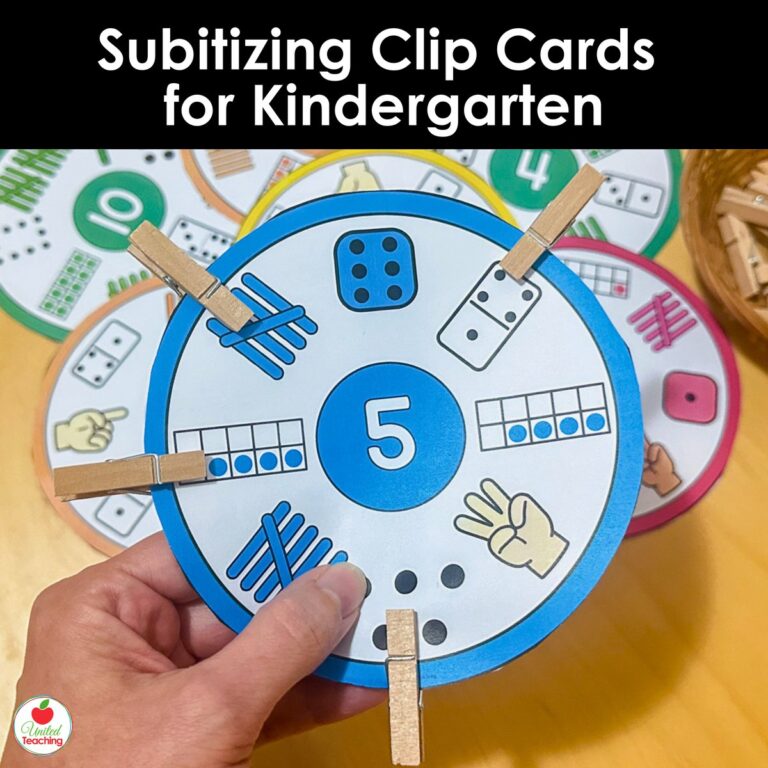
That means counting with one-to-one correspondence until it is automatic. It means recognizing quantities without counting every item, whether they appear in a ten frame, a dot pattern, or on a pair of dice. And it means comparing two groups.
Here’s the thing about pumpkins: they carry all of that. A pumpkin has seeds to count, a stem to measure, and a size to compare against the pumpkin next to it. The theme runs through read alouds, science, and art in October anyway, so bringing it into math centers keeps the whole day connected.
Pumpkin Math With a Real Pumpkin
If you bring a real pumpkin into the classroom this month, it can do a lot of math before it ever gets carved. Three quick investigations work well with kindergarteners.
Count the seeds in groups of ten. Scoop out the seeds and let students count them into small cups, ten seeds per cup. Then count the cups by tens and the leftover seeds by ones. It is a first, hands-on look at the idea behind teen numbers: a group of ten and some more.
Measure the pumpkin with cubes. Students build a cube tower as tall as the pumpkin, then count the cubes. Try it with two or three pumpkins of different sizes and line the towers up to compare. The free Pumpkin Measurement Task Cards (more on those below) turn this into a center students can repeat without a real pumpkin on the table.
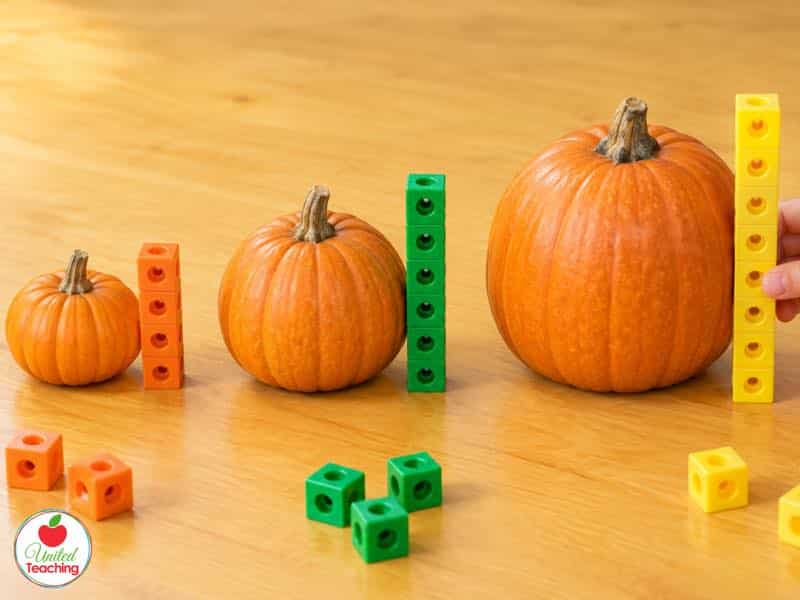
Compare two pumpkins. Set a small pumpkin and a large one side by side and ask which is taller, which is wider, and which is heavier. A classroom balance makes the heavier question easy to answer, and the vocabulary (taller, shorter, heavier, lighter) is exactly what kindergarten measurement standards ask for.
Inside the Pumpkin Number Sense Activities with Math Cubes
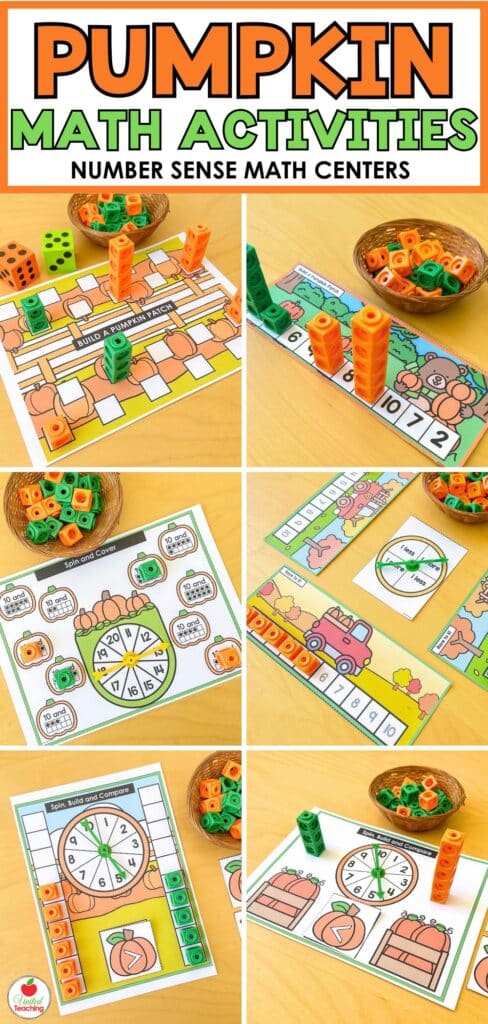
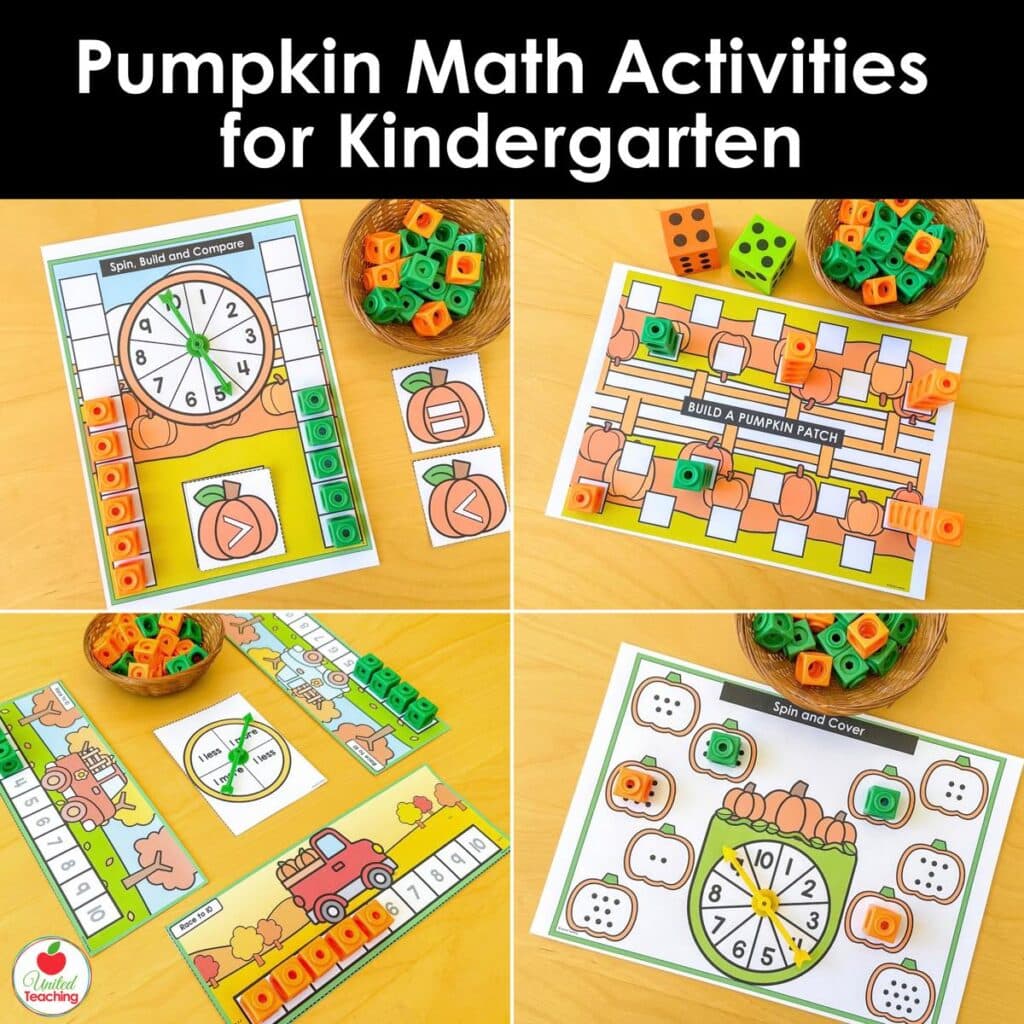
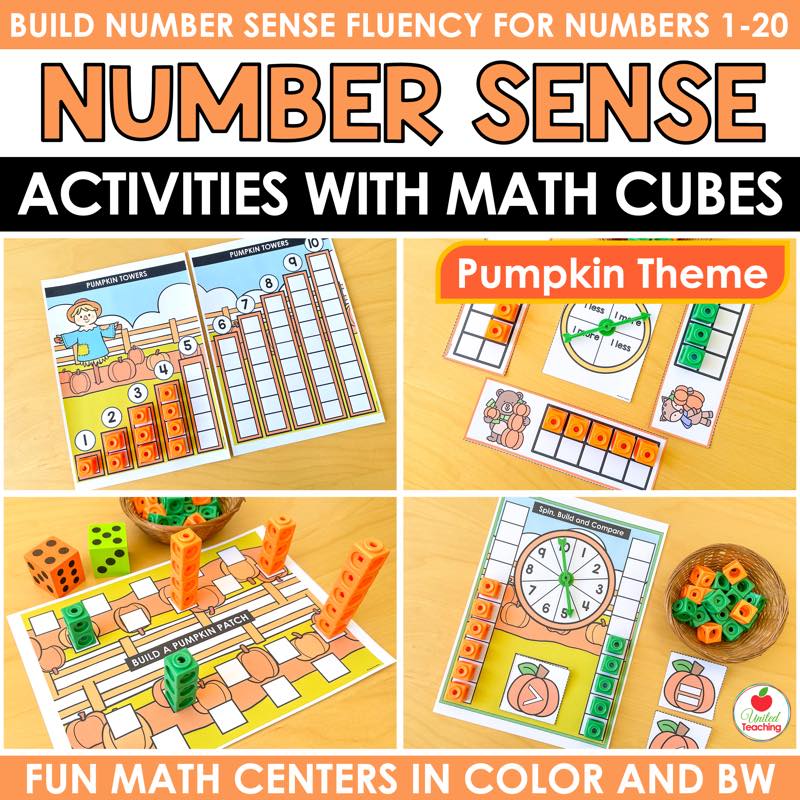
A real pumpkin is a great hook, but most days you need math centers that are ready to go. The Pumpkin Number Sense Activities with Math Cubes packet was built for that. It has 53 mats, task cards, and games covering numbers 1 to 20, in color and black and white, and every one of them uses math cubes.
Here’s what’s included:
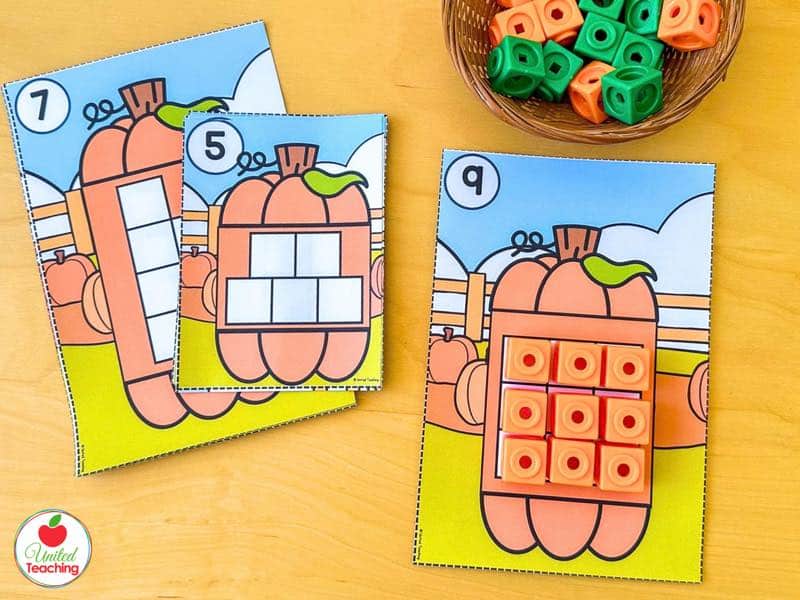
Pumpkin Seed Task Cards: a number shown with that many seed spaces beside it, so students place one cube per seed and practice one-to-one correspondence to 10
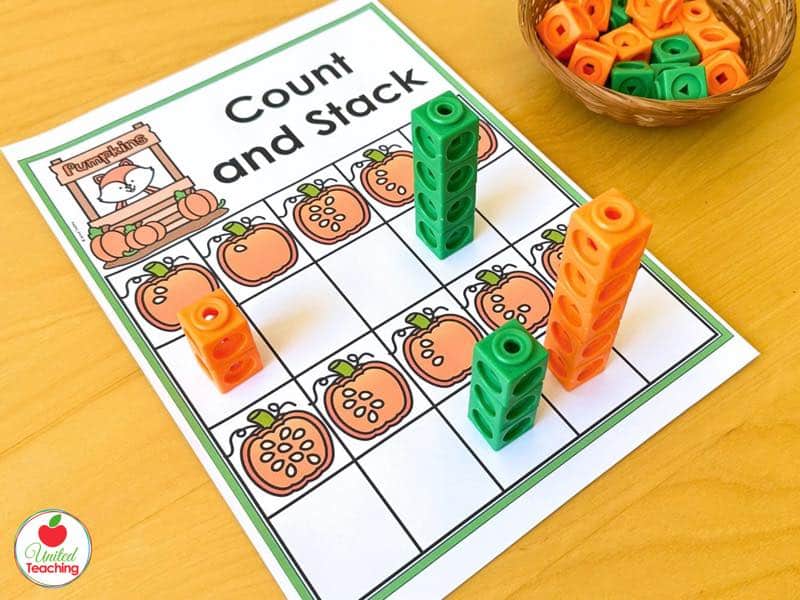
Count and Stack Mats: count the seeds in a pumpkin or the pumpkins on a vine, then build a tower with the same number of cubes
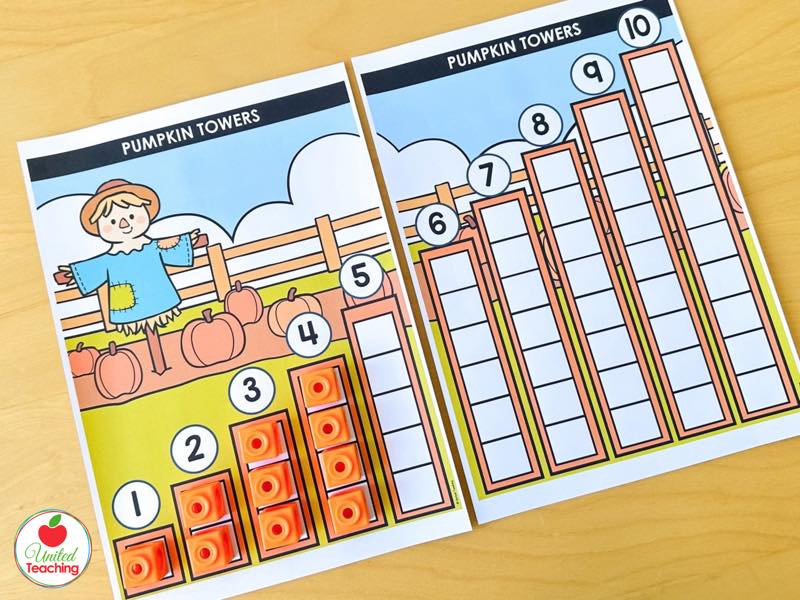
Pumpkin Patch Number Towers Mats (1-5, 6-10, and blank): build a cube tower on each column to match its number
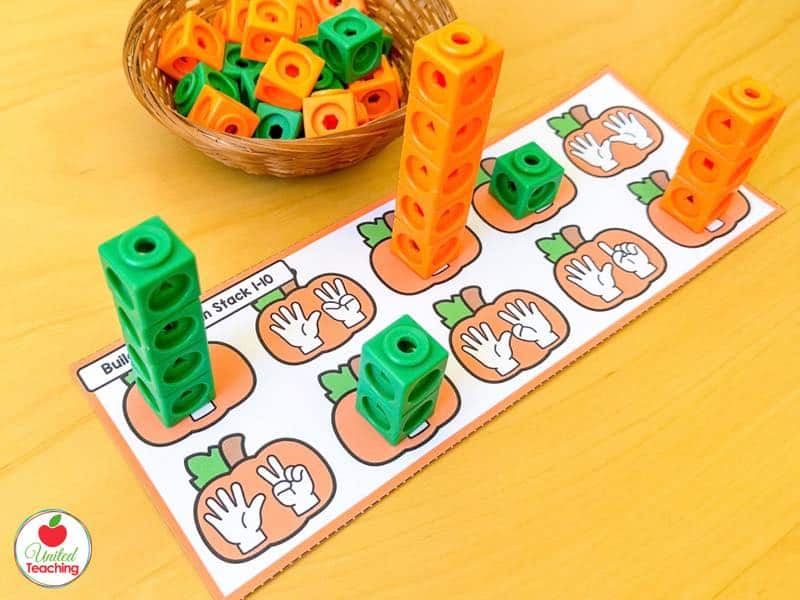
Build a Pumpkin Stack Task Cards (5 sets): build a tower to match a number shown as a numeral, number word, fingers, tally marks, a domino, or place value blocks
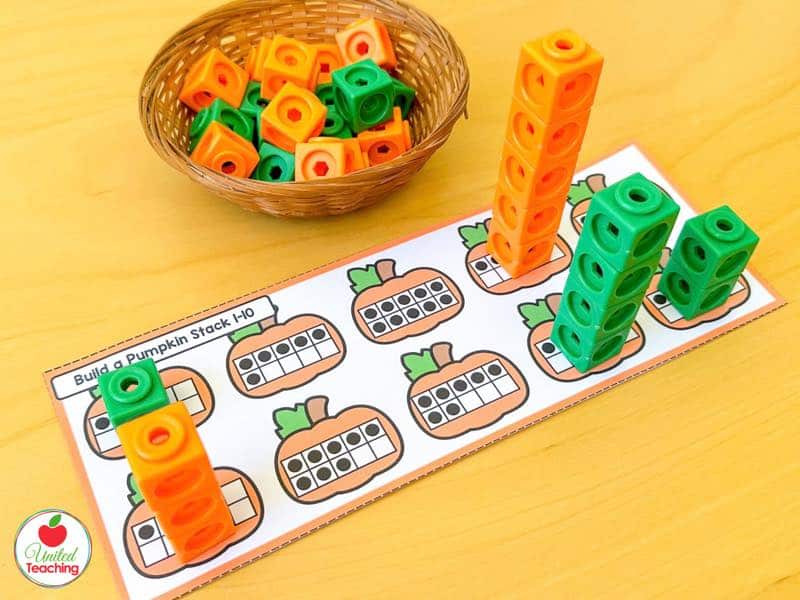
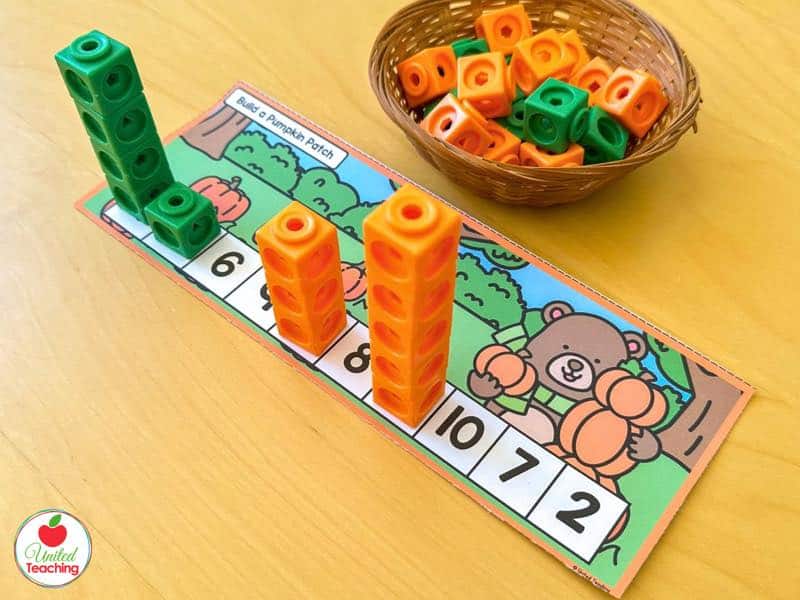
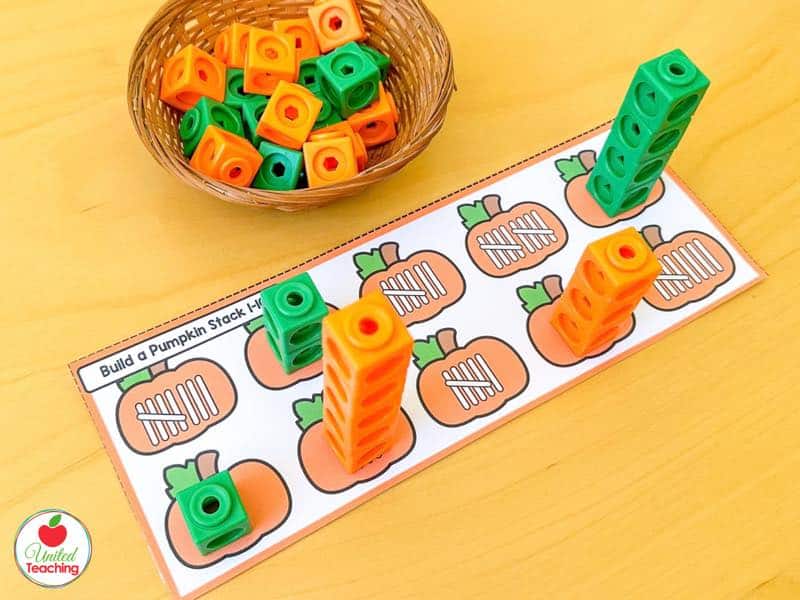
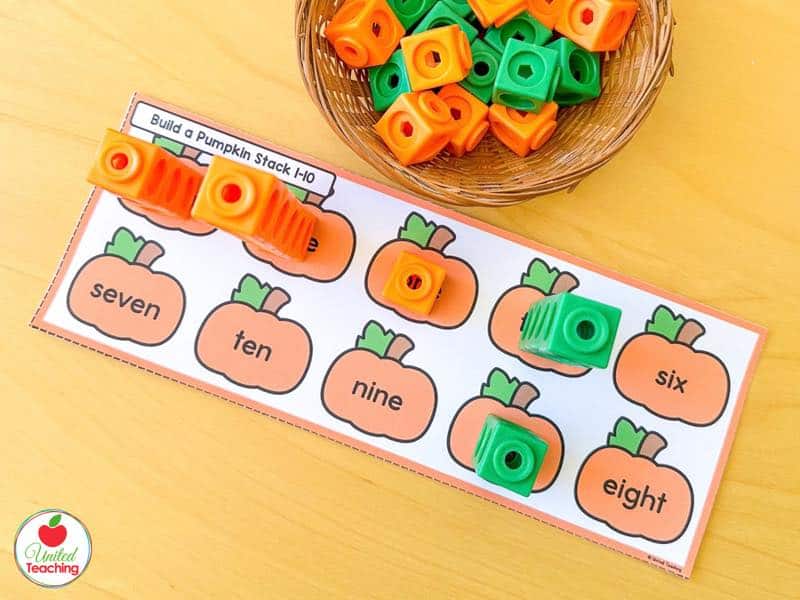
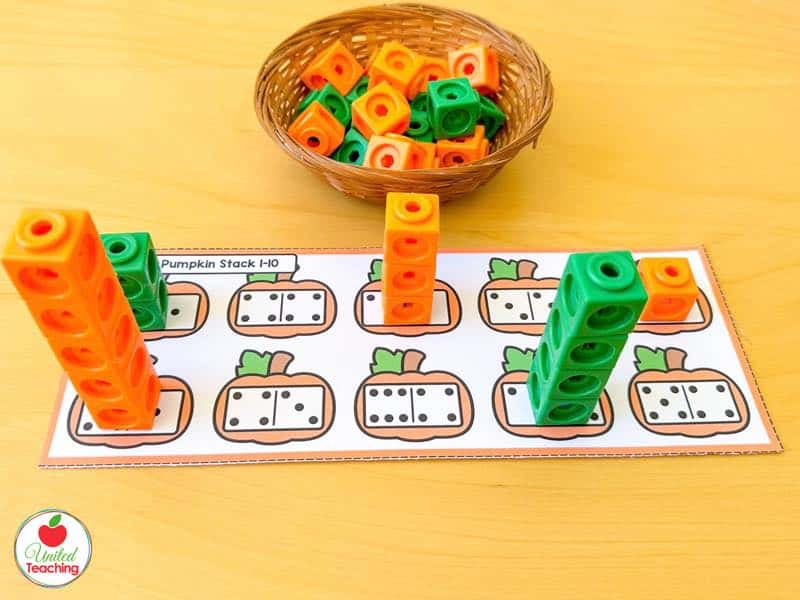
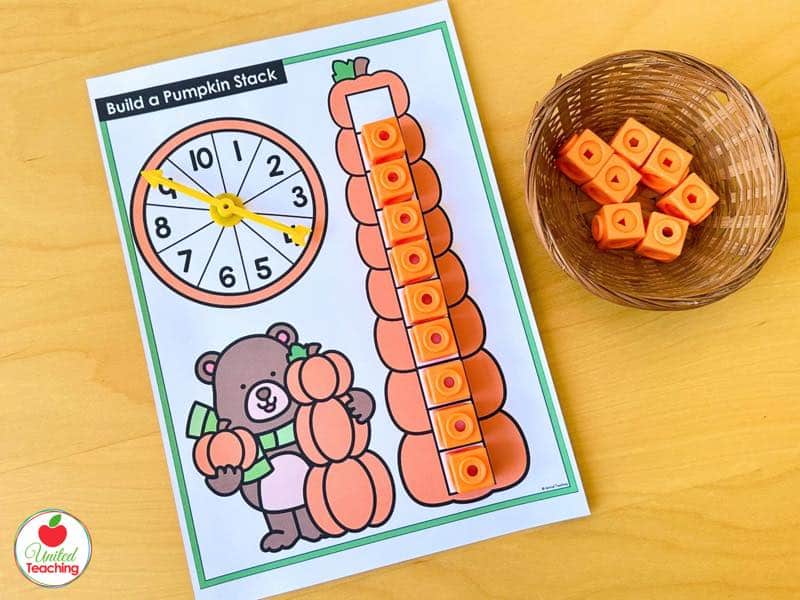
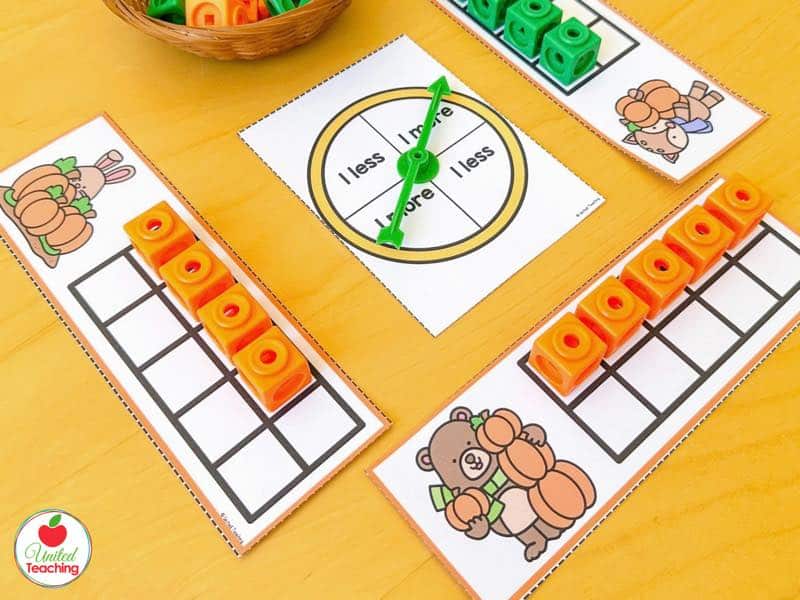
Spin and Build a Pumpkin Stack (1-5 and 1-10 mats): spin a number, then build the matching tower
Fill the Pumpkin Bus (1-10 and 1-20 mats): ten frame practice with the bus windows as the frame
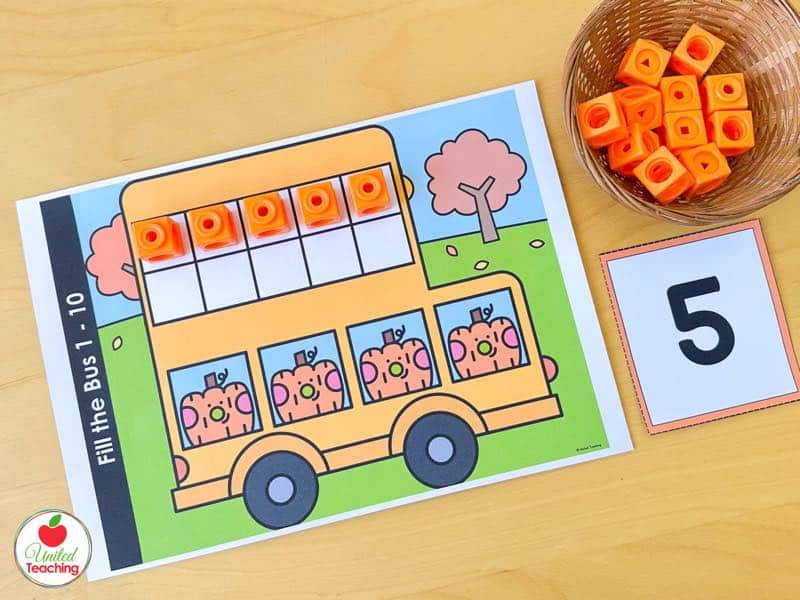
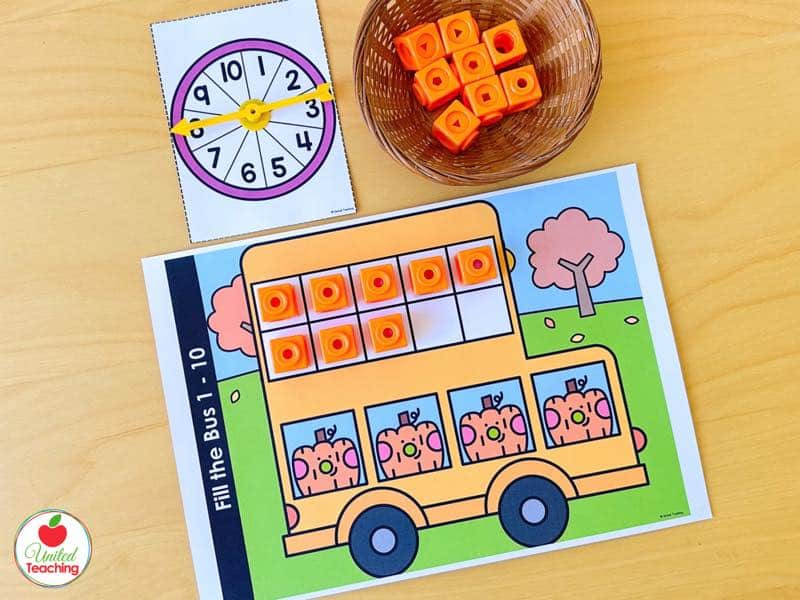
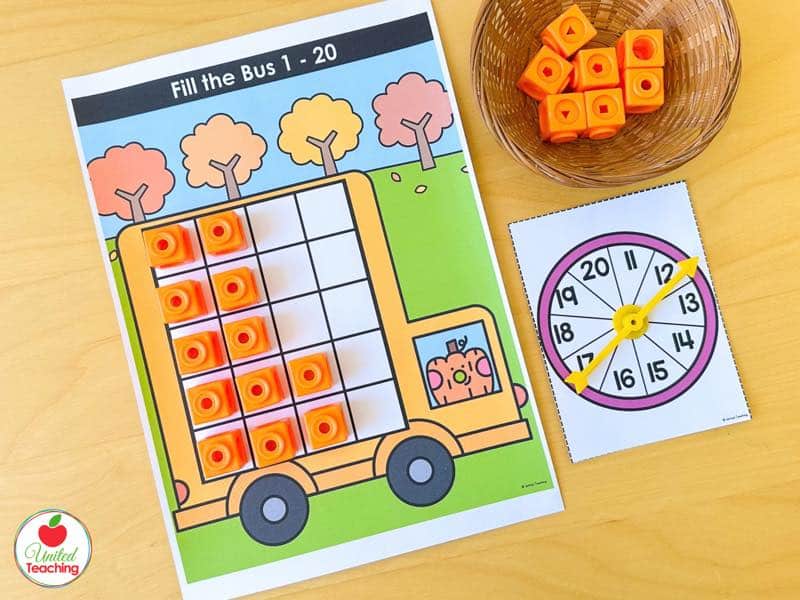
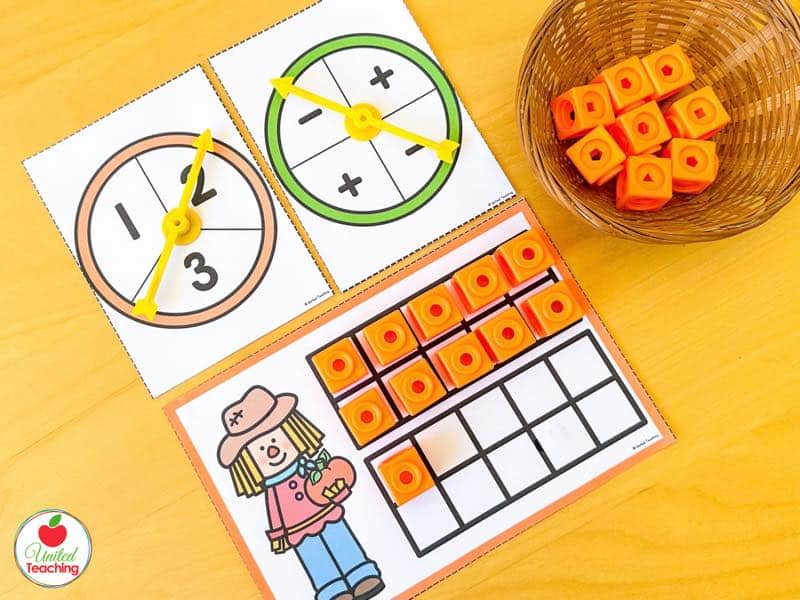
Ten Frame Building Task Cards (1-20): fill a ten frame to match the number on the card or spinner
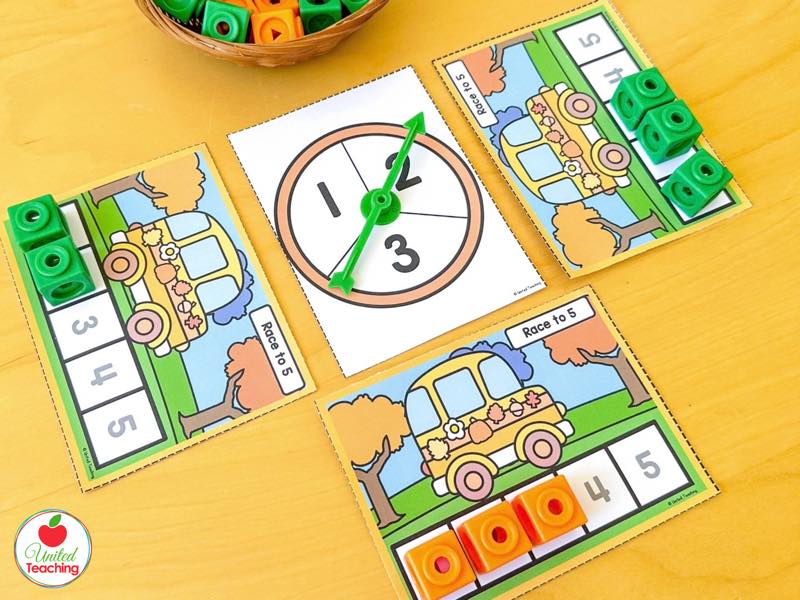
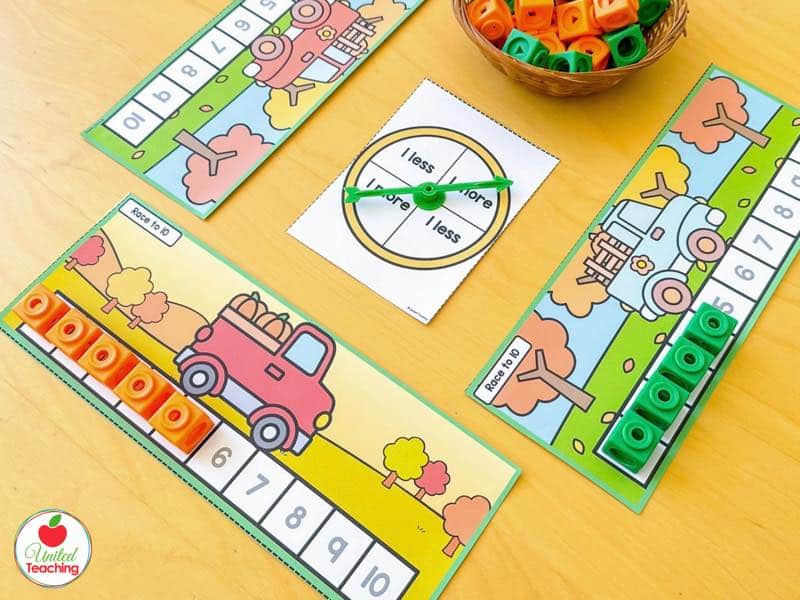
Race to 5 and Race to 10: spin or roll, then fill a number line; first player to the end wins
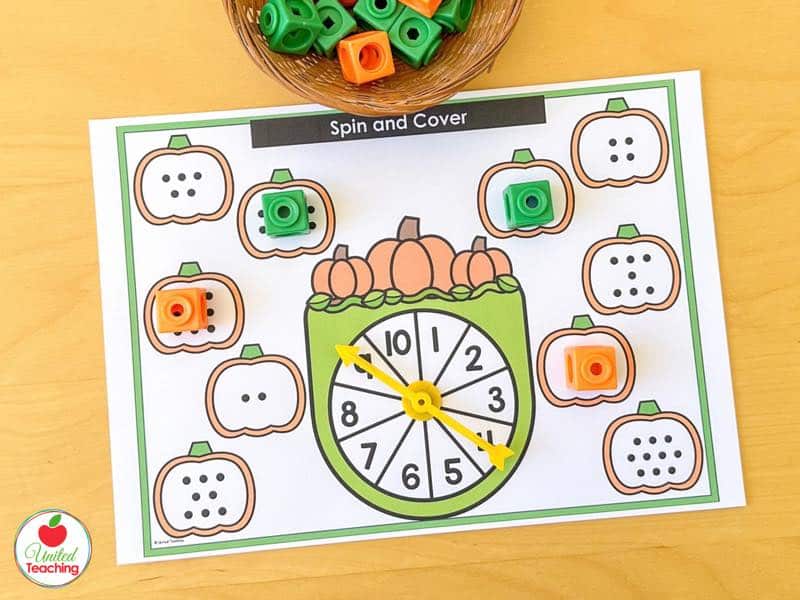
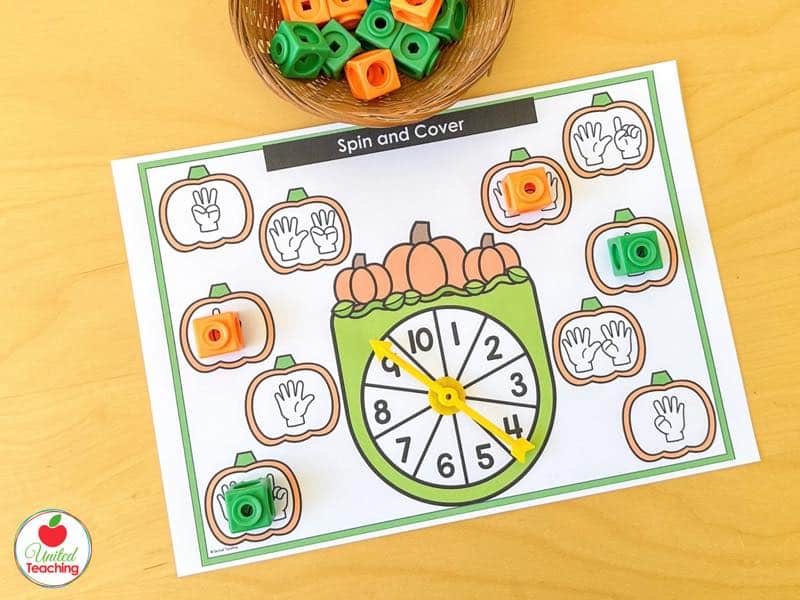
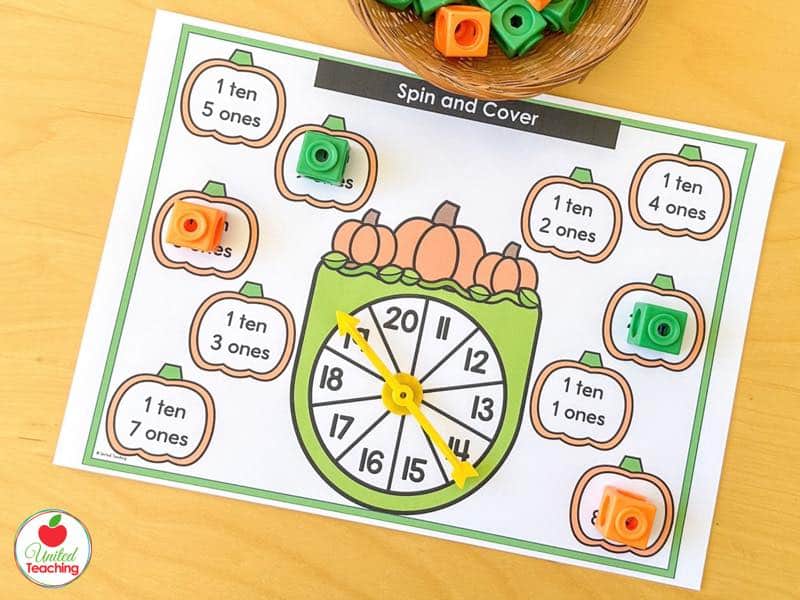
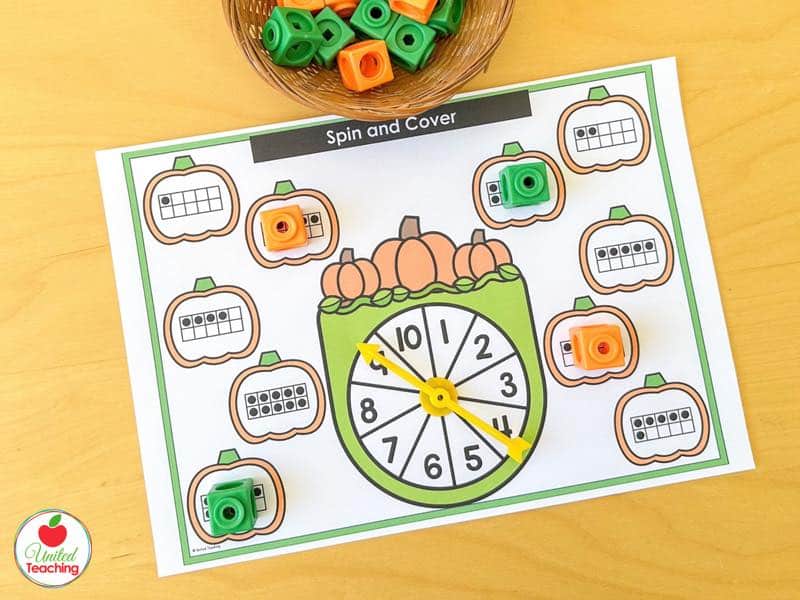
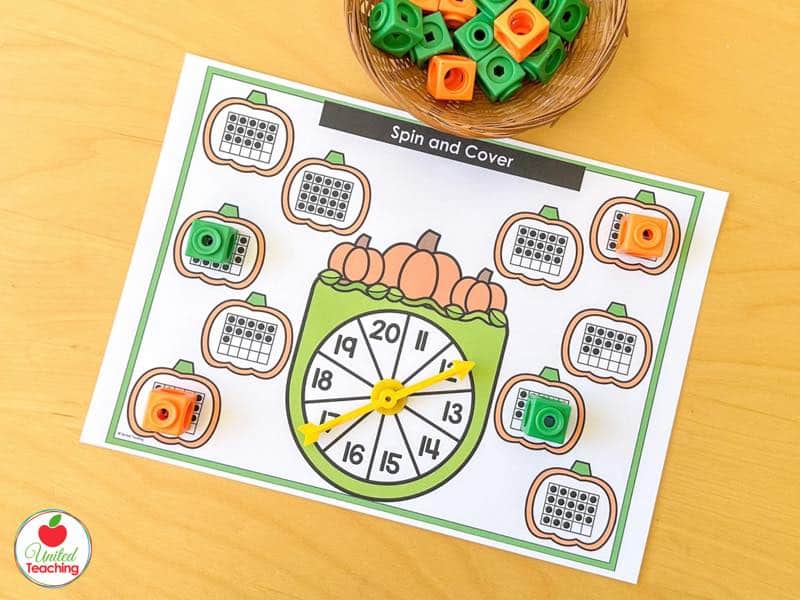
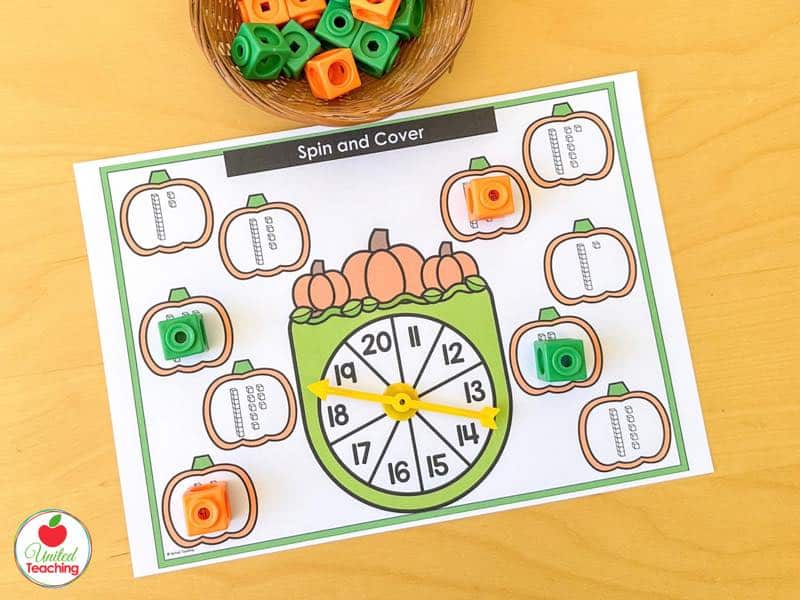
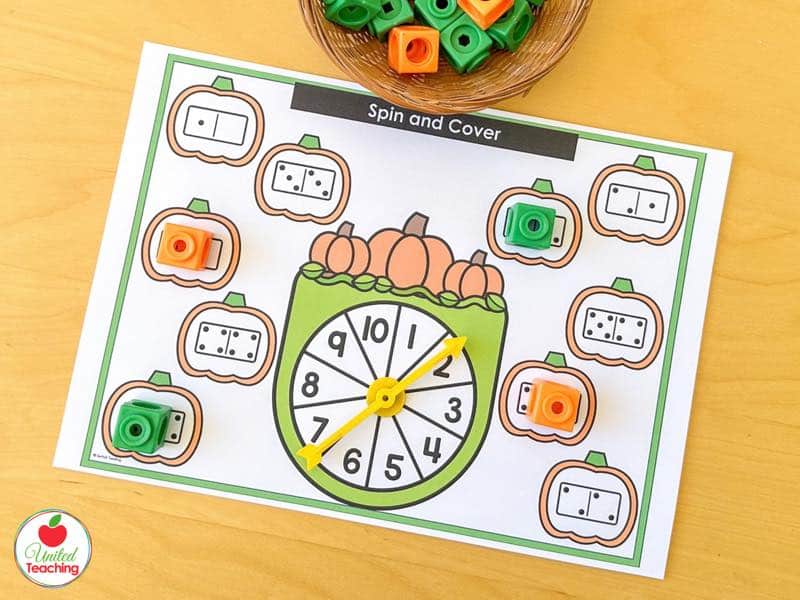
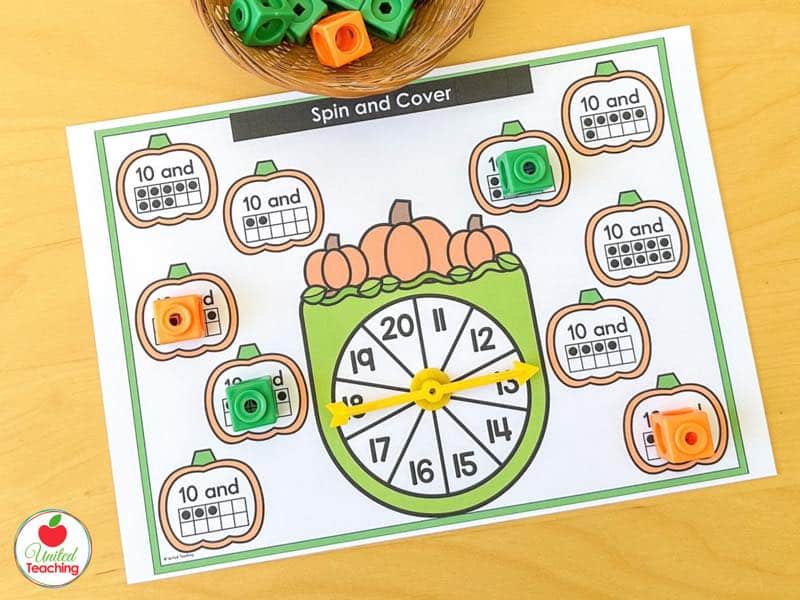
Spin and Cover Number Representation Mats: cover the matching ten frame, fingers, tally marks, domino, or dot pattern for 1 to 10, and double ten frames, bundled tallies, tens and ones rods, or “10 and” frames for 11 to 20
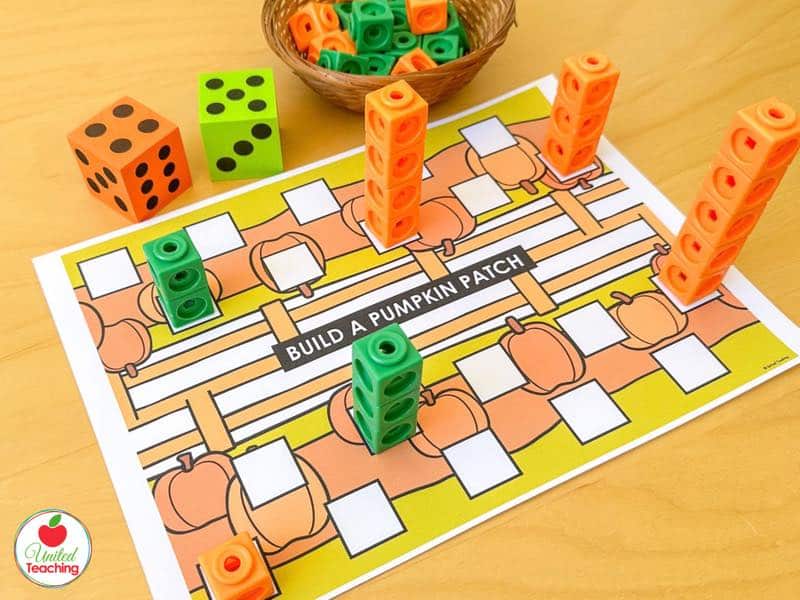
Build a Pumpkin Patch (individual and partner mats, numbered and blank): build towers across the patch, then compare patches
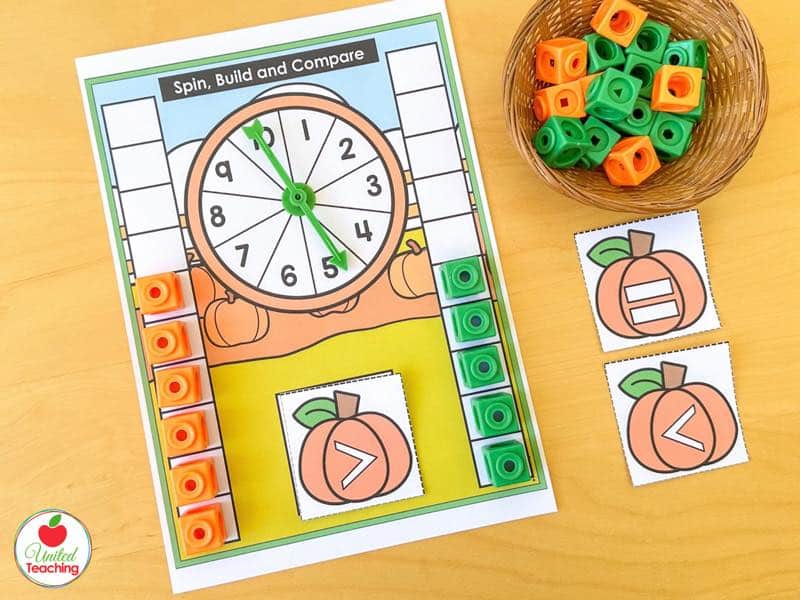
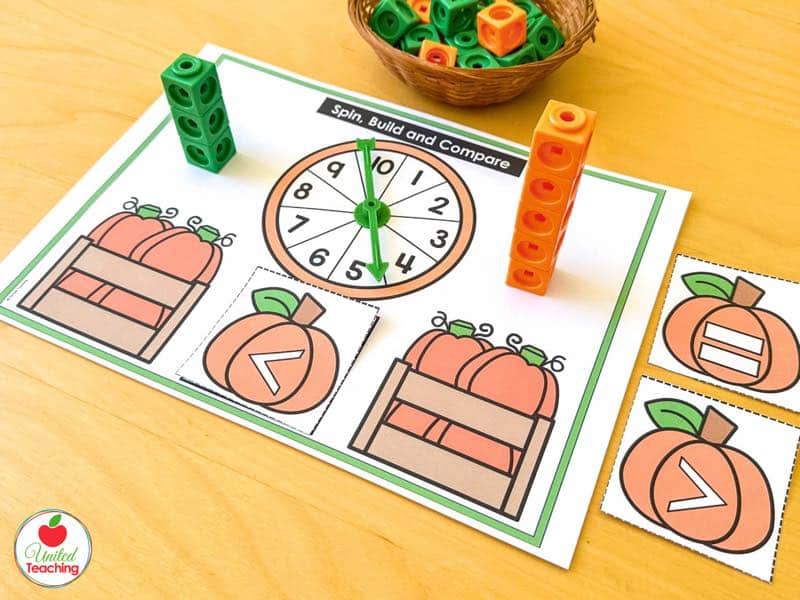
Spin, Build and Compare and Build and Compare Cards: build two towers, then place the greater than, less than, or equal to pumpkin card between them
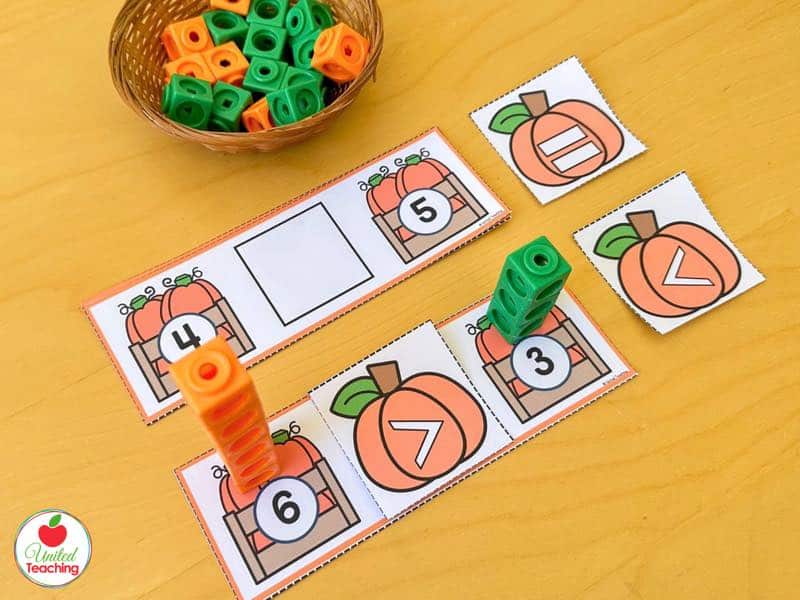
Spinners and tools: number spinners for 1-3, 1-4, 1-5, 1-6, 1-10, and 11-20, extension spinners for 1 more or 1 less and plus or minus, number cards 1 to 20, and pumpkin comparison cards
The spinners are what make the set flexible. Swap the 1-5 spinner for the 1-10 spinner and the same game gets harder without anything new to teach, so one printed center works for your whole class.
A Week of Pumpkin Math Centers
Here is one way to run a full week of pumpkin math centers from the packet.
- Monday, counting: Pumpkin Seed Task Cards. Students count out cubes and place one on each seed. No spinner yet, just careful counting.
- Tuesday, building towers: Spin and Build a Pumpkin Stack with the 1-5 or 1-10 mat. Students spin, build the tower, and check it against the number.
- Wednesday, seeing numbers in different forms: Spin and Cover Number Representation Mats. Start with ten frames and fingers, then add dominoes and tally marks once students are confident.
- Thursday, dice and adding: Roll and Cover. Students roll two dice, add them, and cover the total. It is a natural first step toward addition that still feels like a game. For a free follow-up, the Halloween Roll and Cover Math Games use the same mechanic at three levels.
- Friday, comparing: Build a Pumpkin Patch with a partner. Each student builds a patch, then the pair compares towers and decides whose patch has more.
That is a full week from one printed packet and one tub of cubes, and the routine carries over to the next week with new mats.
Differentiating Pumpkin Math for Every Student
The number range is your main tool. Students still building counting to 5 use the 1-3 or 1-5 spinner and the 1-5 Pumpkin Patch Towers mat. Those confident to 10 use the 1-10 spinner. Students ready for more use the 1-20 bus mat, the 11-20 spinner, and the representation mats that show teen numbers as a ten and some ones.
For a group that finishes quickly, add an extension spinner after the first spin. Students build the tower for one more or one less than the number they spun, which brings in early addition and subtraction without any new materials.
For the full skill progression behind these activities, the guide to hands-on number sense activities for kindergarten walks through what to teach and when. If your class did apple week in September, the apple math activities use the same routines, so students can go straight into the pumpkin versions without learning new rules.
Pair the Mats With No-Prep Pumpkin Math Worksheets
Hands-on mats are right for center time, but some parts of the day need something students can finish on their own. Early finishers, sub plans, and morning work all go better with a worksheet.
The Pumpkin Number Sense Sorting Worksheets cover the same numbers 1 to 20 in a cut and paste format. Students sort numerals, ten frames, and dot patterns onto the matching pumpkin, which is the paper version of the Spin and Cover representation mats. Using both in the same week gives students the same skill in two formats.
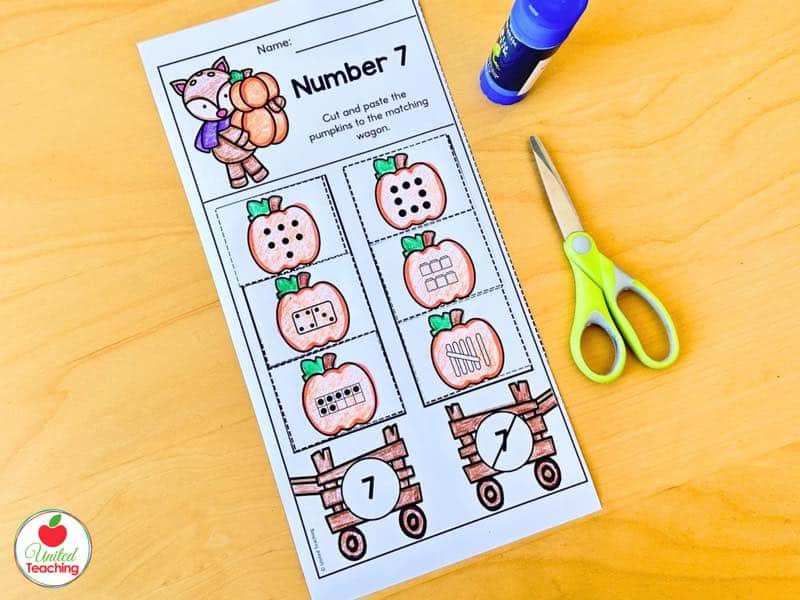
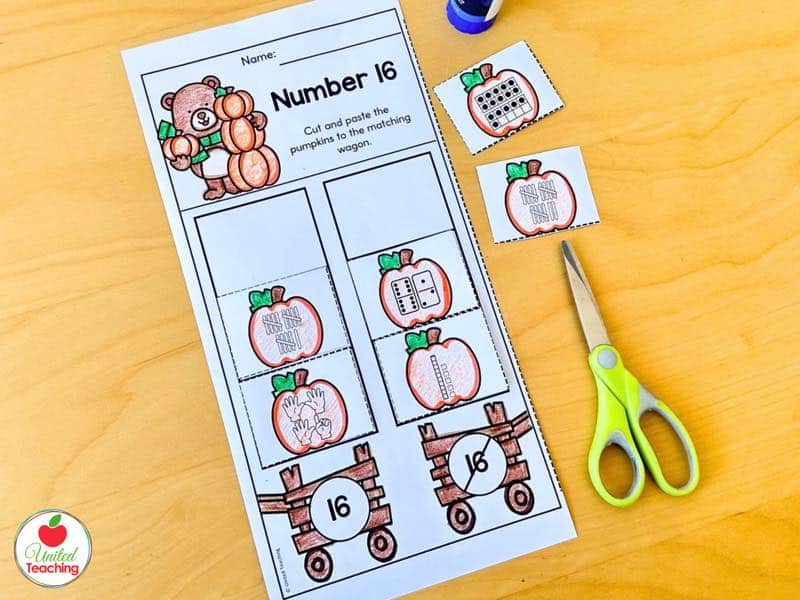
If your pumpkin unit covers more of the math block, the Pumpkin Addition and Subtraction Worksheets add combining and separating within 20, and the Pumpkin 2D Shape Sorting and Pumpkin 3D Shape Sorting cover geometry. All of them, plus the literacy sorts, are in the Pumpkin Sorting Worksheets Bundle.
Start With a Free Pumpkin Math Center
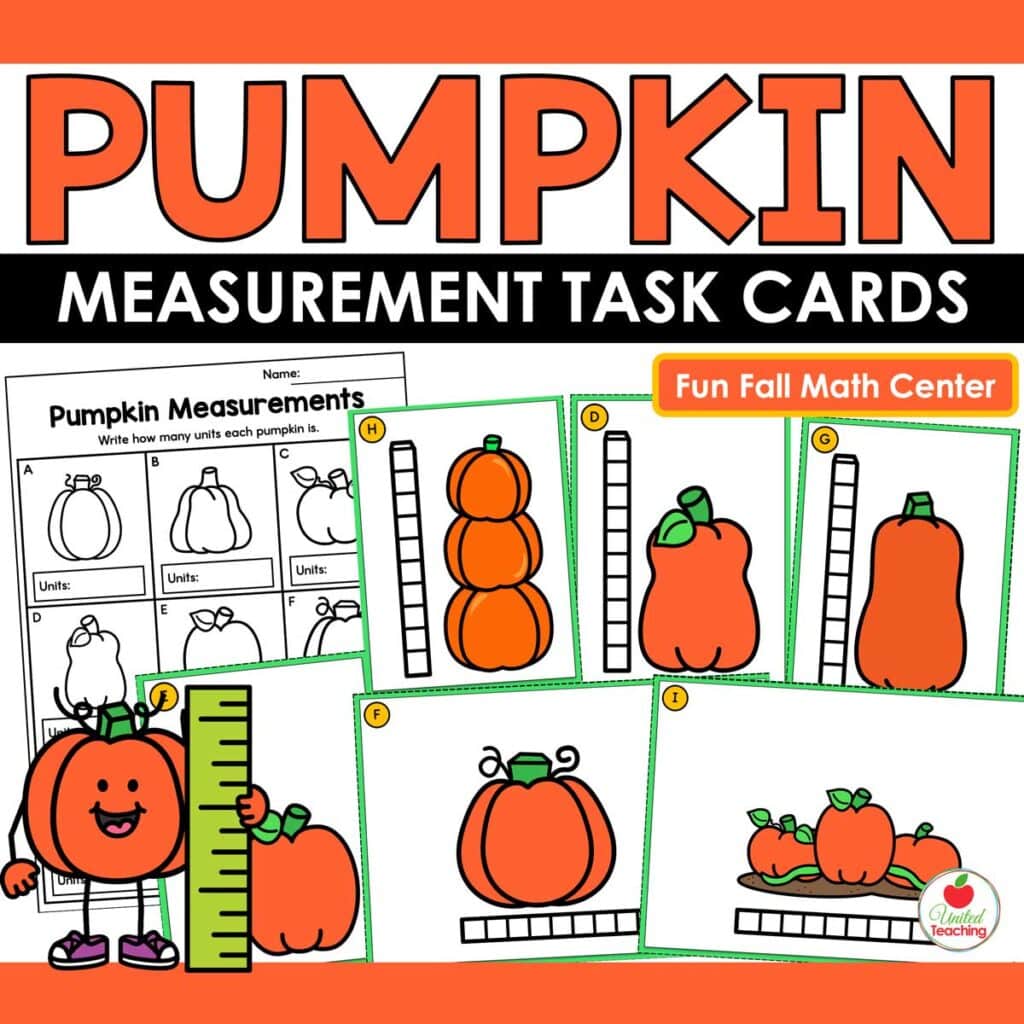
Want to try a pumpkin math center before buying anything? The Pumpkin Measurement Task Cards are free. Students measure pumpkins by counting how many cube units long each one is, then record their answers on the sheet.
- 9 color pumpkin measurement task cards
- A recording sheet for writing each measurement
- Print, laminate, and it is ready for centers or morning tubs
It pairs well with the real pumpkin investigations above, and it uses the same cubes as everything else in this post.
Get the Pumpkin Number Sense Activities with Math Cubes
When you are ready for the full set, the Pumpkin Number Sense Activities with Math Cubes packet gives you 53 counting, ten frame, representation, and comparing activities in color and black and white, covering every number from 1 to 20. Print once, laminate, add cubes, and your pumpkin math centers are ready for all of October.
Save for Later