




You probably recognize this student. She can count to 30 without pausing, recites numbers confidently in morning meeting, and looks like she has it all together. Then you ask her to count out 12 counters from a pile, and somewhere around 8 she loses track and hands you 14. Ask her what number comes after 17, and she starts back at 1.
Counting and number sense are not the same thing, and that gap shows up in kindergarten in ways that can be surprisingly easy to miss. A student who can rattle off numbers in order may not yet understand what those numbers actually mean. Strong number sense means students understand what numbers represent, how they relate to each other, and how to work with them flexibly. That understanding doesn’t develop from recitation or from any single activity. It grows through varied, repeated practice across many different number sense activities over time.
This post walks through number sense activities organized by skill progression. You will find activities for numbers 1-10, extensions to 20, and consolidation tasks that reveal what students have genuinely understood. Along the way, you will find free downloads to use right away and product recommendations for when you want a ready-to-go center or game.
Table of Contents
- The Number Sense Skills Kindergarteners Need to Build
- What Number Sense Gaps Look Like in the Classroom
- Start Here: Number Sense Activities for Numbers 1-10
- Taking Number Sense Further: Activities for Numbers to 20
- Pulling It All Together: Consolidation Activities That Show What Students Really Know
- What Comes Next: Skip Counting, Number Patterns, and Place Value Foundations
- Get Everything in the Numbers 1-20 Number Sense Bundle
The Number Sense Skills Kindergarteners Need to Build
Number sense in kindergarten is not a single skill. It is a progression of connected concepts that build on each other, and the sequence matters. Here is what students need to develop before leaving kindergarten:
- Number recognition: Identifying numerals and connecting them to the quantities they represent
- Counting and one-to-one correspondence: Counting objects accurately, with the understanding that the last number named tells you the total
- Subitizing: Recognizing small quantities instantly, without counting each object
- Representing numbers: Showing a number in multiple ways (ten frames, tally marks, drawings, numerals, number words, and finger patterns)
- Ordering and comparing: Sequencing numbers and understanding greater than, less than, and equal to
- Place value foundation: Beginning to understand tens and ones as students work with teen numbers and beyond
Keeping this progression in mind helps you choose number sense activities that match where your students actually are, rather than where the scope and sequence says they should be.
What Number Sense Gaps Look Like in the Classroom
Number sense gaps are not always visible on the surface. A student might sequence number cards correctly when the full set is in front of her, but have no idea what comes after 16 when asked out of context. Another might use a ten frame mat correctly when matching printed images, but freeze when asked to build one independently with counters.
Some patterns worth watching for:
- Recounts from 1 every single time, even when given a starting number to work from
- Identifies the numeral 13 but reads it as “one-three” rather than understanding it as a quantity
- Gets correct answers on familiar task formats, but becomes confused when the same concept appears in a slightly different way
- Can count a set of objects accurately but cannot tell you “how many” without going back and recounting from the beginning
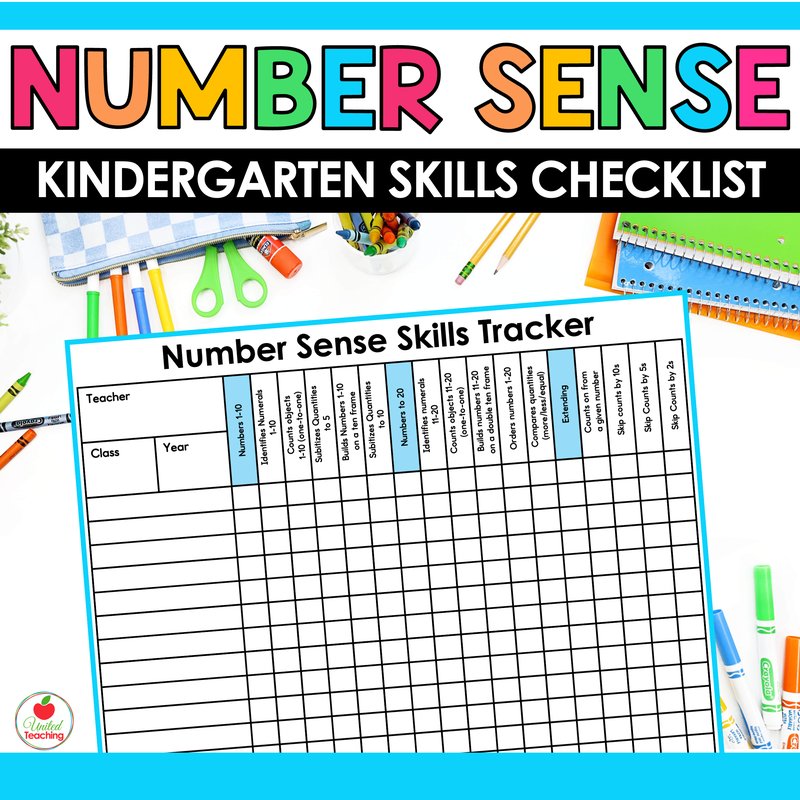
The free Number Sense Skills Checklist below is a simple one-page teacher tool for tracking where each student sits across the key skill areas covered in this post. Use it to plan small groups, make decisions about pacing, or identify who needs more time before moving on.
Free Download
Number Sense Skills Checklist
A one-page teacher tracking tool covering number recognition, subitizing, ten frame use, ordering, and counting on for numbers 1-20.
Start Here: Number Sense Activities for Numbers 1-10
The 1-10 range is where number sense is built from the ground up, and students need deep, flexible familiarity with these quantities before the teen numbers will make sense. Moving through this range too quickly is one of the most common mistakes in early math instruction. Even students who seem confident here often have surface-level recognition without the underlying understanding.
Number Recognition
Number recognition means more than knowing what the numeral “4” looks like. Students need to connect each numeral to its quantity and recognize it across different formats: dot arrangements, tally marks, ten frames, and number words. Without that, they are matching shapes, not building number sense.
Here is what works well in centers and small groups:
- Number hunt: Post sticky notes with numerals 1-10 around the room. Students take a recording strip and walk around finding and matching each number. Getting students up and moving mid-morning is a bonus, and because they are matching to a recording strip, they can work through it without needing to check in with you at every step.
- Memory matching: Arrange a set of numeral cards and dot pattern cards face down on a table or the floor. Students flip two at a time, looking for a numeral and a dot arrangement that show the same quantity. Once students are confident with dots, swap in ten frame cards to extend the challenge.
- Whiteboard quick check: Call out a number and have students write the numeral, then draw a quick dot arrangement or ten frame to show the quantity. A fast way to see who has made the numeral-quantity connection and who is still working on it.
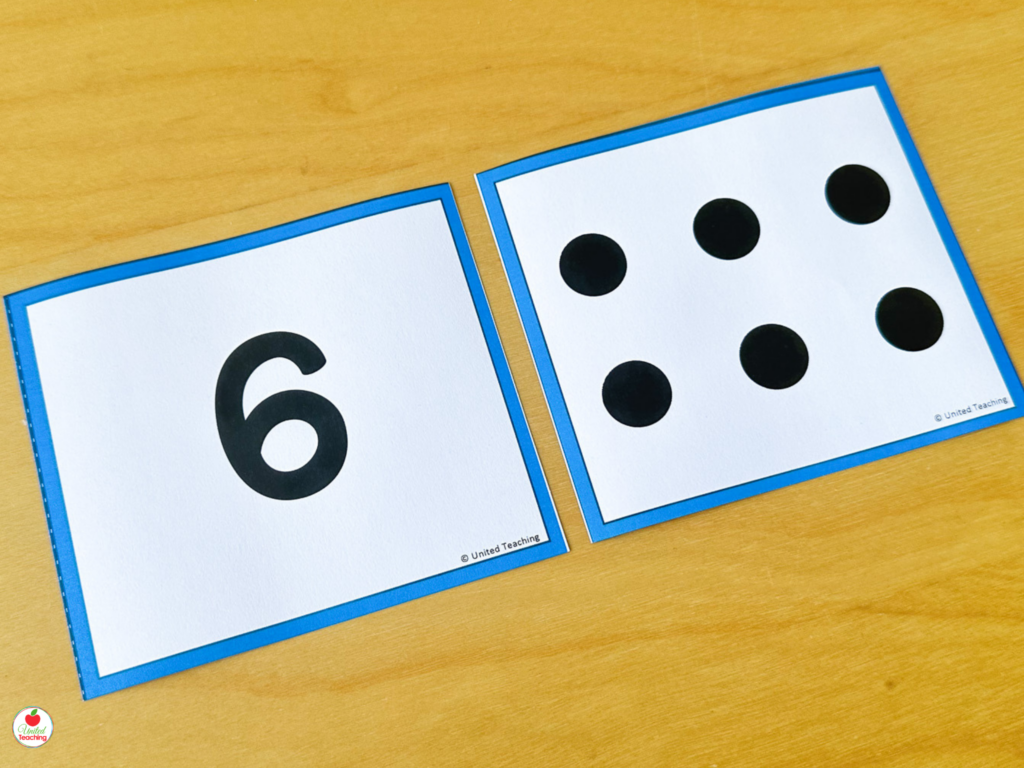
Free Download
Grab the FREE Subitizing Card set to play Memory with numerals, subitizing dots, and other number forms.
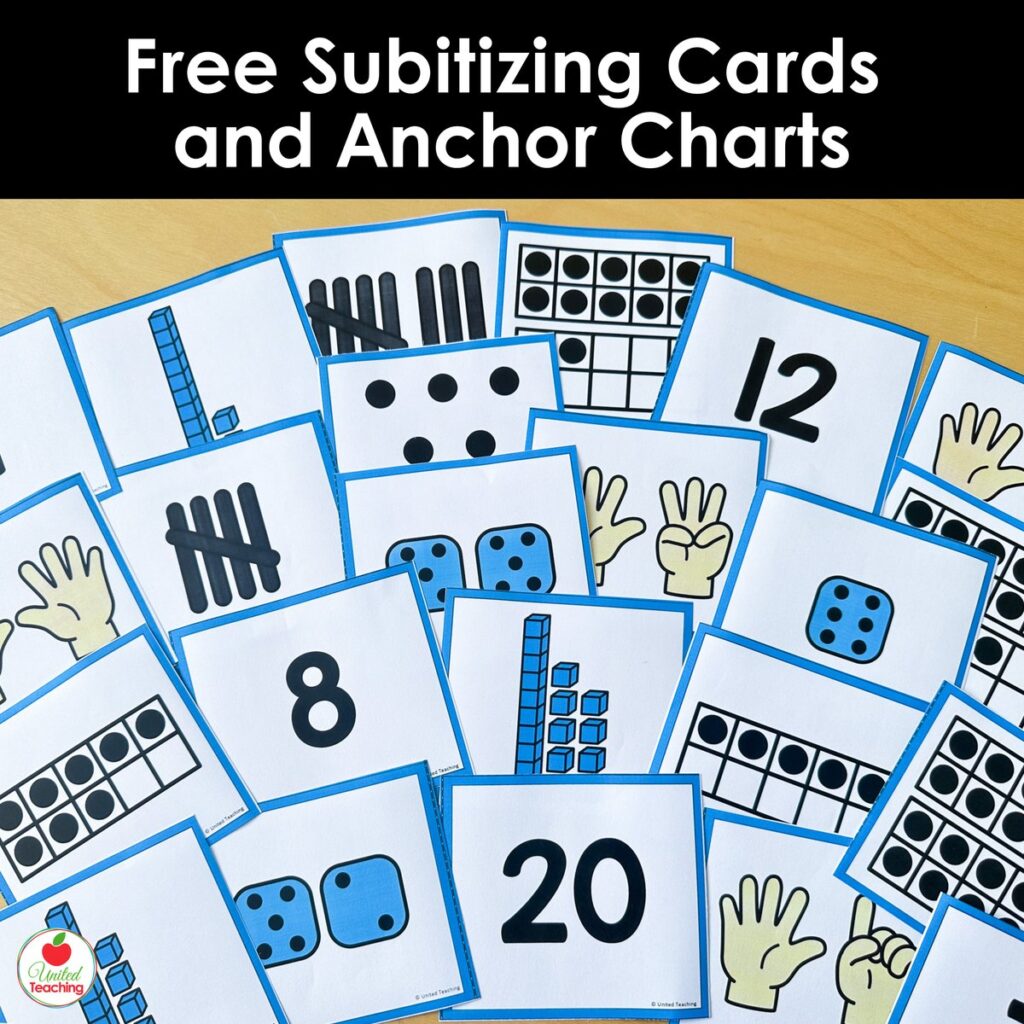
Counting and One-to-One Correspondence
One-to-one correspondence develops through physical counting with real objects. Students need to touch, move, and count things. Each number word connects to exactly one object, and the last number they say tells them the total.
Try these activities:
- Roll and count: Students roll a die, count out that many bears or cubes into a cup, and record the total. Simple, self-checking, and endlessly repeatable across the year.
- Grab and compare: Each student grabs a handful of counters, counts them, and records the total. Partners compare and discuss who has more, who has fewer, and whether any pairs ended up with the same amount.
- Line it up: Students count a set of objects, arrange them in a straight line, then move them into a scattered arrangement. Can they tell you how many without recounting? This builds directly toward conservation of number and reveals whether one-to-one correspondence has truly taken hold.
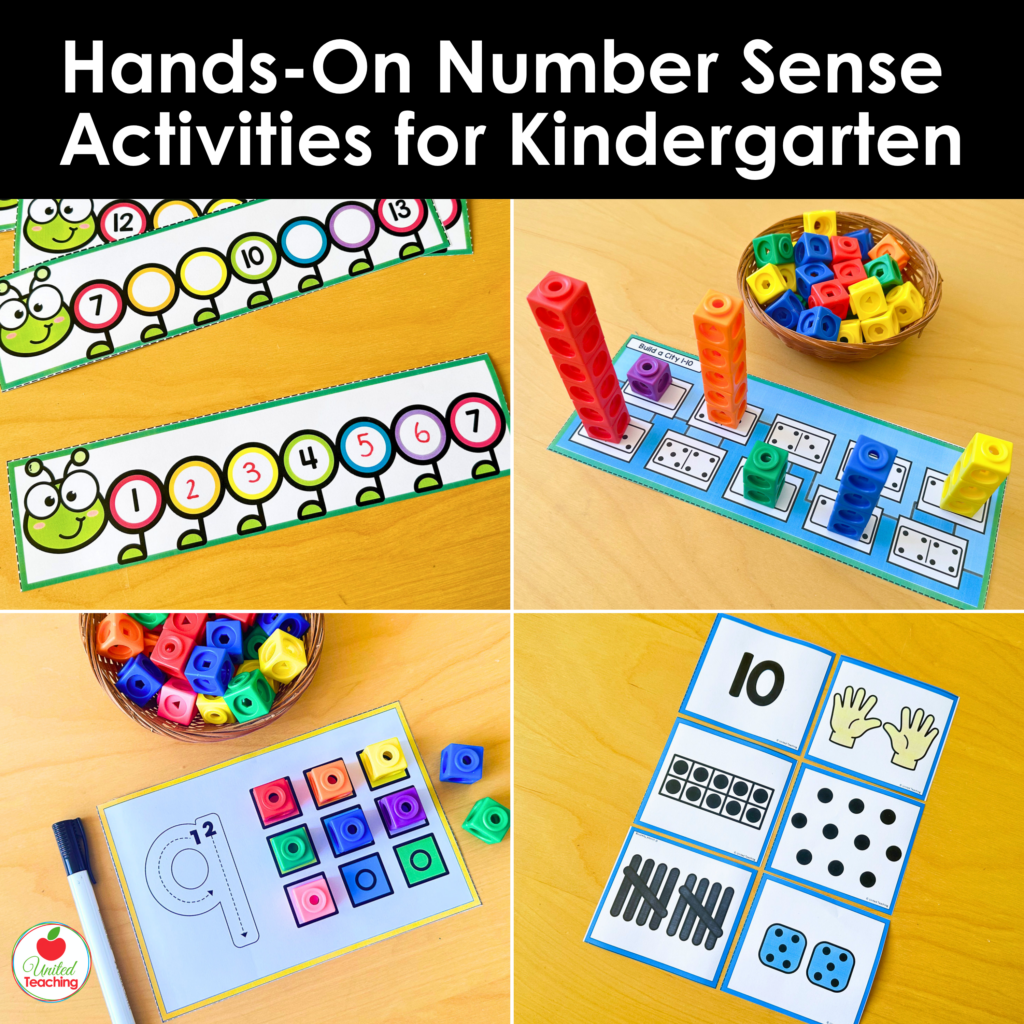
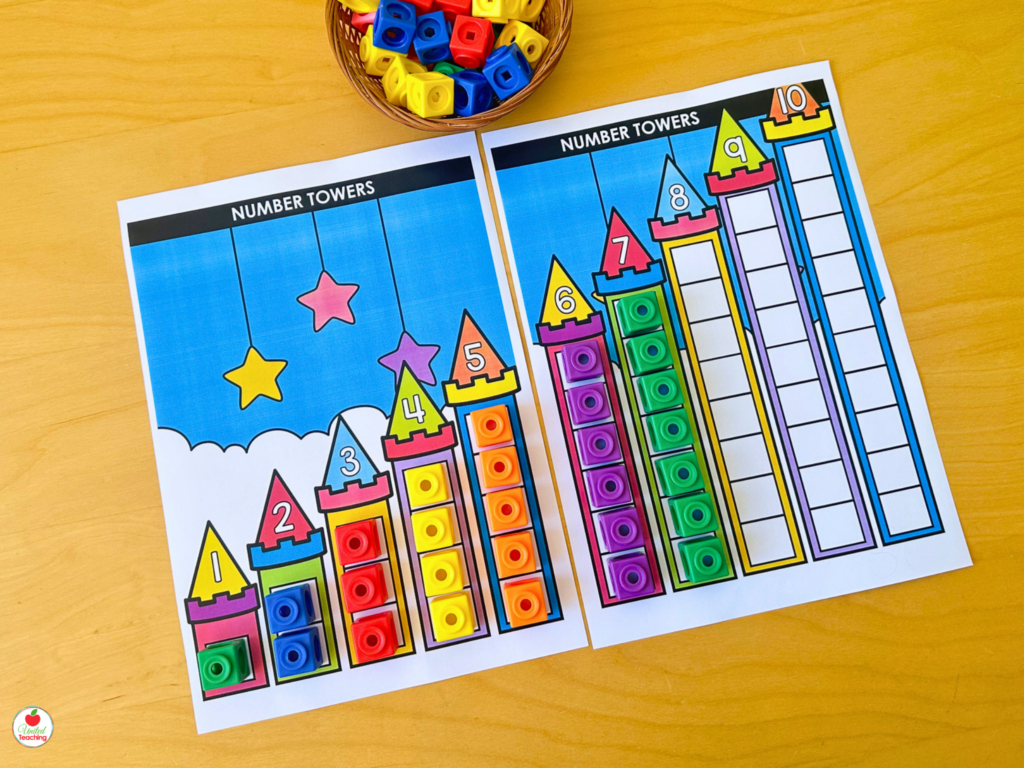
- Number Towers: Students build towers with match cubes for each number from 1 to 10 with each additional tower showing the increase in the number of cubes. Extend the activity with Number Tower mats in which students build towers to match different number forms ranging from ten frames and finger counting to subitizing dots and number words.
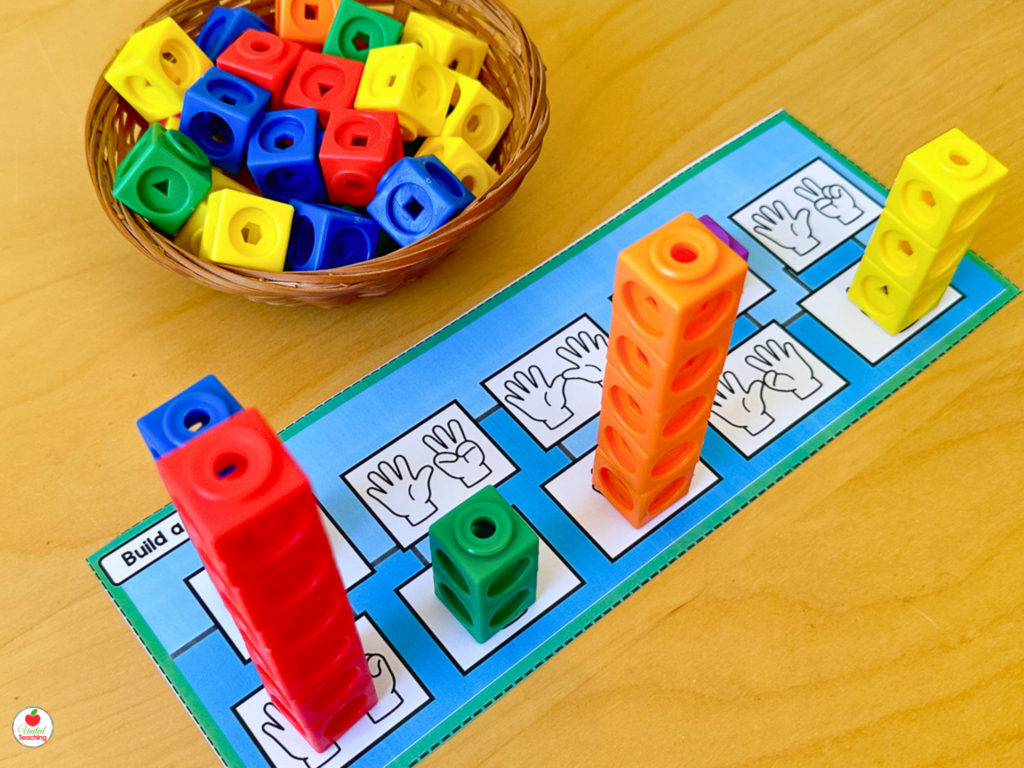
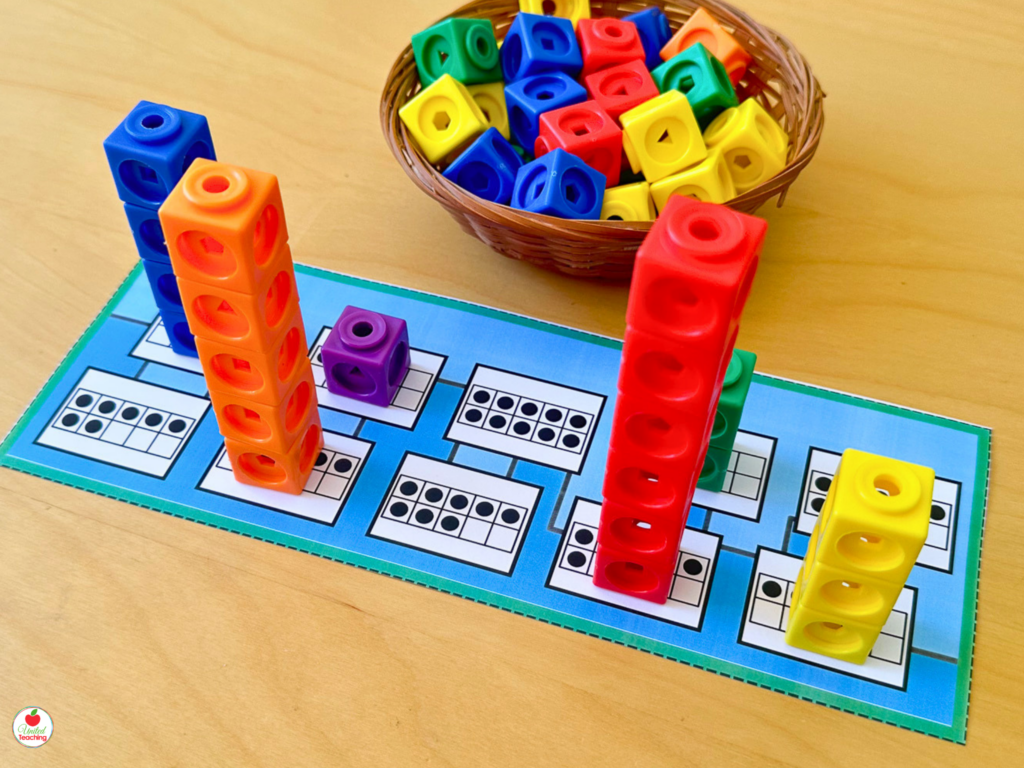
- One-to-One Correspondence Task Cards: students count a set number of objects to match the number on the task card. Included in the Number Sense Activities with Math Cubes are numerous task cards including number tracing and counting task cards clearly defined spaces, building accurate counting through physical manipulation.
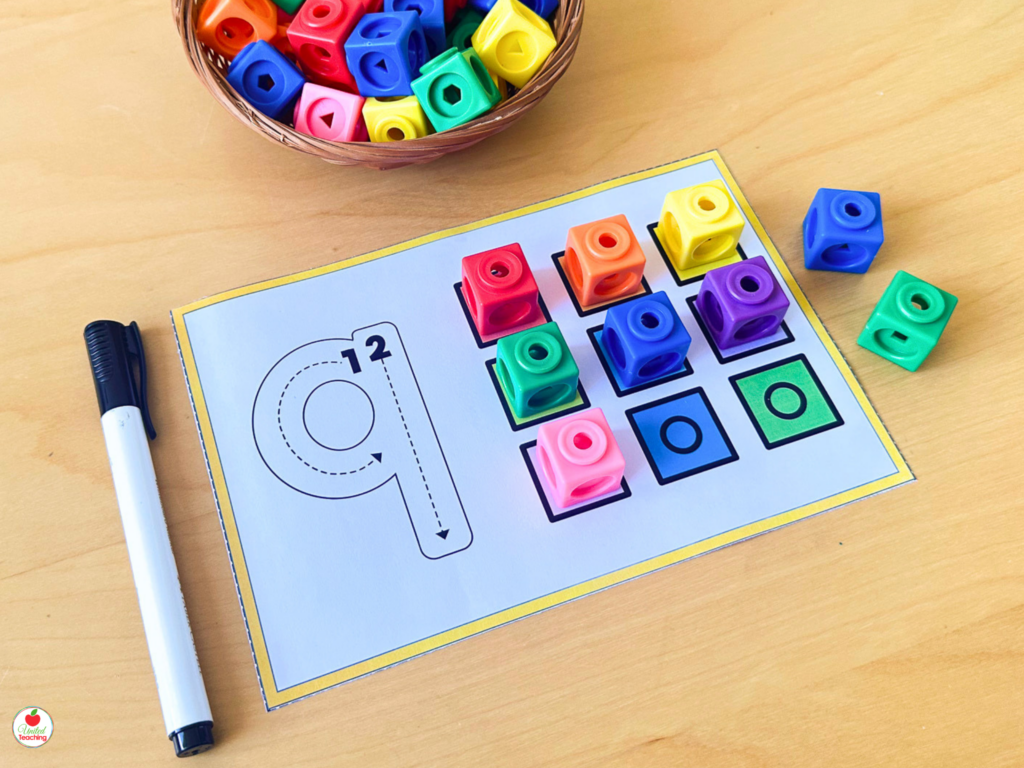
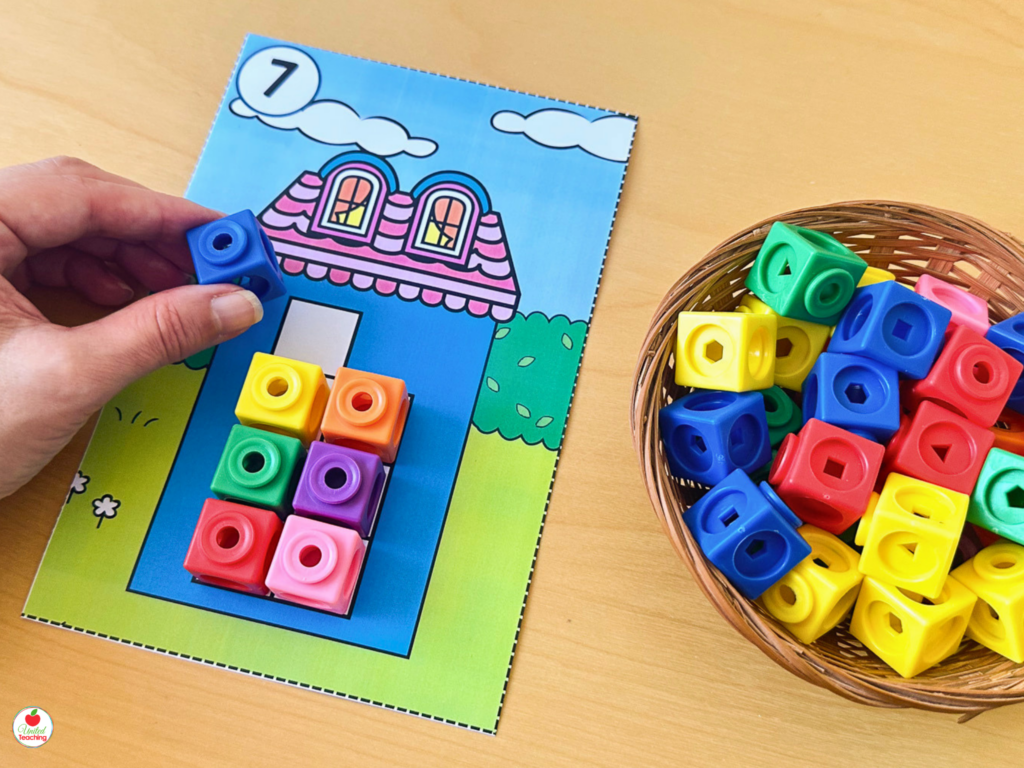
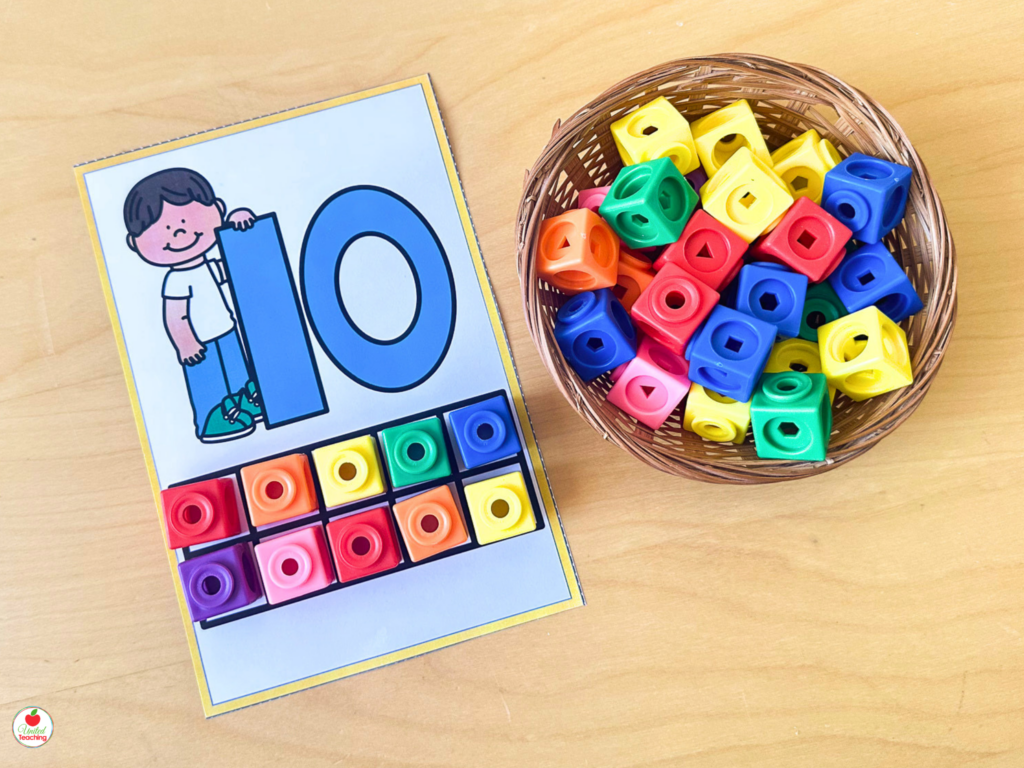
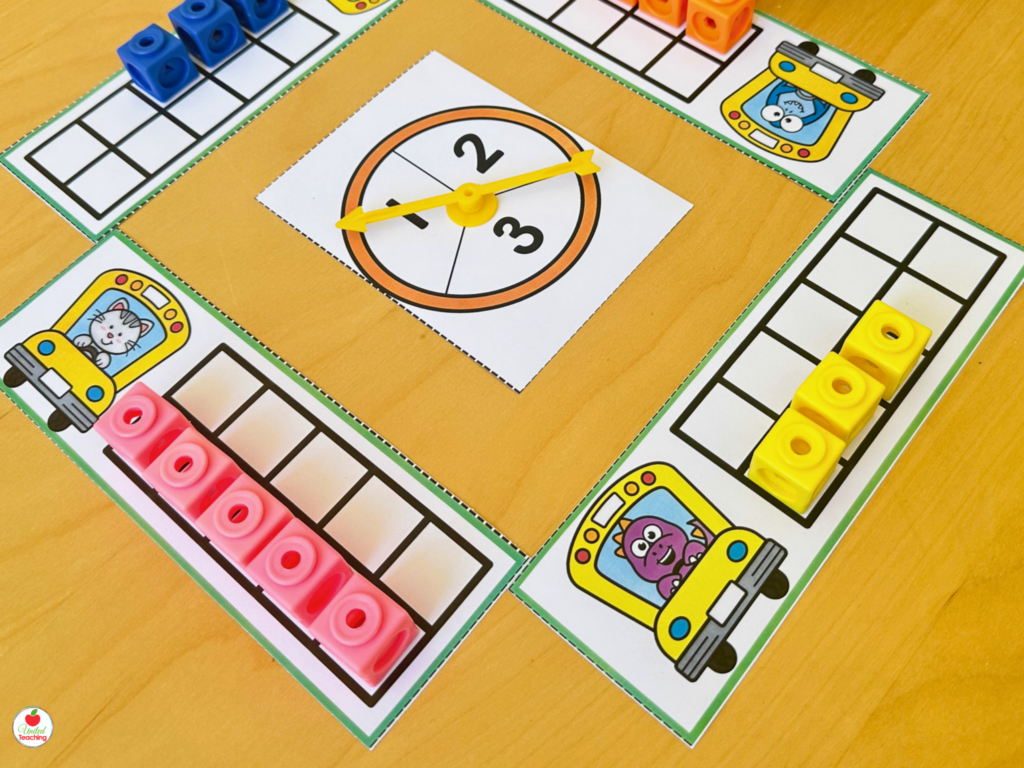
- One-to-One Correspondence Games: Students love to spin a number of flip a number card and fill the trains or build their rockets with the matching number of cubes. They don’t even realise they are cementing their counting and one-to-onse correspondence skills.
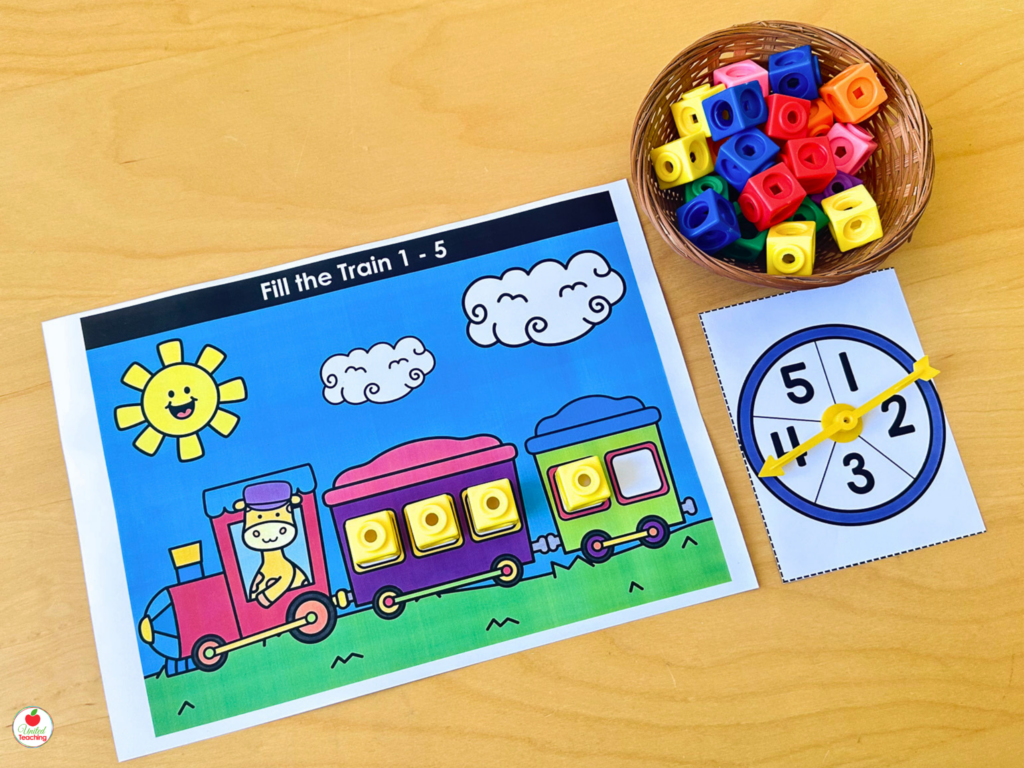
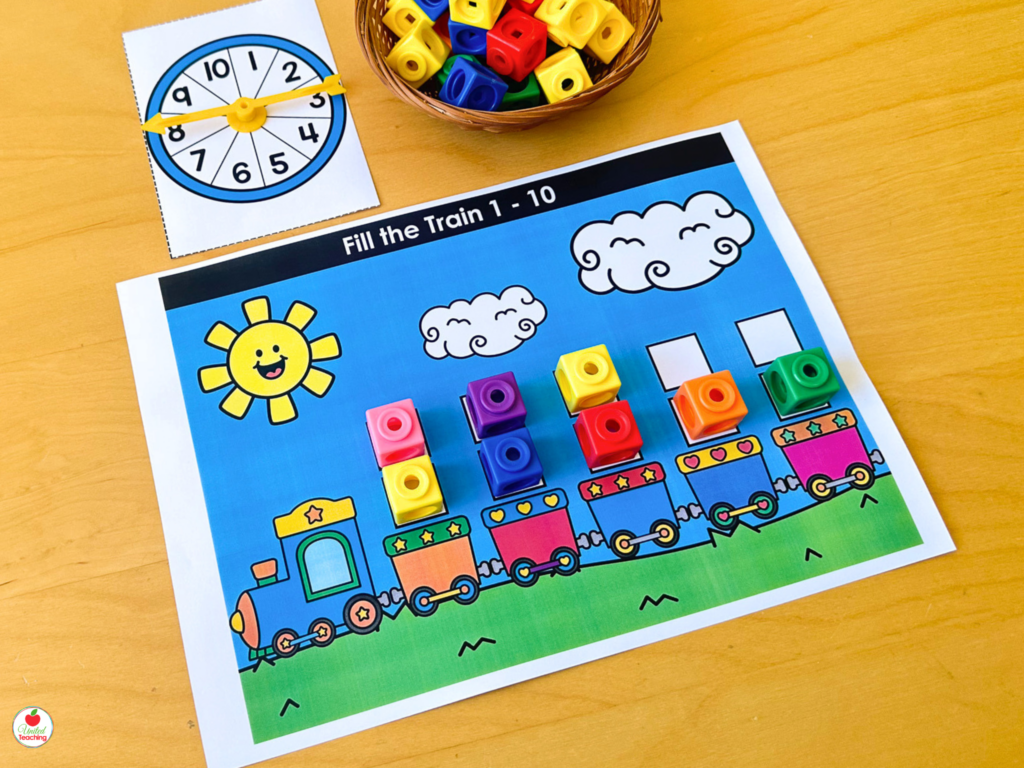
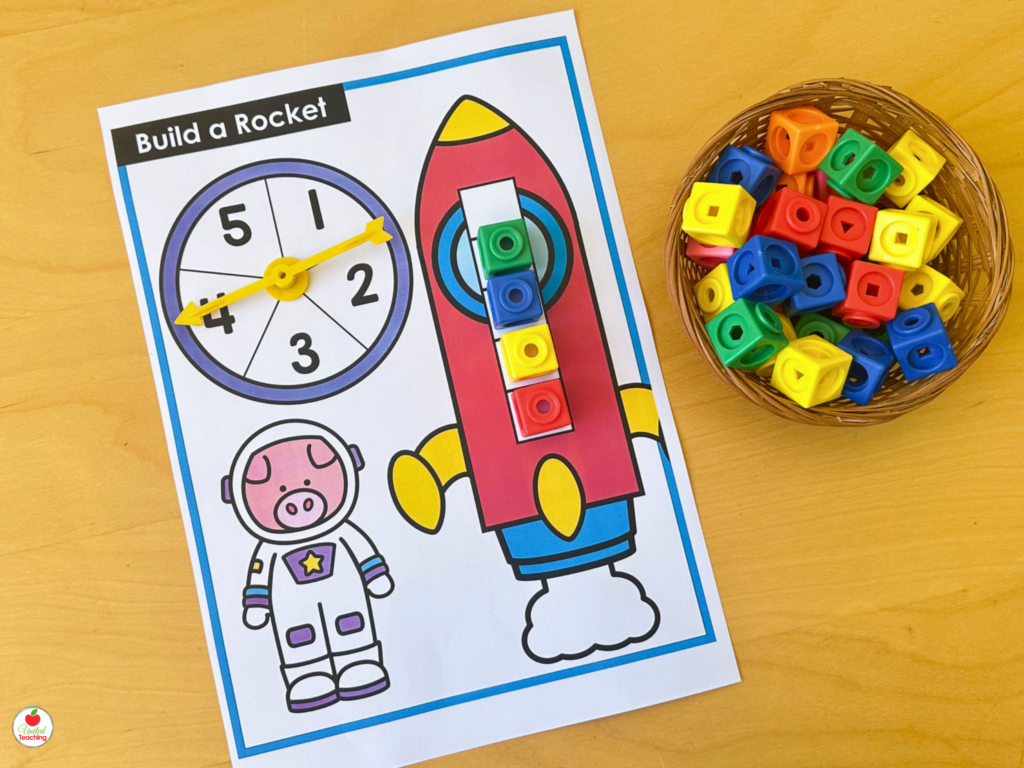
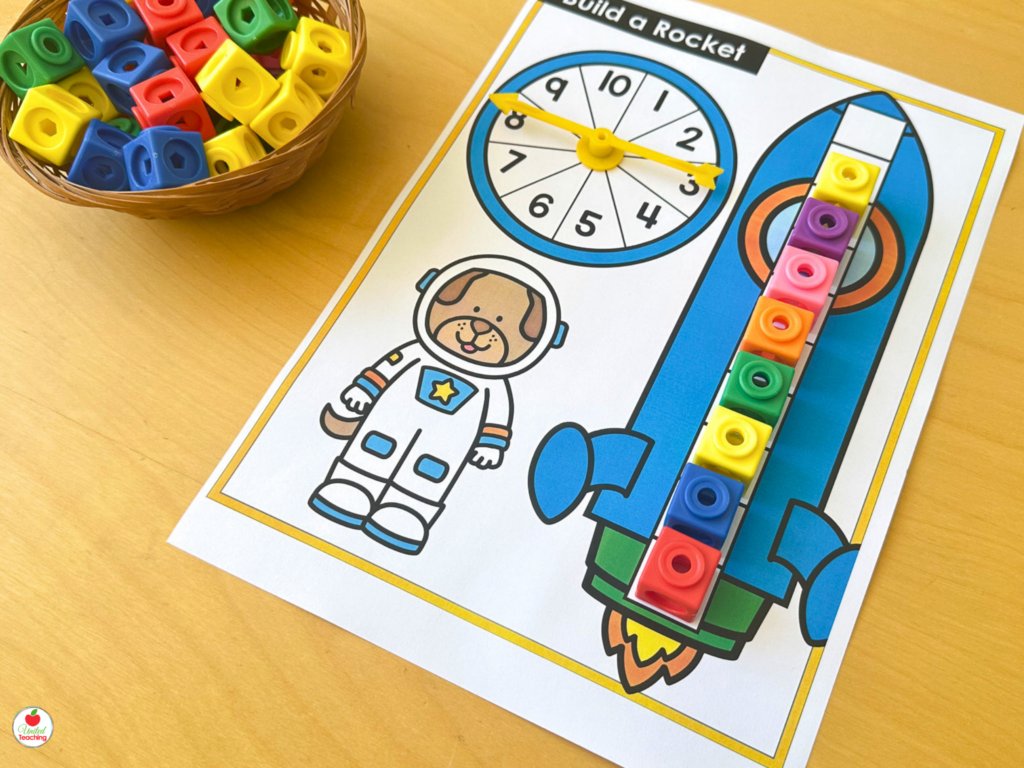
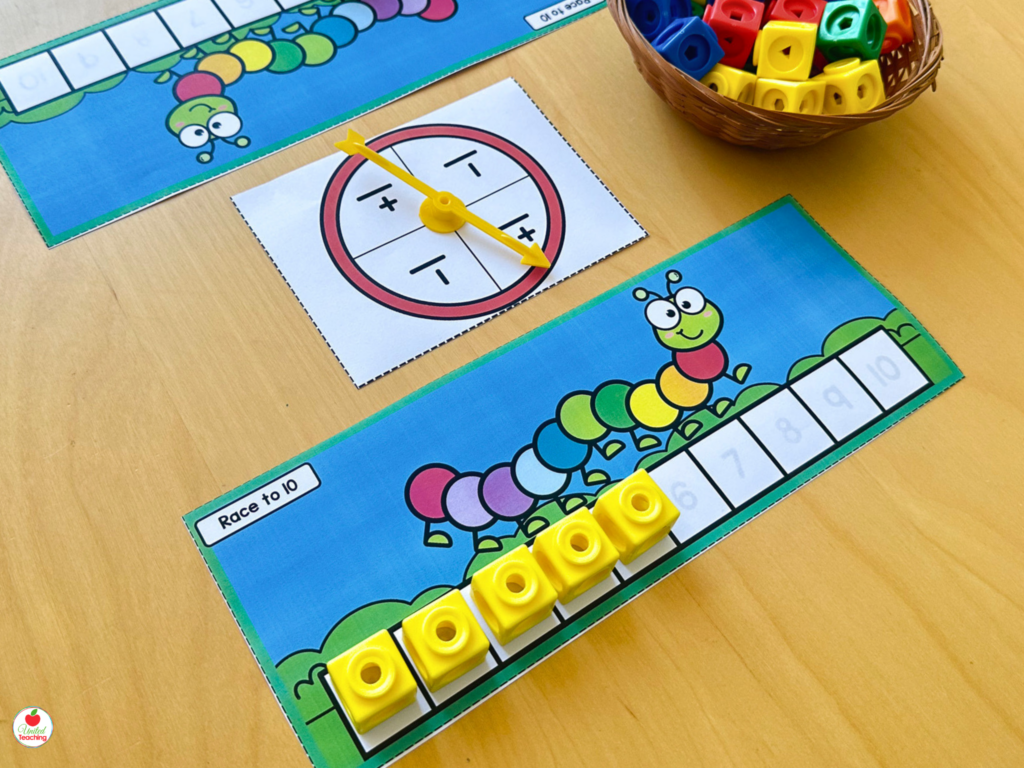
- Race to 10 Games: Students spin one more or one less and race each other to fill their number line. The cards so the number sequence in order to reinforce counting and quantity.
- Race to Fill a Ten Frame Math Games: Students spin a number and race to fill their ten frames.
Subitizing
Subitizing (recognizing small quantities instantly without counting) is one of the most underused number sense skills in early math instruction. When students can subitize confidently, they build number sense faster, develop stronger mental math, and move toward addition more easily. Most students can do significantly more than we expect here when given enough varied practice.
- Dot card flash: Hold up a dot card for two seconds, then hide it. How many did students see? Students show fingers or write on a whiteboard. Dice and dominoes work just as well for this and are often already in the room.
- Domino totals: Students pick a domino and say the total of both sides without counting each dot individually. Start with totals up to 6, then extend as students gain confidence.
- Dot pattern sorts: Give students a set of dot cards and have them sort by quantity (all the threes together, all the fives together), regardless of how the dots are arranged on each card.
- Which card doesn’t belong: Have students look at a group of subitizing cards and decide which card doesn’t belong.
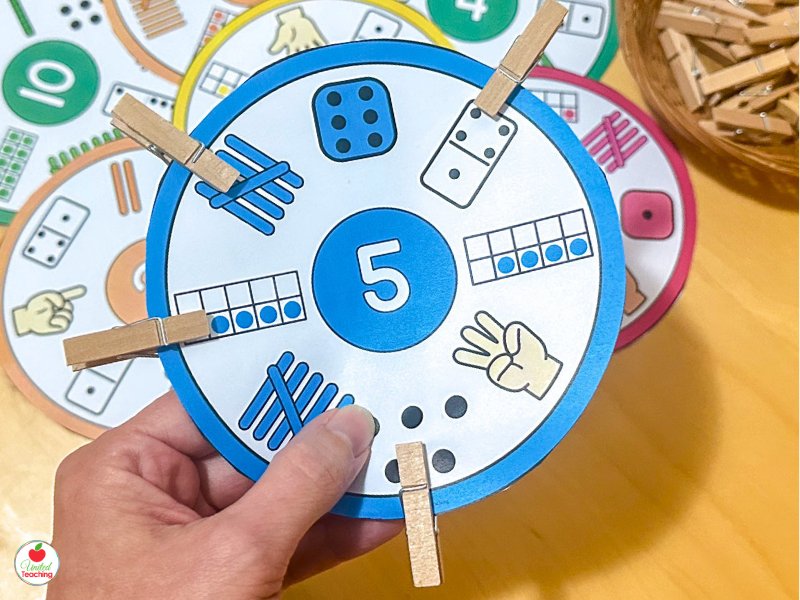
- Number Sense Clip Cards: Extend subitizing practice across eight representations per number (ten frames, tally marks, dominoes, number words, dice, finger patterns, and more). Students look at the focus number and clip the matching number forms.
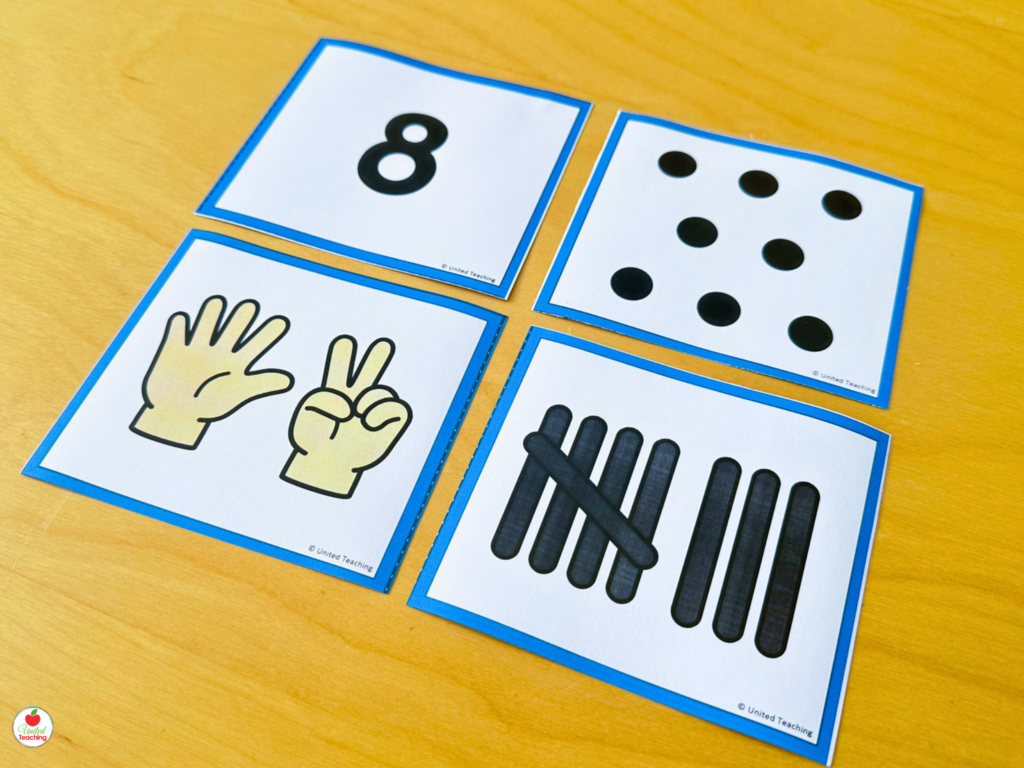
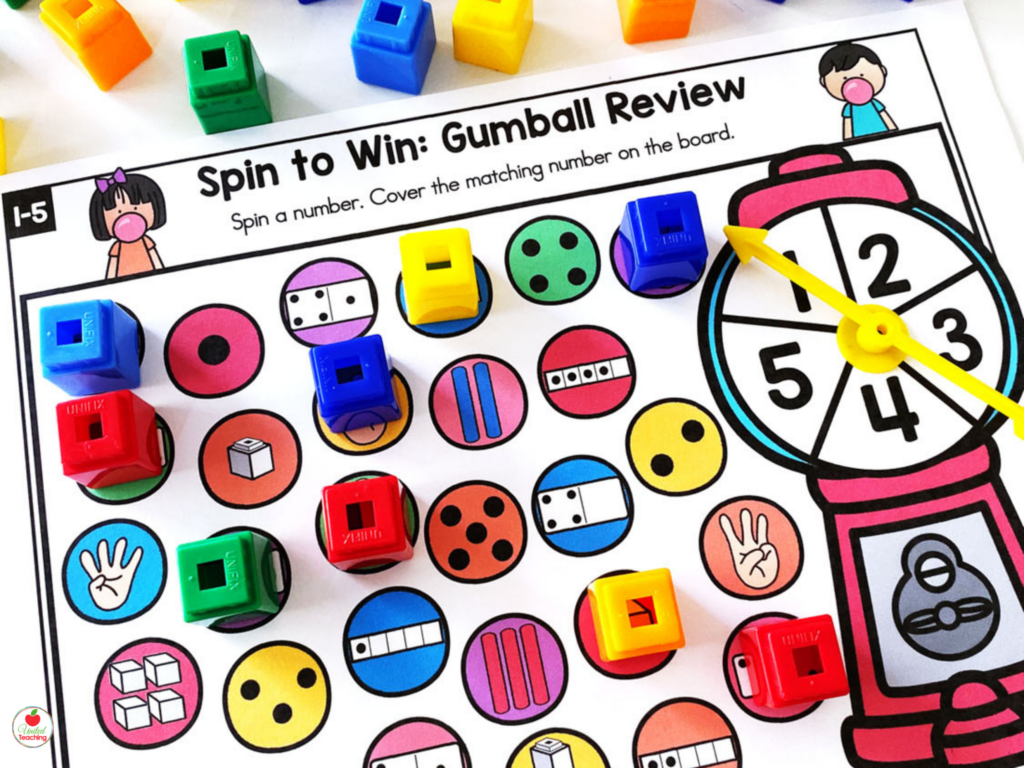
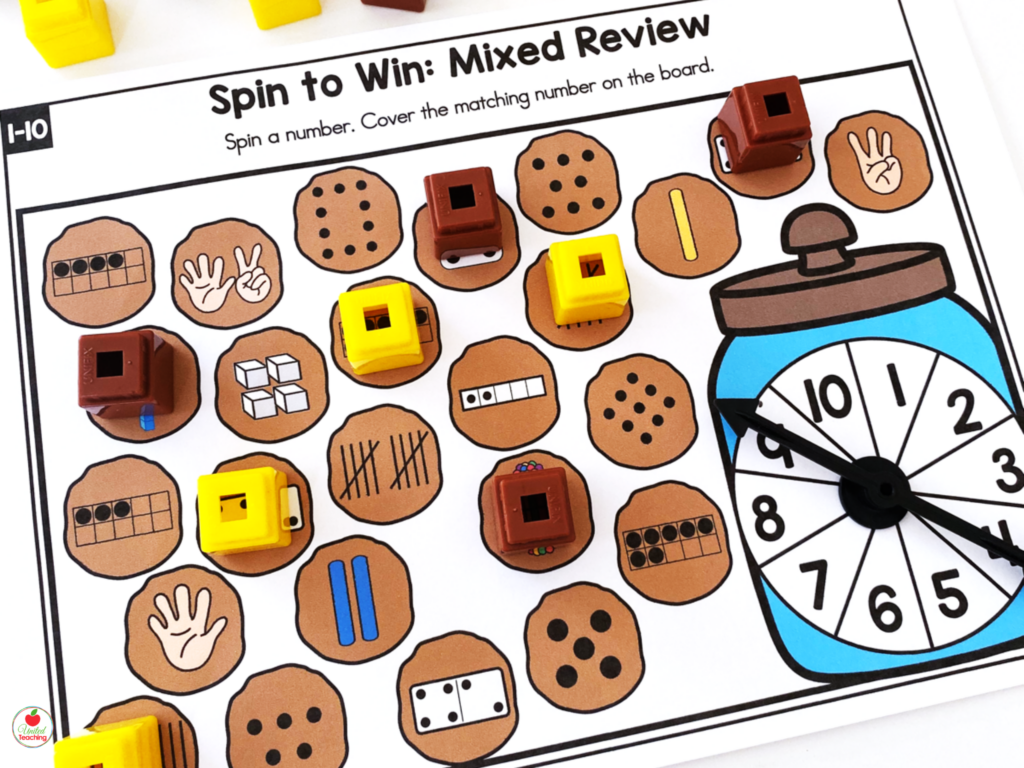
- Subitizing Number Games: The Numbers 1-10 Math Spinner Games cover multiple representations (numerals, dot patterns, ten frames, tally marks, and number words). Students get repeated practice across every format in an activity they will want to keep playing.
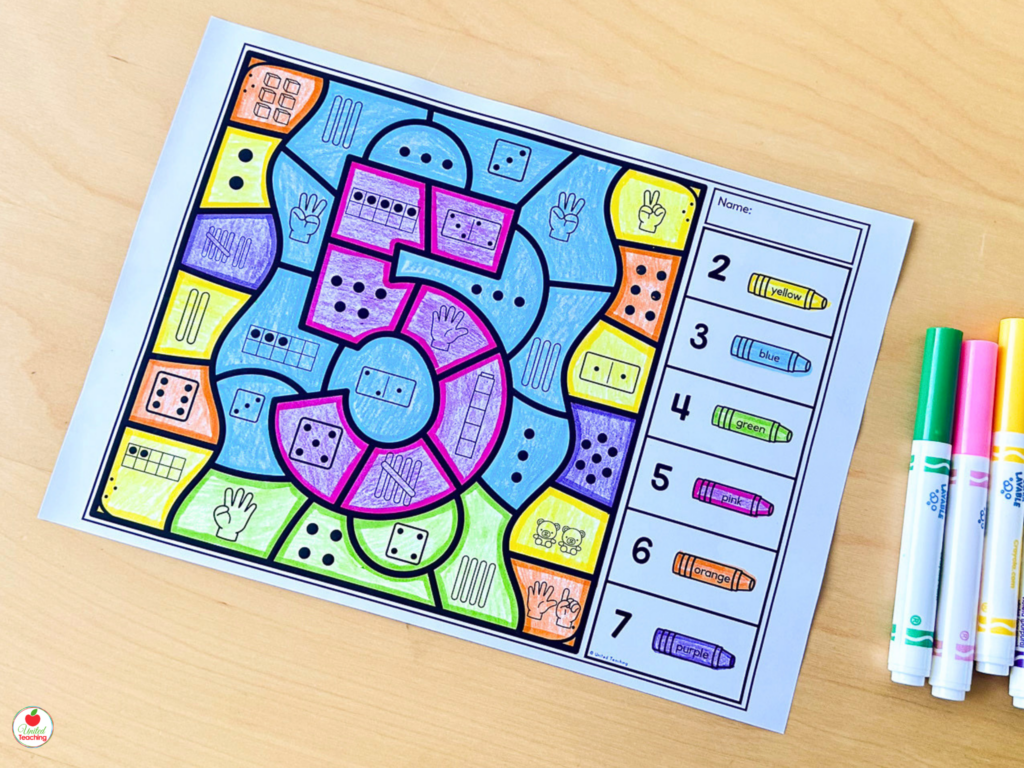
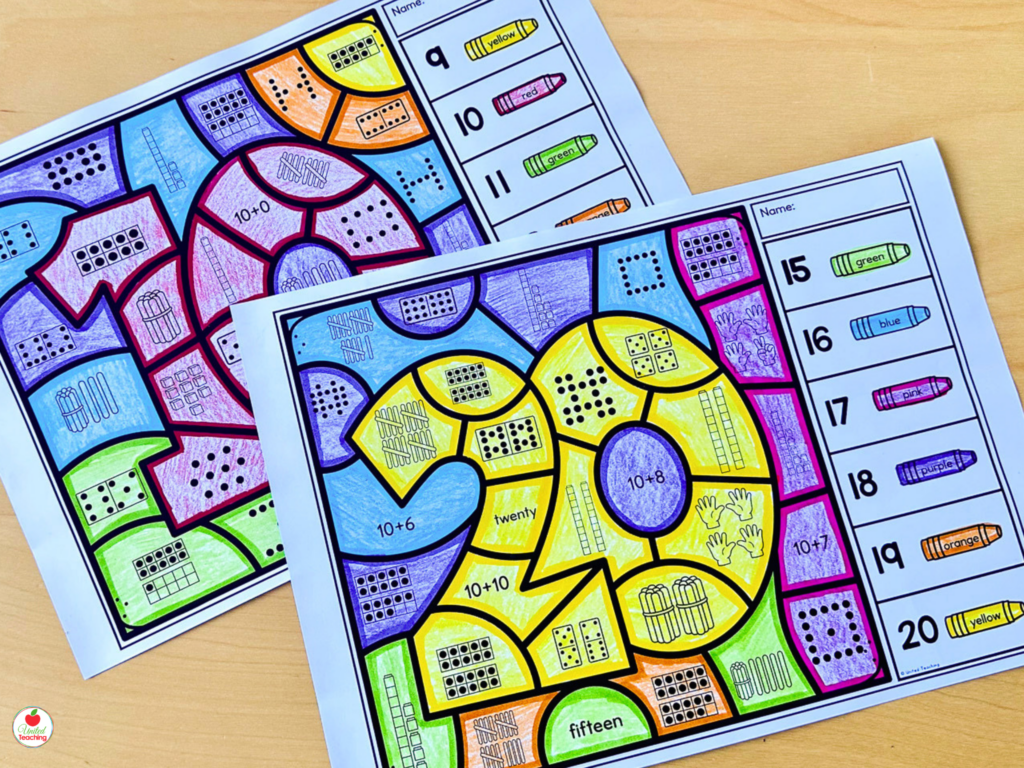
- Number Sense Color by Code: Students color the picture by using a number code and matching the color to the number forms, revealing the hidden numeral when the worksheet is complete. This activity is ideal for no prep math centers or for morning work and sub plans.
Taking Number Sense Further: Activities for Numbers to 20
Once students are solid with 1-10, it is time to extend that understanding to 20. The teen numbers are where many students hit their first real wall, and it helps to understand why. In English, the number names for 11 through 19 do not follow a logical pattern. Eleven and twelve give no clue about their quantity structure. Thirteen through nineteen name the ones before the ten, which is the reverse of how place value is usually taught. Students who look at 13 and say “one-three” are not wrong exactly, they just have not yet made the connection between the symbol and what it means as a quantity. Getting there takes concrete, repeated work with multiple representations.
Number Recognition for 11-20
Teen number recognition needs deliberate, structured practice. Students frequently confuse 13 and 30, or 14 and 40, because the spoken names are similar and the visual difference between the digits does not yet carry meaning for them. Concrete and visual activities help close the gap.
- Teen number matching: Set up a matching activity with numeral cards and dot or picture cards for 11-20. Students find the card that matches the quantity shown.
- Number line ordering: Shuffle a set of number cards (1-20) and have pairs race to put them in order. The number line they build physically becomes a reference they begin to internalize over time.
- Write and check: Students write numbers 11-20 from memory on a whiteboard, then compare against a reference card. Common reversals and confusions become visible right away.
Representing Numbers with Ten Frames
A double ten frame makes the structure of teen numbers visible in a way that is hard to replicate with other tools. One full row of ten, plus extra counters on the second frame. That image (ten and some more) is the foundation of everything that comes next in place value, and returning to it repeatedly pays off.
- Ten frame mats: Give students a double ten frame mat and counters. Call out a number and have them fill in the frames. You will quickly see which students are using the structure of the frame to work efficiently and which are still counting from 1 every single time.
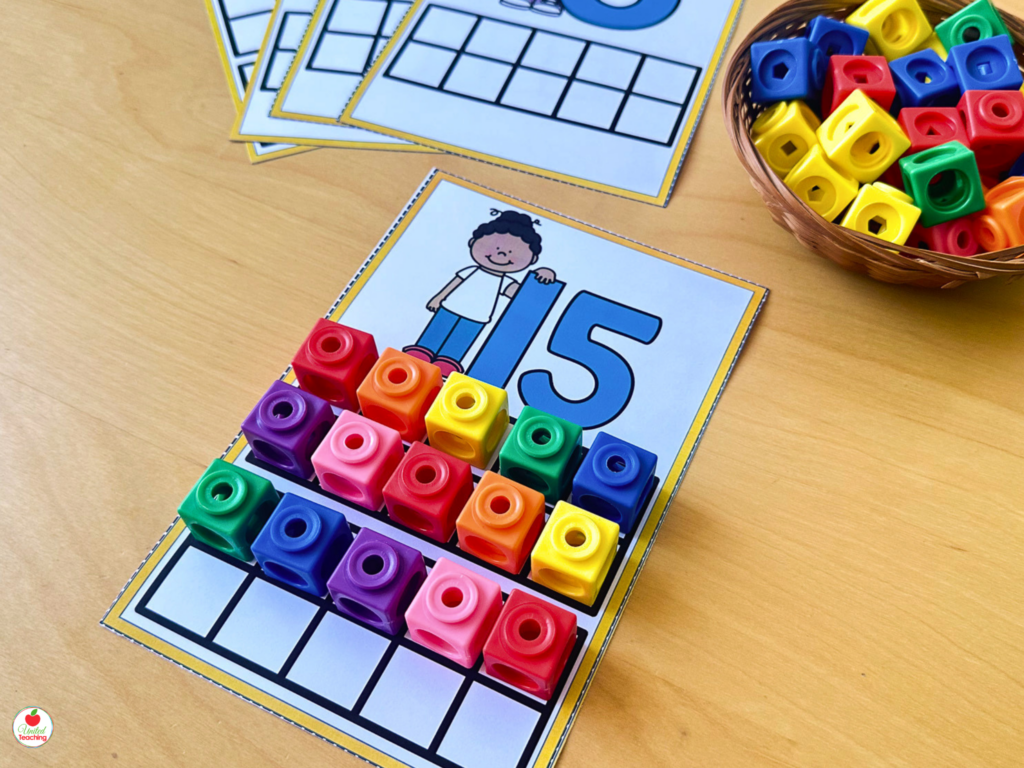
- Flip and build: Students flip a number card and build that number on a double ten frame.
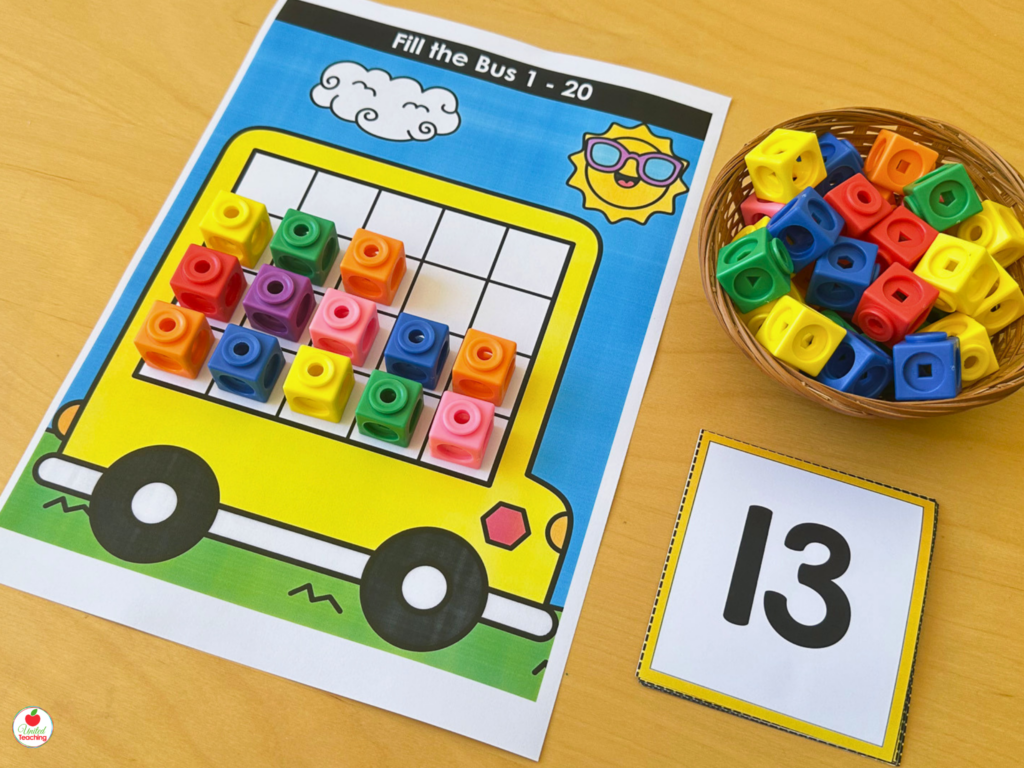
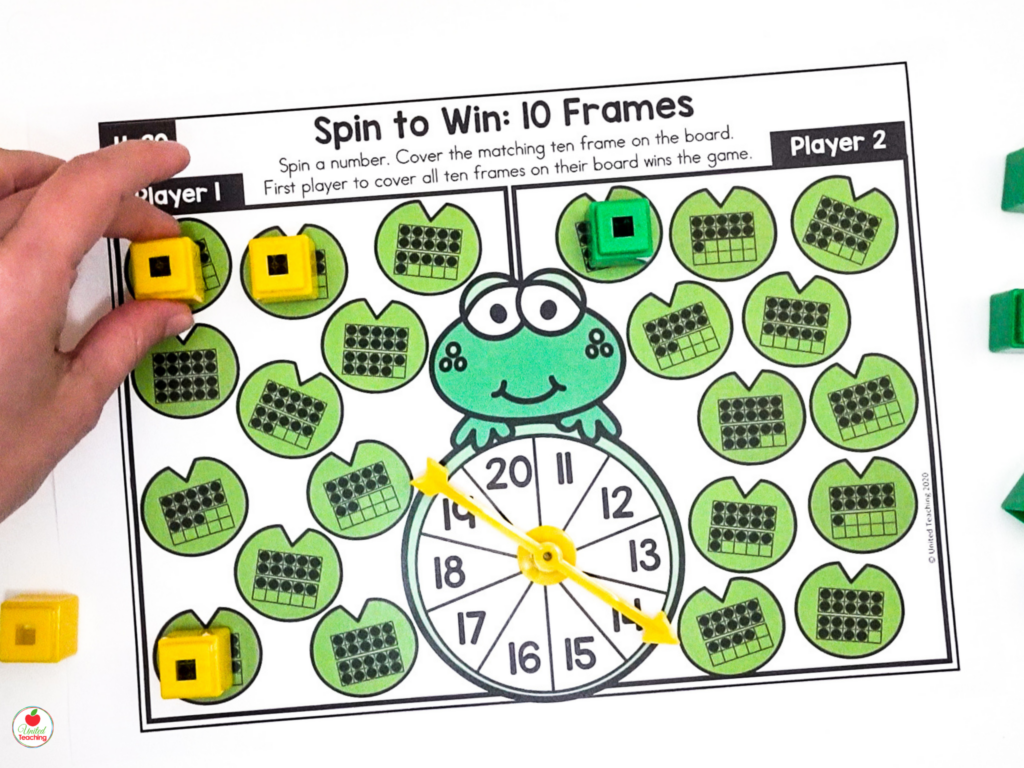
- Ten Frame Spin and Cover Math Games: Students spin a number and cover the matching ten frame. This game comes in multiple designs so students can play the game individually, with a partner, or in a small group.
Ordering, Sequencing, and Comparing
Sequencing work reveals gaps that recognition tasks often hide. A student who can identify 17 on a flashcard may still be genuinely unsure where it sits in relation to 15 and 19 without something in front of her to refer to.
- Shuffle and sequence: Students shuffle a set of number cards (1-20) and work to put them in order. Add a timer for students who need a challenge, or let students who are still building confidence keep a reference strip nearby.
- Greater than/less than plates: Pairs each fill a paper plate with small objects, then compare. Who has more? How many more? Is it possible to make them equal?
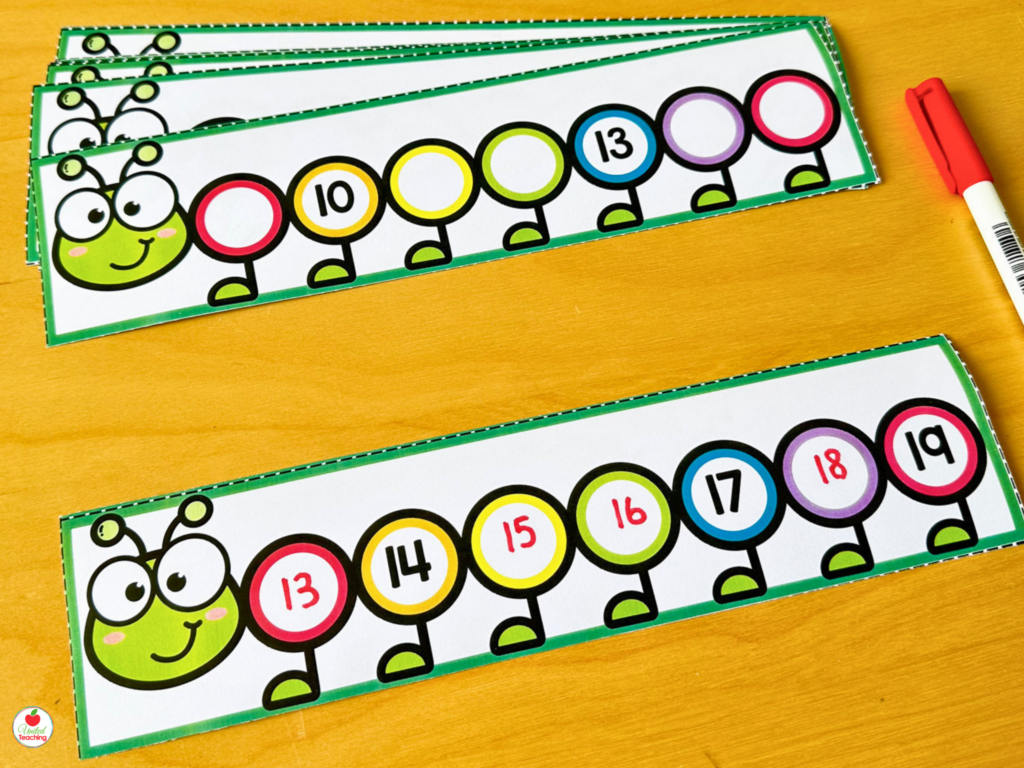
- Missing number strips: Give students a printed strip with a number sequence that has gaps, and have them fill in what is missing. Adjusting the difficulty is as simple as adding more gaps or removing the surrounding numbers.
Free Download
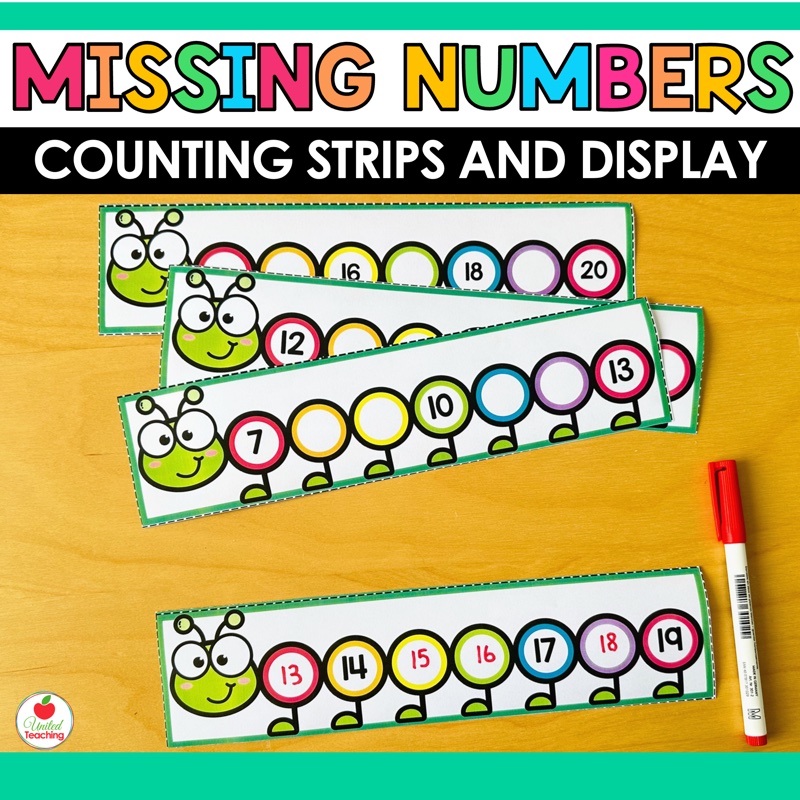
The free Missing Number Strips below give you a ready-to-print page of strips across different number ranges (1-10, 5-15, 10-20) so you can differentiate without extra planning.
Counting On
Counting on is the bridge between number sense and addition. Instead of starting from 1 every time, students learn to start from a known number and count forward from there.
Try this with a cup and some counters: hide a small group of objects under the cup and tell students how many are hiding. Add a few more objects in plain view, then have students count on from the hidden total. You will notice that students with strong one-to-one correspondence from 1-10 make this transition more easily. The activity relies on trusting a known quantity without seeing it, which is a meaningful step. Start with small hidden amounts (2 or 3) and build from there as students gain confidence.
Number of the Day
A daily number routine pulls multiple number sense skills together without requiring any extra planning. Pick a number and give students a few minutes to represent it in as many ways as they can: tally marks, a ten frame sketch, a finger pattern, a drawing of objects, the number word, and the numeral.
The free Number of the Day Mat gives students a structured recording space that works for both 1-10 and numbers to 20. Over time, this routine gives you informal daily data on which representations students reach for automatically and which ones still need more practice. Use it as morning work, a math warm-up, or a transition activity between other parts of your day.
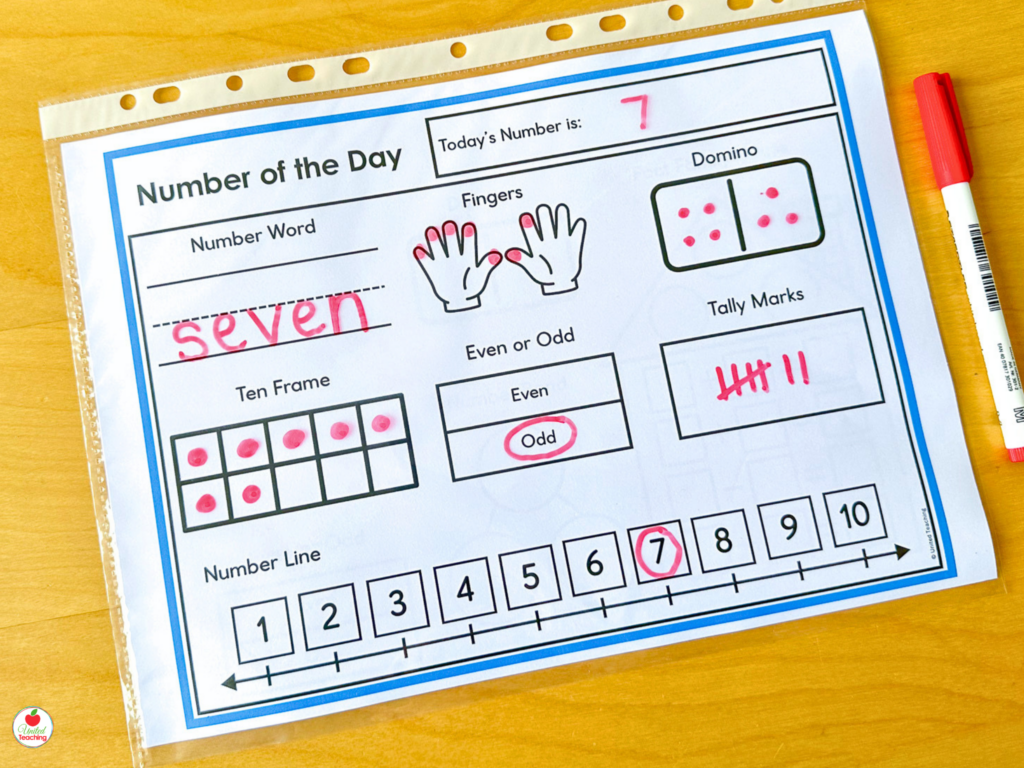
Free Download
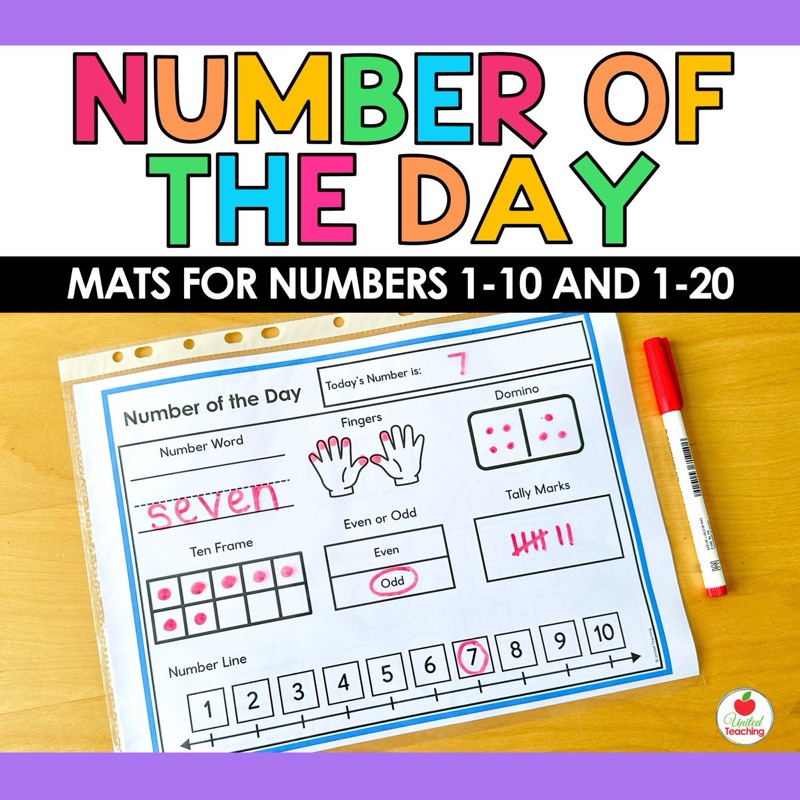
Number of the Day Mats
Reusable recording mats where students represent any number in multiple ways: tally marks, ten frame, finger pattern, drawing, number word, and numeral. Includes a version for numbers 1-10 and numbers to 20.
Pulling It All Together: Consolidation Activities That Show What Students Really Know
Once students have worked through the individual skills, consolidation activities help them apply number sense flexibly across contexts. These are also the activities that most clearly reveal what students have genuinely understood, as opposed to what they have learned to do in a particular format.
Representing Numbers Multiple Ways
Representing numbers multiple ways is one of the strongest consolidation tasks available. Give students a target number and a few minutes to show it in as many ways as possible on a whiteboard or in a math journal. Students who are secure will work quickly and confidently. Students with gaps will show you exactly where more practice is needed without any formal assessment required.
Counting Collections
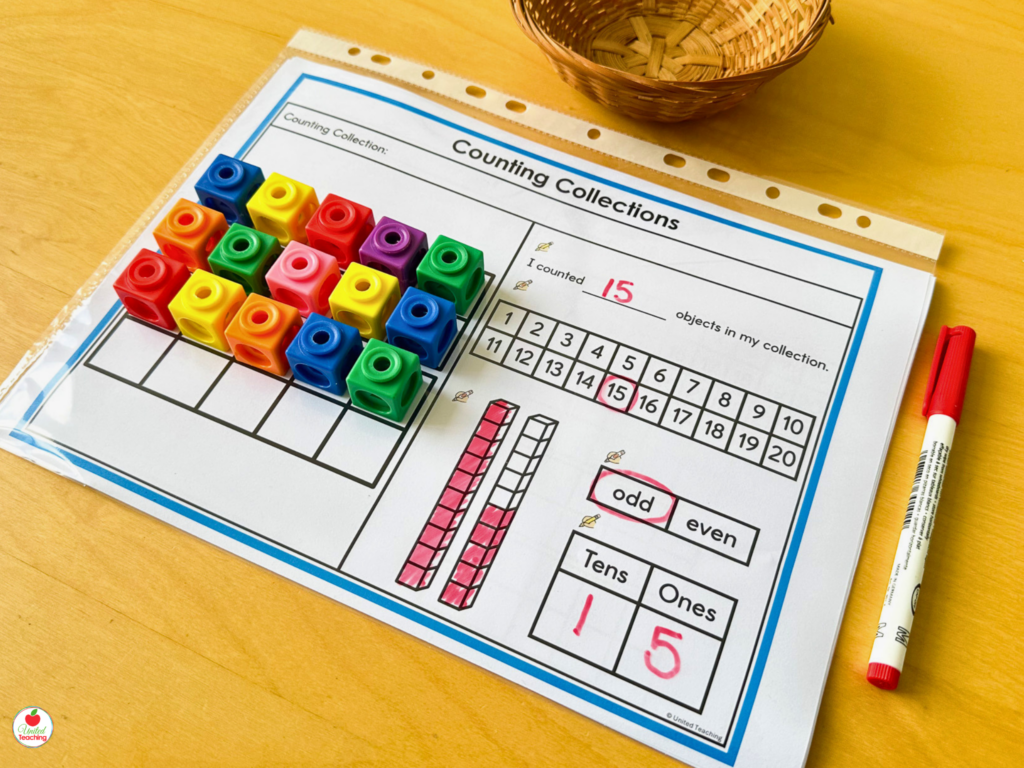
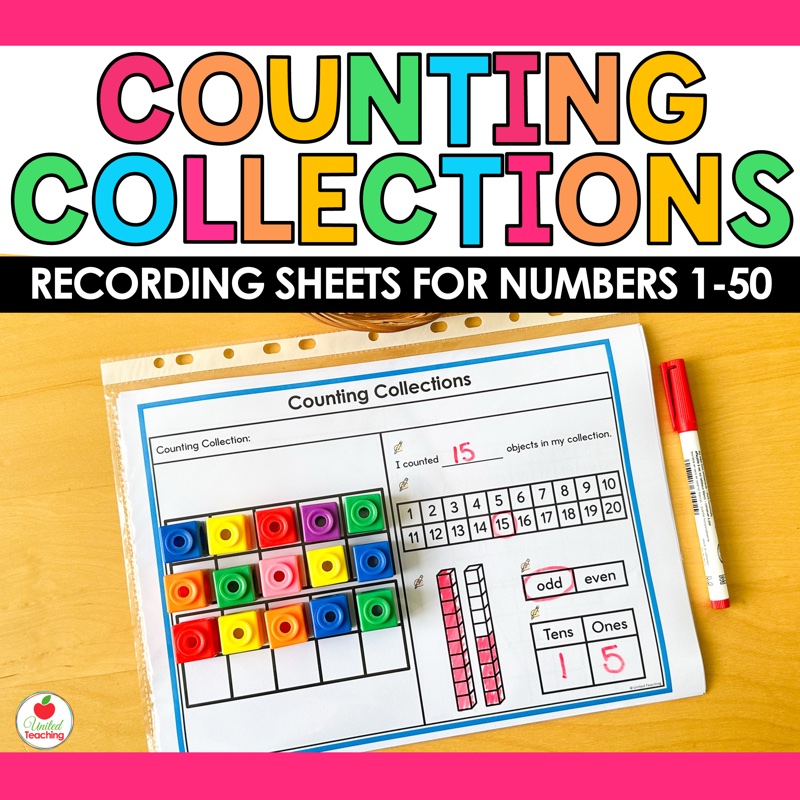
Counting collections is open-ended in the best possible way. Students grab a bag of small objects (buttons, cubes, dried beans, paper clips), count them, and record the total. Because students self-select their grab, every student is working with a quantity that makes sense for where they are. It is worth doing multiple times across the year, since students who struggled in September will often surprise you by November.
Free Download
The free Counting Collections Recording Sheets give students a simple structure: count the objects, write the total, and show the number on a ten frame. It turns a hands-on activity into a documented piece of evidence in one step.
Conservation of Number
Conservation of number is a concept that gets skipped more often than it should. Students need to understand that the quantity of a set does not change when you rearrange it. A quick demonstration: show five counters in a row, then cluster them together. Still five? Move them into a circle. Students who have internalized conservation will hold the total; students who have not will recount every time. No materials prep required, and the pattern you see tells you a great deal about where a student actually is in their number sense development.
Number Talks
Number talks are one of the highest-leverage routines available in early math. Show a dot arrangement, a ten frame, or a small quantity organized in an unexpected way, and ask students to share how they see the quantity, not just what the answer is. The discussion builds subitizing, number recognition, and mathematical vocabulary at the same time. Hearing how classmates approach the same image gives students new strategies to try and helps them understand that there is more than one way to see a number.
What Comes Next: Skip Counting, Number Patterns, and Place Value Foundations
Once students are confident with 1-20, the foundation for everything that follows is already forming. The double ten frame has shown them that teen numbers are ten and some more. The number line work gives them a sense of scale and sequence. The next step is helping students see that numbers keep going, that they follow predictable patterns, and that those patterns can be useful tools.
Skip Counting
Skip counting by 2s, 5s, and 10s is one of the most practical number sense skills to build in kindergarten, and it does not need a formal unit to get started. The goal at this stage is familiarity and rhythm rather than mastery.
Counting by 10s is the easiest place to start because students already have a reference point: a full ten frame. Count to 100 by tens as a morning meeting routine, pointing to each decade on the hundreds chart as you go. Once students have that rhythm, counting by 5s follows naturally, since every other decade marker is a multiple of five.
Counting by 2s builds toward odd and even number awareness. Try a clapping pattern: students clap on every second count and whisper on the others. The physical rhythm helps the sequence stick before students need to recall it abstractly.
Skip counting is also a bridge to multiplication that most students will not encounter formally for another couple of years. Planting the pattern now means it will feel familiar, not brand new, when they get there.
Number Patterns
Number patterns are closely connected to skip counting, but they open up a wider range of mathematical thinking. When students start noticing that numbers ending in 0 or 5 appear at regular intervals, or that every other number is even, they are doing genuine mathematical reasoning.
A few ways to make number patterns visible and accessible:
- Color coding the hundreds chart: Have students color all the multiples of 2 in one color and multiples of 5 in another. The visual patterns that emerge are immediately striking and lead naturally into discussion.
- Odd and even sorting: Give students a set of number cards and two sorting circles labeled “odd” and “even.” Even in kindergarten, many students can begin to notice that even numbers can always be shared equally into two groups and odd ones cannot.
- What comes next?: Start a counting pattern on the board (2, 4, 6, …) and have students continue it. Extend to starting at different points (3, 5, 7, …) for students who are ready.
Number patterns are also a natural extension of the Number of the Day routine. Once students are comfortable representing a number in multiple ways, add a prompt: “Is this number odd or even? What pattern does it belong to?”
The Hundreds Chart
A hundreds chart is one of the most powerful visual tools in early math, and introducing it in kindergarten gives students a reference point they will use for years. Even a brief, regular exposure builds familiarity that pays off in first and second grade.
The patterns on a hundreds chart are worth making explicit, rather than assuming students will notice them on their own:
- Every row increases by 1 across and by 10 going down
- Every number in the same column shares the same ones digit
- Multiples of 10 run down the right side of the chart
- Counting by 5s creates a clear column pattern landing on 5 and 0
A pocket chart version works well for interactive whole-group exploration. Try a “mystery number” routine: remove one card from the chart and ask students to figure out which number is missing using the patterns around it. Students who understand the structure of the chart can solve this without counting from 1, which is exactly the kind of flexible number thinking the chart is designed to build.
Base ten blocks add a physical layer to all of this. Pick up a stick of ten connected cubes and add two loose ones alongside it. That total is 12, not “one and two.” This concrete image is what makes the hundreds chart, place value, and future addition strategies feel connected rather than separate.
Get Everything in the Numbers 1-20 Number Sense Bundle
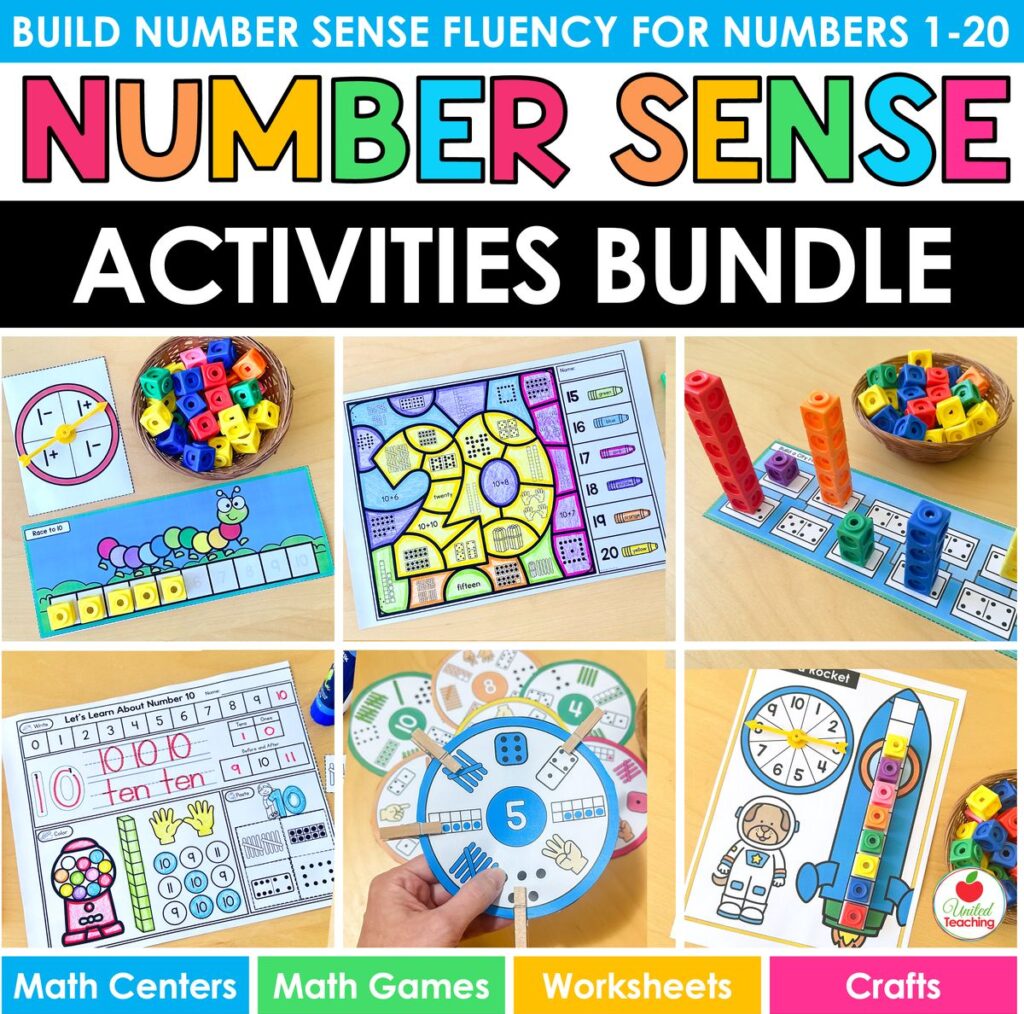
The Numbers 1-20 Number Sense Bundle covers the full progression from 1-20 in one resource. It brings together eight products: the 1-10 and 11-20 spinner games, cut and paste worksheets, subitizing clip cards, review worksheets, number sense activity mats, color by code worksheets, and number hats. Everything is print-and-go, organized by skill, and designed to work together across your number sense instruction all year.