

Pattern blocks are one of those classroom tools that never go out of style. These colorful geometric shapes (hexagons, trapezoids, rhombuses, triangles, squares, and parallelograms) give young learners a hands-on way to build spatial reasoning, strengthen fine motor skills, and explore early math concepts without a single worksheet in sight. Whether students are filling in themed pattern block templates or exploring freely, they stay genuinely engaged.
If your classroom doesn’t have pattern block templates, you’ll find free printable number mats for 1–20 at the end of this post, so you can try the activity right away.
What Are Pattern Blocks?
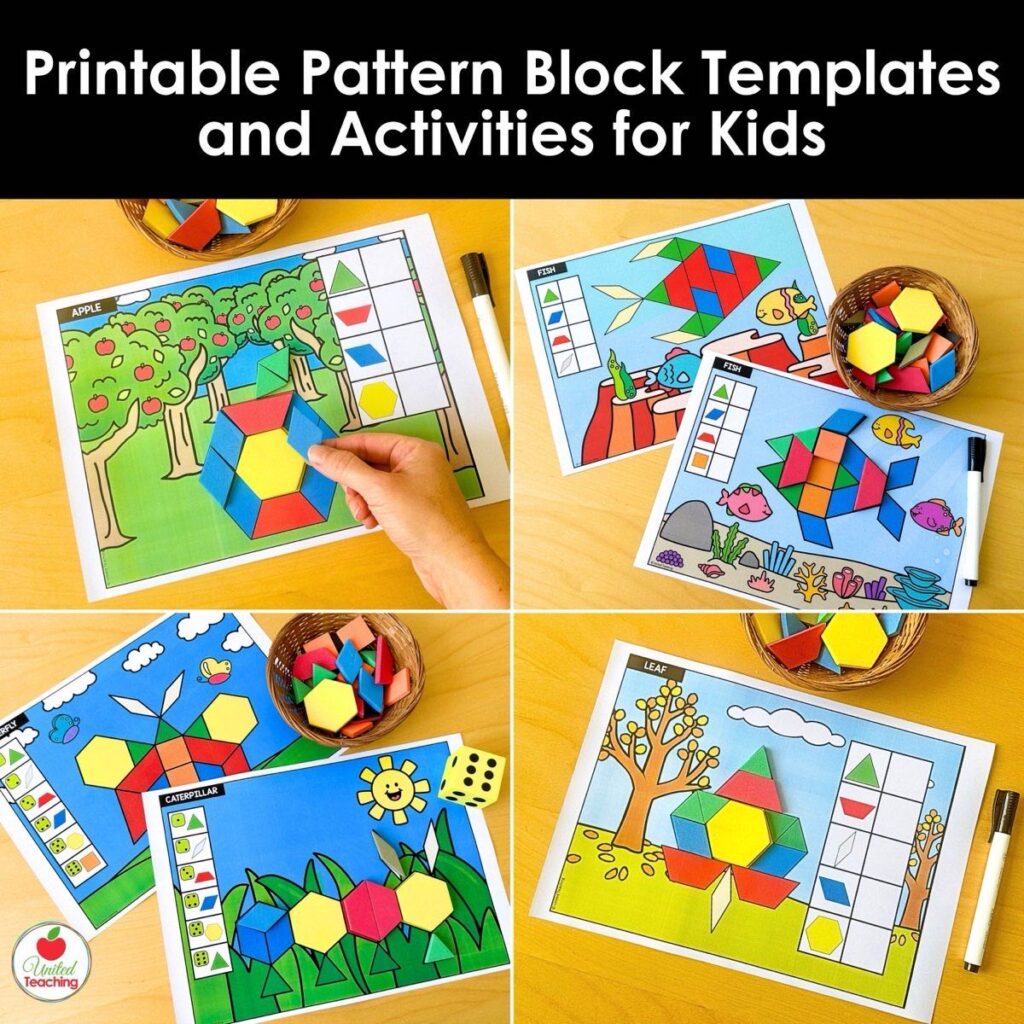
Pattern blocks are a set of six geometric shapes used as math manipulatives in early childhood and elementary classrooms. The standard set includes:
- Yellow hexagons
- Red trapezoids
- Blue rhombuses (parallelograms)
- Green triangles
- Orange squares
- Tan rhombuses
Each shape is sized so that smaller pieces fit together to fill larger ones. Three green triangles make one red trapezoid. Two red trapezoids make one yellow hexagon. This built-in relationship is what makes them so powerful for teaching early math concepts, from shape recognition all the way through to fractions in second grade.
Why Pattern Block Activities Work for Young Learners
Pattern blocks support a wide range of developmental and academic skills, which is why they show up across preschool through second grade.
Spatial reasoning and visual discrimination. Filling a mat means matching shapes by color, size, and orientation, which builds the visual discrimination skills that underpin early reading and math. Research consistently connects spatial awareness in early childhood with later math achievement.
Fine motor skills. Placing small geometric shapes precisely on a mat takes real concentration and hand control. It’s one of the more effective ways to build hand-eye coordination and fine motor strength without it feeling like a separate exercise.
Math concepts. Hexagons, trapezoids, rhombuses, and triangles introduce geometric shapes, symmetry, and pattern recognition naturally. For first and second graders, the size relationships between pieces create a built-in entry point to fractions and part-whole thinking.
Genuine engagement. Students who disengage during paper tasks often thrive with manipulatives. The physical act of building keeps them focused in a way that worksheets simply don’t.
How to Use Pattern Block Mats
There are a few mat formats to choose from, and the right one depends on what your students need.
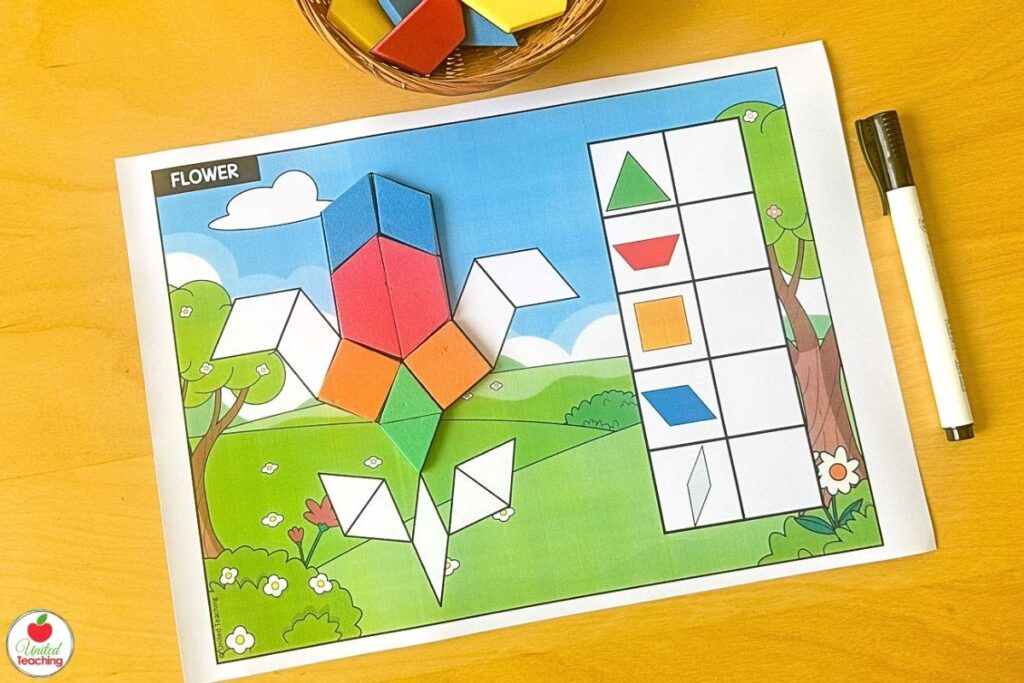
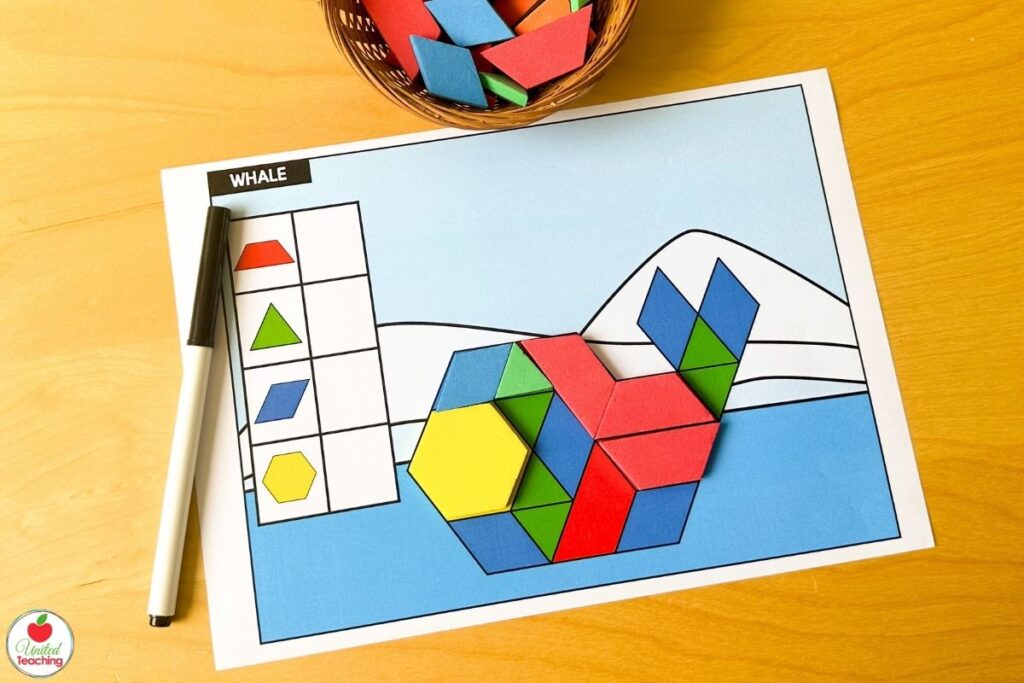
Build and Count Mats. Students match blocks to a design on the mat, filling each shape with the corresponding colored piece. These work well as independent practice because they’re self-checking — students know when they’ve filled the whole picture.
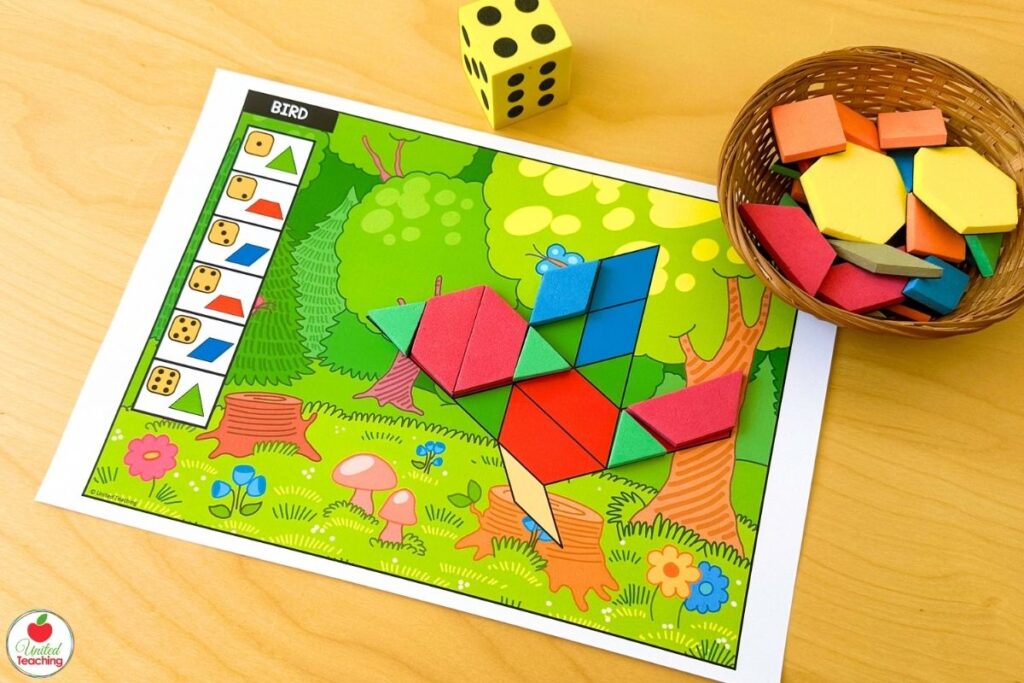
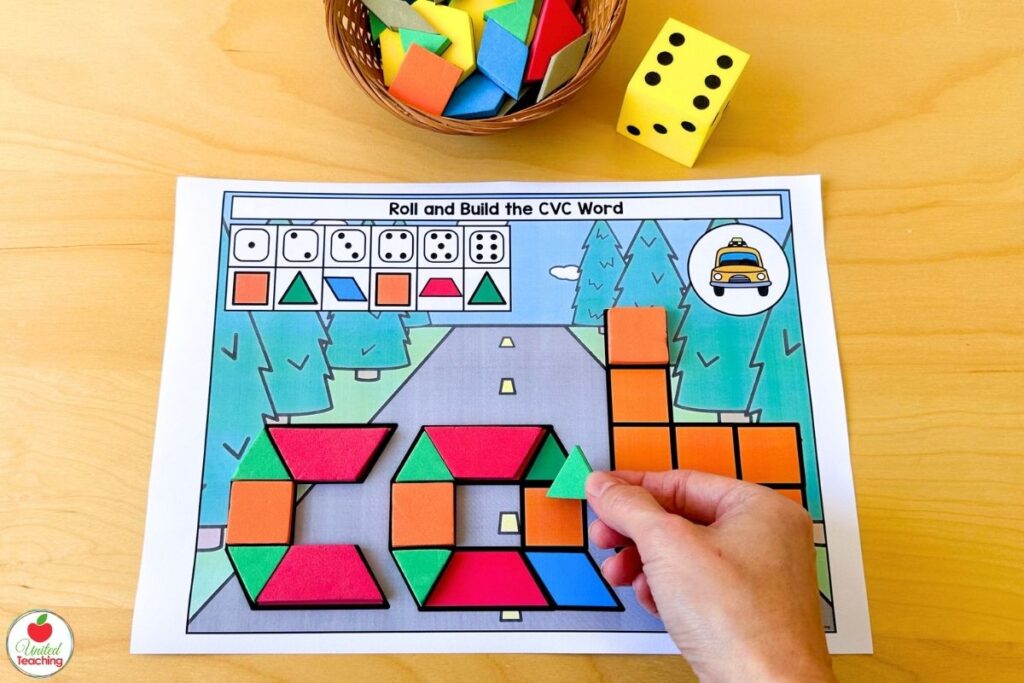
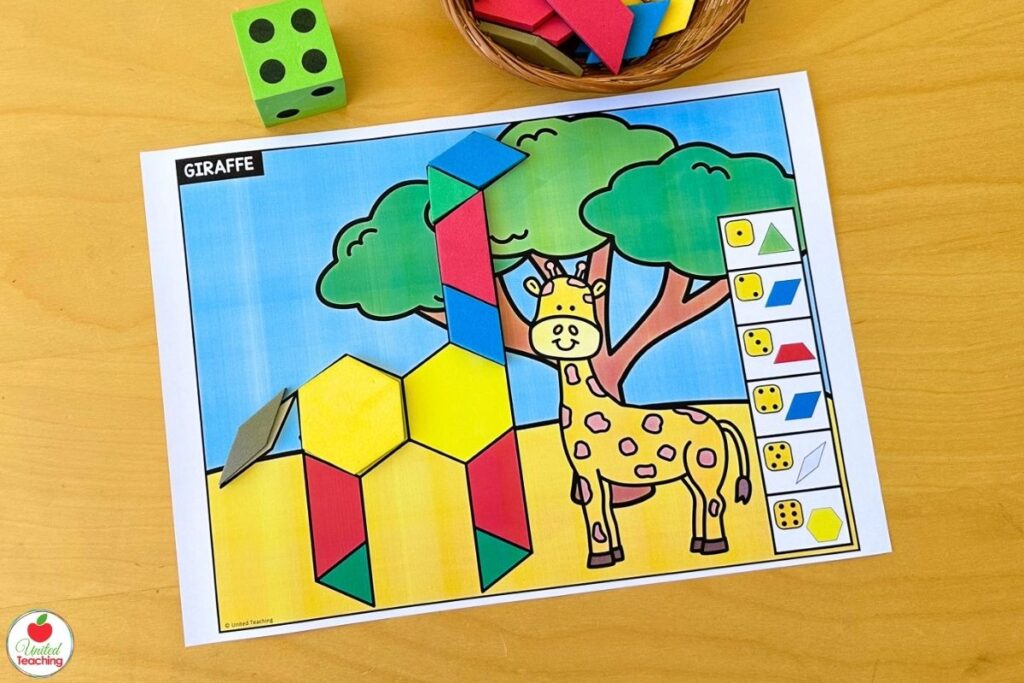
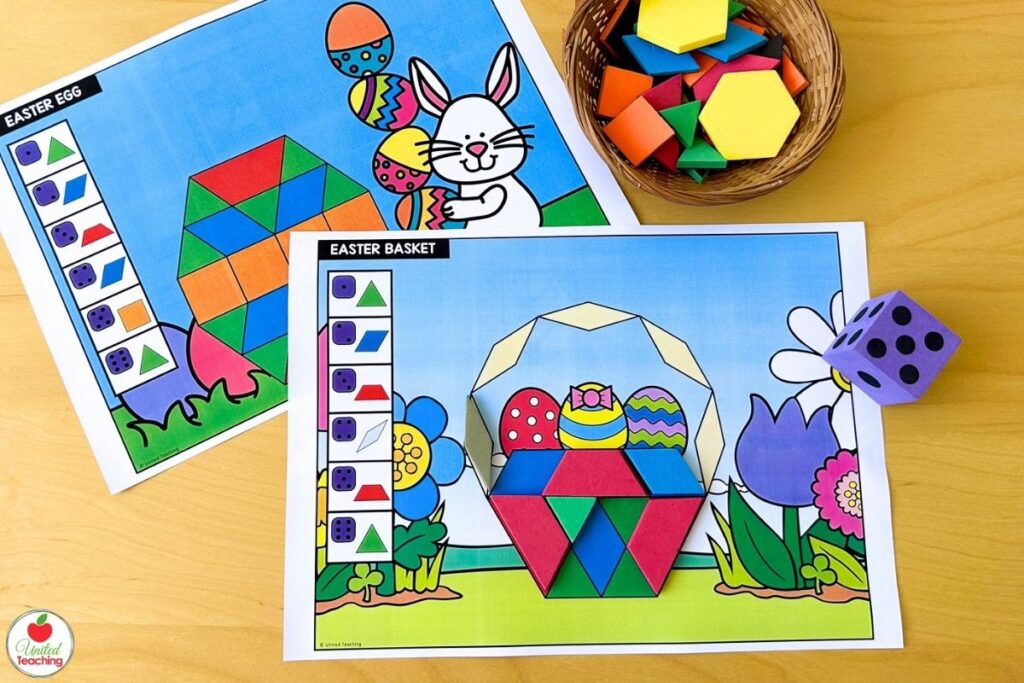
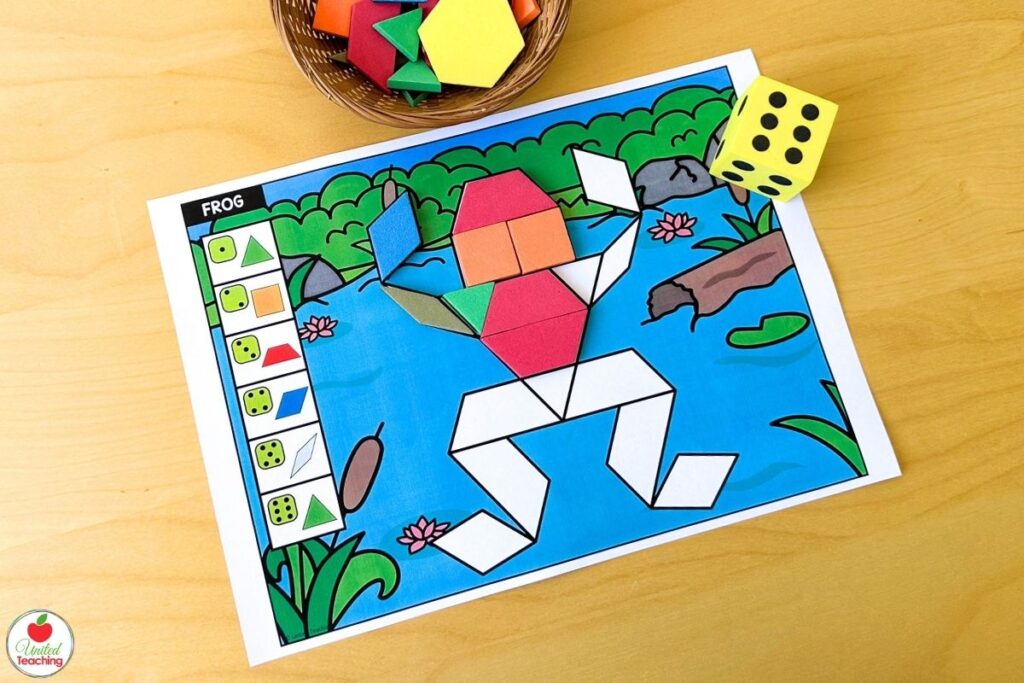
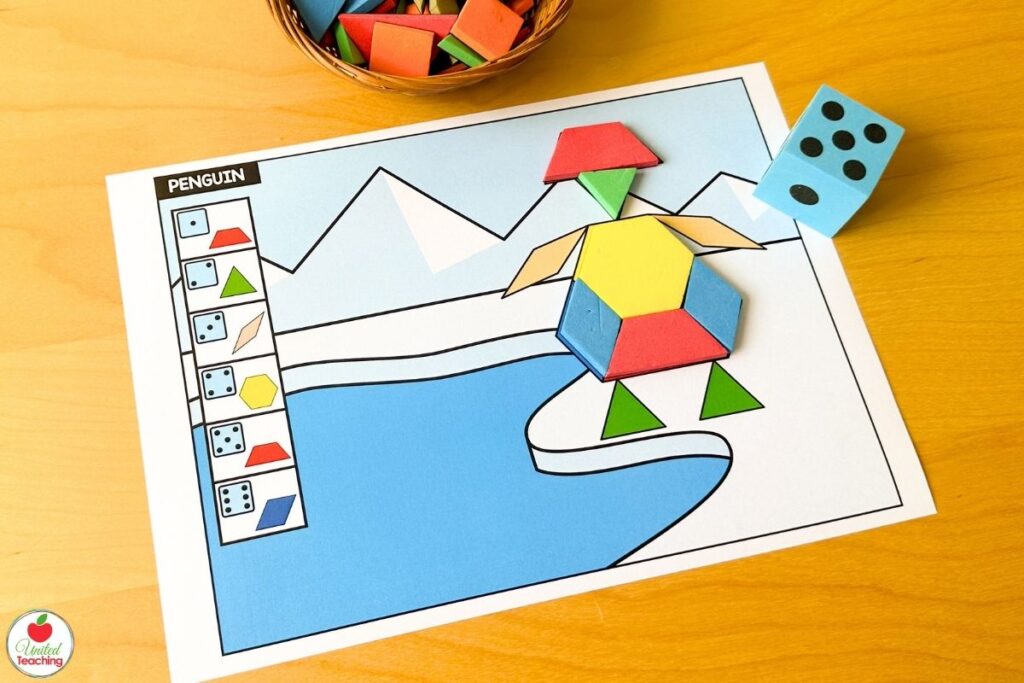
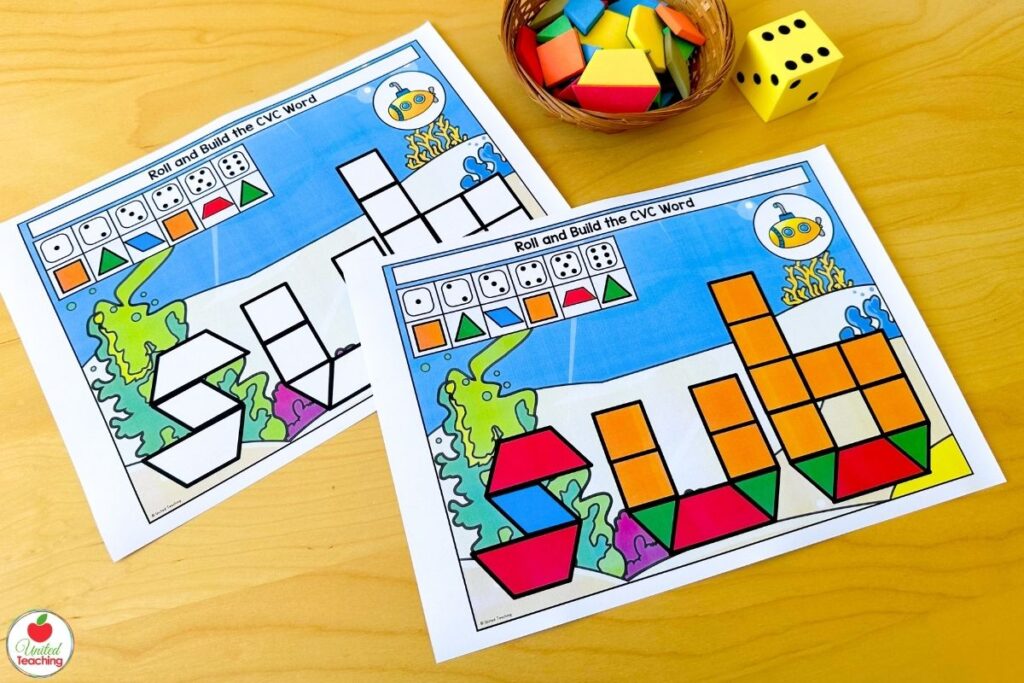
Roll and Build Mats. Add a dice element: students roll, identify the matching shape, and add that piece to their design. A good option for small groups or partner play.
Free building. Open-ended building with no mat develops problem-solving and creativity. Give students a prompt (“Can you build a symmetrical design using only triangles and hexagons?”) or let them explore freely. It’s a reliable early finisher activity that students can extend on their own.
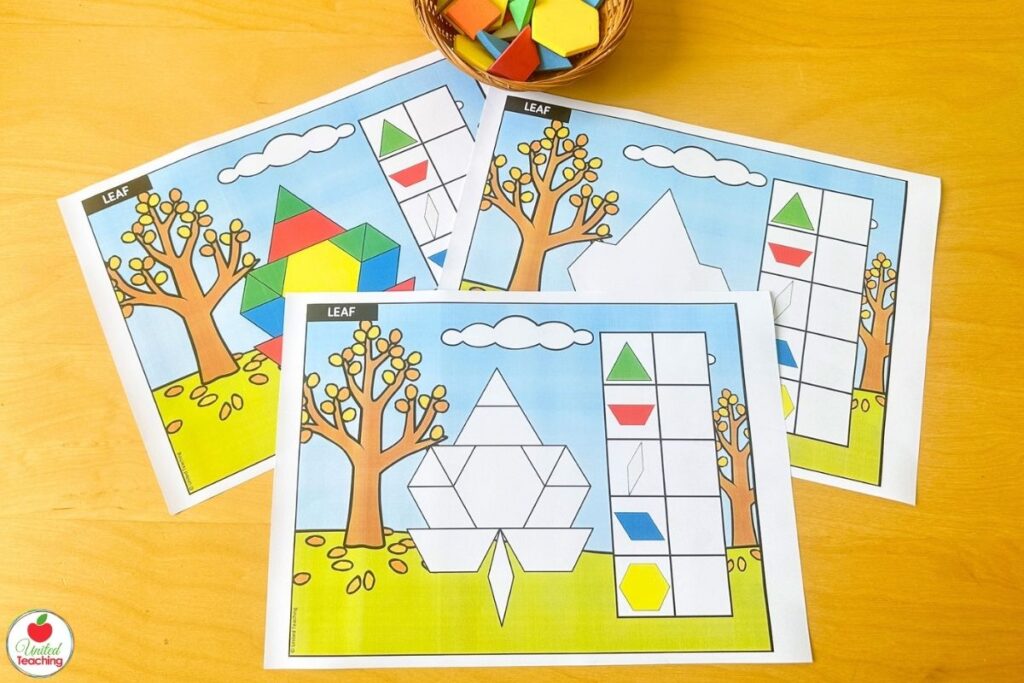
Differentiation is built in. Full-color mats are accessible for beginners. Black-and-white mats with shapes outlined add moderate challenge. Outline-only designs, where students see only the outer picture without internal lines, are the most challenging version and suit students who need extension.
These activities fit across a range of classroom structures: math centers and rotations, morning tubs, soft start, small groups, and sub plans.
Themed Printable Pattern Block Templates for Every Time of Year
One of the best things about this center format is how easy it is to keep fresh. The routine stays exactly the same — students already know what to do — and you simply swap the design to match the season, topic, or time of year. Here are a few ways to build out your collection.
Seasonal and Holiday Pattern Block Mats
Spring, summer, fall, and winter designs are an easy way to keep centers timely without rebuilding anything. Because the format never changes, swapping in a seasonal mat from the Seasonal Pattern Block Mats Bundle takes minutes. These work particularly well for morning tubs and soft start, where a fresh theme is often all it takes to keep students settled and on task.
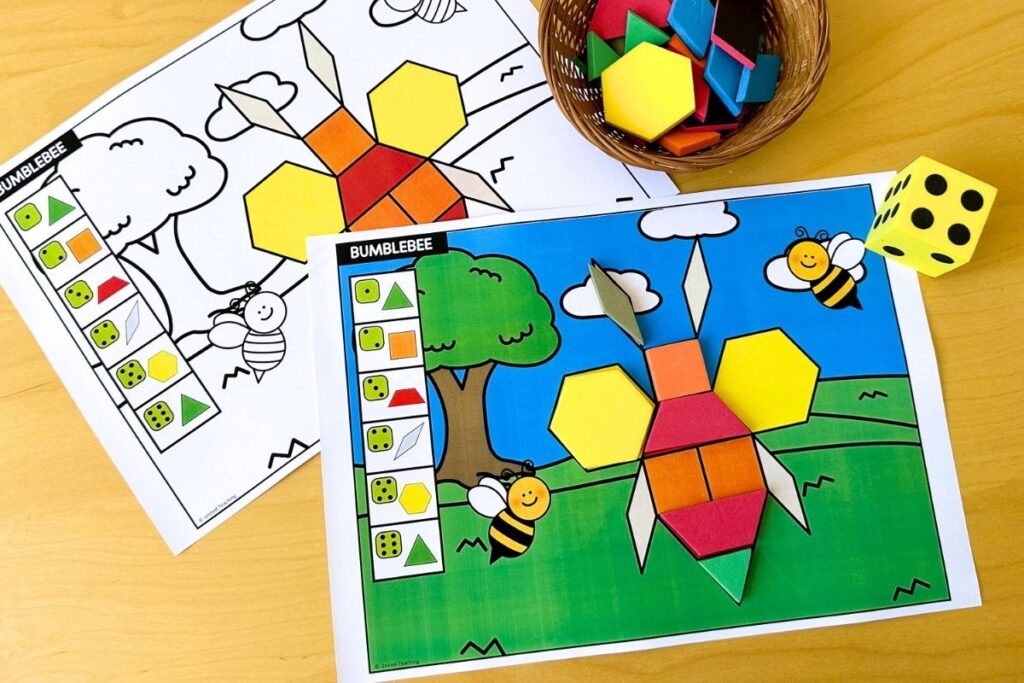
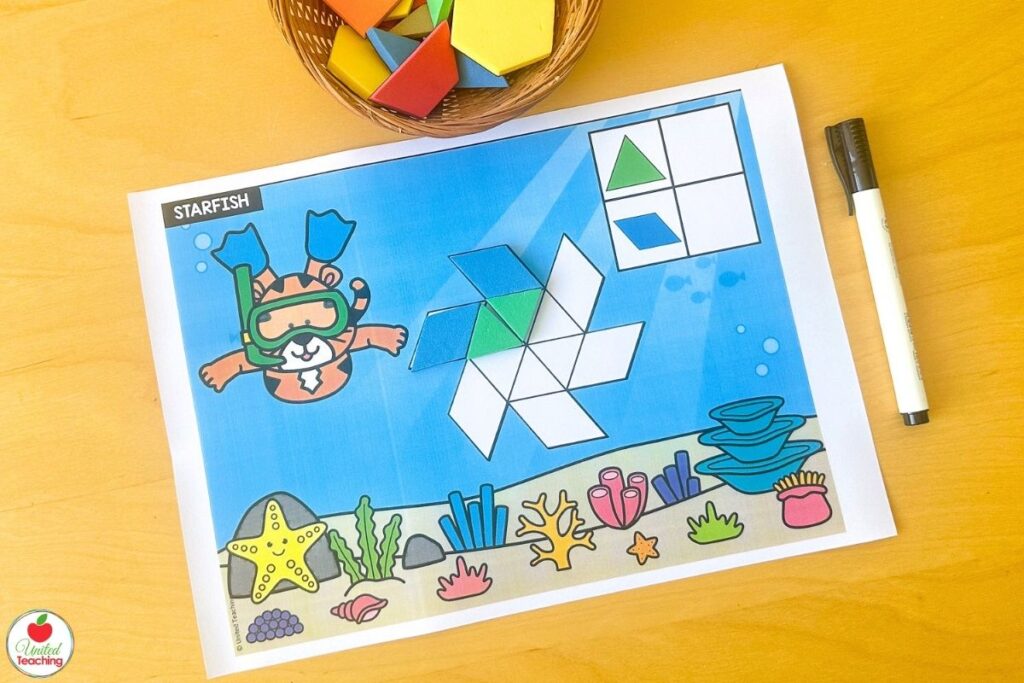
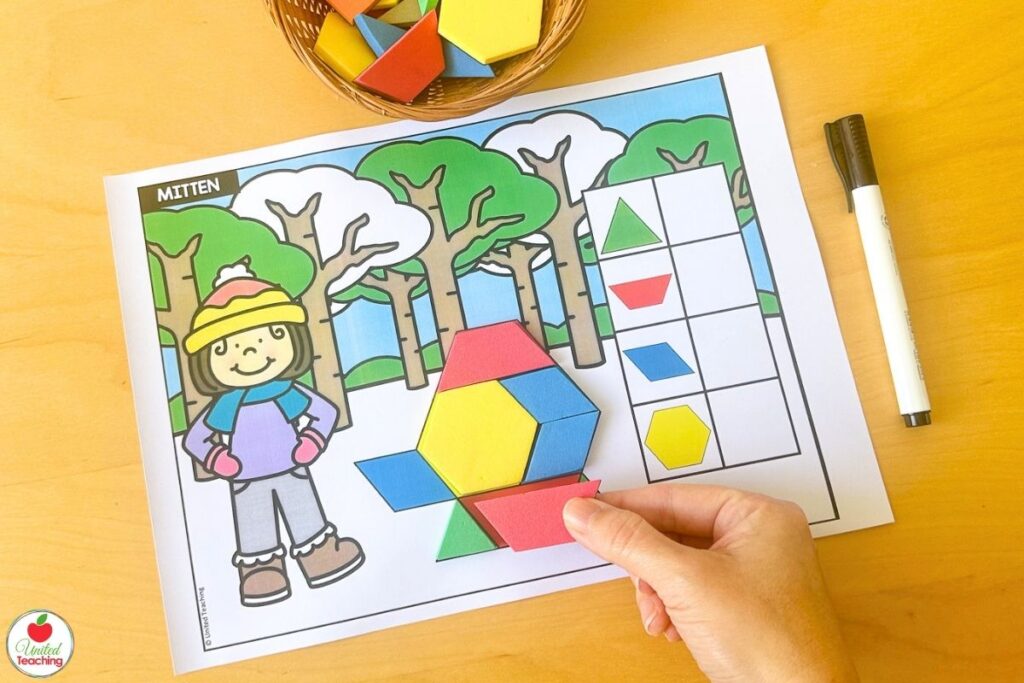
Holiday designs are a low-prep way to add seasonal engagement to math centers without disrupting your routine. Students build familiar images using blocks they already know how to use, and the Holiday Pattern Block Mats Bundle covers the major holidays across the school year so rotating in a new design takes minutes.
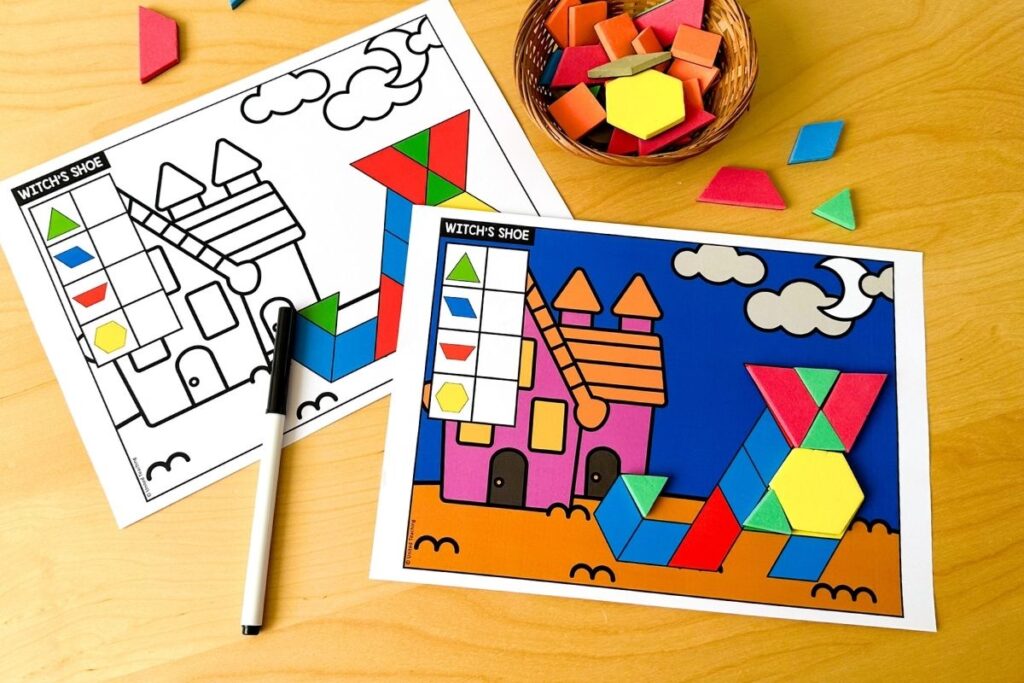
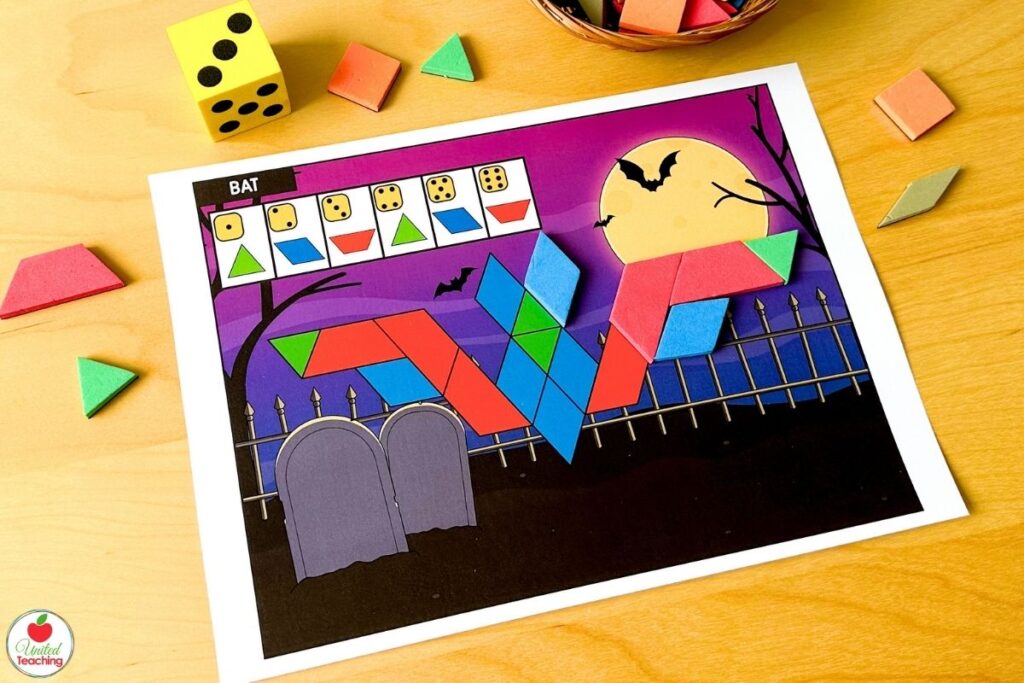
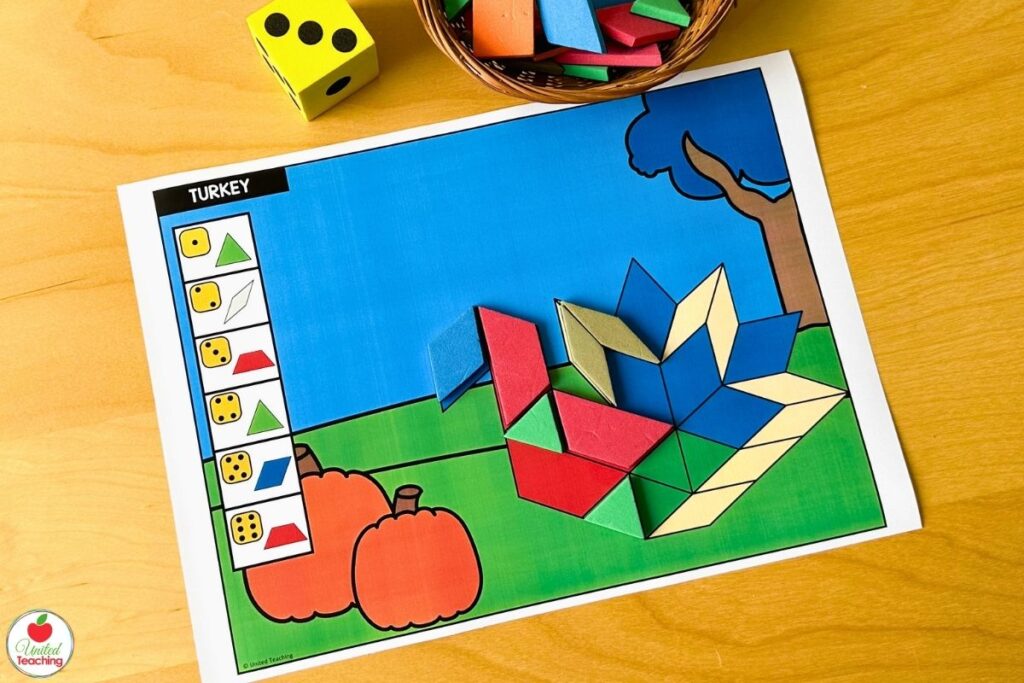
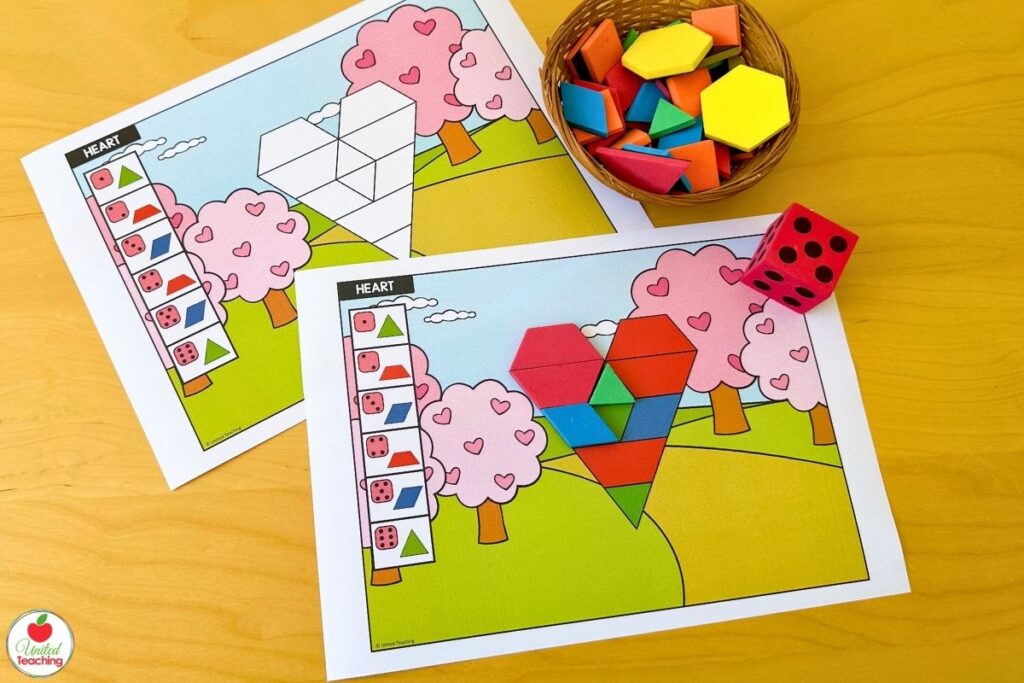
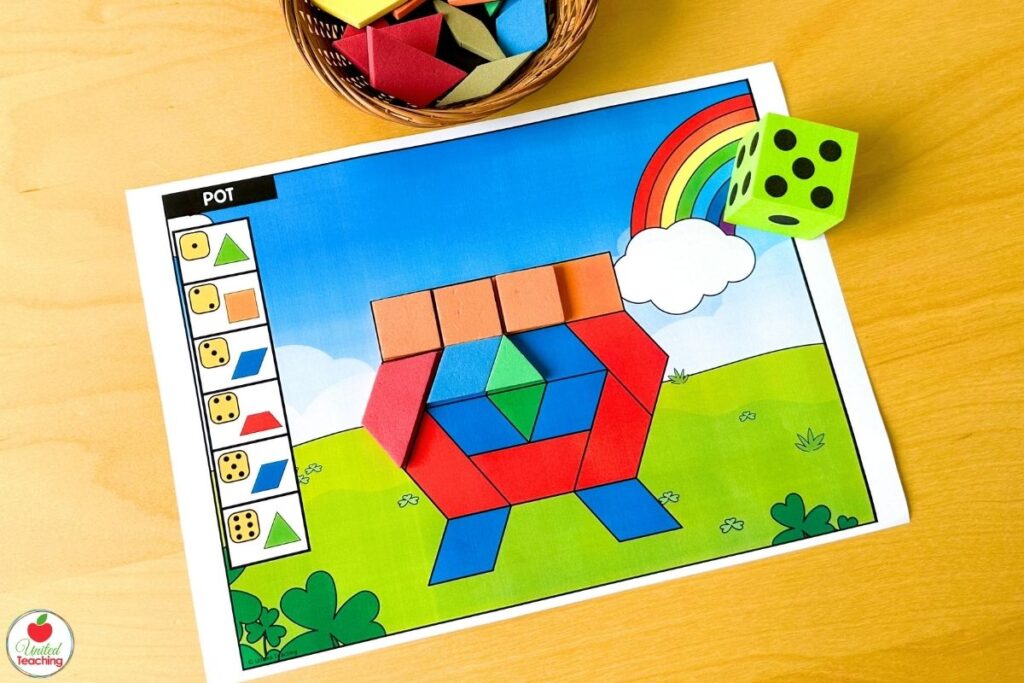
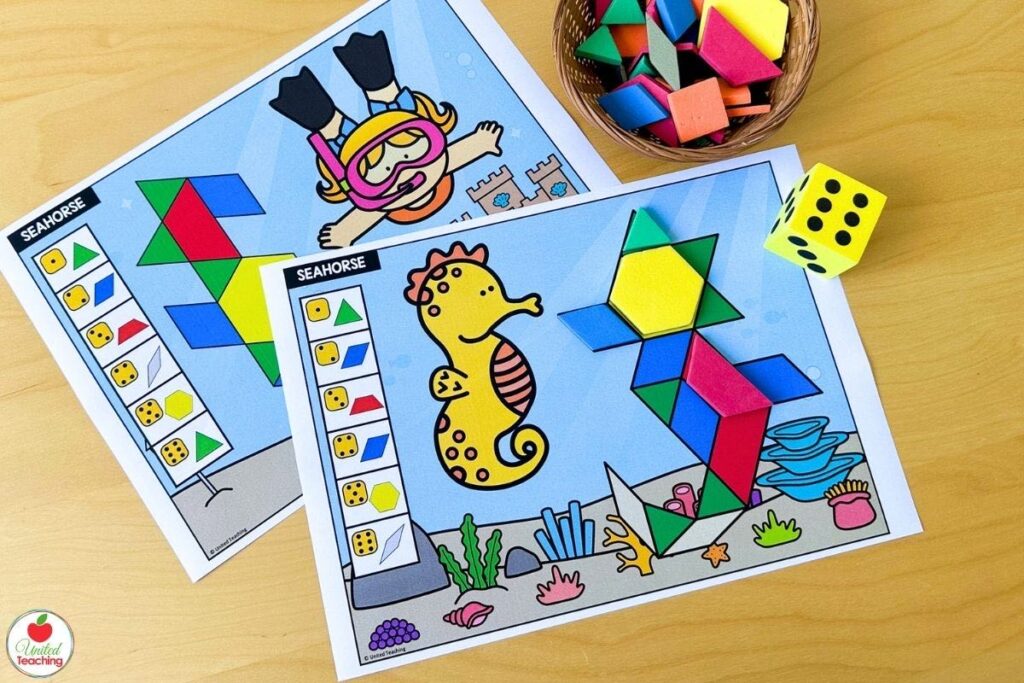
Animal-Themed Pattern Block Mats
Animal designs are perennially popular with young learners. Students love building recognizable creatures (a T-Rex, a polar bear, a butterfly), and the variety of animal shapes provides a natural range of difficulty. The Animals Pattern Block Mats Growing Bundle covers seven themed sets: forest animals, pond life and insects, polar animals, safari animals, ocean animals, farm animals, and dinosaurs, each with three differentiation levels in color and black-and-white.
Alphabet Pattern Block Mats
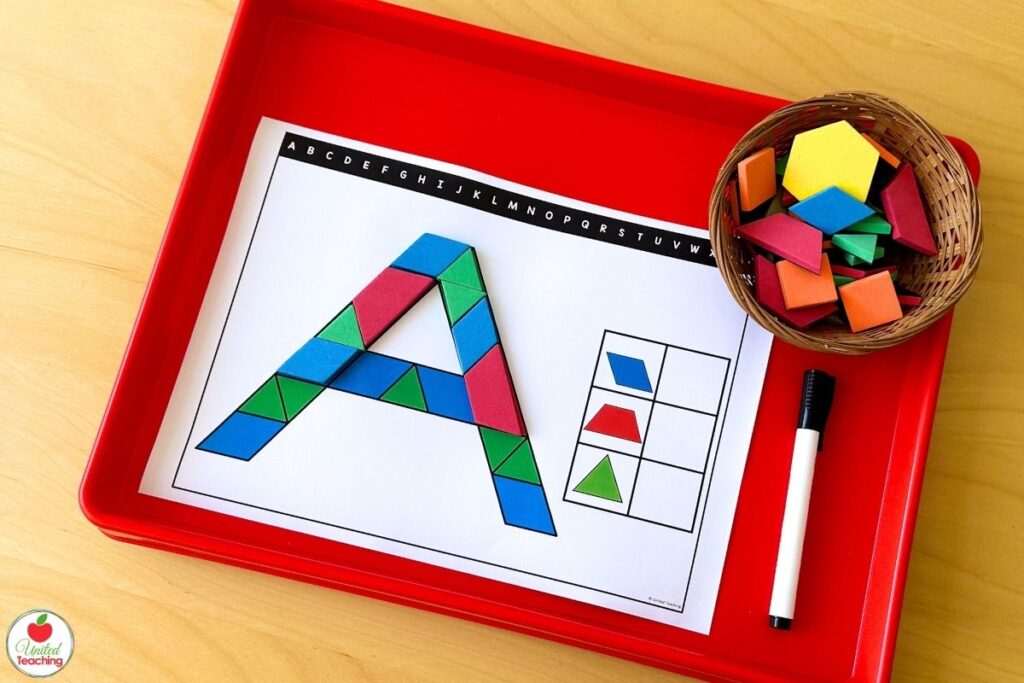
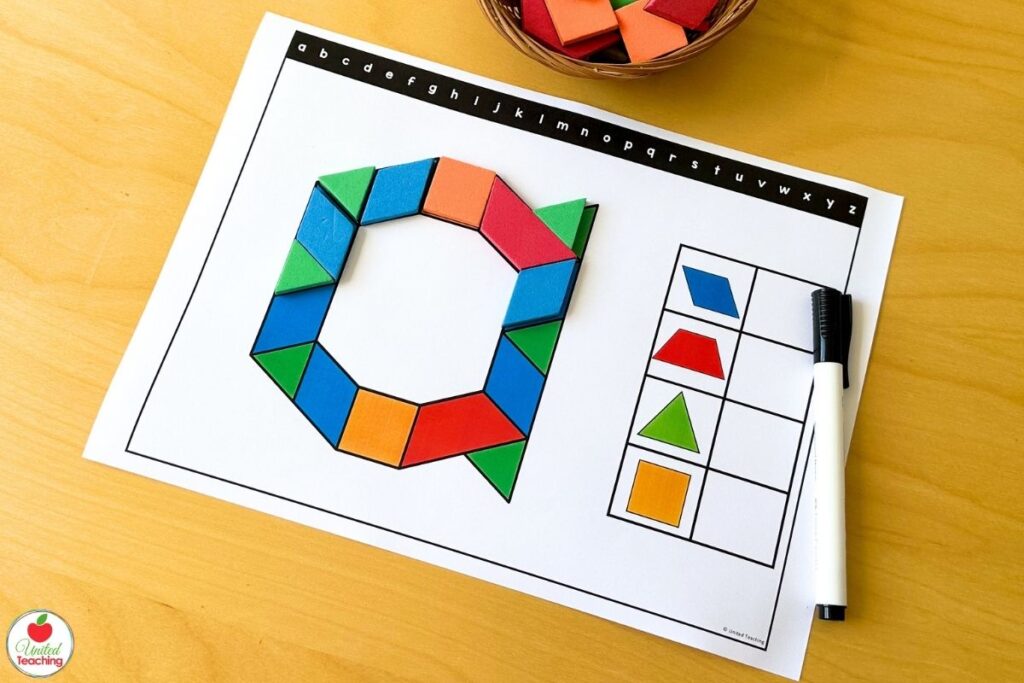
Pattern blocks aren’t just for math. Phonics-themed mats bring the same format into literacy centers, which means one familiar routine carries across two subject areas and reduces the time you spend re-teaching center procedures.
The Alphabet Pattern Block Mats pair letter recognition with counting. The CVC Words Roll and Build Pattern Block Mats and the CVC Words Build and Count Pattern Block Mats extend the format into early decoding practice. Both work well alongside your existing phonics instruction without any extra setup.
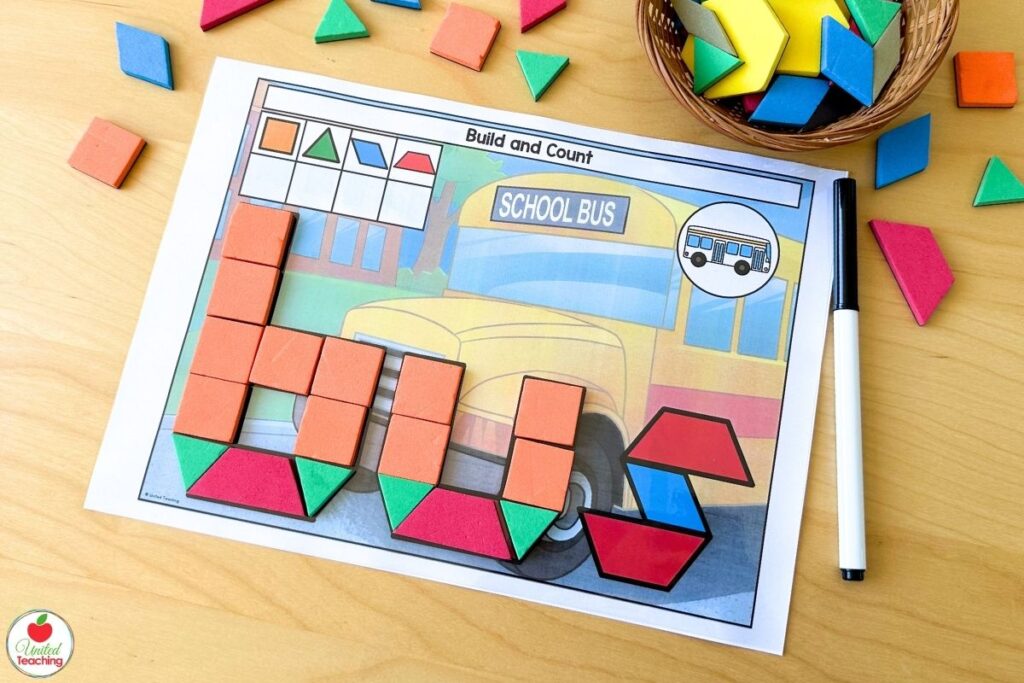
Free Printable Pattern Block Templates: Number Mats 1–20
To get started right away, grab the free download below. It includes 20 number mats (one for each number, 1–20) for hands-on number recognition and early math practice.
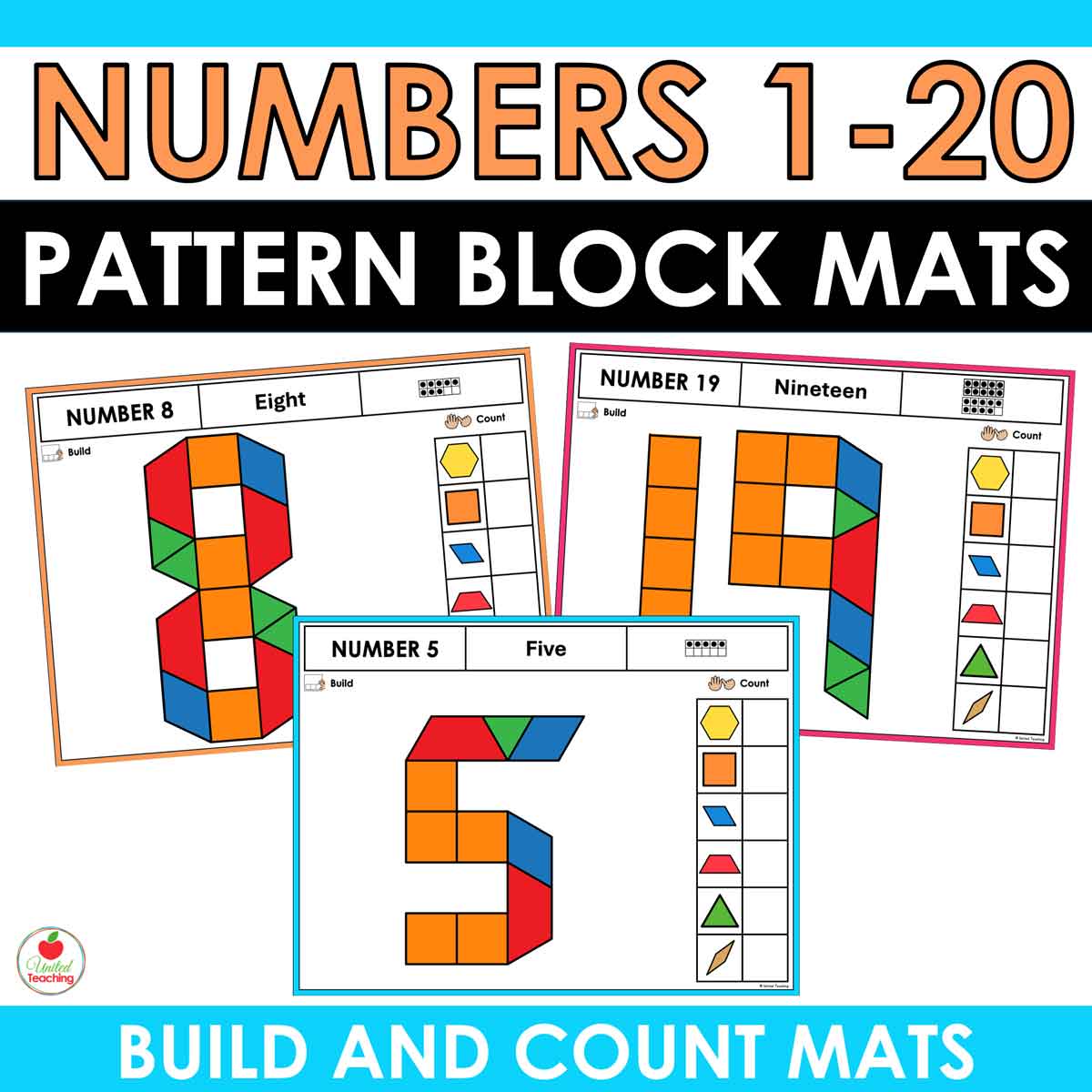
These mats work well as a math center at the beginning of the year, a number recognition activity for preschool and kindergarten, or a print-and-go option for sub plans. Once laminated, the shapes hold up well through repeated use.
Once students know the routine, these centers run themselves. Rotate holiday, animal, phonics, and seasonal designs throughout the year and the format never needs re-teaching. Grab the free number mats above to get started and explore the themed collections when you’re ready to add more.