




These free printable letter tracing worksheets cover all 26 letters of the alphabet, with large uppercase and lowercase demonstration letters showing the correct stroke sequence, a beginning sound picture to trace for fine motor practice, and two rows of uppercase and two rows of lowercase dashed tracing on every page. The free Alphabet Letter Tracing Worksheets and Task Cards kit also includes uppercase and lowercase reference guides and reusable tracing letter task cards: three formats in one download for preschool and kindergarten classrooms.
Letter formation practice works best when correct stroke sequence is built in from the start. Without a numbered starting point, students often develop their own way of forming each letter, and that habit is easy to miss until reversals appear in January, when they are far harder to undo. Building a consistent tracing routine in the first weeks of school, with stroke-guided tracing sheets and a reference chart students can check themselves, prevents most of those mid-year problems before they start.
What’s in the Free Alphabet Letter Tracing Worksheets and Task Cards Kit
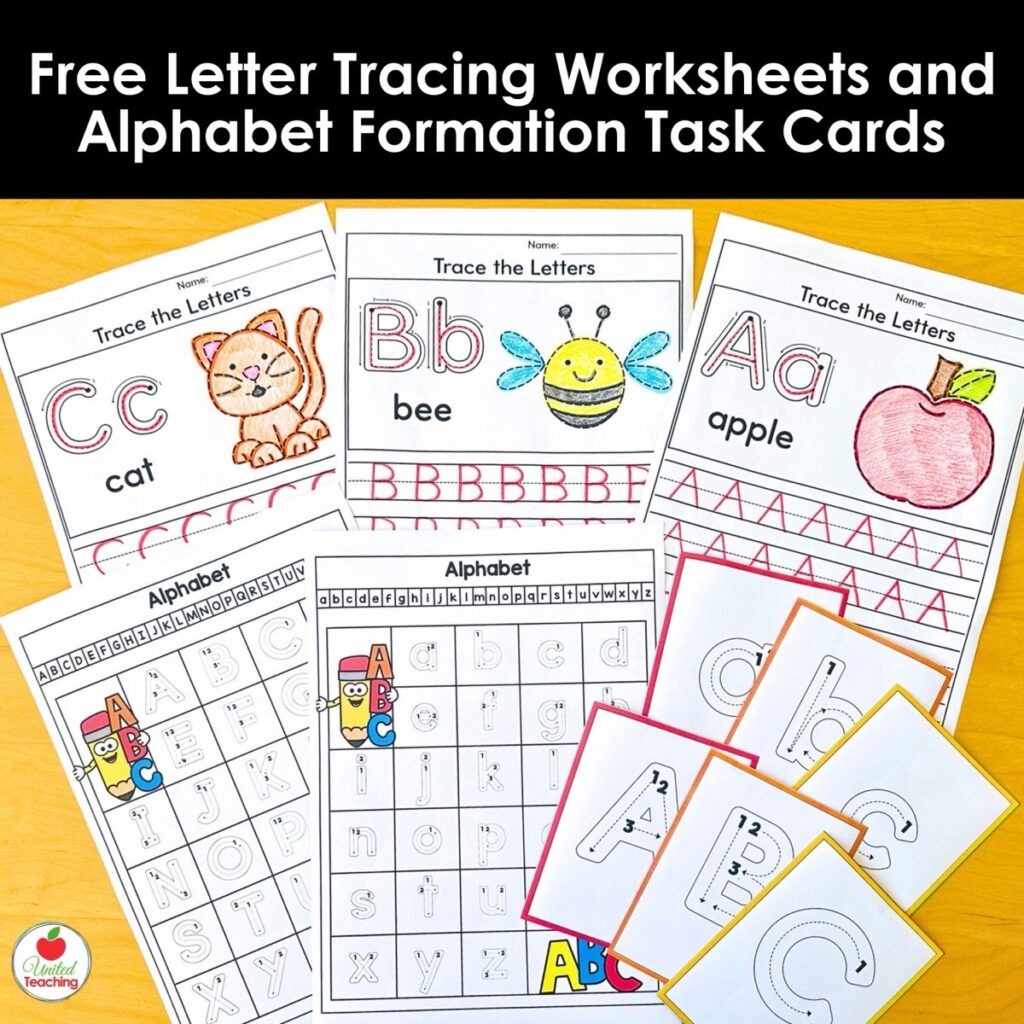
The free kit includes three formats so you have what you need for direct instruction, independent writing practice, and centers, without sourcing resources separately.
Free letter tracing worksheets for Preschool and Kindergarten
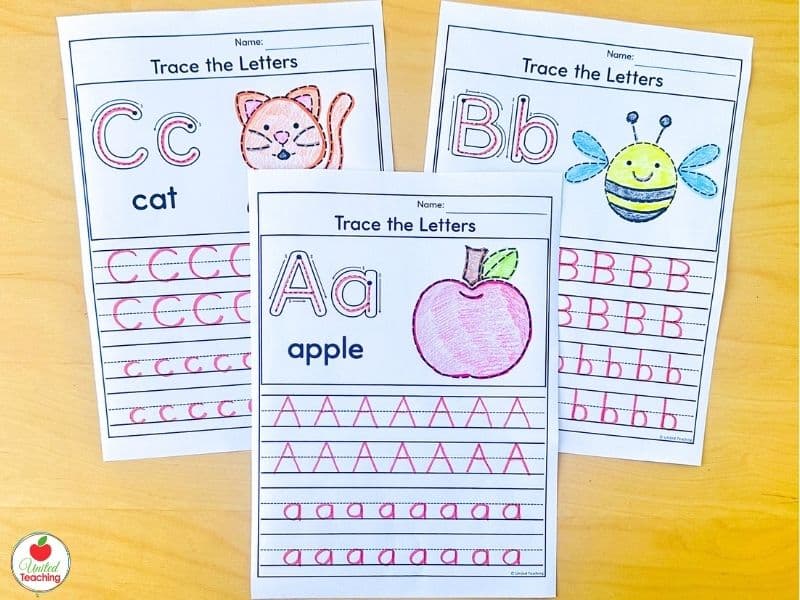
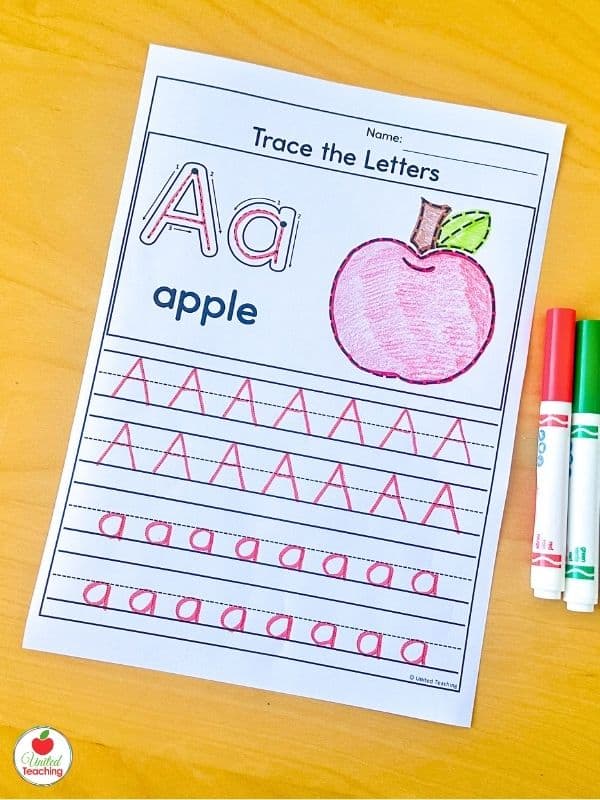
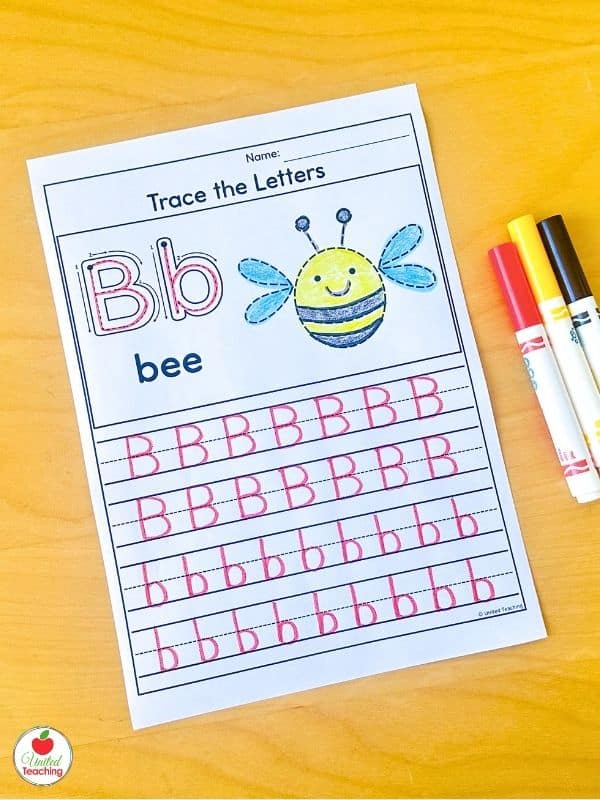
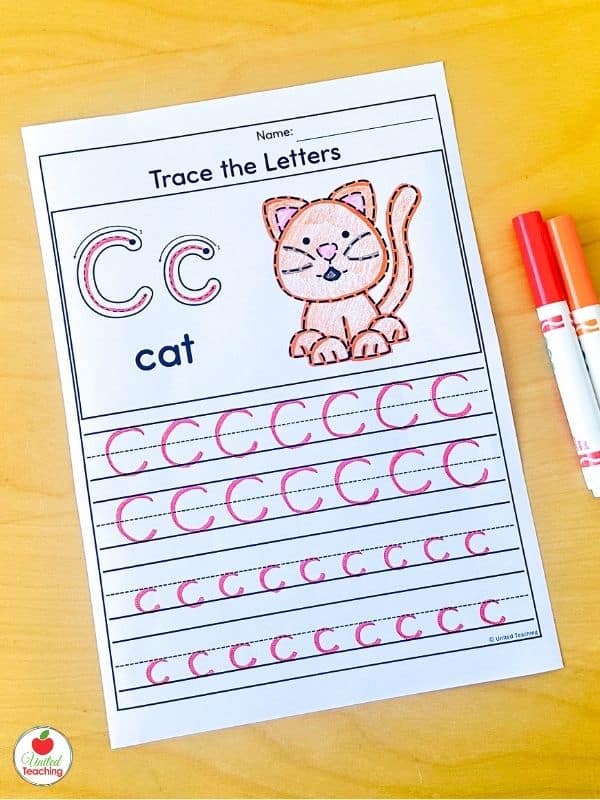
Each of the 26 letter tracing worksheets covers uppercase and lowercase letters on a single page. Large demonstration letters show the correct stroke sequence for both forms, with numbered arrows guiding students through each stroke. Beside the demonstration letters, a beginning sound picture can be traced for additional fine motor skills practice and hand-eye coordination (apple for A, bee for B). Below, two rows of dashed uppercase tracing and two rows of dashed lowercase tracing give students repeated practice on every page.
Printable Uppercase and Lowercase Letter Reference Guides
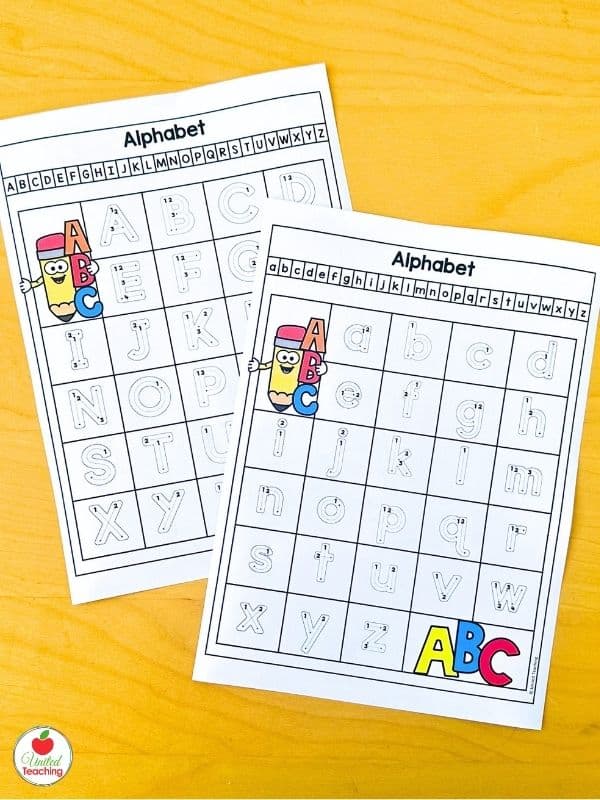
Two printable reference charts show all 26 letters in a grid format, one for uppercase and one for lowercase, with stroke numbers and directional arrows for each. These are designed to laminate and keep at the small group table or post in the writing center so students have a quick reference to check starting points before they write. One chart per alphabet case covers everything without taking up a lot of wall space.
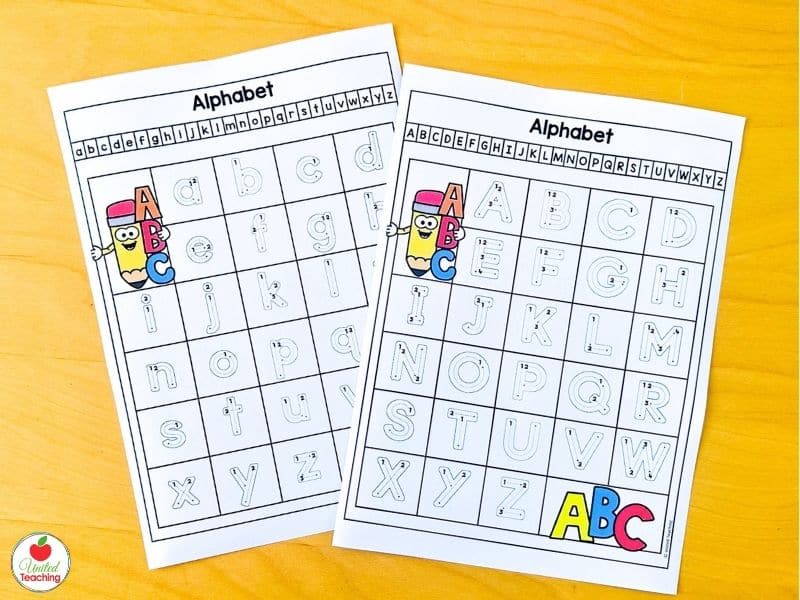
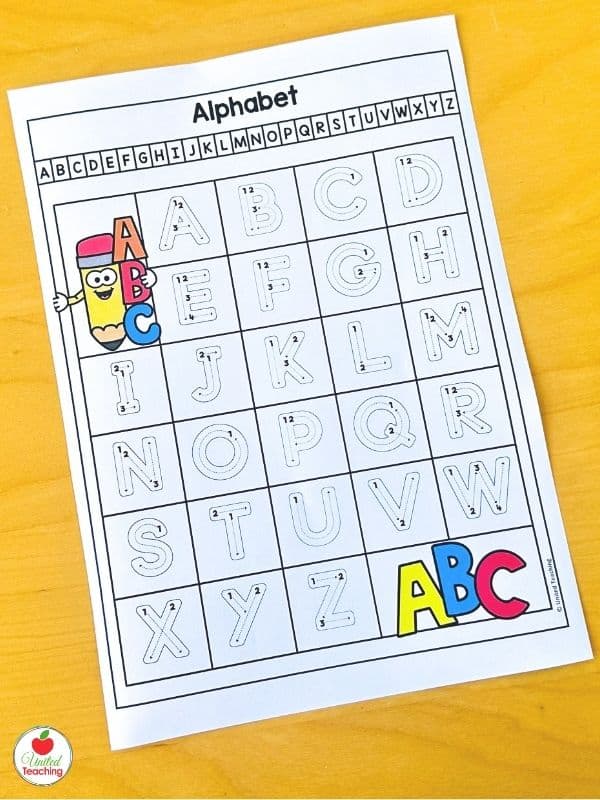
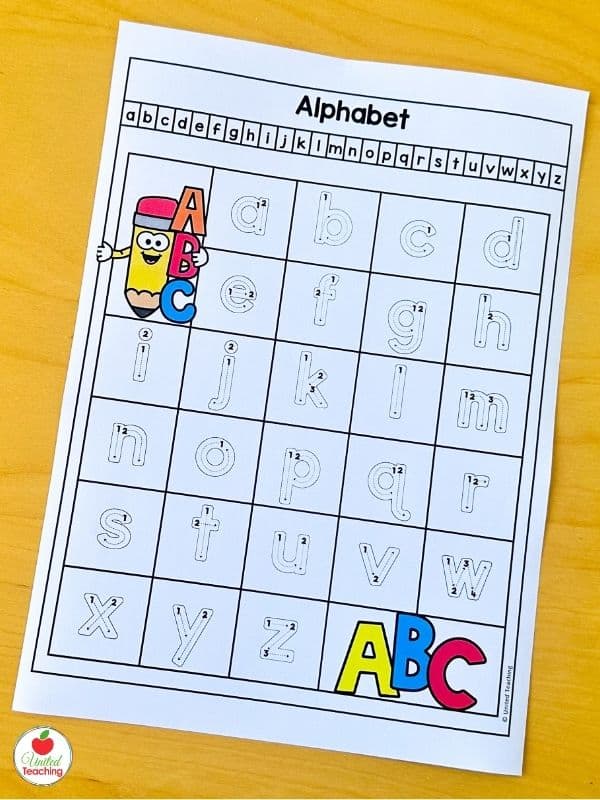
Uppercase and Lowercase Tracing Alphabet Task Cards
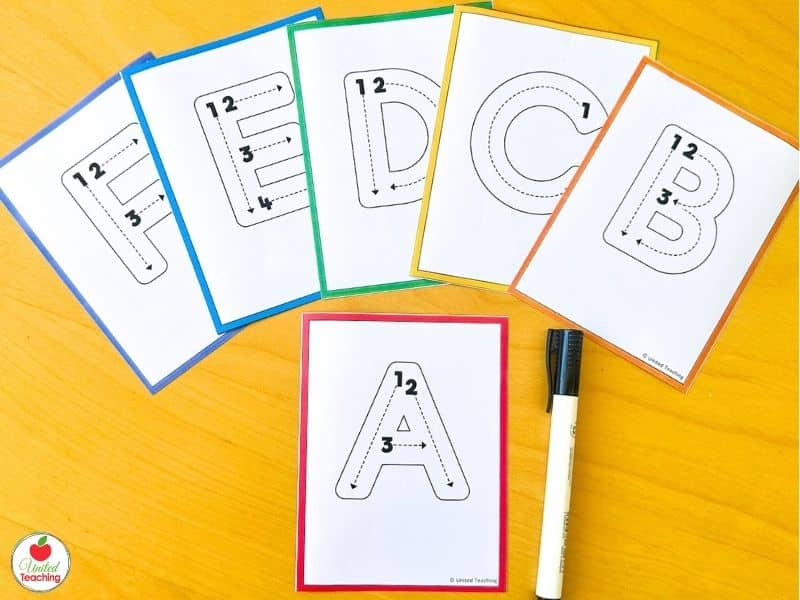
Each task card features a large letter with a dashed tracing path and stroke numbers, framed by a color-coded border. The set includes 26 uppercase and 26 lowercase cards. Laminated, they work as a reusable center activity, a morning tub option, or a warm-up routine that students can work through independently. Print once, laminate once, use all year.
How to Use Alphabet Letter Tracing Worksheets and Task Card Printables
The sequence matters as much as the practice. Here’s what works well for building correct habits from the beginning:
Step 1: Reference guide first. Before students pick up a pencil, use the reference chart to introduce the starting point and stroke direction for the target letter. Run a finger along each stroke while naming the letter and saying its sound. This connects the visual letter form to its name and phoneme from the first introduction.
Step 2: Work through the worksheet. Students finger trace the demonstration letters first, then move to the dashed tracing rows using a pencil. Saying the letter sound with each trace keeps the phonics connection active throughout the handwriting practice.
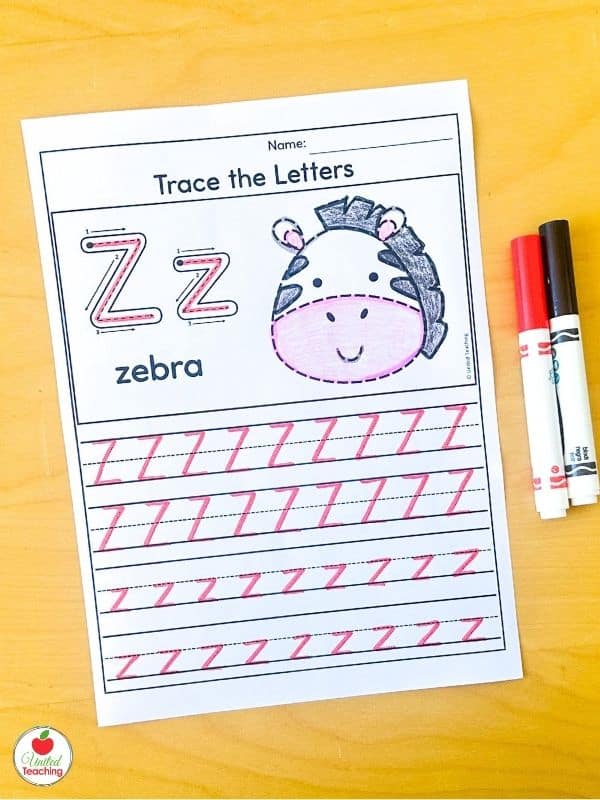
Step 3: Task cards for centers. Once students have practiced with the worksheet, the task cards give them a reusable format for continued practice in a rotation or small group setting. A dry-erase marker on laminated cards means no extra printing and no prep after setup.
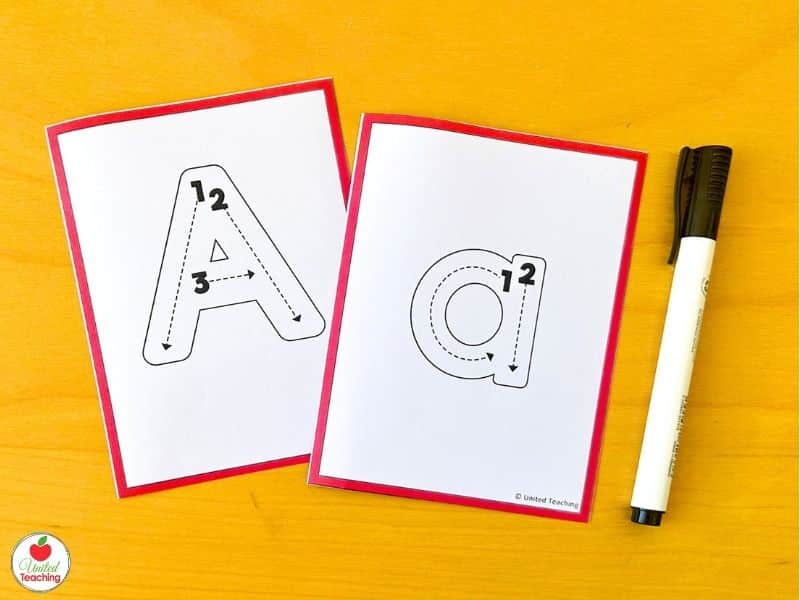
This three-step sequence (reference guide, worksheet, task cards) builds correct letter formation without relying on a single format or a single session.
Why Stroke Sequence Matters: Preventing Letter Reversals in Preschool and Kindergarten
Most letter reversals in kindergarten come down to inconsistent starting points. When students form the same letter differently each time, there’s no reliable motor memory to fall back on, and reversals continue long past the stage where they should have resolved.
The letters that cause the most trouble are b, d, p, and q. All four use similar curves and lines, and students who haven’t internalized a fixed stroke sequence for each will swap them well into first grade. The numbered arrows on these letter tracing worksheets and printables address this directly. Every letter has a set starting point and a set stroke order, so students practice the same sequence every time they trace. That repetition is what builds the fine motor memory that prevents reversals from forming in the first place.
There is also a Science of Reading layer worth noting. Tracing a letter while saying its sound and pointing to the matching picture is not purely a handwriting activity. It is building the orthographic mapping connection that links the written symbol to its phoneme. The alphabet tracing worksheets in this kit include that picture-sound connection on every page, which means the handwriting practice and the phonics practice happen at the same time.
Three Ways to Extend Handwriting Practice
Rainbow writing. Have students trace the letters in a different color. The repetition builds muscle memory, and tracing the lettersin different colors helps students stay engaged. It works as a centers activity or an early finisher task with zero additional prep.
Dry-erase reuse. Laminate the worksheet pages and use them with dry-erase markers as a reusable writing practice activity. Students wipe the page clean and a partner or the teacher can reset it for the next round. This works particularly well for a fine motor center where the focus is on pencil control and letter formation.
Task cards for morning tubs or warm-ups. Set out a selection of task cards each morning and let students work through them independently as they arrive or as a pre-lesson warm-up. Because the format is simple and the cards are large, students can work without needing instructions. Rotating through the full alphabet over several weeks builds consistent tracing practice across all 26 letters in a low-prep routine.
Get Your Free Printable Alphabet Letter Tracing Worksheets and Task Cards
The free Alphabet Letter Tracing Worksheets and Task Cards kit includes:
- 26 letter tracing worksheets (A-Z, uppercase and lowercase demonstration letters with stroke guides, dashed tracing rows, and a traceable beginning sound picture on every page)
- Uppercase letter reference guide (all 26 letters with stroke sequence)
- Lowercase letter reference guide (all 26 letters with stroke sequence)
- 26 traceable alphabet uppercase letter task cards
- 26 traceable alphabet lowercase letter task cards
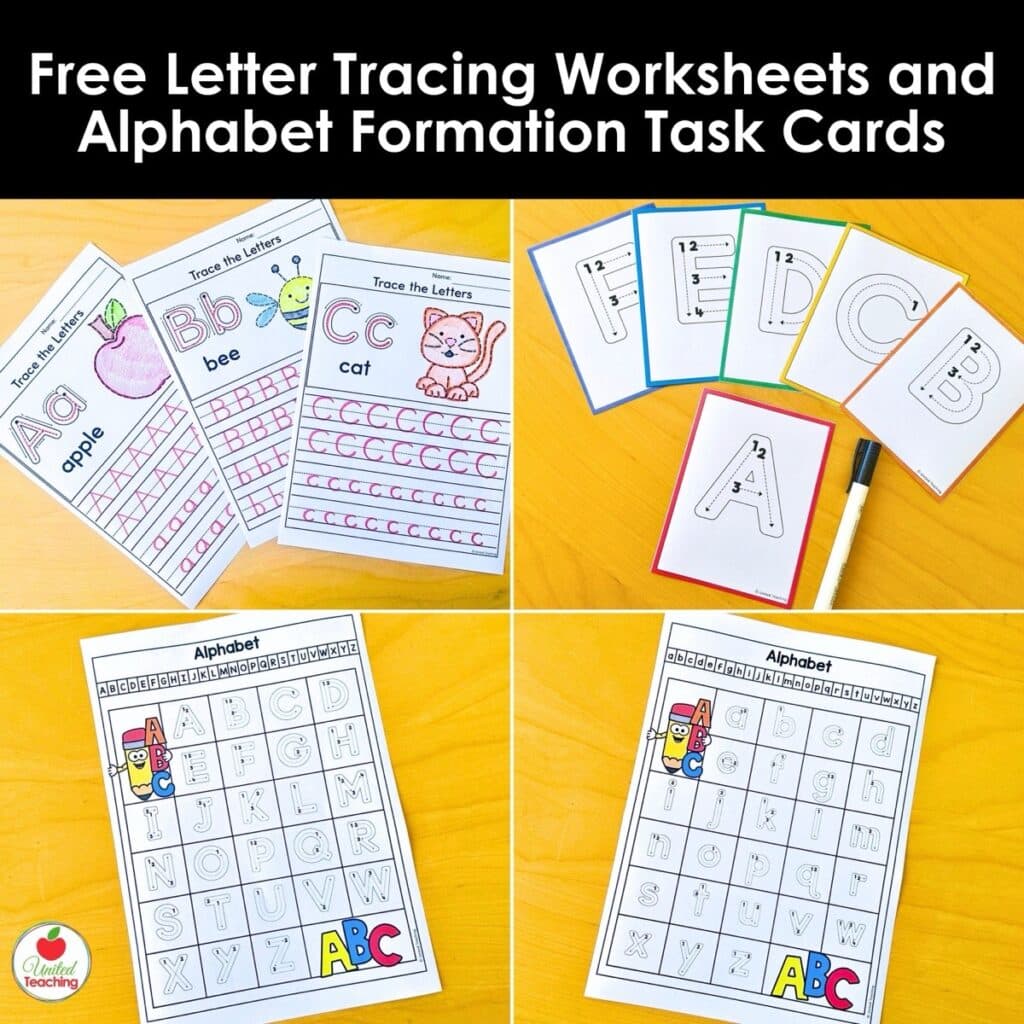
Download the free printable kit below.
For a more comprehensive set of alphabet tracing and letter formation activities, the Alphabet Tracing and Letter Formation Task Cards packet includes additional components for building letter writing skills in kindergarten and preschool.
Letter tracing worksheets work best when they are part of a consistent routine, one that connects the letter, the stroke sequence, and the sound every time students practice. With three formats in one download, the free kit gives you what you need to build that routine in your classroom without extra prep.