



Teaching the ABCs is more than teaching letter names. For students to build real reading foundations, they need to recognize both uppercase and lowercase letters, connect each letter to its sound, and develop the fine motor control needed for writing. That’s four distinct skills across 26 letters, and keeping the learning consistent and memorable across the whole alphabet is one of the genuine challenges of early literacy instruction for young children.
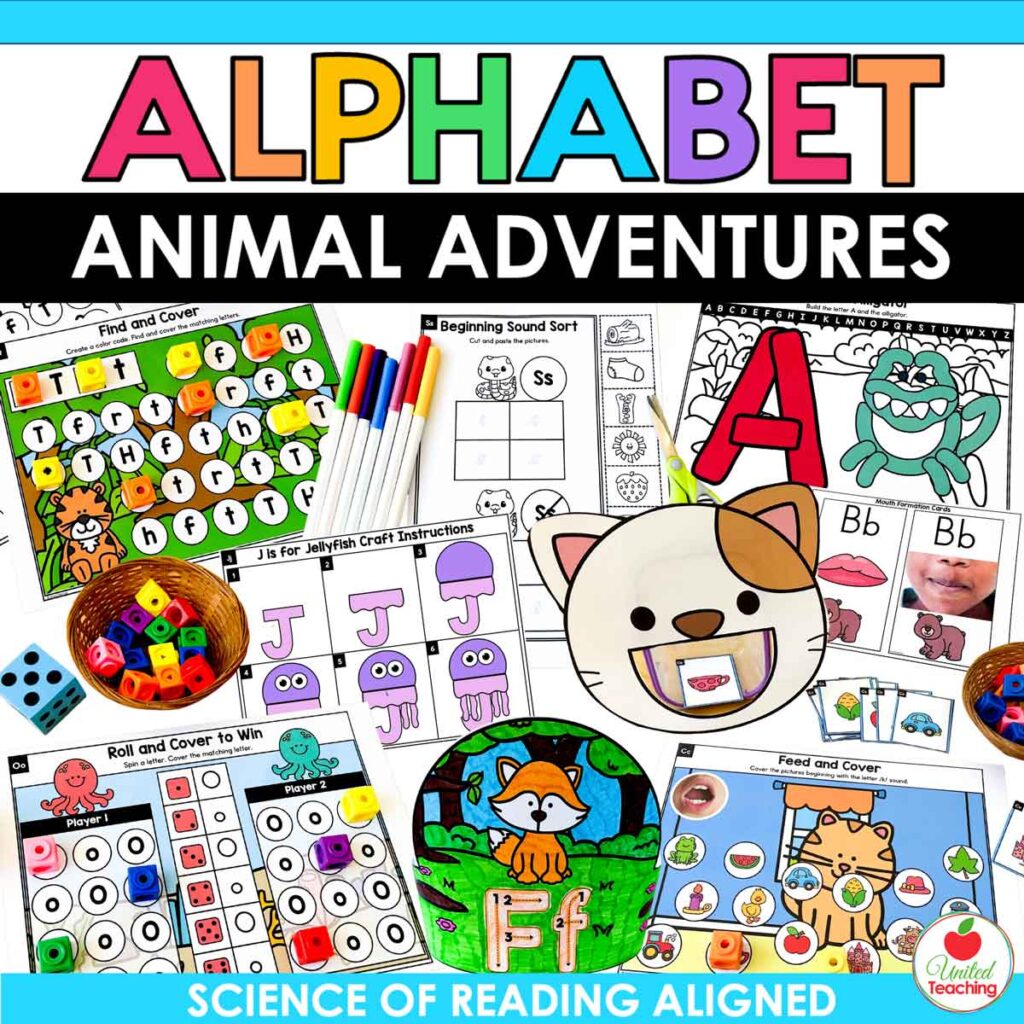
Animal alphabet letters solve this by giving students a reliable visual reference for every letter: an animal whose name starts with that letter’s sound. Every time students see the letter, they see the animal. Every time they practice the sound, they connect it to something concrete. The Alphabet Animal Adventures curriculum is built around this principle, with over 1,600 pages of alphabet printables and activities from A to Z. Here’s how the approach works and what a full animal alphabet letters curriculum looks like in practice. Plus, download a free printable Letter A packet at the end and try these activities with your class this week.
Why Animal Alphabet Letters Work
Pairing letters with animals is not just a theme choice. It is a teaching strategy grounded in how young children learn and retrieve letter-sound knowledge.
When students learn that A is for alligator, they create a mental link between the letter symbol (A), the animal image (alligator), and the sound (/a/). That image becomes a visual anchor, something to return to whenever the letter appears in print. In the early stages of learning letters, that reliable cue makes the difference between guessing and knowing. Over time, as the letter becomes automatic, students no longer need the anchor, but it is what gets them there.
The animal also provides a physical cue for sound production. The /a/ sound is made with the mouth wide open, which mirrors the image of an alligator’s open jaw. This kind of multi-sensory connection is exactly the type of support Science of Reading research points to for early phonics instruction. Every activity in the Alphabet Animal Adventures curriculum reinforces the animal anchor so students encounter the same connection across every format and skill area.


What Students Learn with Animal Alphabet Letter Activities
Each letter packet covers four skill areas:
- Letter recognition: Learning to identify uppercase and lowercase letters, distinguish between similar-looking letters, and match letter forms across different fonts and contexts
- Letter formation: Developing the muscle memory and pencil control needed to write each letter correctly
- Letter sounds: Connecting the letter symbol to its phoneme using the animal anchor and multiple phonics practice formats
- Fine motor skills: Building the hand strength that writing demands through cutting, tracing, placing counters, molding play dough, and building with manipulatives
Every activity in the bundle targets one or more of these four areas, and the animal stays consistent throughout so the connection builds as students move from activity to activity across the week.
Inside the Curriculum: Alphabet Printables, Worksheets, and Crafts
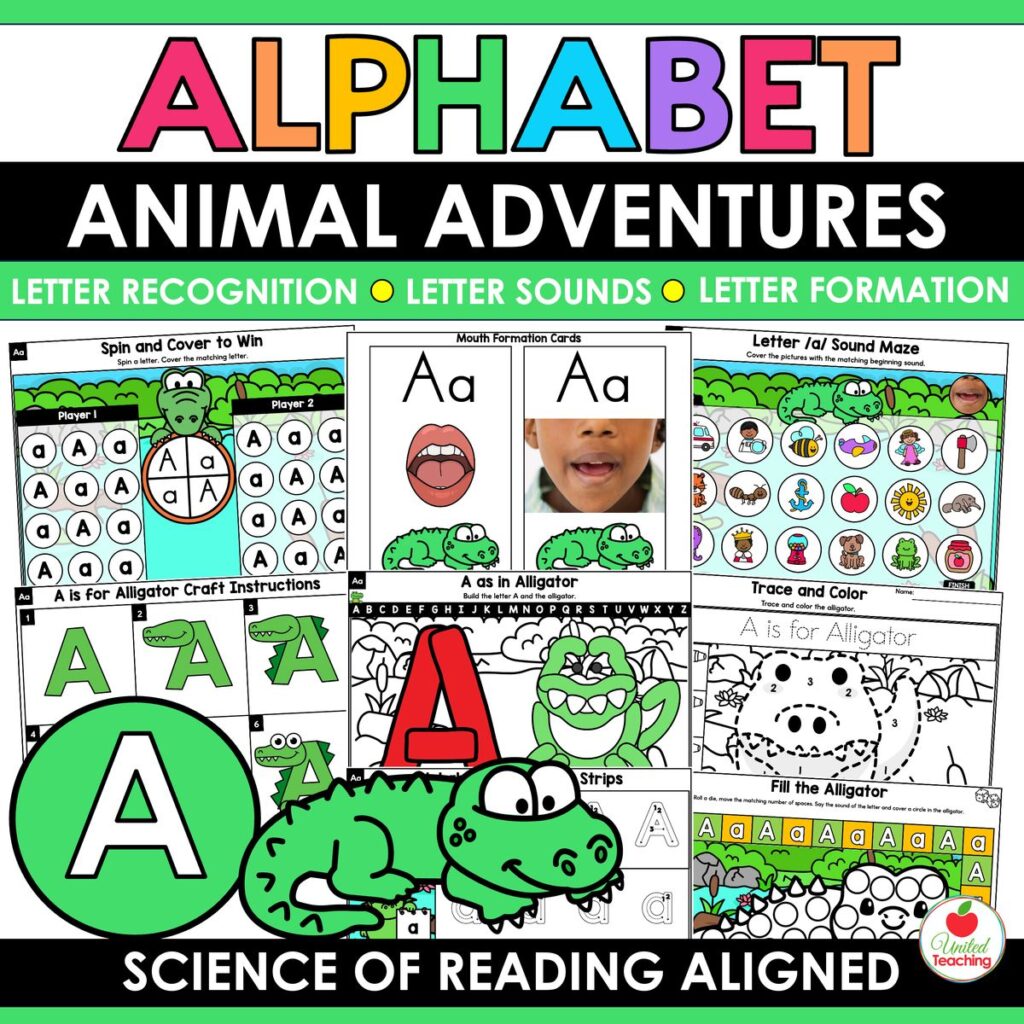
The Alphabet Animal Adventures bundle covers all 26 letters, with each letter packet organized around the same activity types. Here’s a look at what’s included.
Letter Recognition Worksheets and Activities
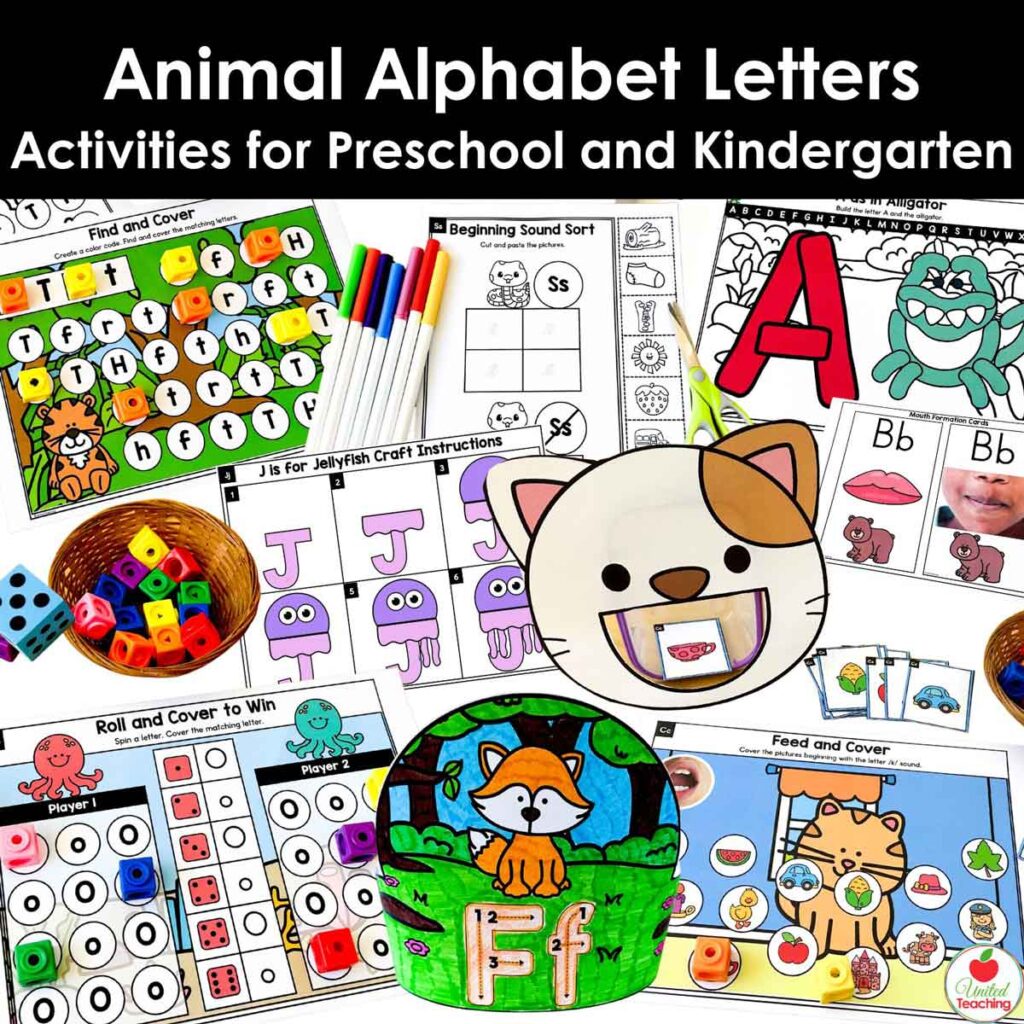
Students build letter recognition through spin and build mats (snap cubes and pattern blocks), uppercase and lowercase sorting activities, find and cover mats, color by letter worksheets, coloring pages, and ABC worksheets. The variety of formats gives students repeated exposure to the same letter without repeating the same task, which keeps students engaged while building the automaticity that comes from genuine repetition.


Letter Formation Worksheets and Activities
Handwriting strips, play dough mats, and spin and trace and roll and trace alphabet worksheets give students the varied, repeated practice that letter formation requires. Students trace uppercase and lowercase letters across multiple formats, building the muscle memory needed to write each letter correctly. The handwriting strips laminate well on cardstock for dry-erase reuse, making them a practical daily activity that stretches across the full letter-of-the-week without using additional paper.


Letter Sound and Phonics Activities
Mouth articulation cards, letter sound fluency strips, feed the animal phonics centers, and animal-themed letter crafts reinforce the letter-sound connection across multiple formats. The adorable animal crafts are particularly effective for phonics learning. When students make the alligator for A or the bear for B, they reinforce the sound anchor through creativity and hands-on learning in a way that a worksheet alone cannot replicate.


Fine Motor Skill Builders
Rolling dice, placing counters, pressing play dough, cutting along lines, and coloring activities all develop the hand strength, pincer grip, and wrist stability that writing requires. These activities build fine motor skills alongside letter learning rather than treating them as a separate skill area.


How to Sequence a Letter of the Week
Each letter packet has enough variety to fill a full teaching week without repeating the same format twice. Here’s how to structure the daily lessons:
- Monday: Introduce the letter and animal anchor with the craft activity. The hands-on, creative format builds the visual anchor at the start of the week when students first encounter the letter.
- Tuesday and Wednesday: Move to letter formation, using play dough mats and handwriting strips. Repetition mid-week while the letter is still new builds the muscle memory students need to write it correctly.
- Thursday: Games and recognition activities work well as literacy centers here. Spin and build, roll and cover, and find and cover can all run independently, which frees you for small group instruction.
- Friday: Letter sound activities to close the week. The feed the animal center, fluency strips, and sound sort worksheets reinforce the animal anchor before students move to the next letter.
The animal crafts also make effective classroom display pieces. Posting each craft alongside the focus letter keeps the visual anchor present in the room, giving students something to reference throughout the week.


Get Your Free Printable Letter A Packet
The best way to see how these animal alphabet letter resources work is to run a complete letter week with your class. The Letter A Packet is available as a free printable PDF download. It includes every activity type from this post, all built around the A is for alligator anchor.
Enter your details below to get the Letter A Packet
What’s included in the free download:
- Uppercase and lowercase alligator letter crafts and instruction cards
- Letter A crown craft
- Directed drawing of the alligator
- Play dough mats (4 styles, uppercase and lowercase)
- Spin and build games (snap cubes and pattern blocks)
- Roll and cover, roll and trace, and spin and race games
- Letter formation tracing strips and worksheets
- Phonics and letter sound activities
- Mouth articulation cards for the /a/ sound
Ready for All 26 Letters?
The free Letter A packet gives you one complete letter week. The Alphabet Animal Adventures Bundle extends the same format across every letter from A to Z, with over 1,600 pages of alphabet printables, worksheets, and activities organized by letter and ready to print. It is an ideal educational resource for preschool, pre-K, kindergarten, and gives busy teachers everything needed for a complete letter-of-the-week program.
If the Letter A packet works for your students, purchase the full bundle and get the complete A to Z curriculum in one place.
Get the Alphabet Animal Adventures Bundle