
Teaching beginning sounds and letter-sound correspondence can feel like an uphill battle, right? You introduce a new letter sound, practice it in small group, and the next day half your students look at you like it’s brand new again. Yeah, we’ve all been there. That’s where beginning sound clip cards come in.
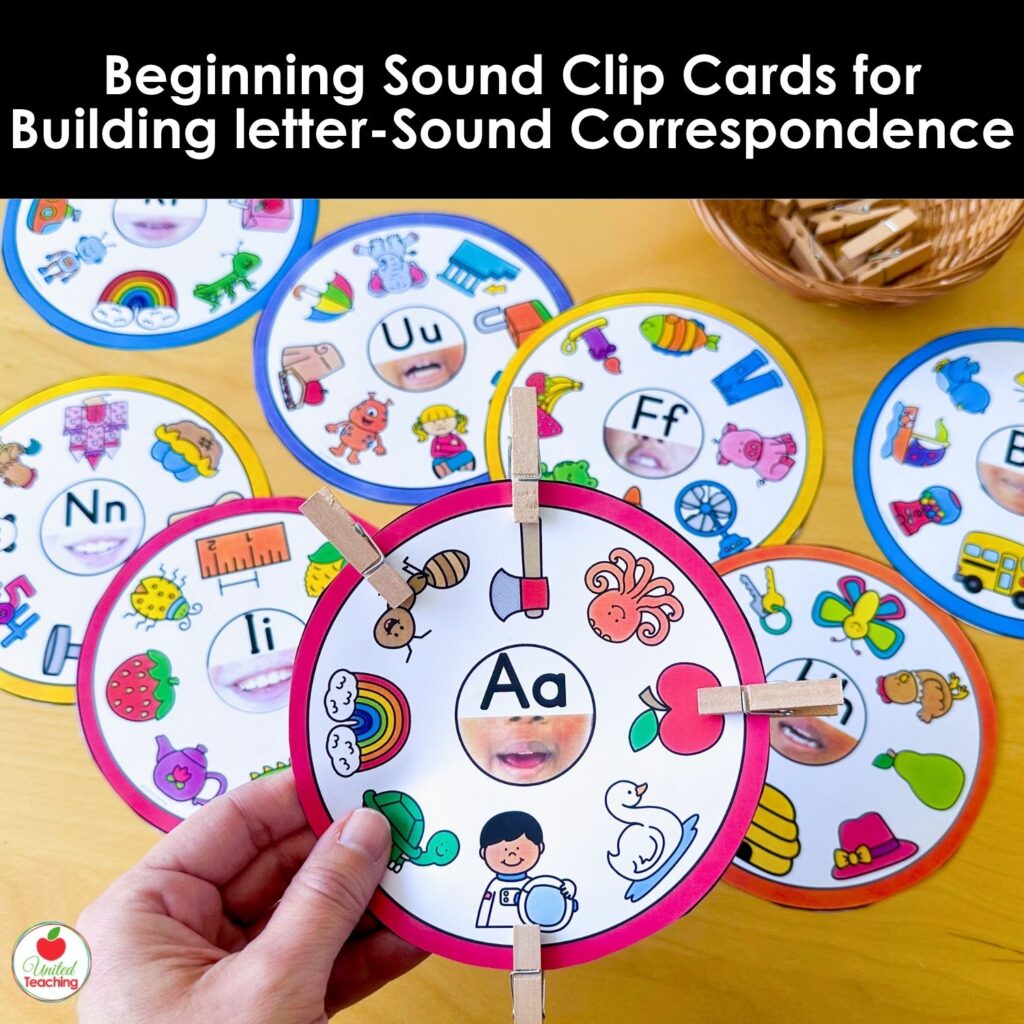
These hands-on alphabet clip cards transform abstract phonics concepts into concrete, engaging practice that students can see, say, and feel. Whether you’re using them in literacy centers, guided reading groups, or RTI intervention, clip cards give your early readers the multi-sensory practice they need to master those tricky beginning sounds.
Here’s the thing … traditional alphabet practice often misses a crucial piece. We show them the letter, we show them the picture, and we expect their brain to make the connection. But some students need more than visual input to really cement those letter-sound relationships. That’s why adding a tactile, kinesthetic element to beginning sound practice makes such a difference. When students can physically manipulate materials while they’re thinking through sounds, suddenly those connections start to stick.
What Are Beginning Sound Clip Cards?
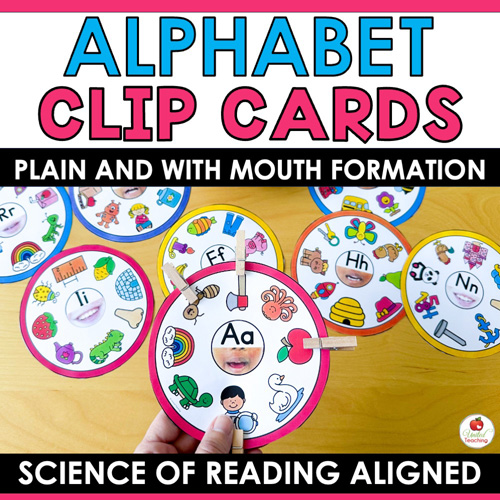
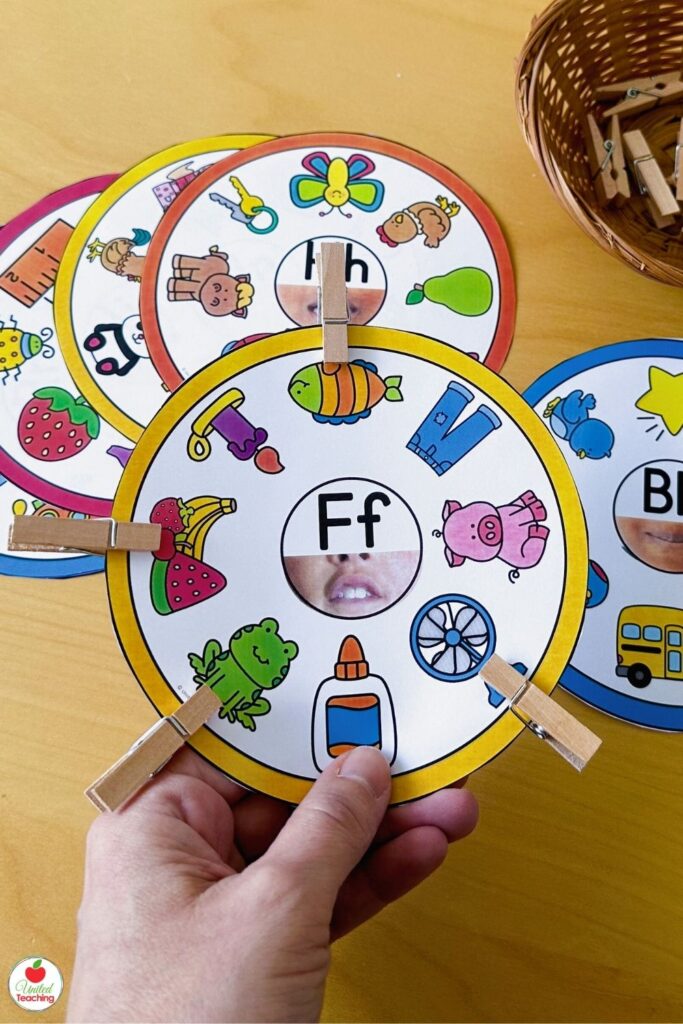
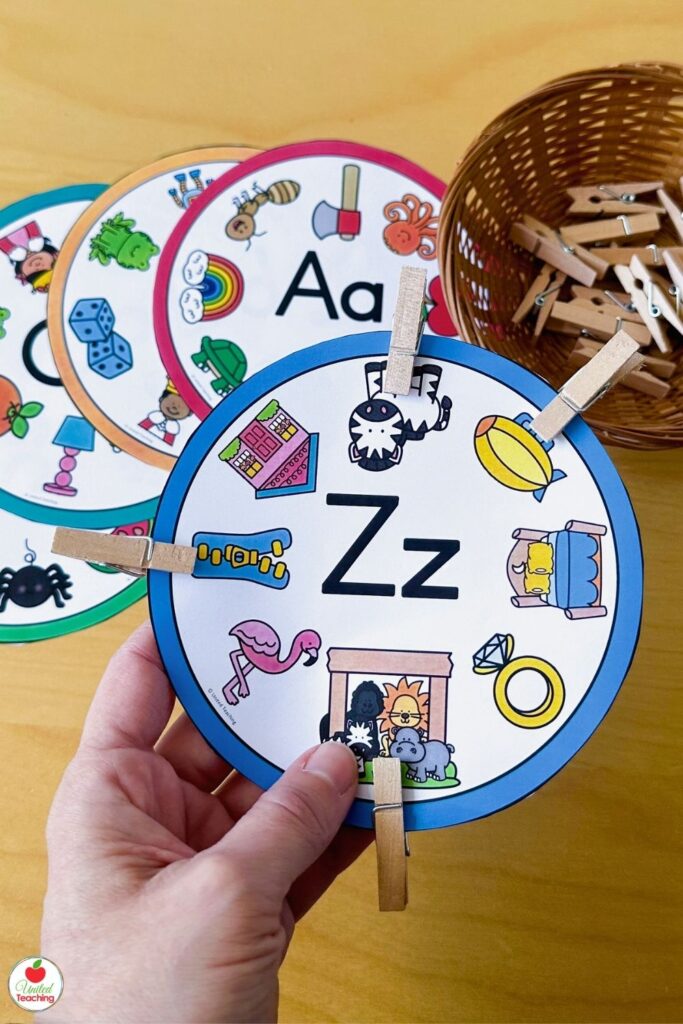
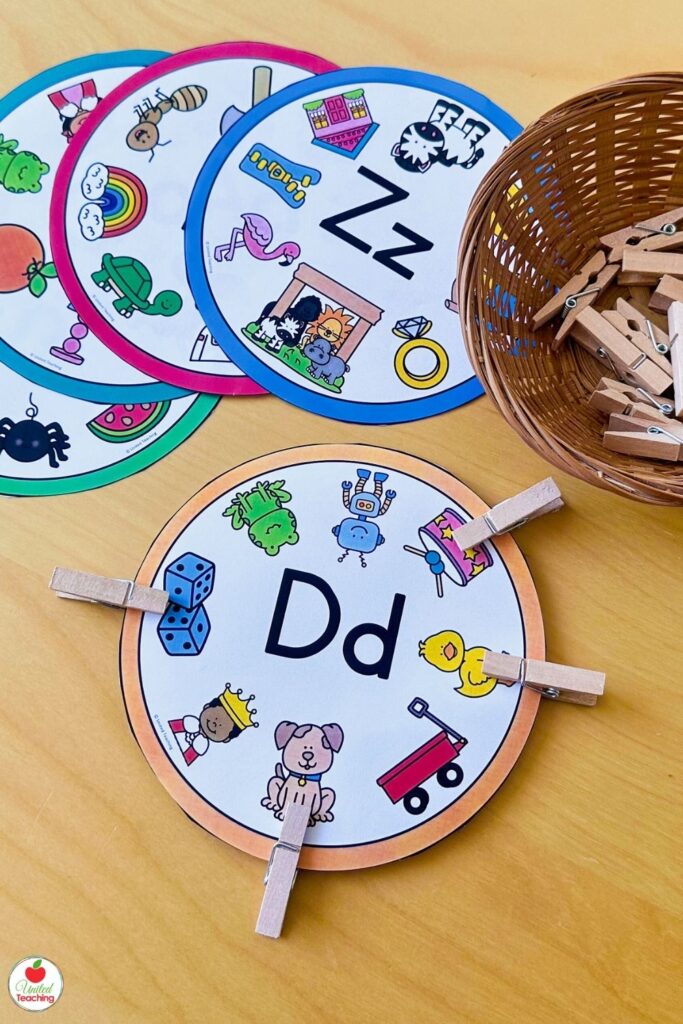
Beginning sound clip cards are hands-on phonics activities where students look at the picture, identify the beginning sound, and use clothespins to clip the correct letter. Each clip card features a letter of the alphabet, along with multiple pictures choices.
The Beginning Sounds Clip Cards give your kindergarten and preschool students a hands-on way to master beginning sounds – without you spending hours prepping materials or searching for the right visuals.
Each set includes 26 alphabet clip cards with clear images representing every letter of the alphabet. Students look at the letter, identify the initial sound, and clip a clothespin to the matching pictures.
But here’s where it gets even better.
Science of Reading Aligned Clip Cards with Mouth Formation Prompting
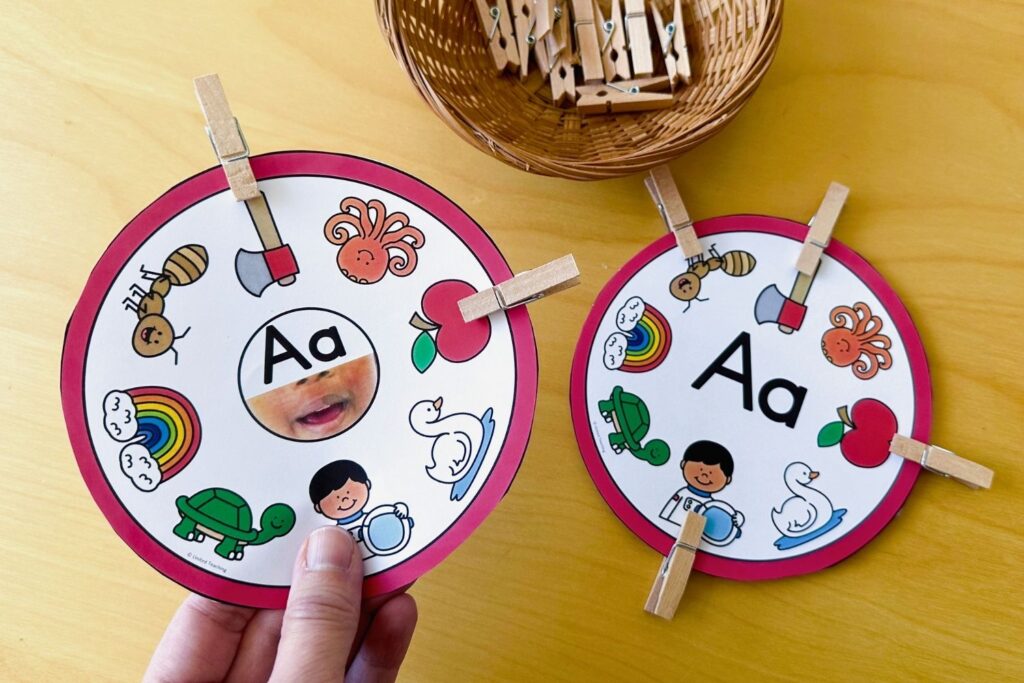
The set also includes 26 cards with mouth formation images that show students exactly how their mouth should look when making each sound. This articulatory awareness piece is straight from the Science of Reading playbook – giving students a concrete visual of what their lips, tongue, and teeth are doing when they produce each phoneme.
So you can start with the plain picture cards for students who are ready for independent practice, then easily switch to the mouth formation cards for students who need that extra support. Same activity, built-in differentiation.
Why Beginning Sound Clip Cards Work for Phonics and Phonemic Awareness
Phonemic Awareness That Sticks
Students practice isolating and identifying beginning sounds while building letter-sound correspondence for all 26 letters. The physical act of clipping reinforces each correct match. When students can identify the beginning sound and clip the picture that makes that sound, they’re building the foundation for reading success.
Science of Reading Aligned
The mouth formation cards support articulatory awareness – one of those key Science of Reading components that helps struggling readers finally break through. Students learn letter sounds by seeing and feeling how individual sounds are formed.
Fine Motor Skills Bonus
Every clip strengthens those little hand muscles and builds the hand-eye coordination students need for writing. Using clothespins promotes fine motor skills while students get phonemic awareness practice at the same time. You’re teaching reading and prepping them for handwriting with one simple activity.
Self-Checking and Independent
Want to make them self-checking? Add a small sticker to the back of each card next to the correct answer. Now students can flip the card over and know immediately if they clipped the right picture. This self-checking feature builds confidence and allows for independent work in literacy centers.
Differentiation Built Right In
Use the plain cards for students who’ve got it, the mouth formation cards for students who need more support. You’re meeting everyone where they are without creating twice the work for yourself.
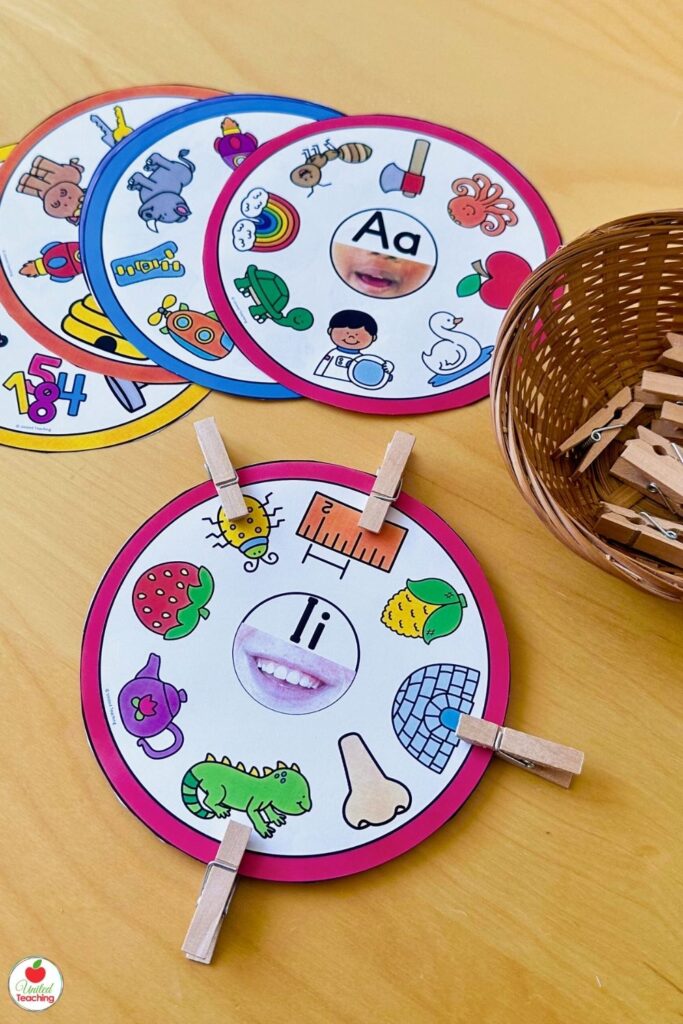
How to Use Alphabet Beginning Sounds Clip Cards in Your Literacy Center
Print the cards once, laminate them if you want them to last (totally optional), grab some clothespins, and you’re done. Seriously.
In Literacy Centers
Toss these printable clip cards into your alphabet centers for daily rotations. Students can work independently or with a partner to practice beginning sounds while you work with small groups.
Small Group Instruction
Pull them out during small group instruction when you’re reinforcing tricky letter sounds. Use the cards for each letter to target specific sounds your students are still learning.
Morning Tubs & Early Finishers
Add them to morning tubs or early finisher bins for meaningful independent work. These fun clip cards keep students engaged while building essential phonics skills.
Intervention & RTI
Use them for intervention and RTI when students need targeted practice with beginning sound activities. The hands-on nature makes learning letter sounds accessible for struggling readers.
Home Practice
Even send them home so families can support learning without needing a teaching degree. Parents love these printables because they’re simple to use and the kids actually enjoy them.
Preschool and Pre-K Alphabet Activities
Perfect for preschoolers and pre-k students who are just beginning to learn the alphabet, letter recognition and beginning sounds.
You can print them as full-page cards or two to a page if you’re using smaller clothespins. Either way works.
Beginning Sound Worksheets vs. Clip Card Activities: Why Hands-On Sound Activities Win
While beginning sound worksheets have their place, clip card activities offer something worksheets can’t – true hands-on engagement. Instead of circling or coloring, students physically manipulate the clothespin to show their answer. This kinesthetic element helps cement learning, especially for students who struggle with traditional worksheet formats.
Plus, clip cards are reusable. Print once, laminate, and use all year long with multiple students. Beginning sound worksheets get used once and tossed. These printable activities give you way more bang for your prep time.
What’s Included in These Printable Alphabet Clip Cards
If you’re ready to give your students beginning sound practice that’s engaging, differentiated, and easy to prep, the Beginning Sounds Clip Cards will become one of those resources you use over and over again.
Here’s what’s included:
- 26 plain alphabet clip cards (letters A-Z) with clear pictures for each letter
- 26 mouth formation clip cards (letters A-Z) showing how to form each sound
- Support for phonemic awareness, letter-sound correspondence, and articulatory awareness
- Fine motor practice and visual discrimination built right in
- Multiple ways to use the cards: centers, small groups, morning tubs, intervention, and take-home practice
- Self-checking option for independent work
- Perfect for kindergarten, preschool, and pre-k alphabet activities
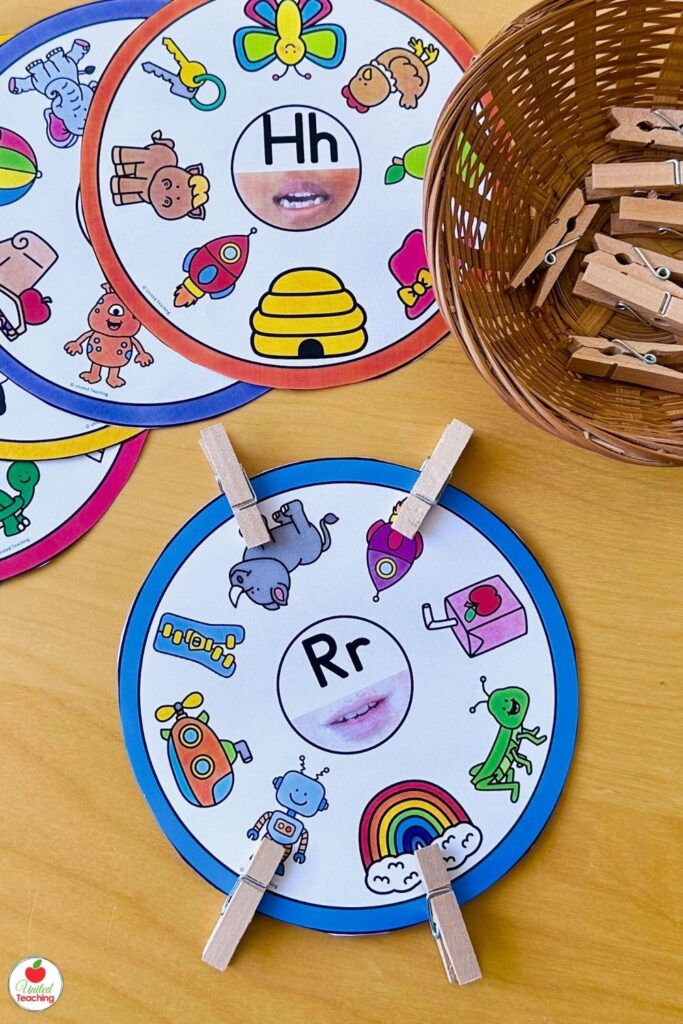
Alphabet Activities and Sound Practice That Build Letter Names and Sounds
These alphabet beginning sounds clip cards help students make the connection between letter names and the sounds letters make. When students can look at the letter and find the pictures with the beginning letter sound, they’re practicing both letter recognition and phonics at the same time.
The clip card activity works beautifully for teaching:
- Beginning sounds in words
- Letter-sound relationships
- Alphabet recognition
- Initial sound identification
- Letters and sounds connections
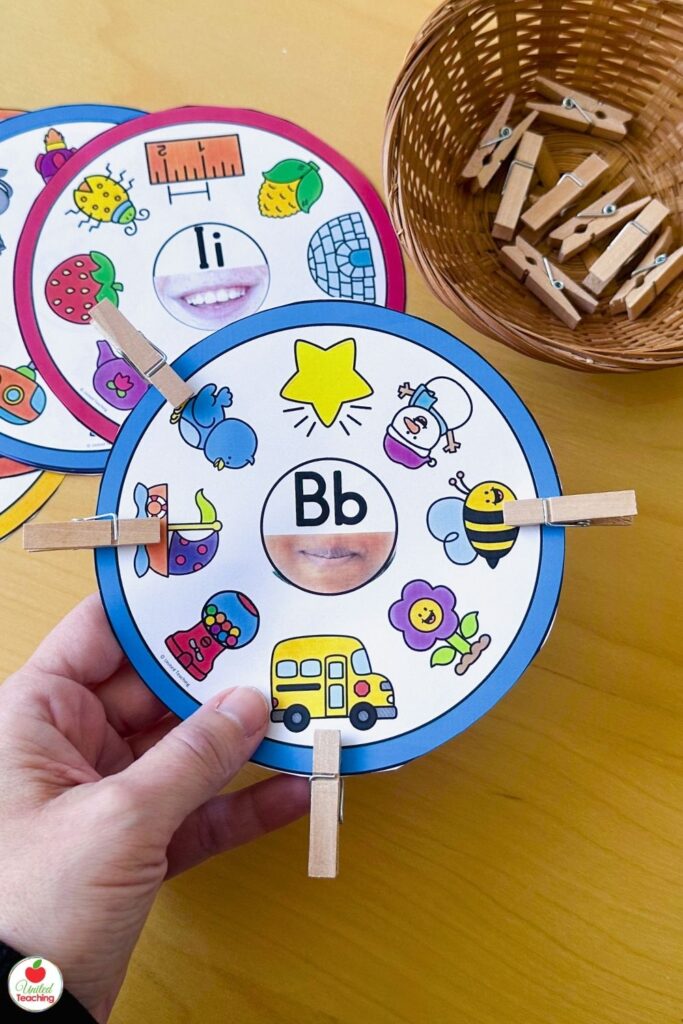
Extra Fine Motor Practice with Clothespin Activities
Using clothespins for this clip card activity gives students extra fine motor practice beyond just the phonics learning. The pinching motion strengthens the same muscles needed for pencil grip and writing. It’s hands-on alphabet learning that serves double duty.
For preschoolers who are still developing fine motor skills, start with larger clothespins. As students build strength, you can switch to smaller clips for an added challenge.
When Practice Actually Feels Like Play
Slip these cards into your daily rotations and watch students light up as each confident clip reinforces their letter-sound knowledge. You’ll love how quick the prep is and how meaningful the practice becomes.
These sound activities don’t feel like work to students—they feel like play. And that’s exactly what makes them so effective for learning letter sounds and building phonics skills.
So the next time that struggling student looks at a picture of a dog, they’ll feel the /d/ sound in their mouth, see it on the card, and clip that clothespin to the picture with the beginning sound with confidence. They’ll know exactly which letter makes that sound because they’ve practiced it in a way that actually sticks.