



By March, your kindergarteners know how centers work. They can transition independently, stay on task without constant reminders, and they actually want to do the activities — which means spring is the perfect time to refresh your math rotations with something new.
These spring math centers for kindergarten cover every key skill from counting and ten frames through addition, subtraction, shapes, and measurement. Whether you’re looking for free ideas to set up with materials you have on hand, or a print-and-go pack that covers the whole season, this post has you covered.
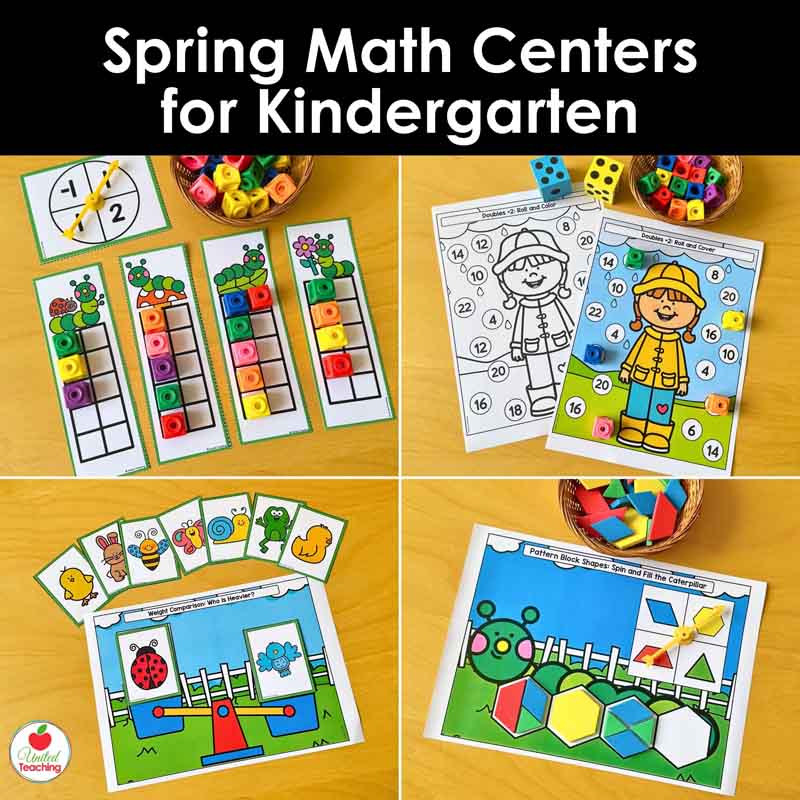
Ten Frames and Number Sense Centers
Number sense is the foundation of everything else in kindergarten math, and spring is a great time to reinforce it through hands-on center games. These activities work well for students still solidifying counting and one-to-one correspondence, as well as students who are ready for more challenge.
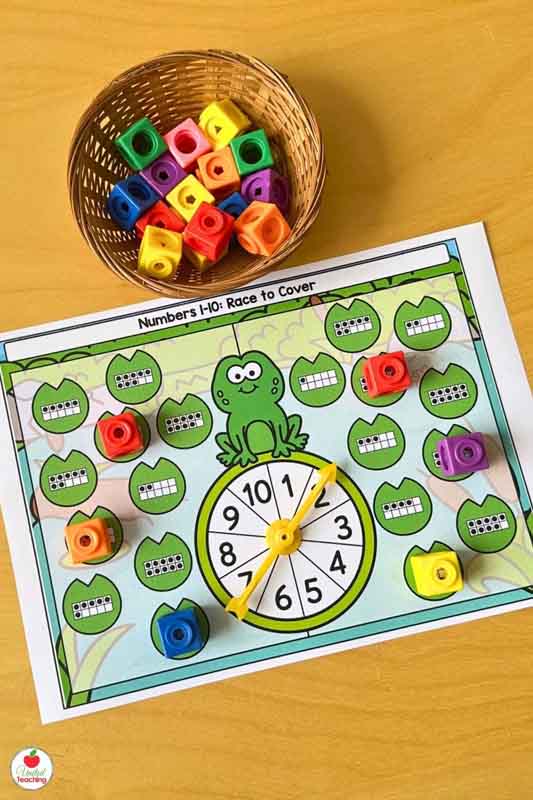
Ten Frames 1–10
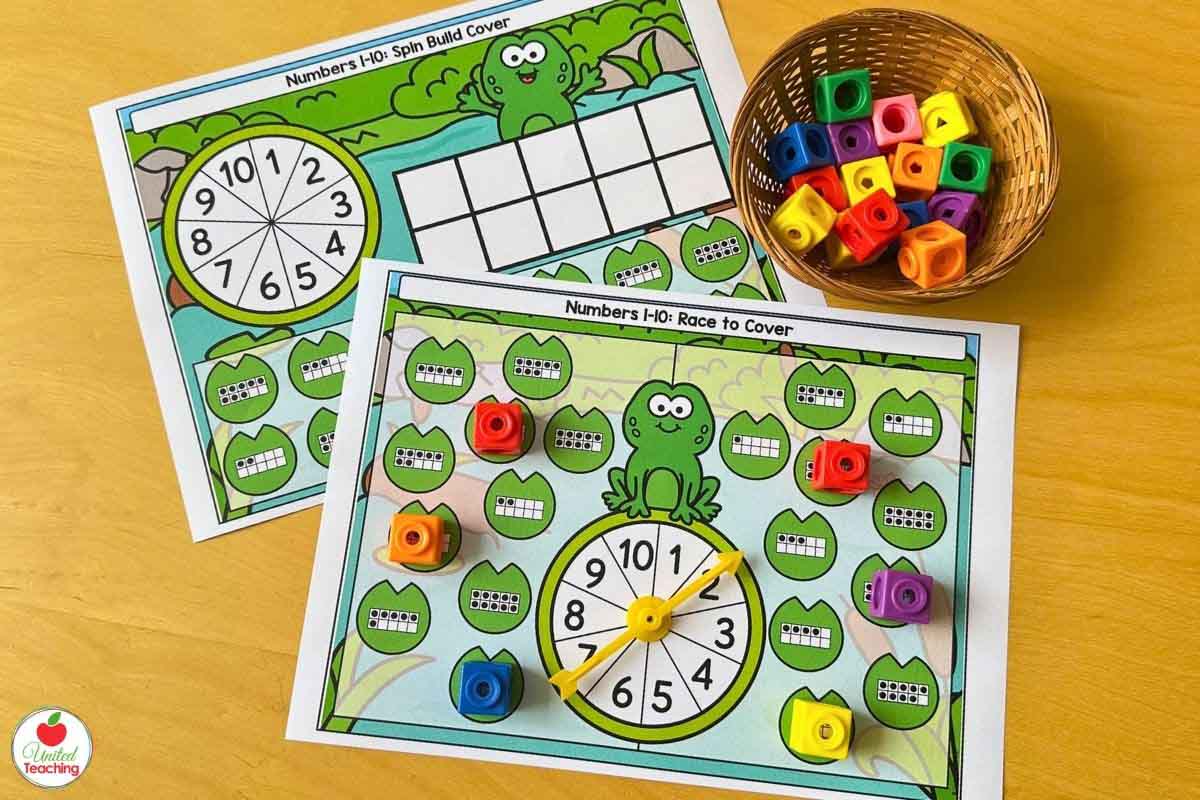
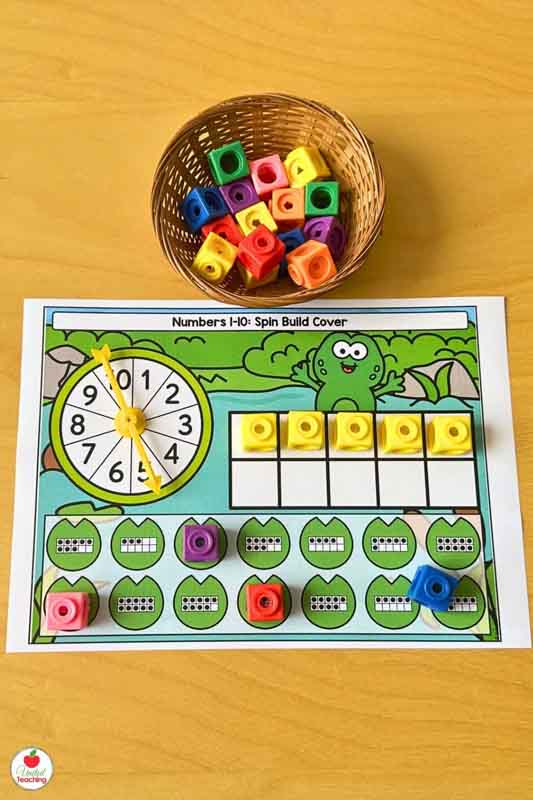
Students use counters, mini erasers, or cubes to fill ten frame mats as they spin or roll for a number. The key with ten frames is having students say the number, fill the frame, and then check — that verbal component is what moves this from a fine motor activity to genuine number sense practice.
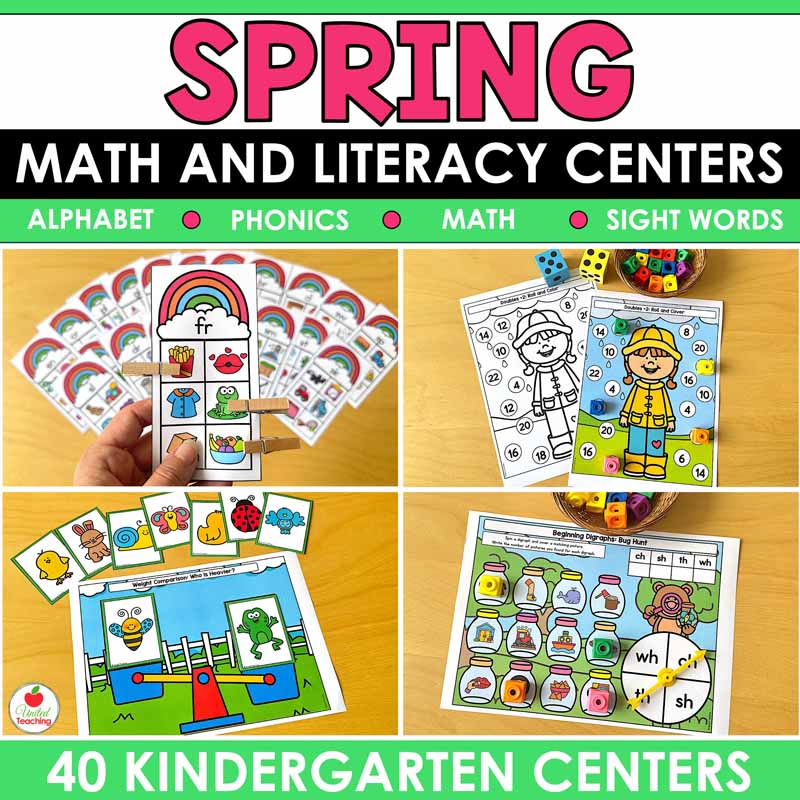
The Spring Math and Literacy Centers pack includes individual ten frame mats, a partner game format, and a recording worksheet for accountability — all with spring themes so the season feels fresh.
Ten Frames 11–20
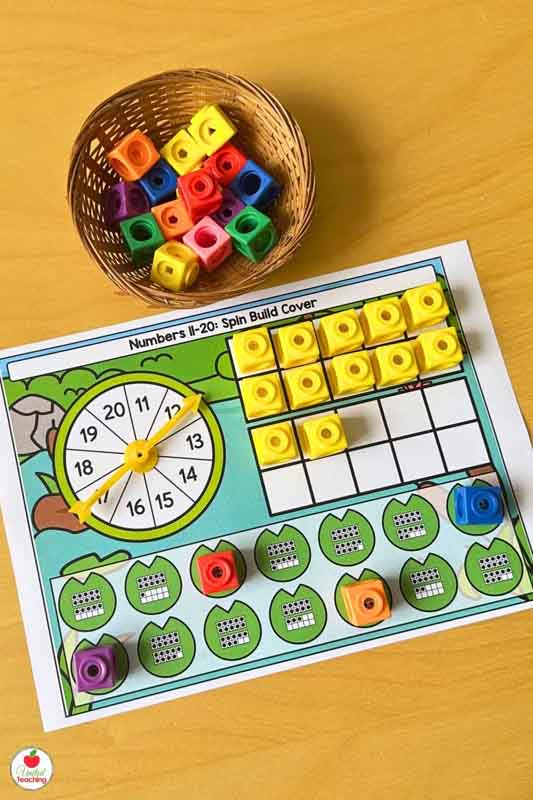
Once students are solid on numbers to 10, teen number ten frames are the next step. The visual of a full ten frame plus extra counters is one of the most powerful ways to help kindergarteners understand that 13 means “ten and three more” — which is the conceptual foundation for later place value work.
Free tip: Laminate blank ten frame mats and use dry-erase markers. Students roll a die (or use a numeral card from 11–20), draw the corresponding dots across two ten frames, and wipe clean to repeat.
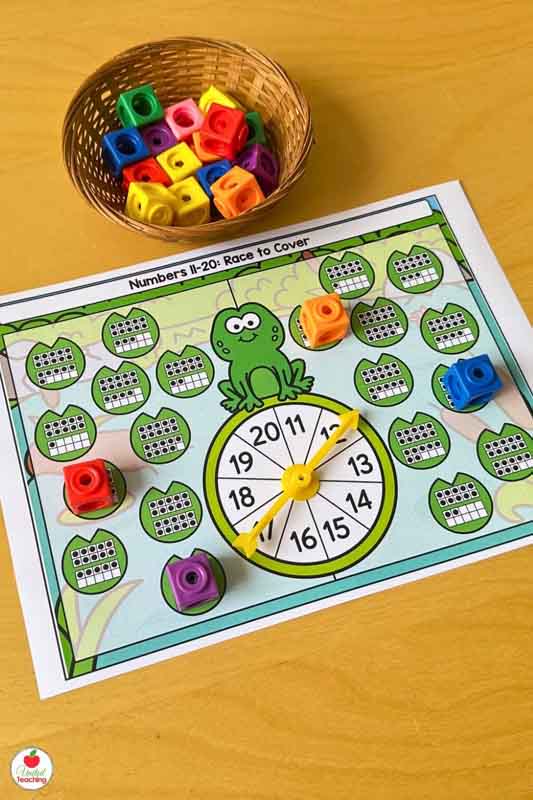
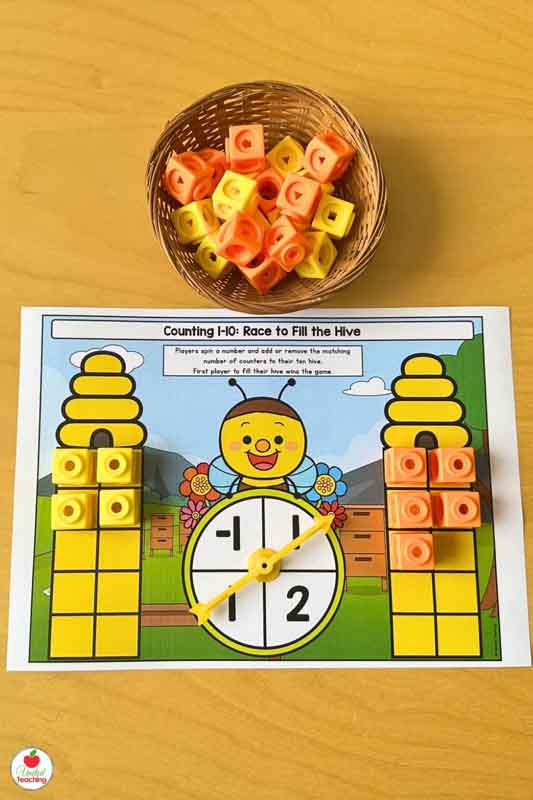
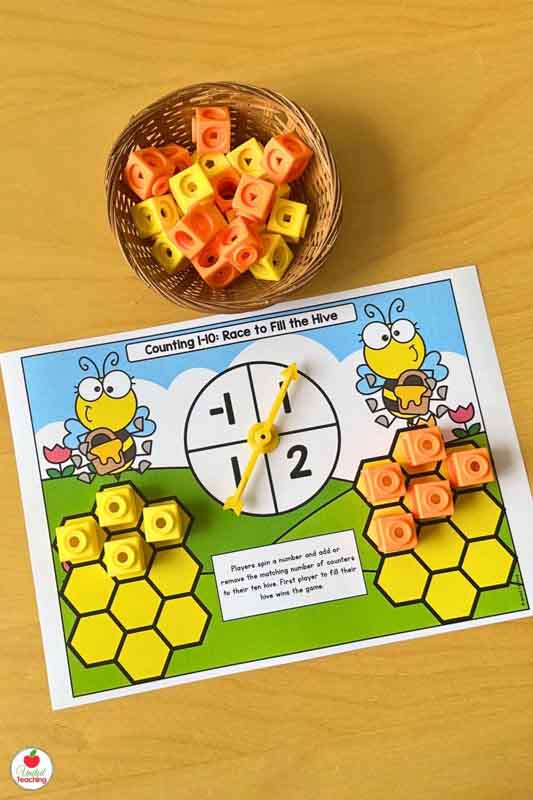
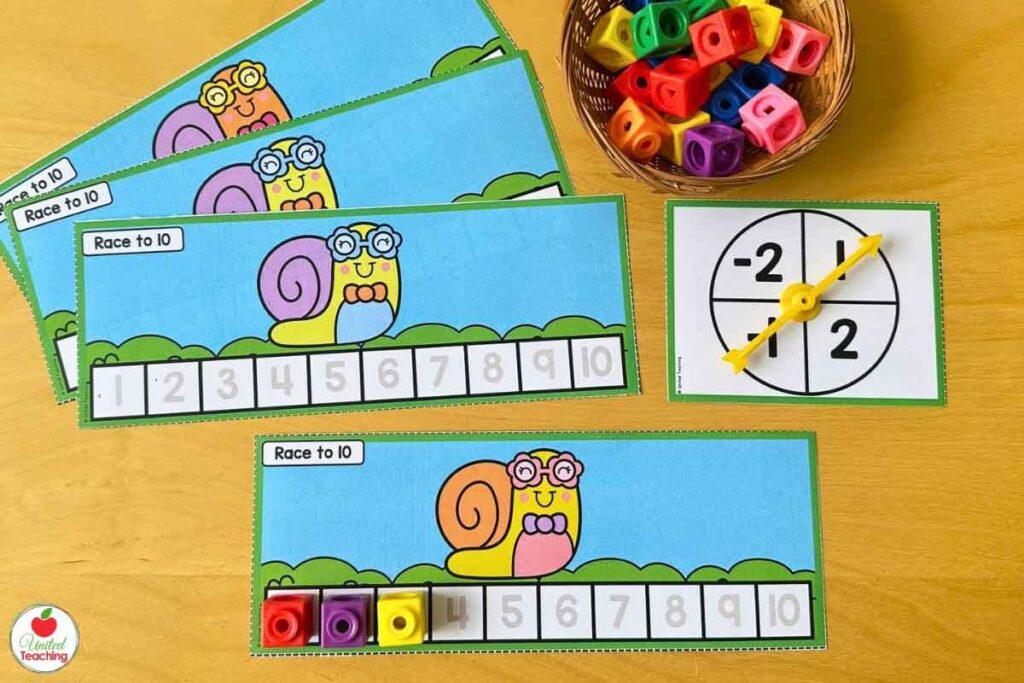
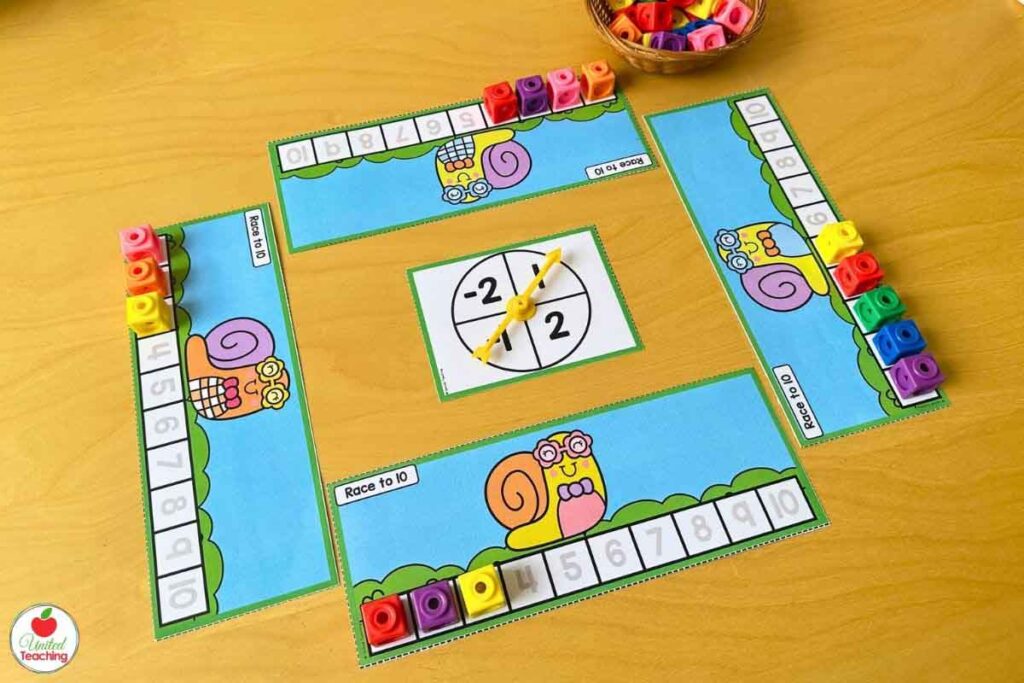
Roll and Race / Spin and Race to Fill a Ten Frame
Partner games make ten frame practice genuinely engaging. Students take turns rolling or spinning, filling their frame, and racing to be first to fill all ten spaces. The competitive format means students get repeated practice without it feeling like drill. Multiple games are included to keep the practice engaging.
Place Value Centers
Tens and Ones: Catch the Bugs Game
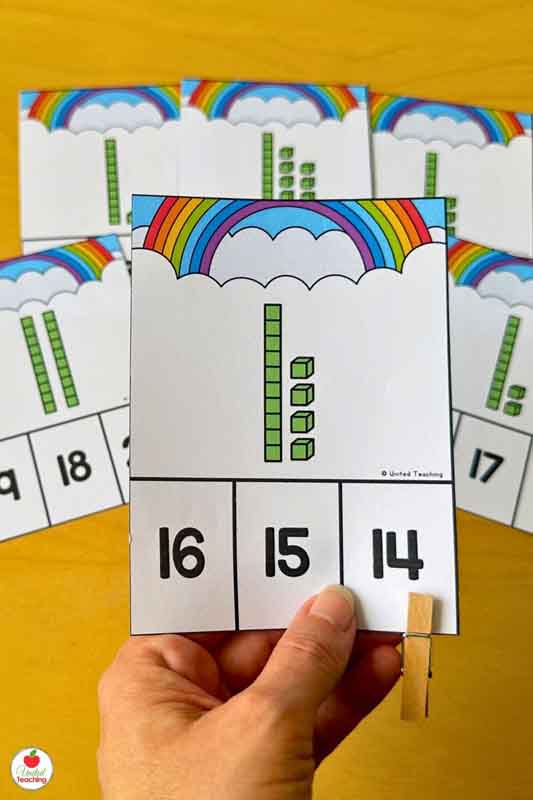
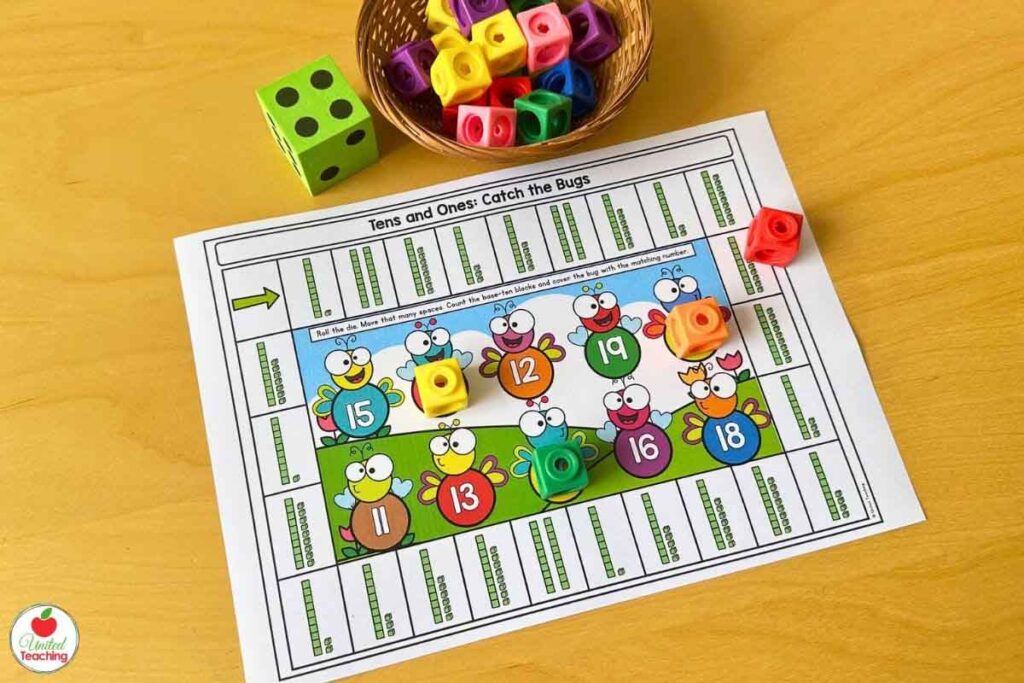
Students practice decomposing numbers into tens and ones using clip cards and by playing a fun math game. In the Catch the Bugs math game, the student rolls and moves around the game board. They identify the number represented by the base ten blocks and cover the matching numeral. This is one of those centers that looks simple but covers a genuinely difficult conceptual shift for kindergarteners.
Tens and Ones: Race to Cover
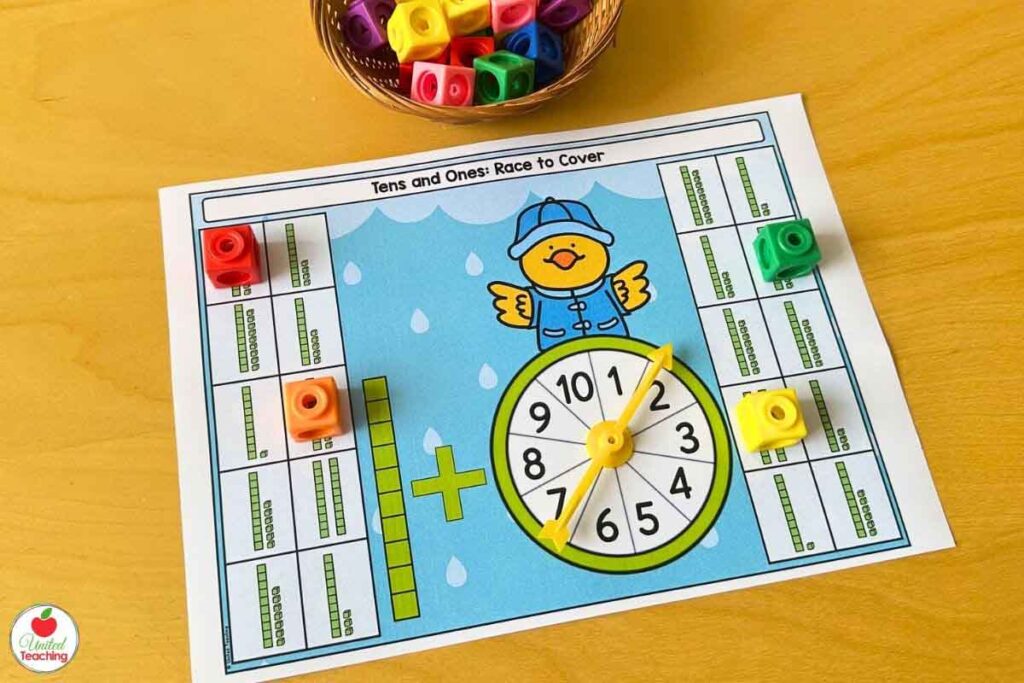
Students spin to build numbers represented as tens and ones, then race to cover matching base ten blocks on their board. This builds the connection between the visual representation (rods and units) and the written numeral — a connection that doesn’t come automatically for most students.
Mystery Numbers
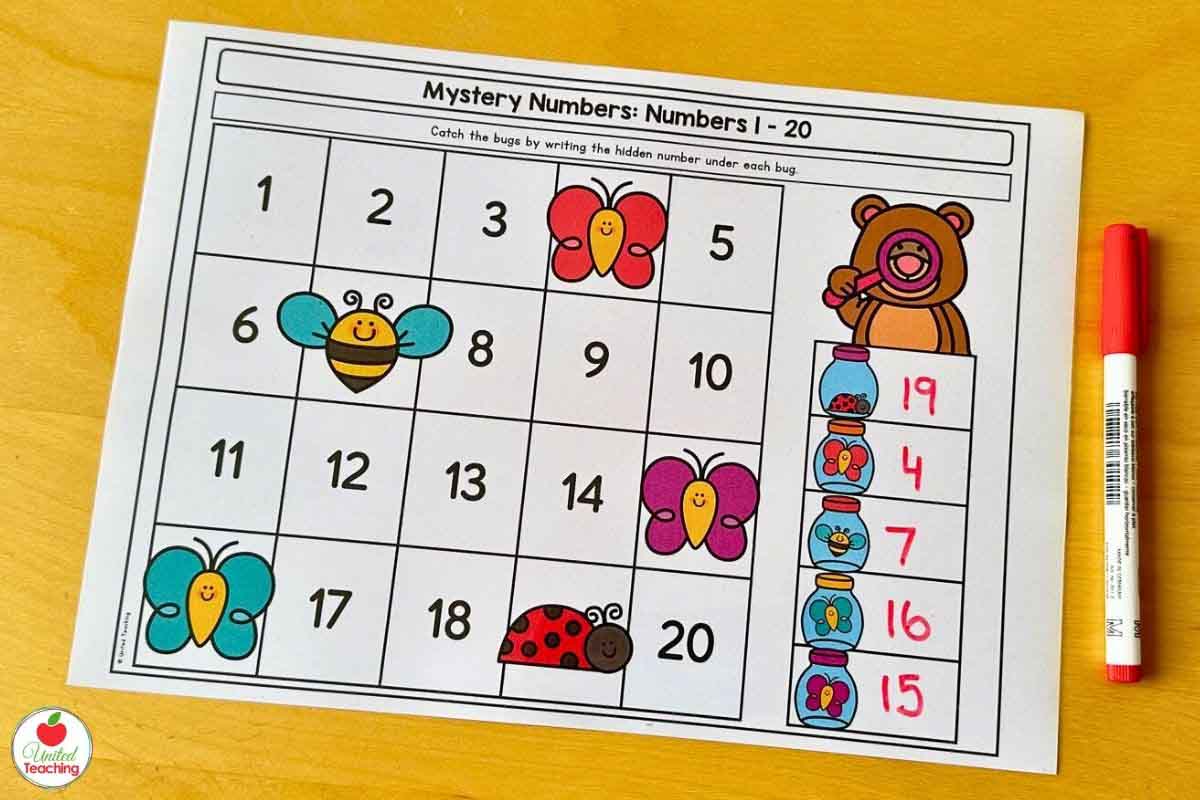
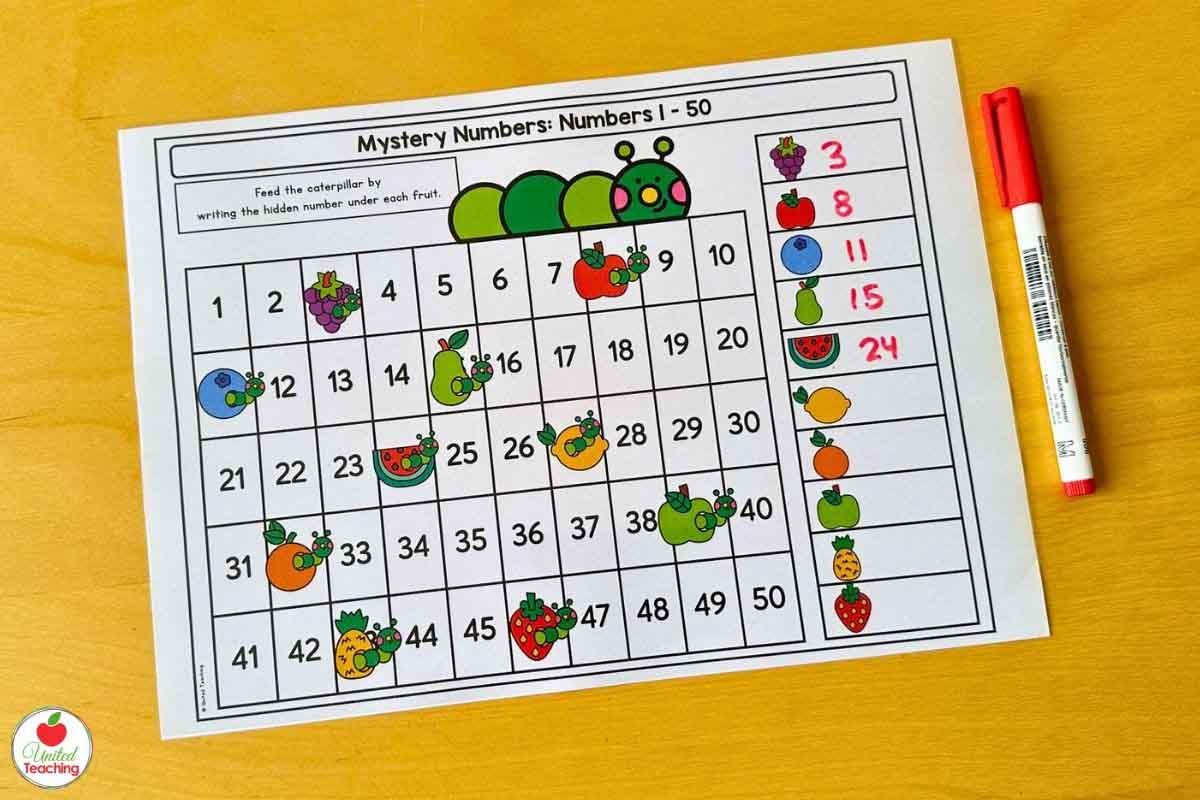
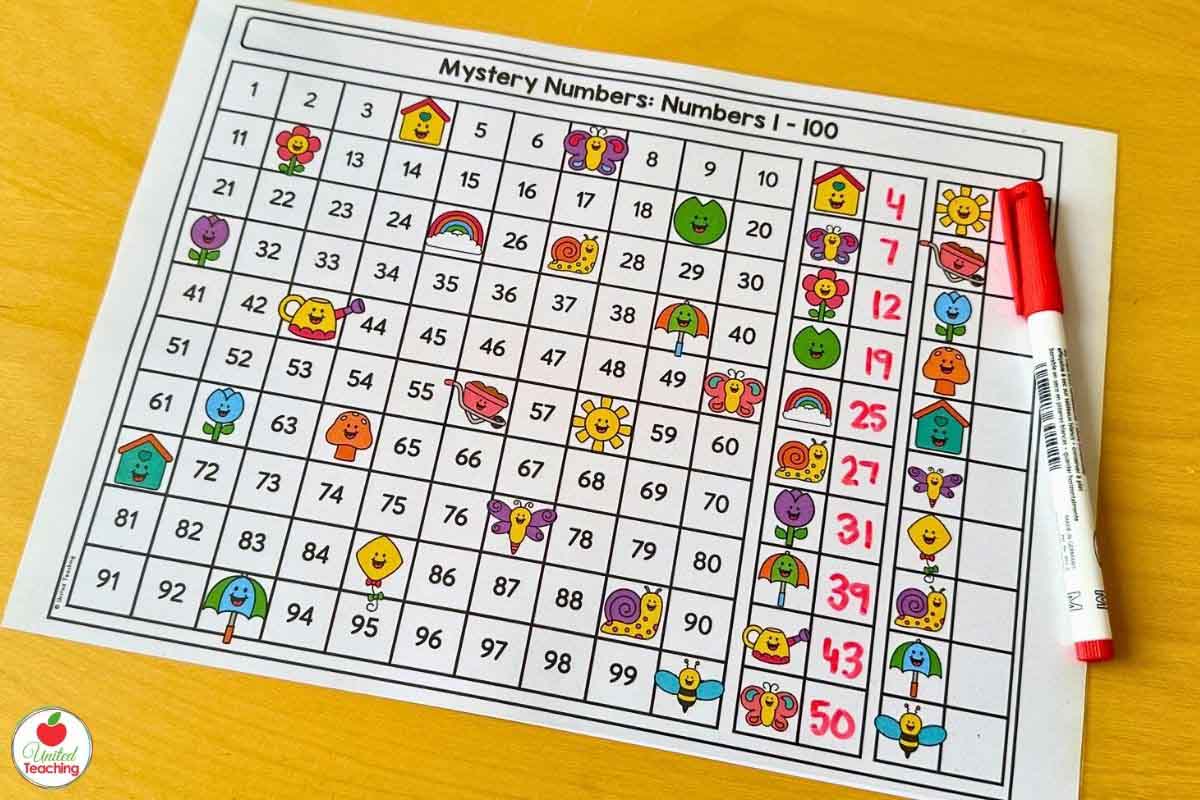
Students use clues to identify mystery numbers on mats covering 1–20, 1–50, and 1–100. This is an excellent differentiation tool because you can assign different mats to different students based on where they are in their number sense development.
Comparing Numbers Centers
Number Comparison Clip Cards
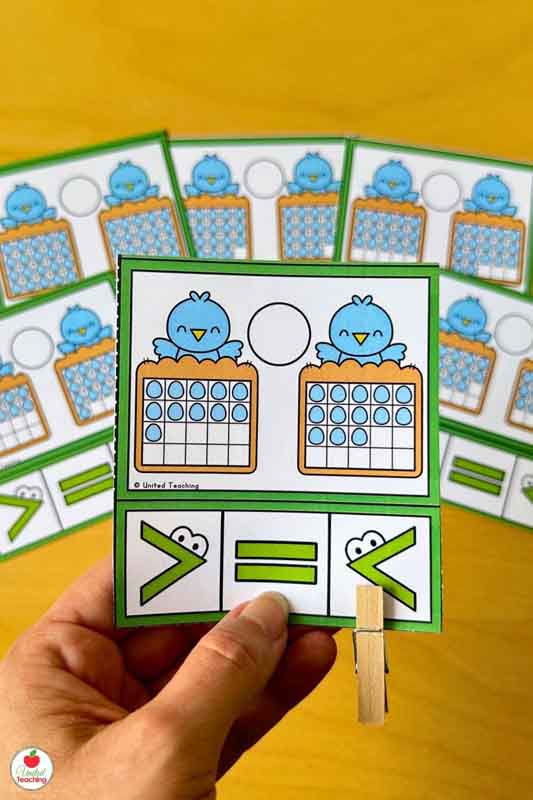
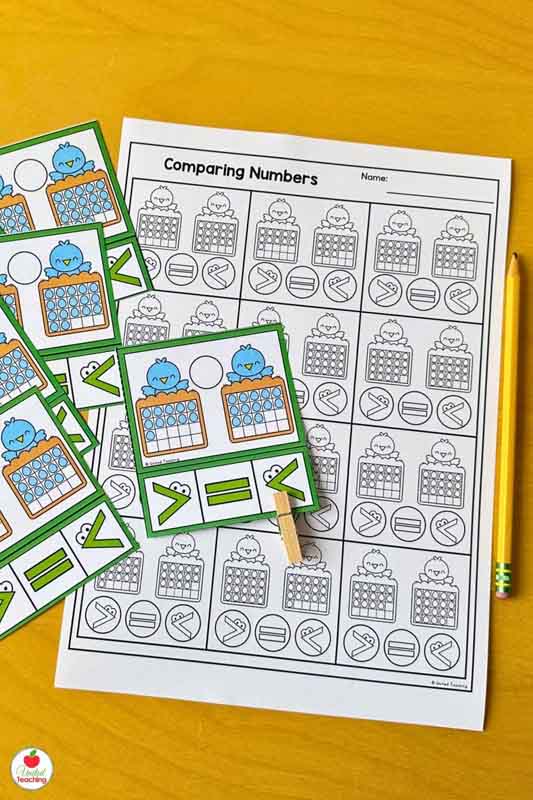
Students look at two numbers and clip the comparison symbol. Including a recording worksheet turns this from a self-check activity into something you can use for quick assessment. The recording sheet also adds accountability so students stay engaged with the task rather than speed-clicking through the cards.
Making 10 Centers
Making 10 is one of the most important number relationships in early math because it becomes the foundation for mental addition strategies. These centers give students repeated, concrete practice with that relationship.
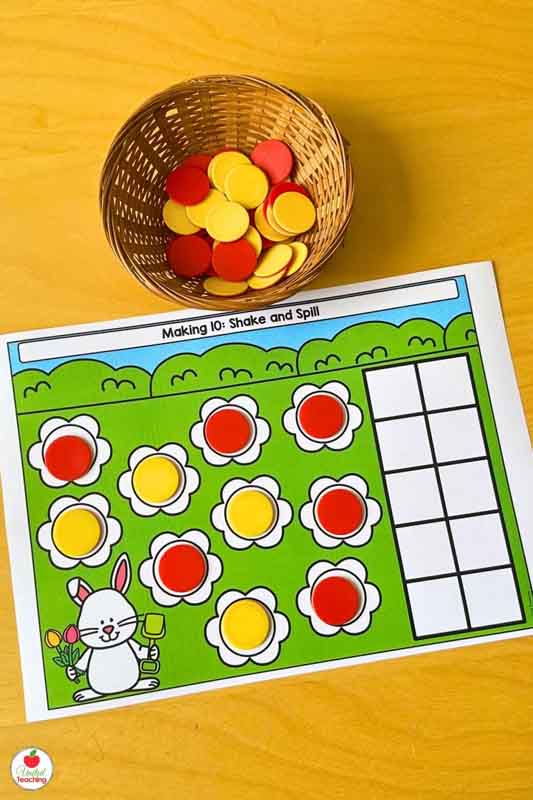
Making 10 Shake and Spill
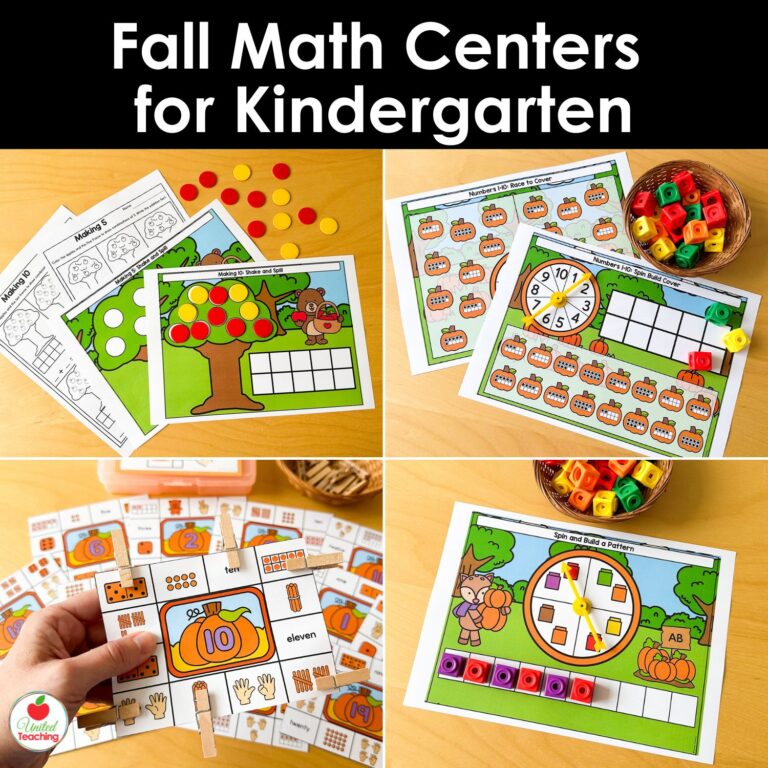
Students shake two-sided counters (red on one side, yellow on the other) and spill them onto a spring-themed mat. They fill the ten frame and count how many of each color, then write the equation on their recording sheet. Over time, students start to anticipate the missing quantity — “I have 7 yellow, so I know I need 3 red to make 10” — which is exactly the number sense you’re building toward.
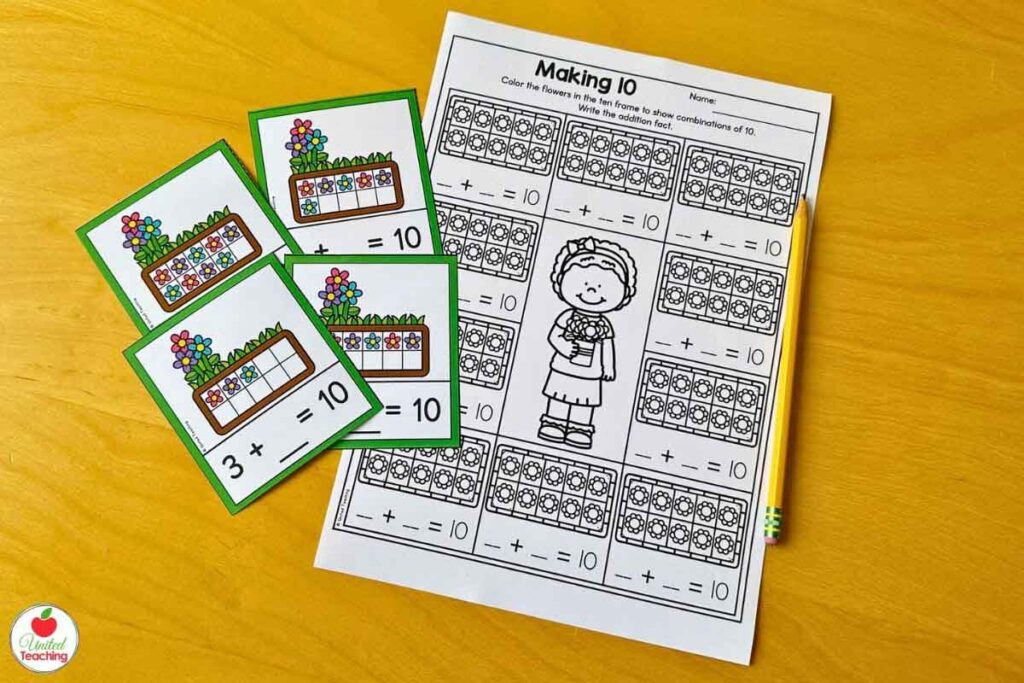
Making 10 Task Cards
Task cards give you a flexible format that works for centers, small group instruction, or early finishers. Students look at a partial ten frame and determine how many more are needed to make 10. Pair these with unifix cubes or counters so students can physically check their thinking. A worksheet is included for students to reinforce the hands-on activity.
Addition Centers
Spring addition centers work best when they mix concrete practice (manipulatives, spinners, dice) with a game format that gives students repeated practice across the session. These five activities hit that balance well.
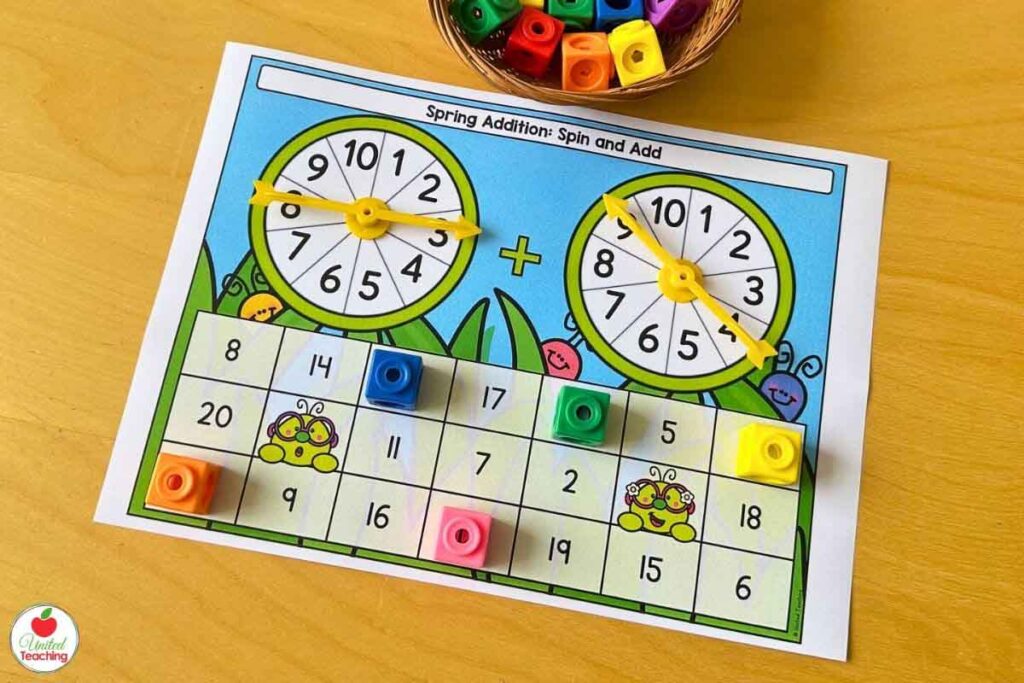
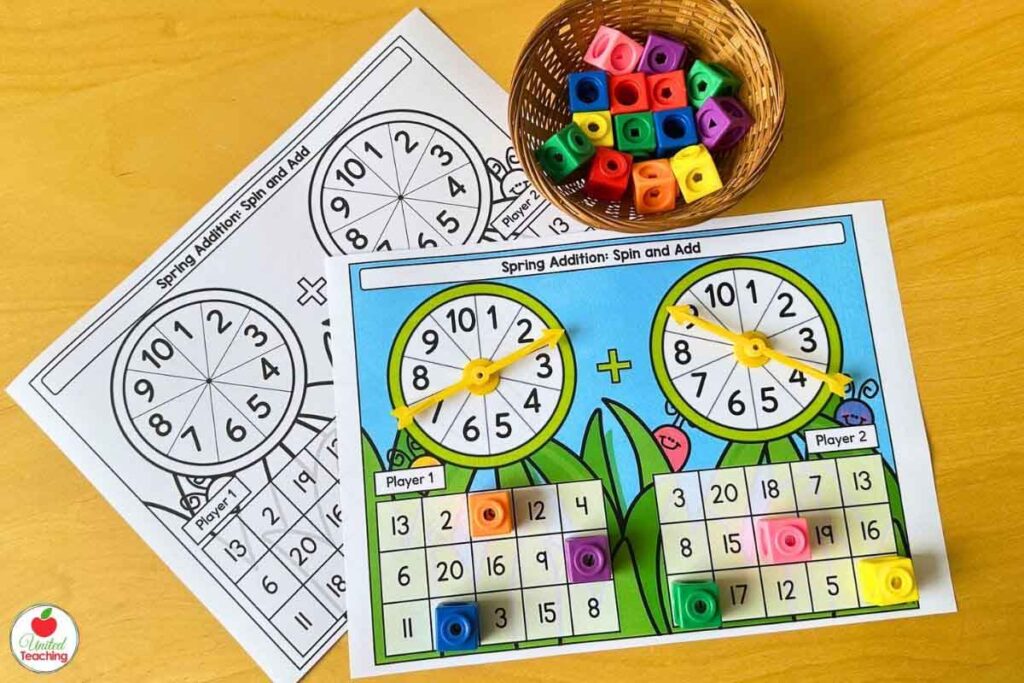
Spring Addition: Spin and Add
Students spin two numbers, add them together, and cover the sum. The spring spinner design keeps the format fresh even after a few weeks in rotation. The game can be played solo or as a partner game.
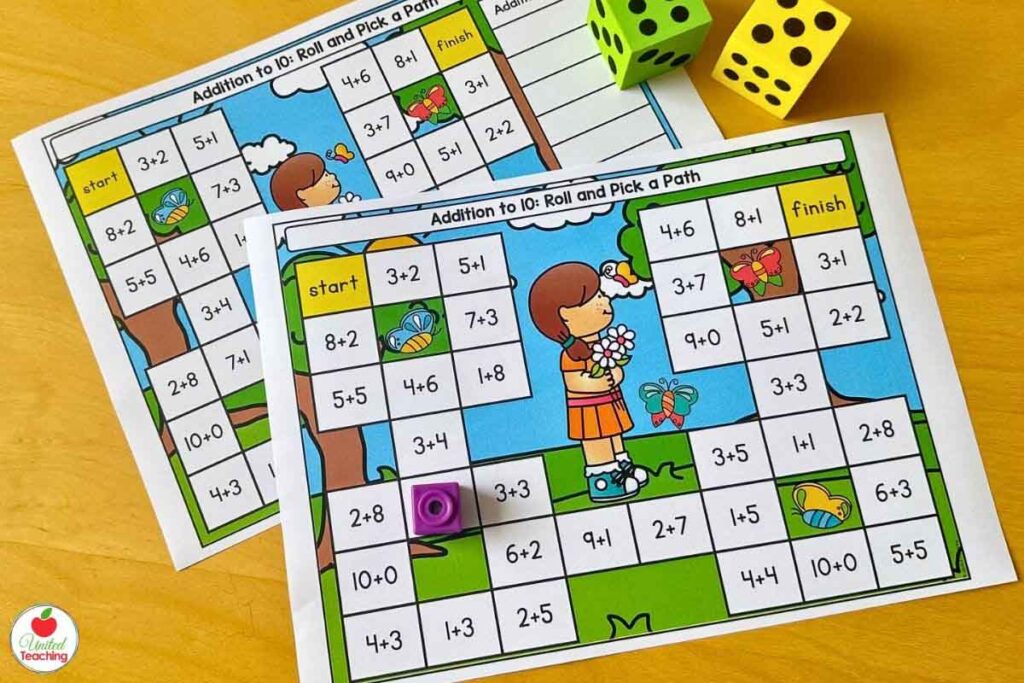
Addition Path Game Boards
Board games are center gold for addition practice because every turn requires students to solve a problem. Students roll dice, solve the addition equation on their space, and move along the path.
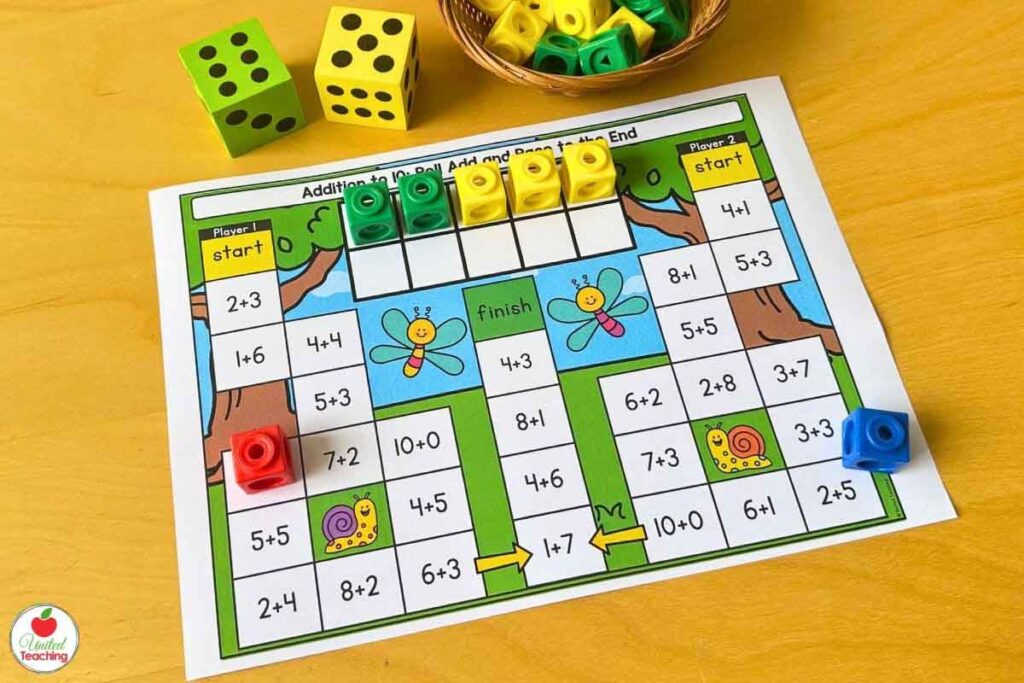
Addition Race to End (Partner Game)
A competitive version of the path game — first player to reach the end wins. Includes built-in ten frame for students to check their answers. The spring race theme adds motivation. Keep these partner games in your rotation for students who need high repetition practice on addition facts to 10.
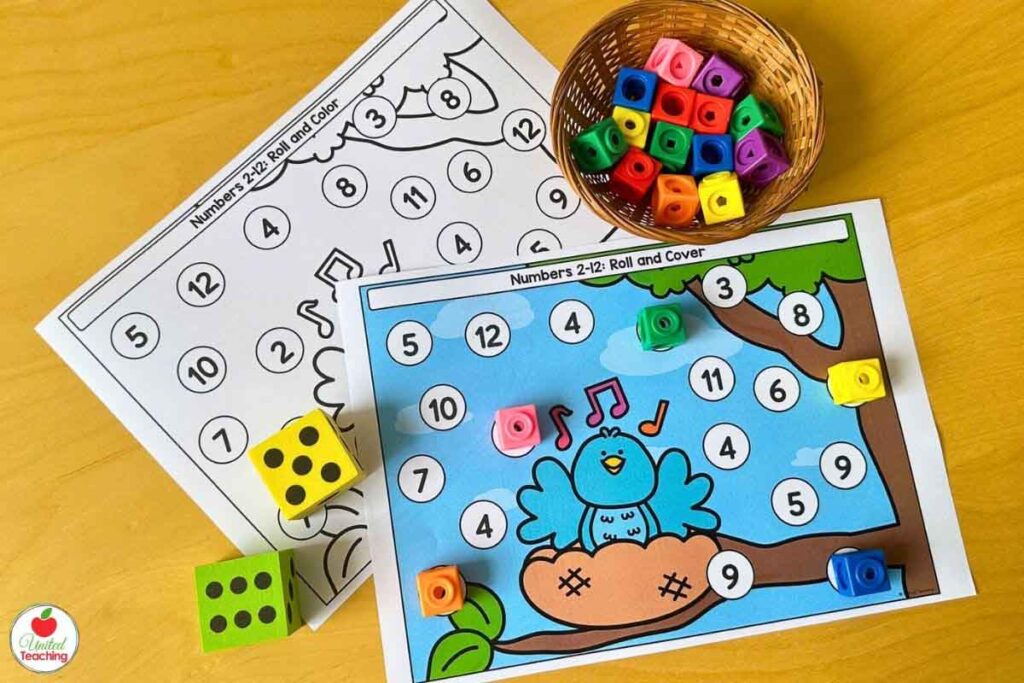
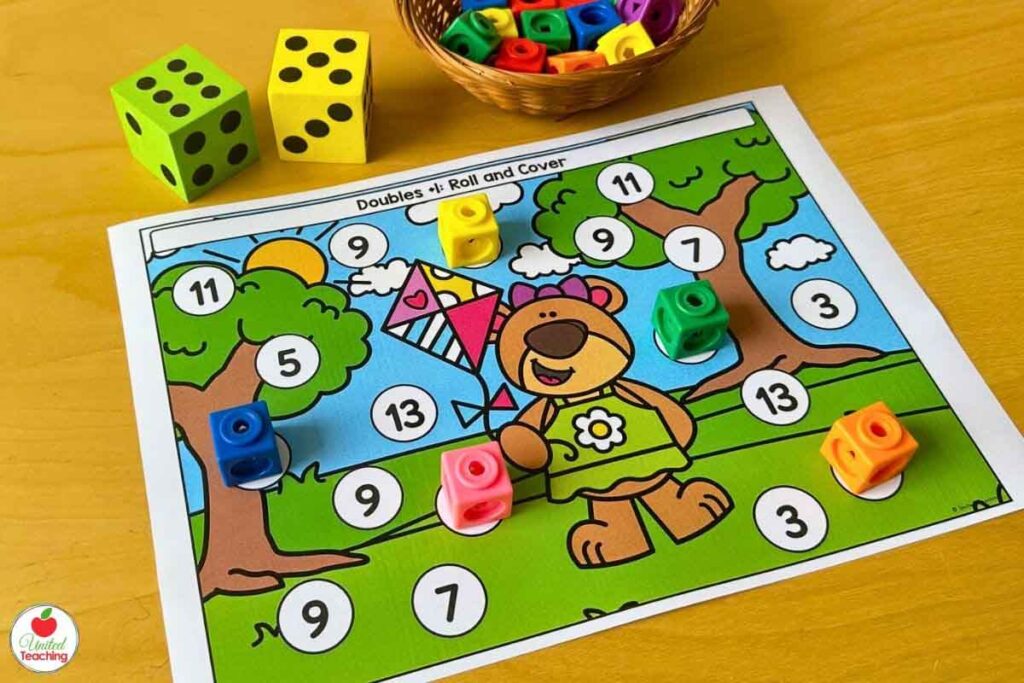
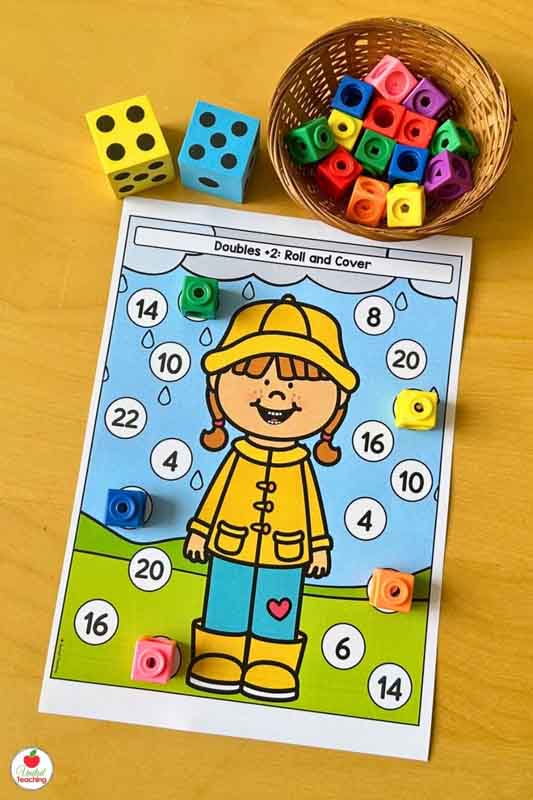
Spring Roll and Cover Mats
Three variations are included in the pack: Cover 2–12 (basic addition), Doubles +1, and Doubles +2. The doubles mats make this an easy differentiation tool — students working on basic addition use the standard mat, while students ready for near-doubles strategies use the +1 and +2 versions.
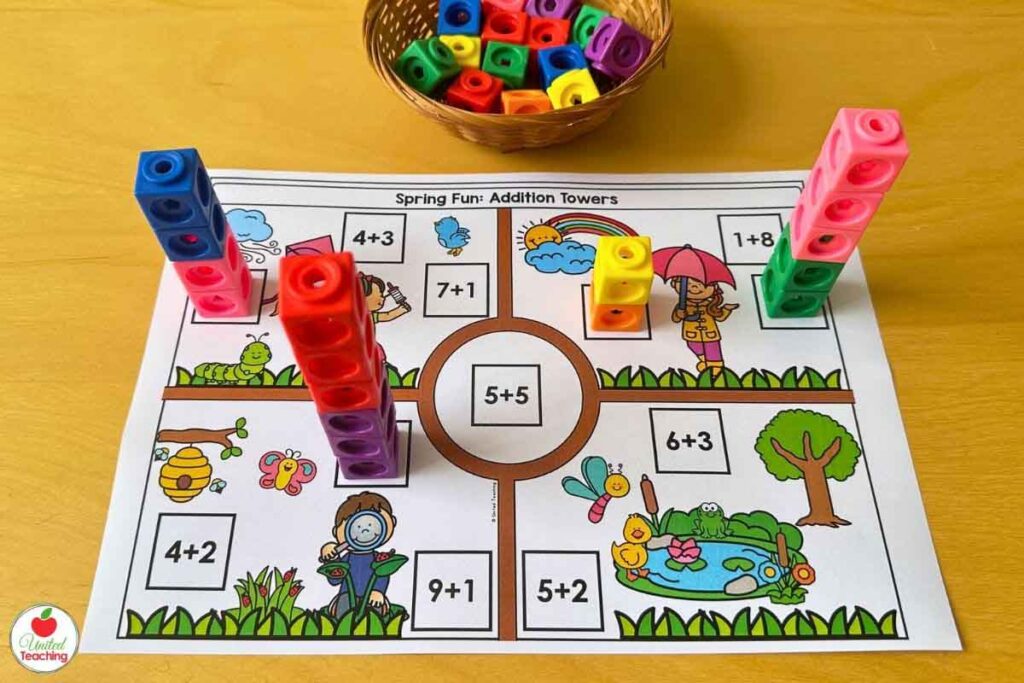
Spring Village Addition Towers
Students build towers of connecting cubes, then record the addition equation their towers represent. The physical building element is important — it gives students a concrete representation to count before transitioning to the abstract equation. A recording worksheet is included for accountability.
Subtraction Centers
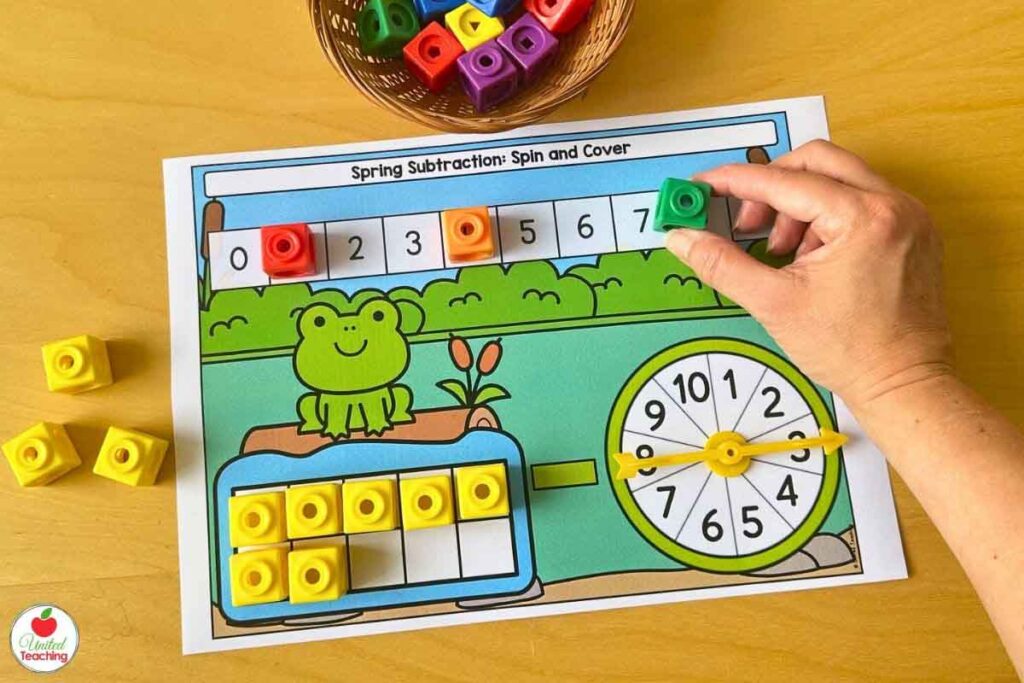
Subtraction Spin and Cover
Students spin a subtraction equation, solve it, and cover the answer on their board. Both individual and partner game formats are included, so you can adjust based on how many students are at a center and how much verbal math talk you want to encourage.
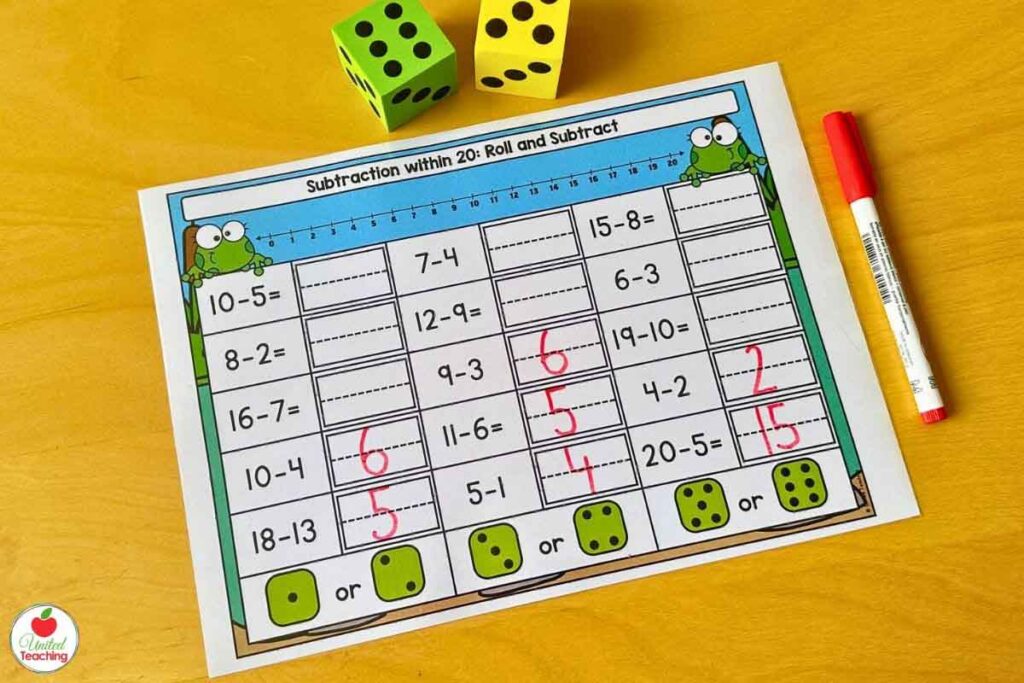
Subtraction Roll and Solve
Students roll a die and solve the subtraction problem in the matching column. Recording the equations builds fluency over time.
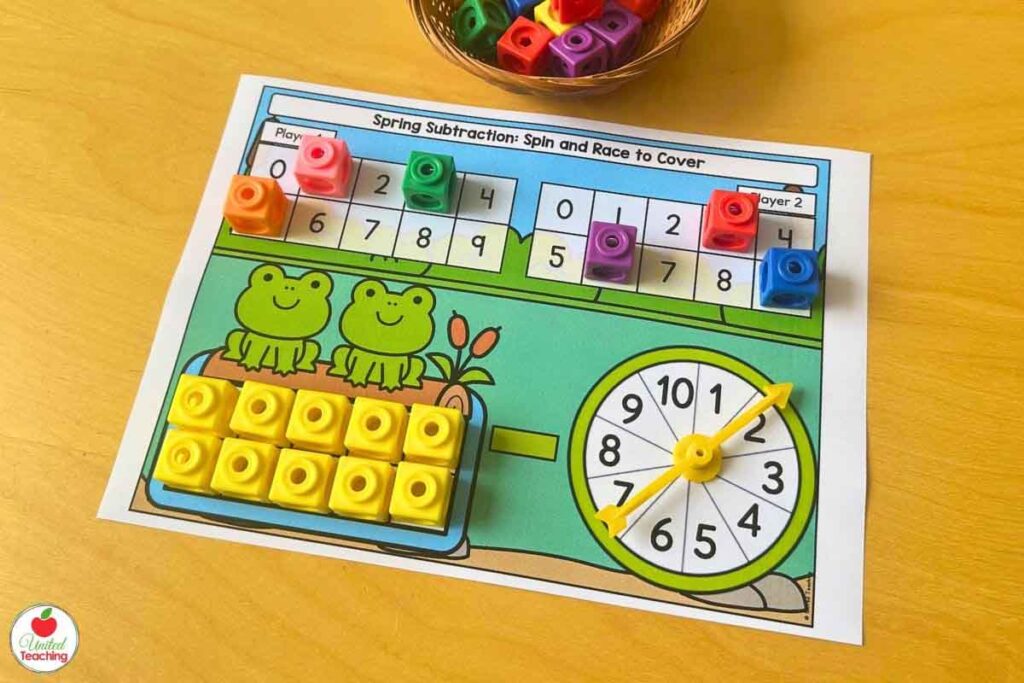
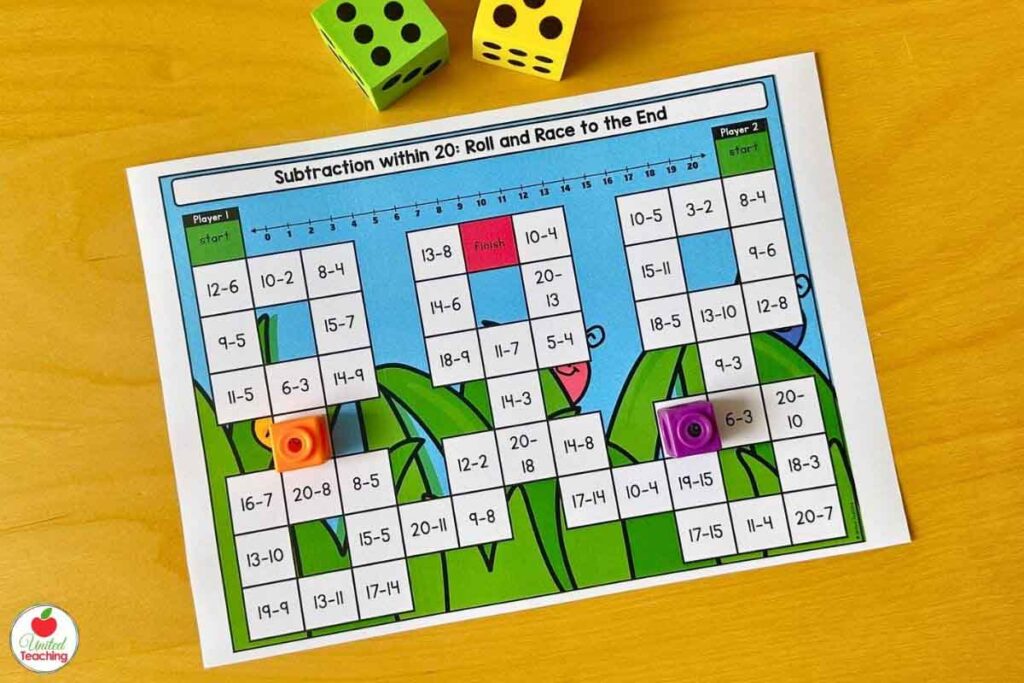
Subtraction Roll and Race to the End
A partner race game for subtraction practice — same format as the addition race, which means students who have already used the addition version need almost no directions. Familiar formats lower the cognitive load so students can focus entirely on the math.
Shapes, Measurement, Time, and Patterns Centers
These centers cover the geometry, measurement, and data standards that can get squeezed out by number sense and operations work. Cycling them through your rotations in spring ensures students get the exposure they need before end-of-year assessments.
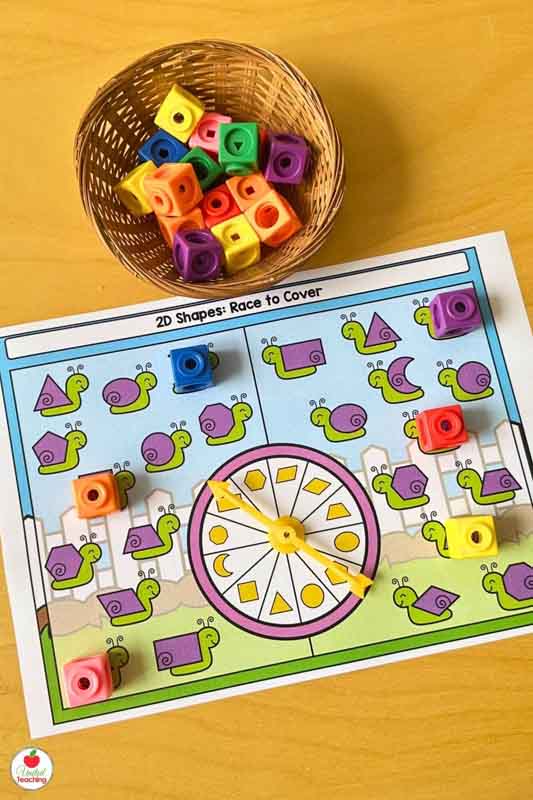
2D Shapes: Spin and Race to Cover
Students spin a 2d shape, identify the matching snail, and race to cover all shapes on their board. The fun snail theme is a hit with kindergarteners. Pair this with a quick introduction to shape attributes at circle time — sides, vertices, equal sides — so students are sorting by properties, not just visual memory.
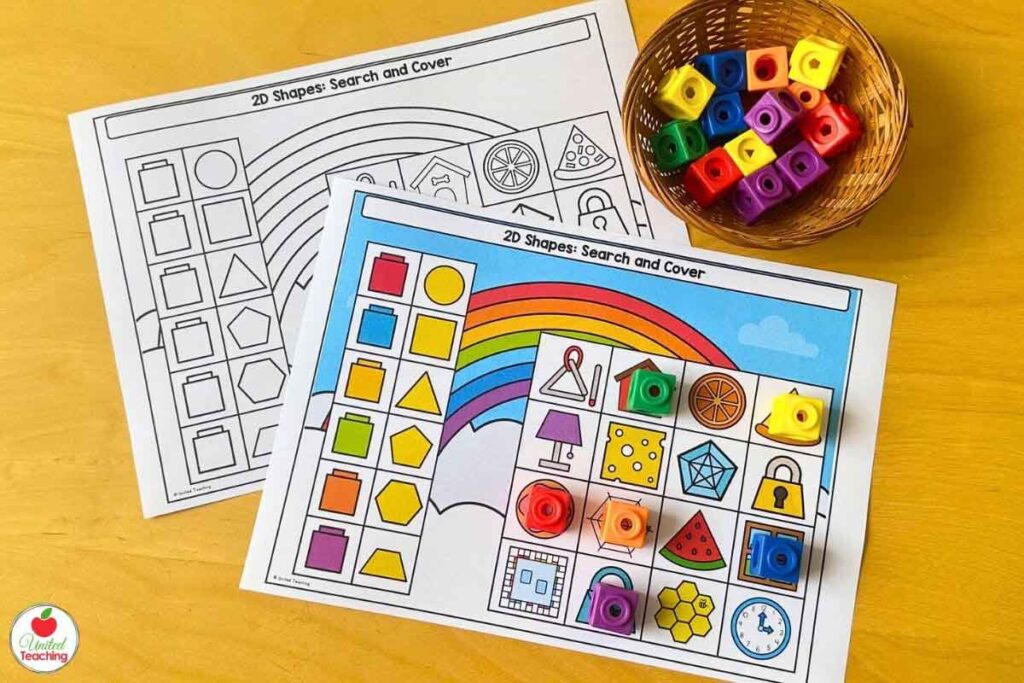
2D Shapes: Search and Cover (Real-World Representations)
Students use a 2d shape color code and cover real-world objects that match the 2D shapes — a window is a rectangle, a pizza slice is a triangle, a clock face is a circle. This is an important step beyond matching shapes to shapes, because it’s how shapes appear on assessments and in the real world.
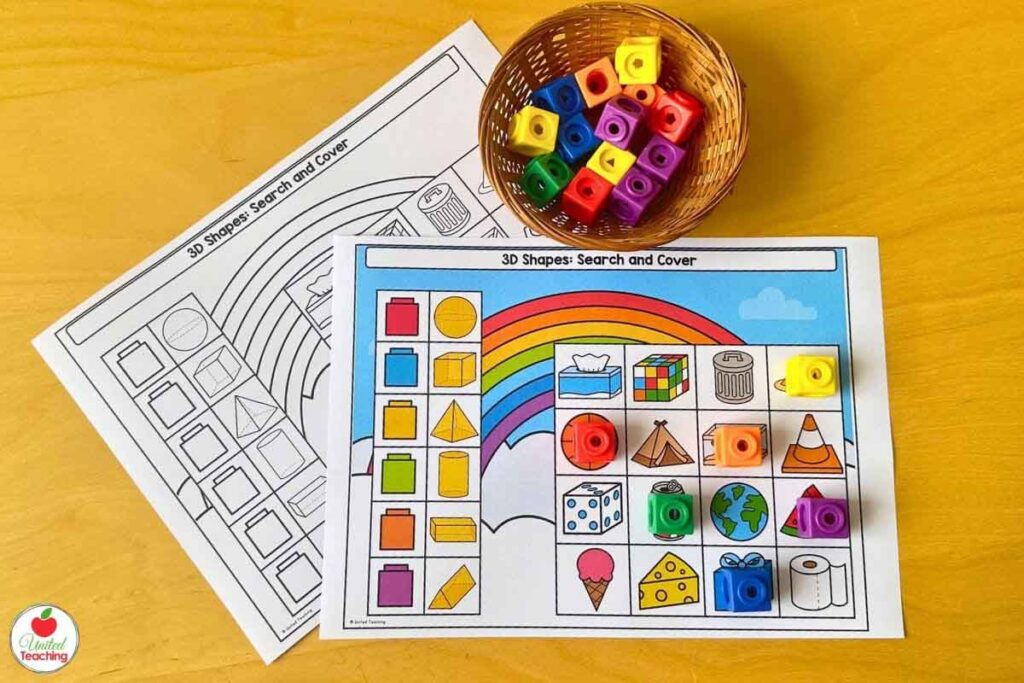
3D Shapes: Search and Cover
Same format as the 2D version, but with real-world pictures of spheres, cubes, cylinders, and cones. If 3D shapes is a standard in your curriculum, these centers make it easy to give students repeated exposure without extra planning on your end.
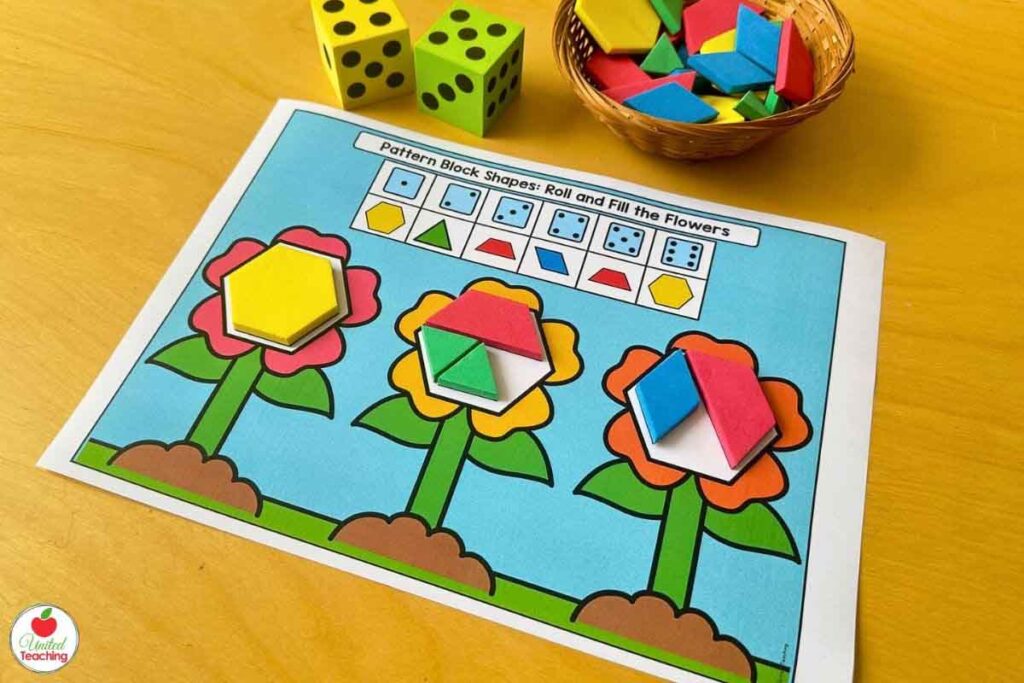
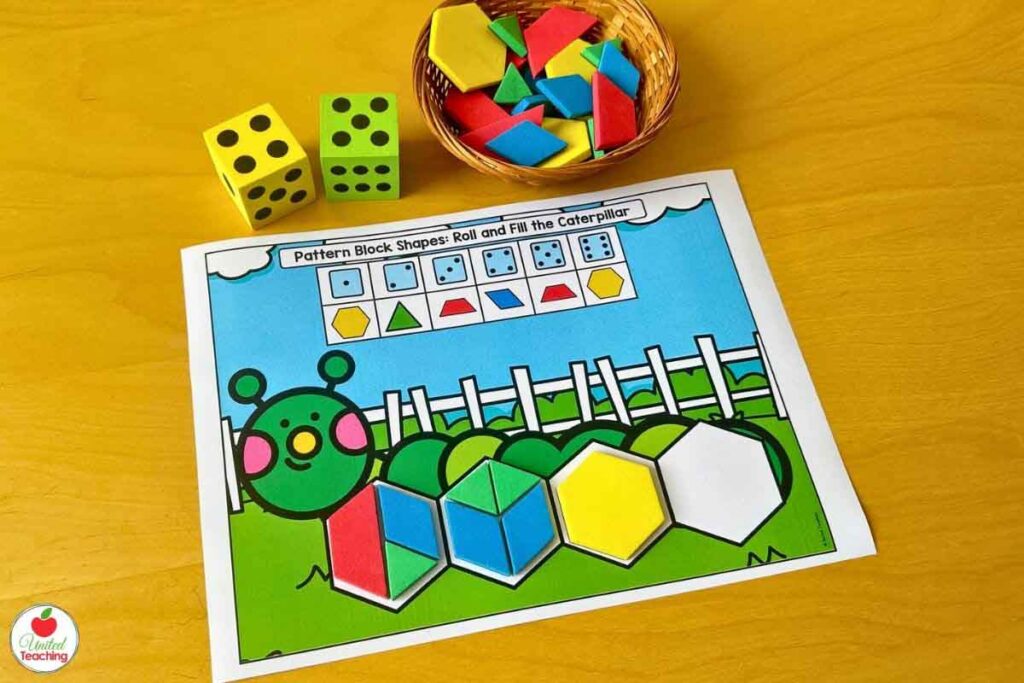
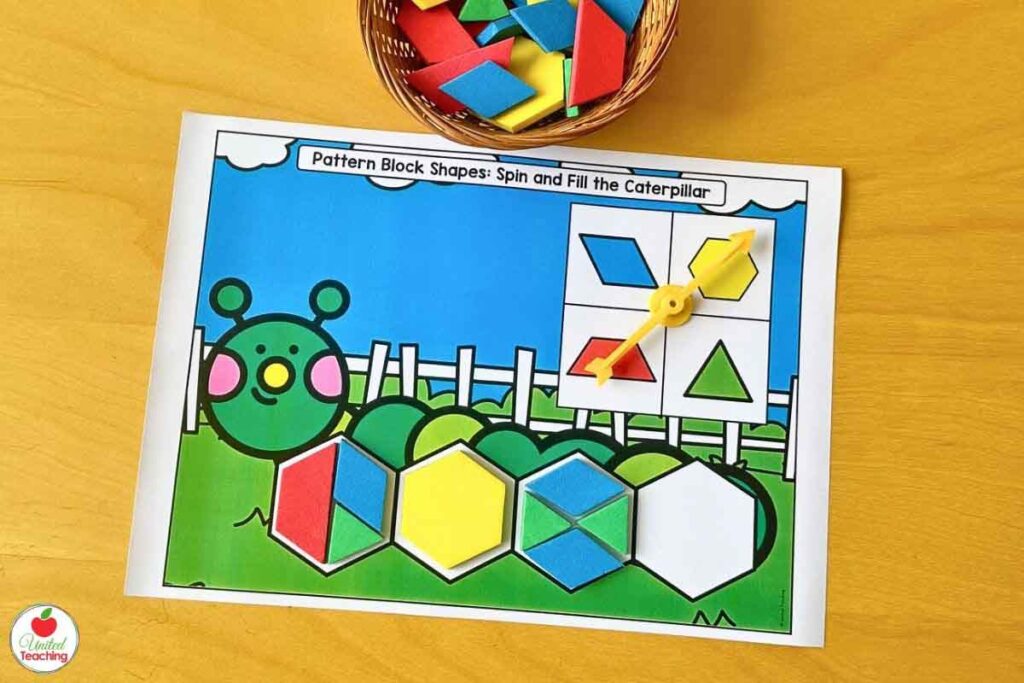
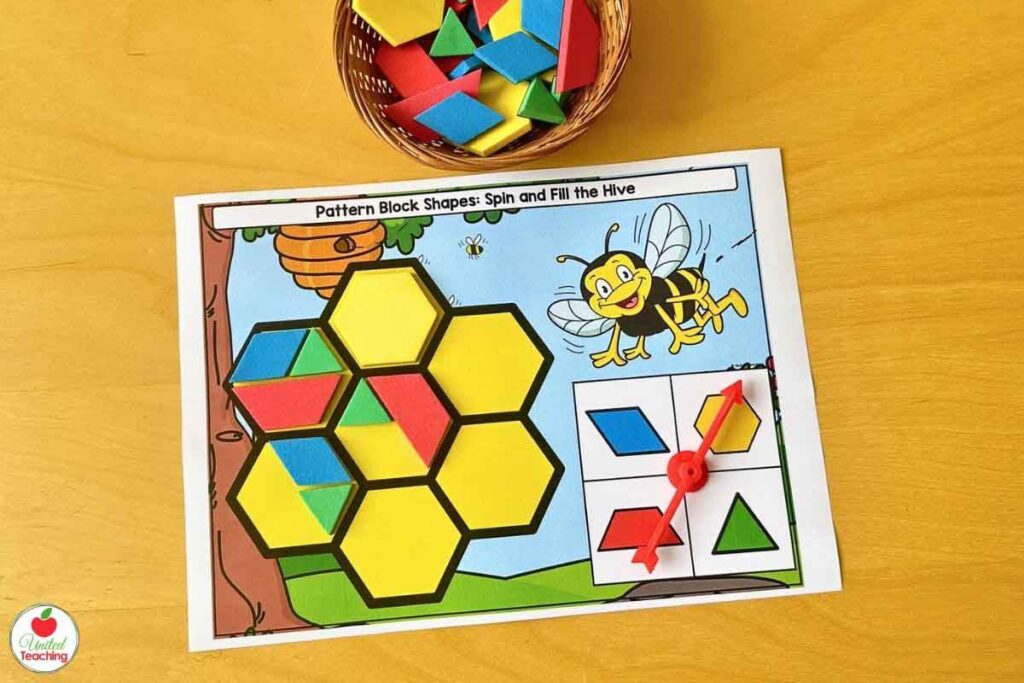
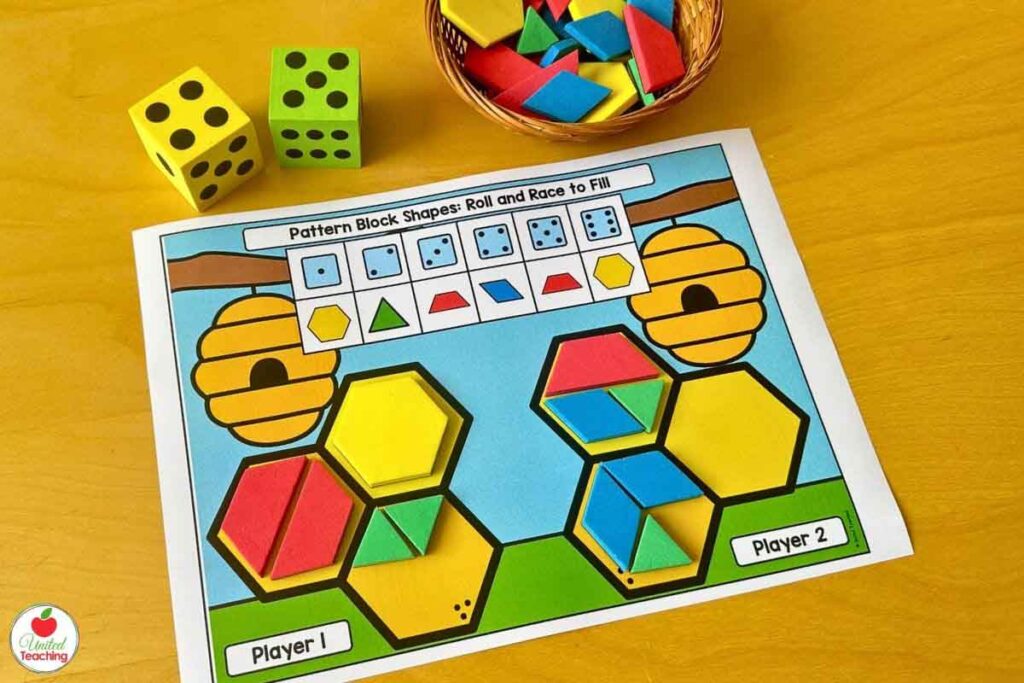
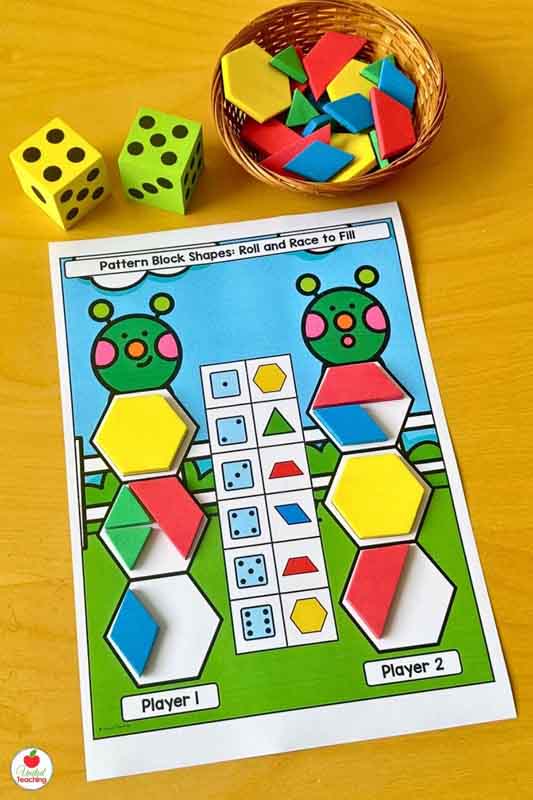
Pattern Block Mats and Race to Fill
Pattern block mats with spring designs — flowers, butterflies, caterpillars — give students a hands-on geometry center that builds spatial reasoning without any additional teacher setup. Students fill the mats with the correct pattern blocks, which requires them to visually decompose the image into component shapes. The Race to Fill version adds a partner game format for extra engagement.
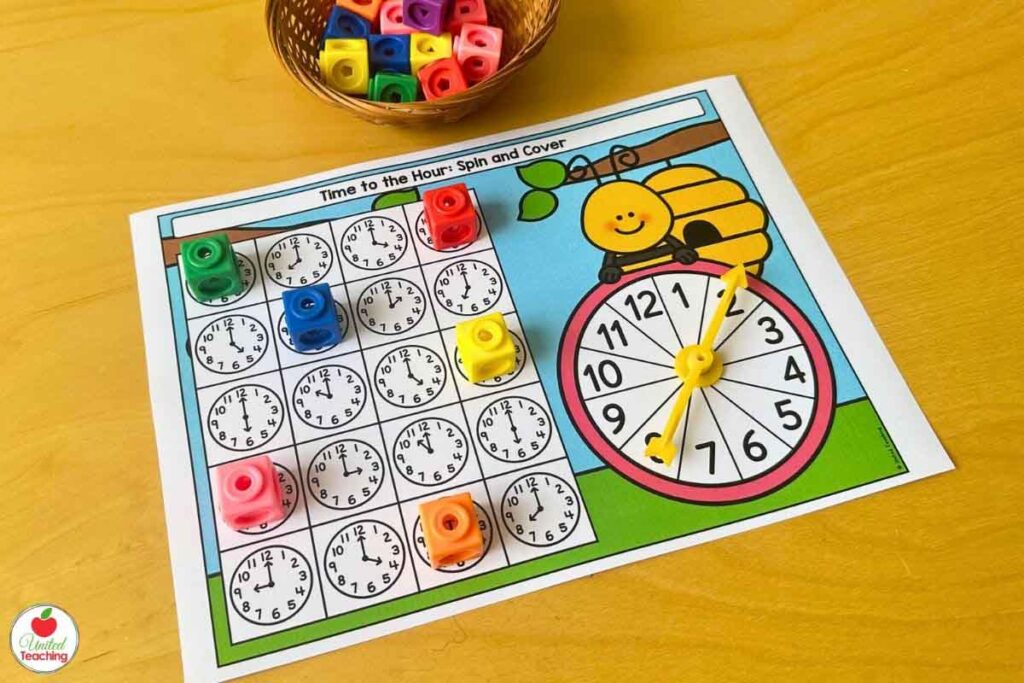
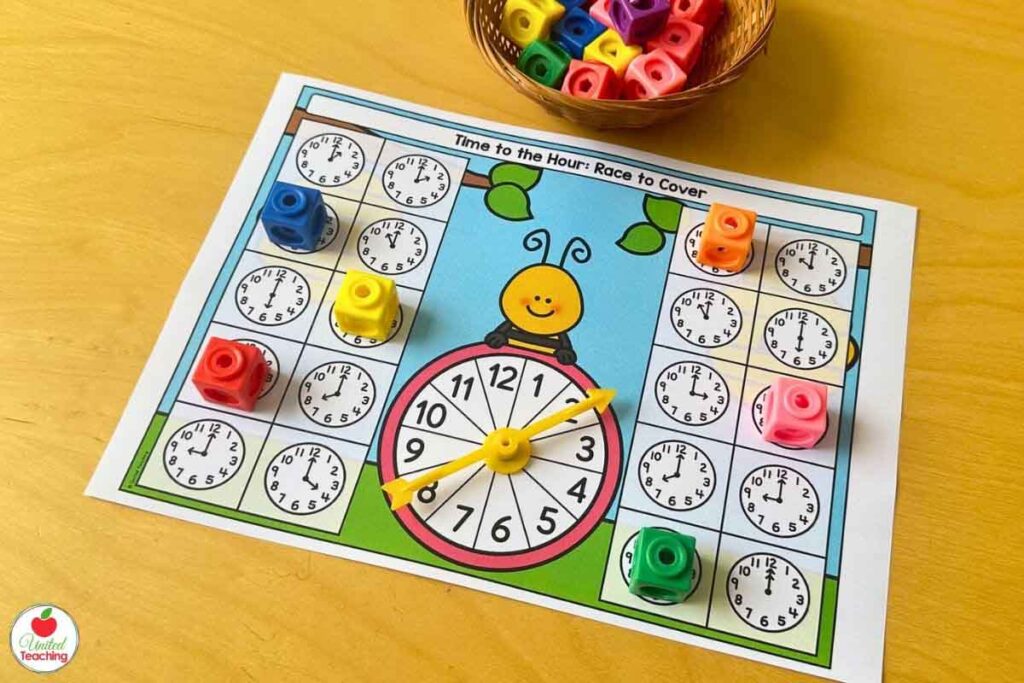
Telling Time to the Hour: Spin and Cover + Race to Cover
Two formats for time practice — an independent version and a partner version. Students spin a number from 1 to 12, identify the time to the hour, and cover or race to cover the matching analog clock. Including both formats gives you flexibility depending on your center setup.
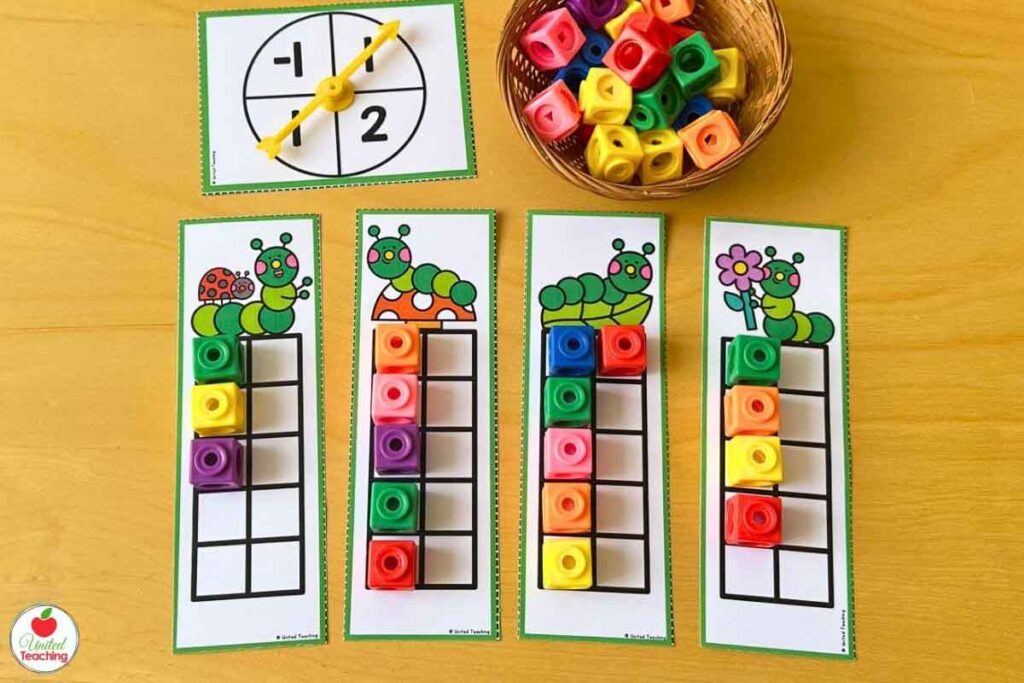
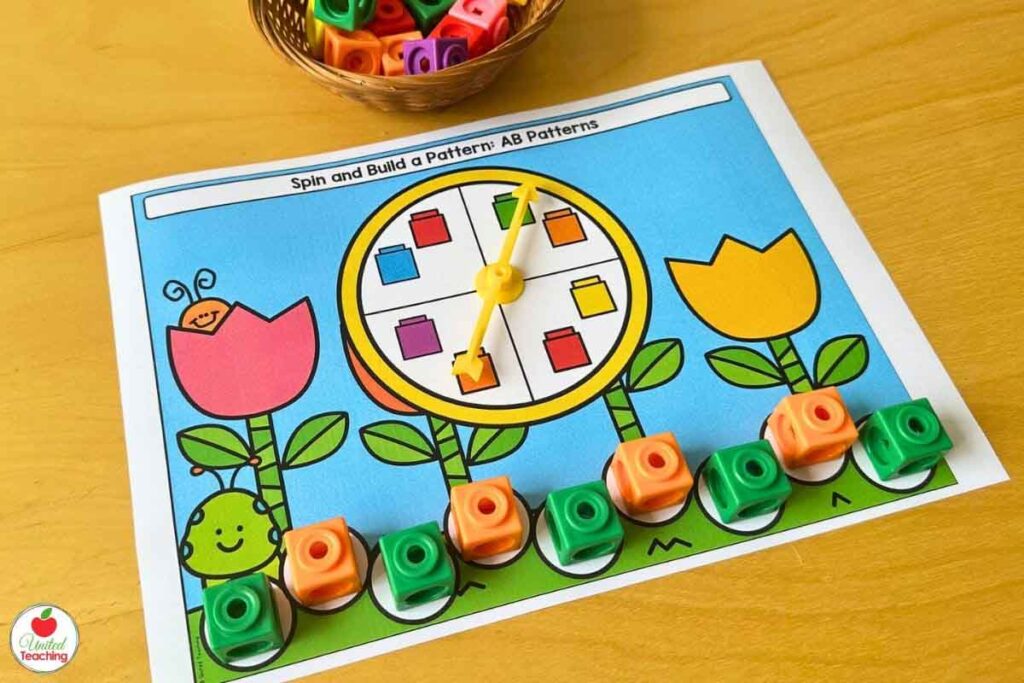
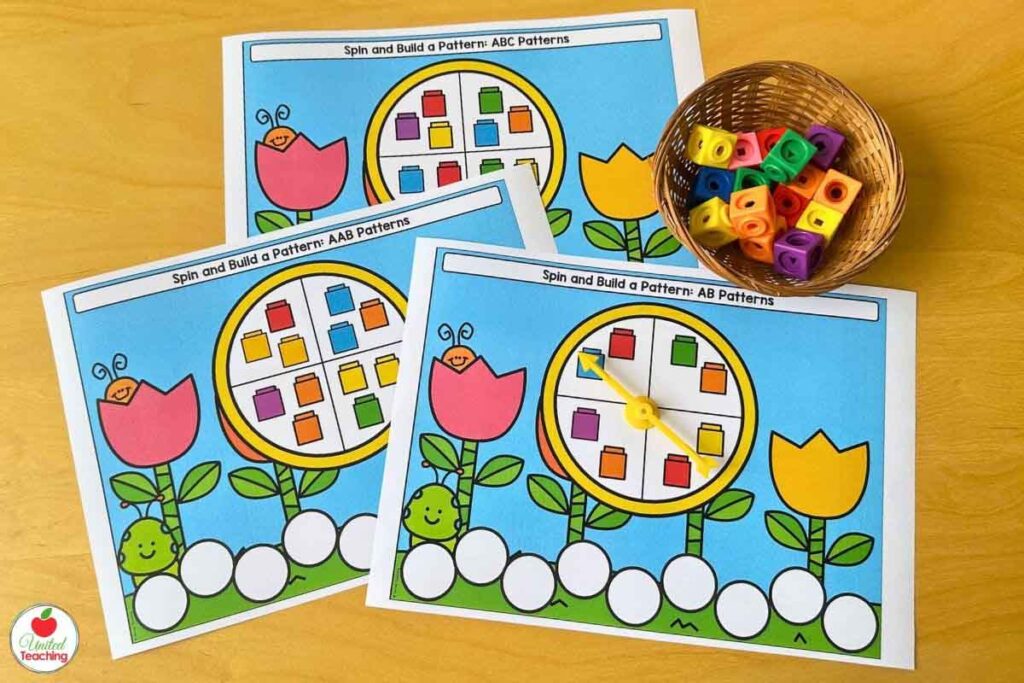
Build a Caterpillar: Spin a Pattern
Students spin a pattern element and build AB, ABB, or ABC patterns using caterpillar segments. Three pattern mats are included so you can differentiate — start students on AB patterns and move them to ABB and ABC as they’re ready. A worksheet for recording their patterns is included.
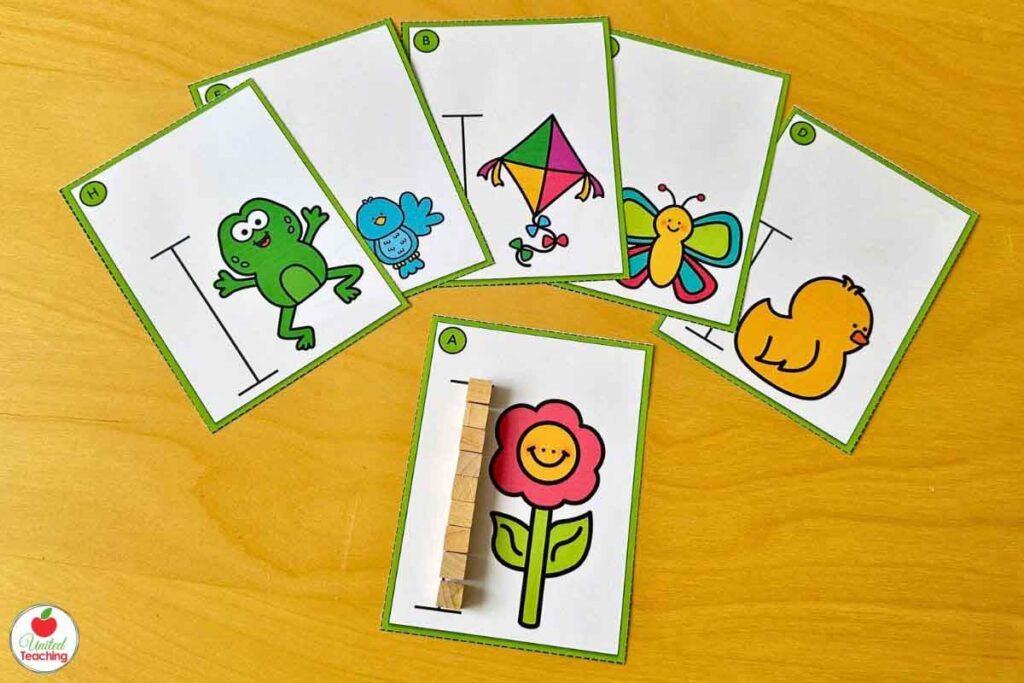
Spring Measurement Task Cards
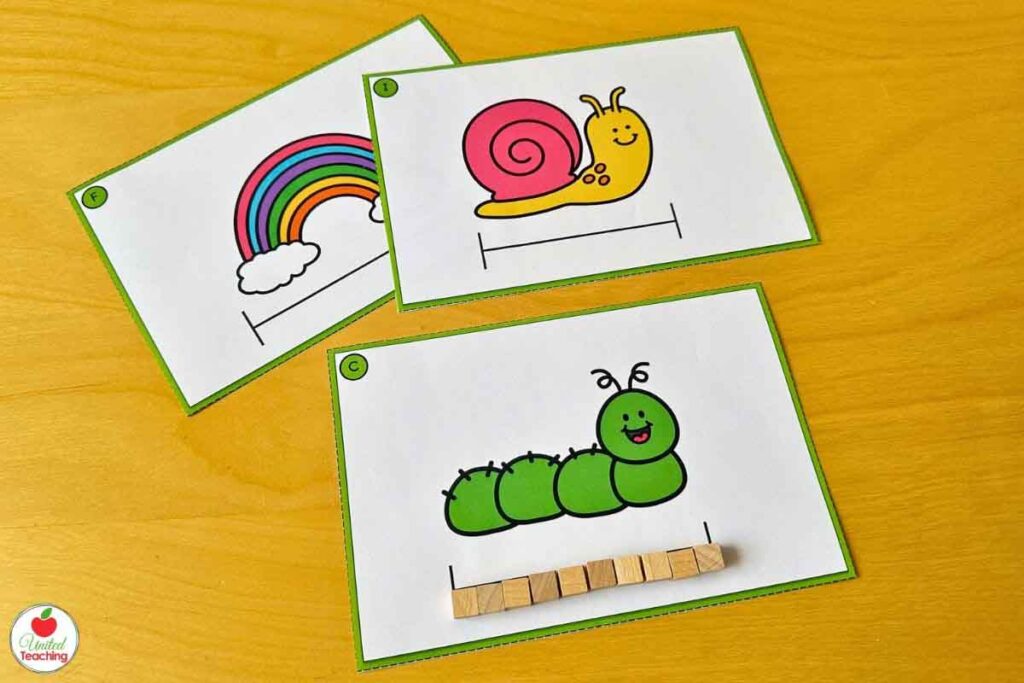
Students use non-standard units (centimeter cubes) to measure spring-themed pictures, then record their measurements. Non-standard measurement is often a standard that gets missed in the spring rush toward assessment prep — these task cards make it easy to check it off.
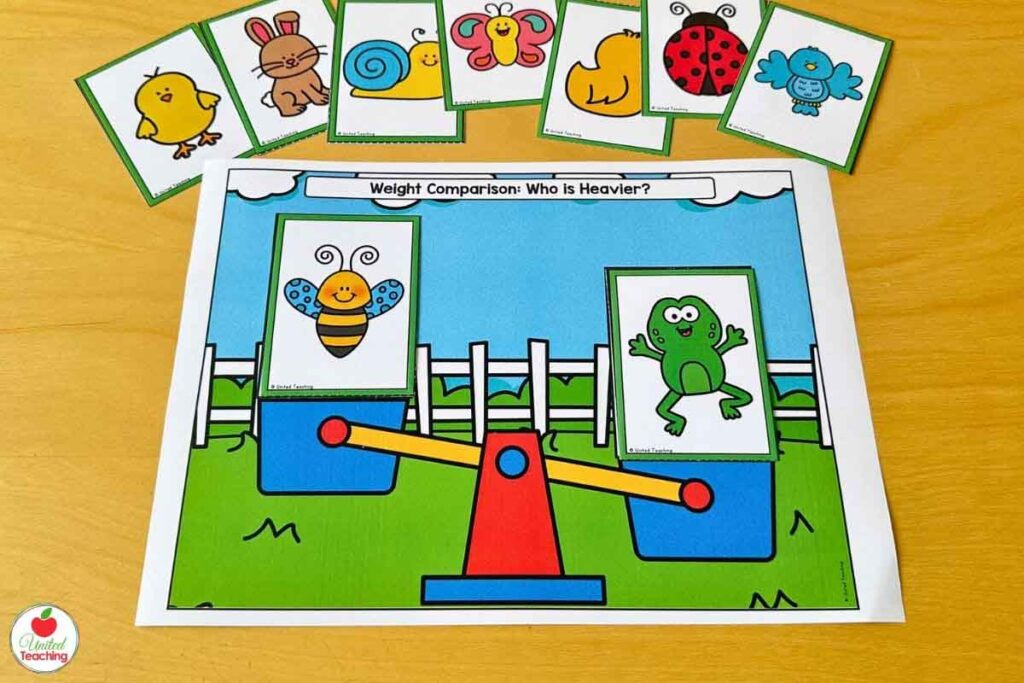
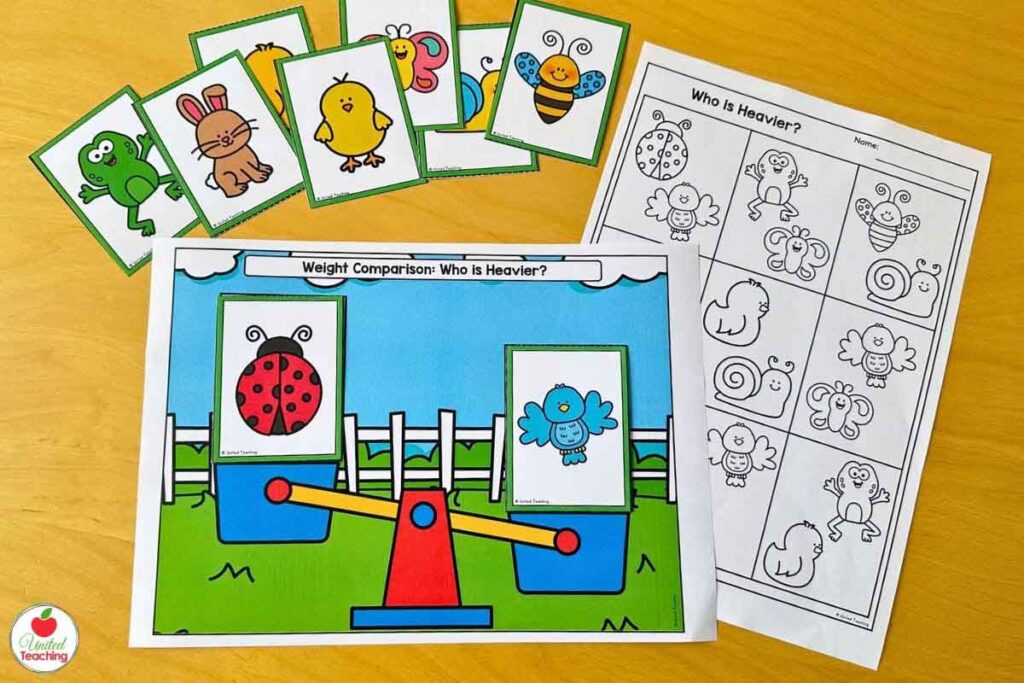
Which Is Heavier? Mat with Cards
Students compare the weight of two spring objects and record which is heavier. A recording worksheet is included. This is a quick, low-prep center that covers the comparison aspect of measurement — heavier/lighter — which is a separate standard from length measurement and often undertaught.
How to Organize Your Spring Math Centers
With 20+ math centers in the Spring Math and Literacy Centers pack, you have enough variety to rotate activities across all of March, April, and May without repeating. Here’s how to plan the rotation without it becoming a weekend project.
Start the week before spring break by selecting 4–5 math centers for your rotations. Choose activities that align with the skills you’re currently teaching in whole-group instruction — if you’re introducing subtraction, pull those centers. If you’re reviewing place value, use the tens and ones games.
Swap 2–3 activities every Monday. Keep the games students love for an extra week and retire the ones that aren’t getting engagement. Students will often tell you which centers they want back.
All activities come in color and low-ink / black-and-white versions.
Wrapping Up
Spring math centers work best when they give students meaningful practice in a format they actually want to engage with. The activities above — from ten frame counting through measurement and patterns — cover every key kindergarten math standard across the season.