




Spring brings warmer weather, blooming flowers, and the perfect opportunity for hands-on insect activities. And here’s the thing: bug activities for kindergarten practically teach themselves because young learners are naturally fascinated by the insects they spot on the playground. These insect-themed lessons build observation skills, introduce life cycle concepts, and develop scientific vocabulary, all while tapping into that genuine curiosity kids have about bugs and insects.
This post shares seven fun insect activities that make teaching both effective and manageable for preschool through first grade. You’ll find graphic organizers, life cycle studies for butterflies and other insects, hands-on sorting activities, research projects, and crafts that blend science and literacy seamlessly. And here’s a bonus: download the free My Book of Insects printable booklet at the end. Students can create their own insect reference guide to color, complete, and take home, giving families a window into what their kindergartener is learning about the world of bugs.

Why Bug and Insect Activities Matter for Kindergarten
Insect activities give kindergarten and preschool students their first real introduction to scientific observation and classification. When students learn to identify what makes an insect an insect, watch how butterflies and caterpillars transform through their life cycles, and compare different insects like ladybugs, ants, and bees, they’re developing critical thinking skills that reach far beyond science lessons.
Here’s what makes bug activities such powerful teaching tools for young learners: insects are concrete and observable. Students can see bugs in their own backyards, search for insects on nature walks, and observe ladybugs or ants up close. This hands-on experience makes abstract concepts like life cycles and habitats suddenly make sense. The vocabulary students pick up, words like antennae, thorax, metamorphosis, and habitat, builds the kind of academic language that supports reading and literacy development across all subjects.
And the best part? Insect-themed activities create natural opportunities for math and literacy integration. Students practice reading when they learn insect facts, develop fine motor skills through insect crafts and worksheets, use math activities to count legs or compare sizes, and engage in careful observation for art. This hands-on learning approach helps students see connections between subjects rather than viewing them as separate boxes.
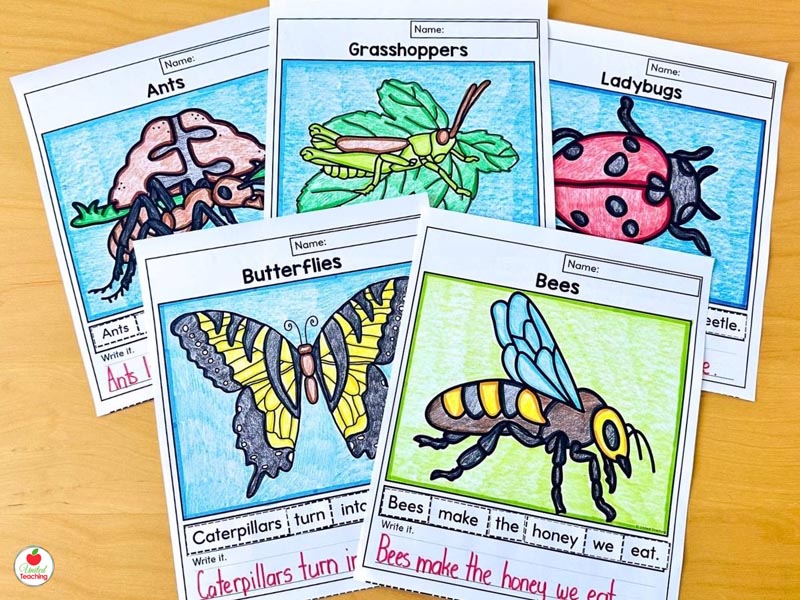
Understanding Insect Characteristics
Before students can learn about specific insects, they need to understand what makes an insect an insect. All insects share specific characteristics: six legs, three body parts (head, thorax, abdomen), antennae, and an exoskeleton. Teaching these defining features helps students distinguish insects from other small creatures like spiders or worms.
Use visual supports to teach these characteristics. Large posters showing labeled insect anatomy help students internalize the vocabulary. Point out each body part across different insect species so students see that while butterflies, ants, and bees look different, they all share the same basic structure.
Students benefit from comparing insects to non-insects. Create a sorting activity where students classify pictures as “insect” or “not an insect.” Include obvious non-insects like spiders (eight legs), ladybugs (insects), centipedes (too many legs), and grasshoppers (insects). This comparison reinforces the defining characteristics through active decision-making.
7 Engaging Activities for Teaching About Insects
Activity 1: Can-Have-Are Graphic Organizers
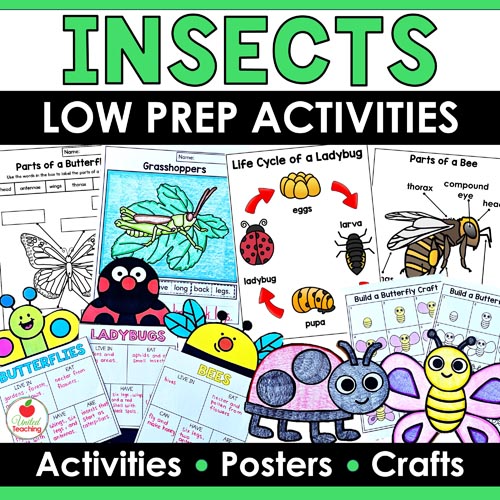
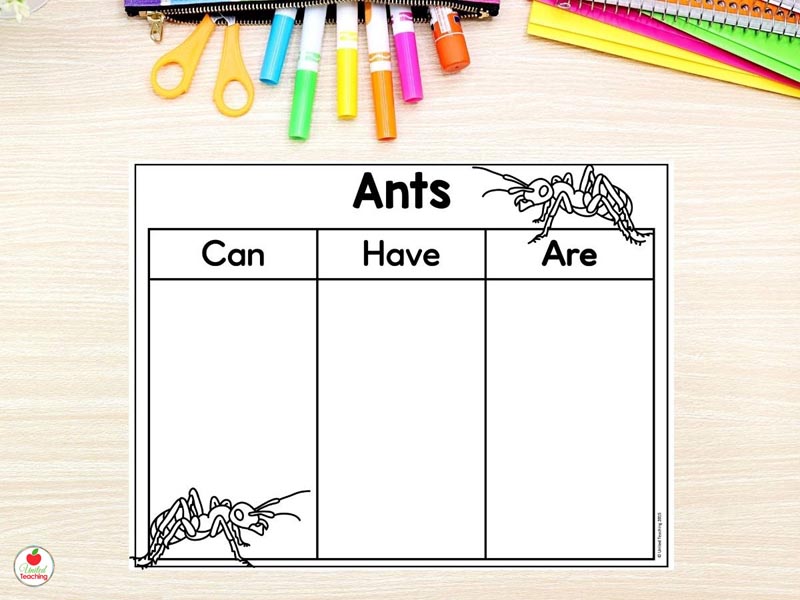
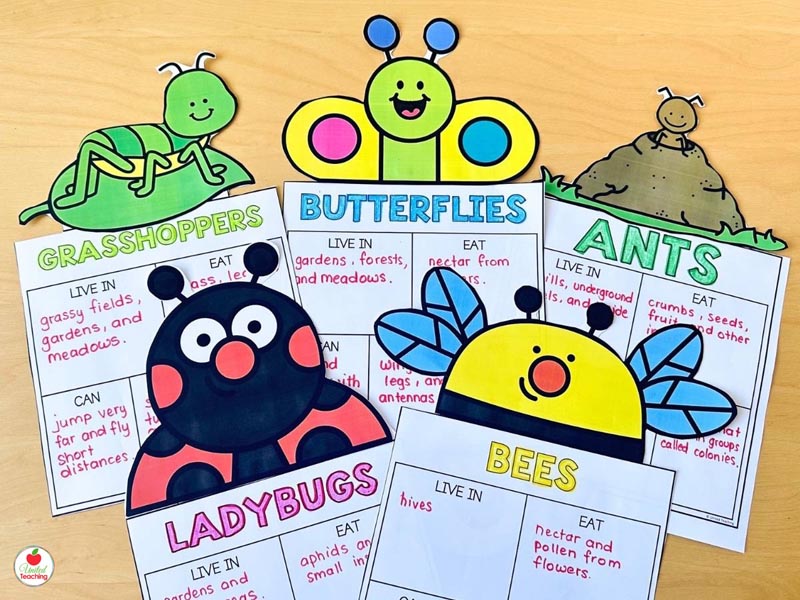
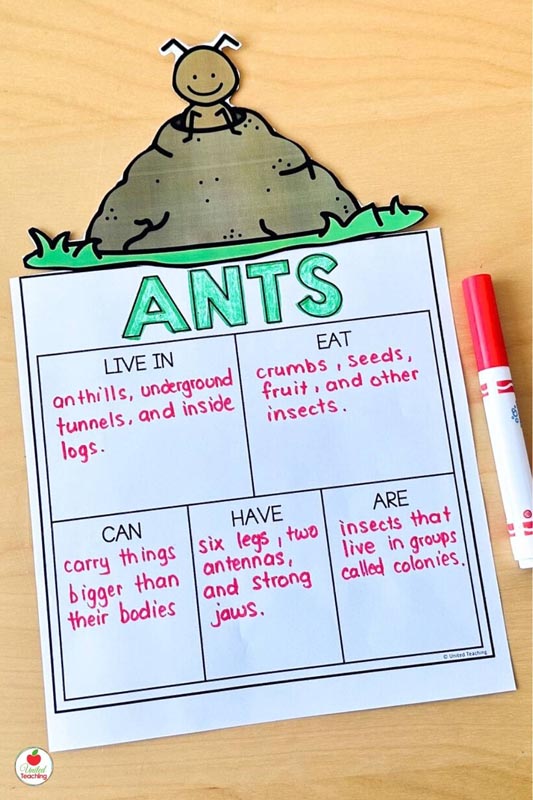
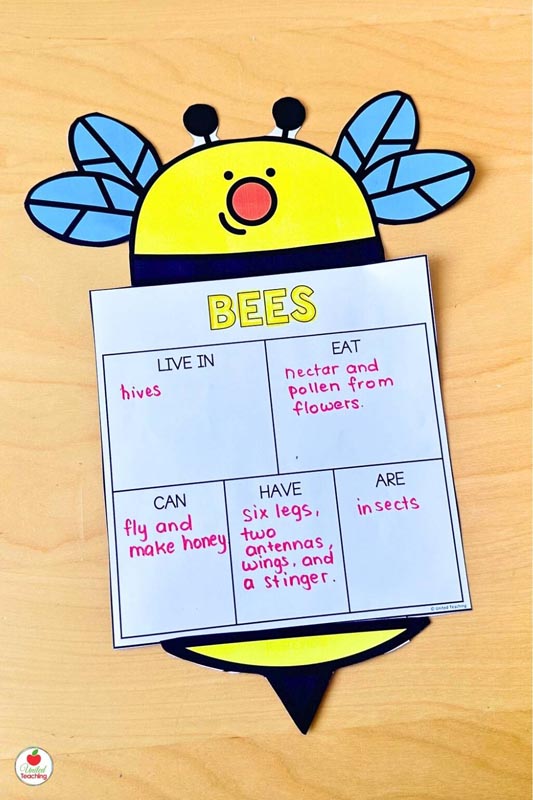
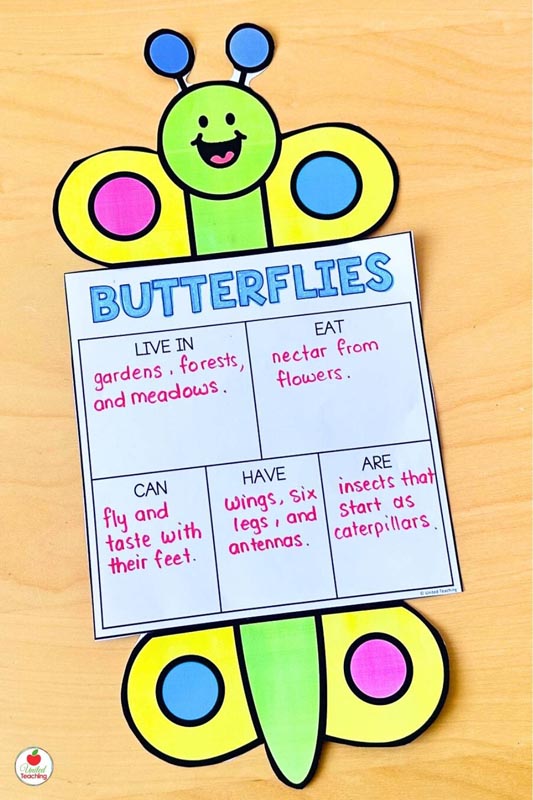
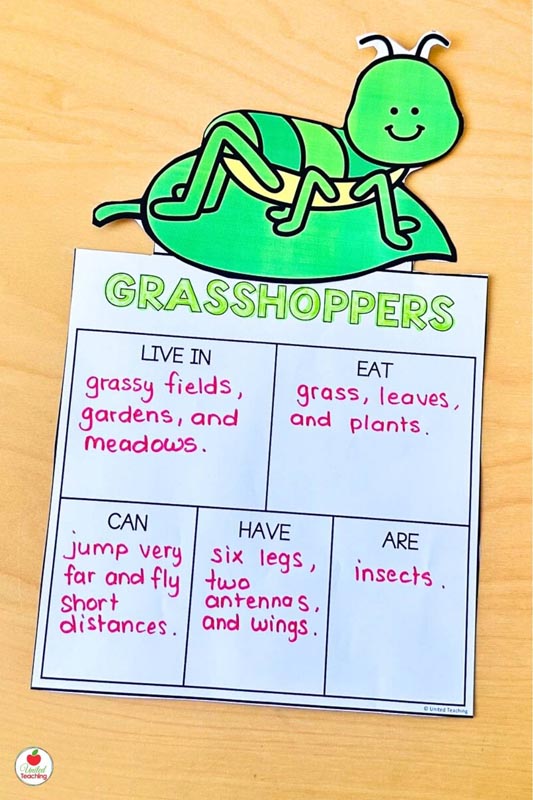
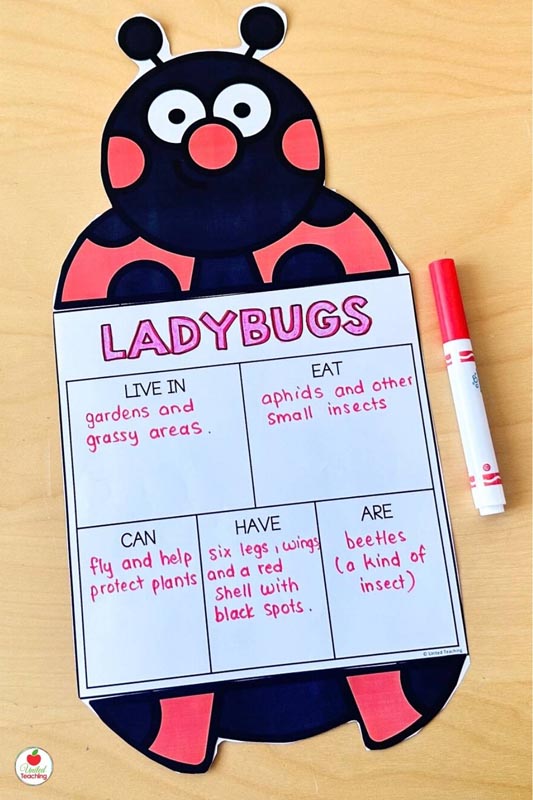
Graphic organizers are one of those tools that look simple but do so much heavy lifting when it comes to helping students organize information. The Can-Have-Are format breaks down insect facts into three straightforward categories: what insects can do, what they have (physical features), and what they are (classification). Kindergarteners can grasp this structure quickly, and once they understand it, they can complete organizers independently.
Start with a whole-group Can-Have-Are chart for one insect (butterflies work well because most students already know something about them). Guide the conversation: Can (fly, drink nectar, lay eggs); Have (wings, six legs, antennae); Are (insects, pollinators, colorful). The key is to model your thinking out loud by asking questions: “What can we observe butterflies doing?” “What body parts do butterflies have that we can see?”
Once students get the hang of the format, give them individual graphic organizers for different insects. They can work alone or with partners to complete organizers for bees, ants, ladybugs, and grasshoppers. You’ll find that the repetition of the same structure across multiple insects helps students internalize the format while building their insect knowledge at the same time.
And here’s a bonus: these organizers become excellent references for later writing activities. When students write about insects, they can look back at their completed graphic organizers for ideas and vocabulary support.
Activity 2: Life Cycle Learning and Sequencing
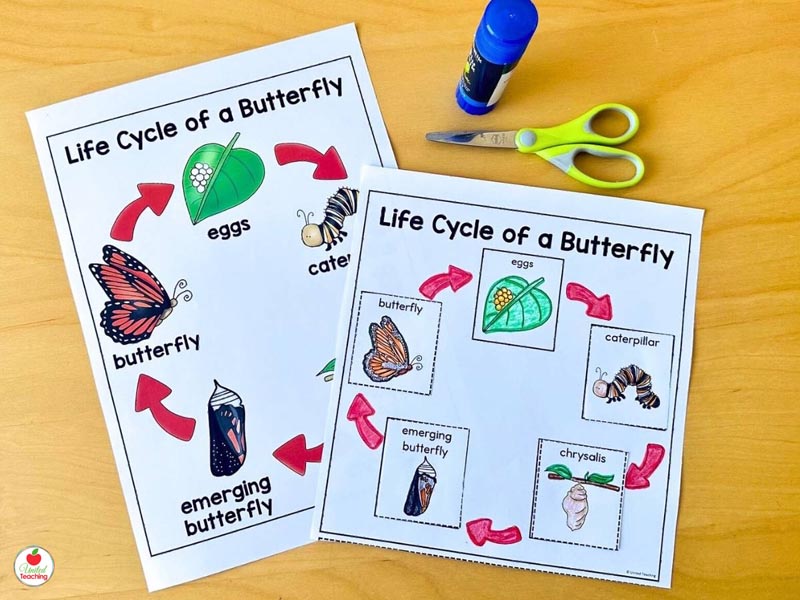
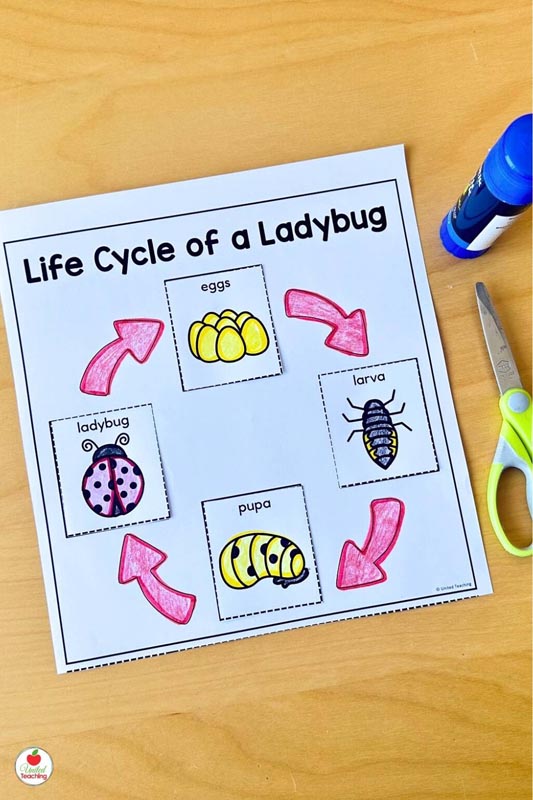
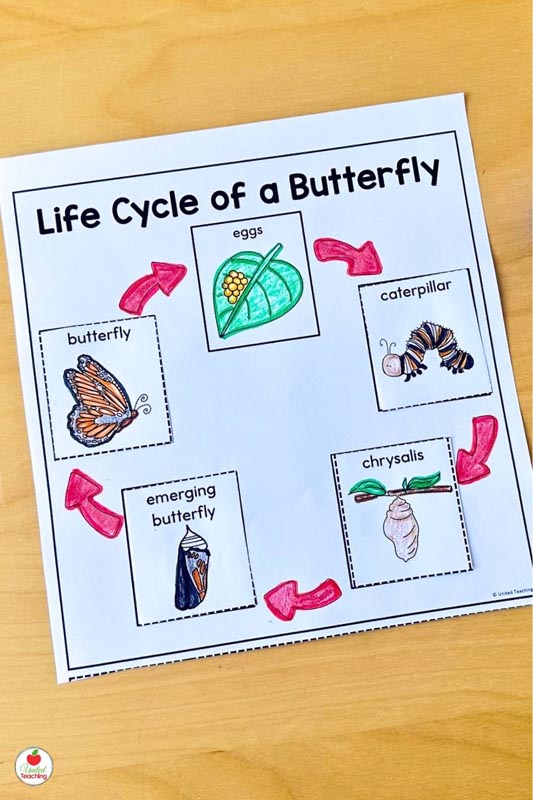
Life cycles demonstrate that living things grow and change over time, a foundational science concept. Insect life cycles, particularly the dramatic transformation of butterflies and beetles, fascinate young students and provide clear visual examples of metamorphosis.
Teach life cycles using posters that show each stage clearly labeled. For butterflies, students learn the four stages: egg, caterpillar (larva), chrysalis (pupa), and butterfly (adult). Display the poster prominently and refer to it throughout your insect unit.
After introducing the life cycle, have students practice sequencing. Provide cut-out images of each life cycle stage and have students arrange them in the correct order. This hands-on manipulation helps students internalize the sequence better than simply looking at a poster.
Connect life cycle learning to writing by having students describe each stage. Sentence frames support beginning writers: “First, the butterfly lays an ___.” “Next, the egg hatches into a ___.” “Then, the caterpillar makes a ___.” “Finally, a ___ comes out.”
Compare life cycles across different insects. Students discover that while butterflies undergo complete metamorphosis, grasshoppers undergo incomplete metamorphosis (egg, nymph, adult). This comparison deepens understanding and introduces the concept that not all insects develop the same way.
Activity 3: Parts of an Insect Labeling Activities
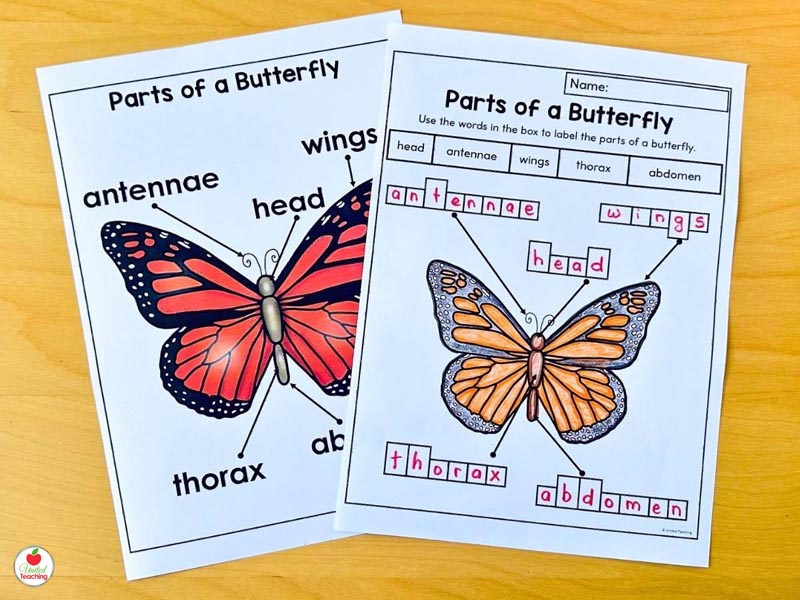
Labeling activities build vocabulary while teaching insect anatomy. Students learn to identify and name specific body parts, head, thorax, abdomen, antennae, legs, and wings. This precise vocabulary supports both science understanding and literacy development.
Begin with large classroom posters showing clearly labeled insect diagrams. Point to each part and have students repeat the vocabulary. Use multiple insect examples so students see that while a bee’s body looks different from an ant’s body, both have the same basic parts.
Provide individual labeling worksheets where students match vocabulary words to the correct body part or write labels independently. Include visual supports like word banks for students who need them. Some students may be ready to write labels from memory, while others benefit from word cards they can copy.
Make labeling activities hands-on by creating three-dimensional models. Students can build insects using playdough or craft materials, then add labels with toothpicks and paper flags. This tactile approach helps kinesthetic learners internalize the vocabulary while engaging all students in creating.
Activity 4: Insect Sorting and Classification
Sorting activities develop critical thinking and observation skills. Students learn to identify similarities and differences among insects, which supports classification, a key scientific skill.
Create sorting activities based on observable characteristics. Students can sort insects by: • Number of wings (two wings vs. four wings) • Where they live (ground, air, water, plants) • How they move (flying, crawling, jumping, swimming) • What they eat (plants, other insects, nectar) • Colors or patterns
Start with simple sorts using picture cards. Display two category labels and have students place each insect card in the correct category. Discuss students’ reasoning: “Why did you put the bee in the ‘flies’ group?” This verbalization of thinking is just as important as the correct answer.
Progress to more complex sorting with multiple attributes. Venn diagrams work well for this: students compare insects and spiders, or compare two types of insects. The overlapping section shows shared characteristics, while the separate sections show unique features.
Insect sort activities also provide opportunities for students to create their own sorting rules. Give students a collection of insect images and ask: “How could we sort these?” Students might suggest sorting by size, by number of spots, or by insects they like versus insects they don’t. This open-ended approach encourages creative thinking.

Activity 5: Insect Research and Fact Recording
Research activities introduce students to informational reading and fact-gathering, important literacy skills. Even kindergarteners can engage in simple research when provided with appropriate supports.
Begin research activities by reading aloud informational texts about insects. As you read, model how to identify and record important facts. Think aloud: “This book says that ants live in colonies. That’s an important fact about where ants live. Let’s write that down.”
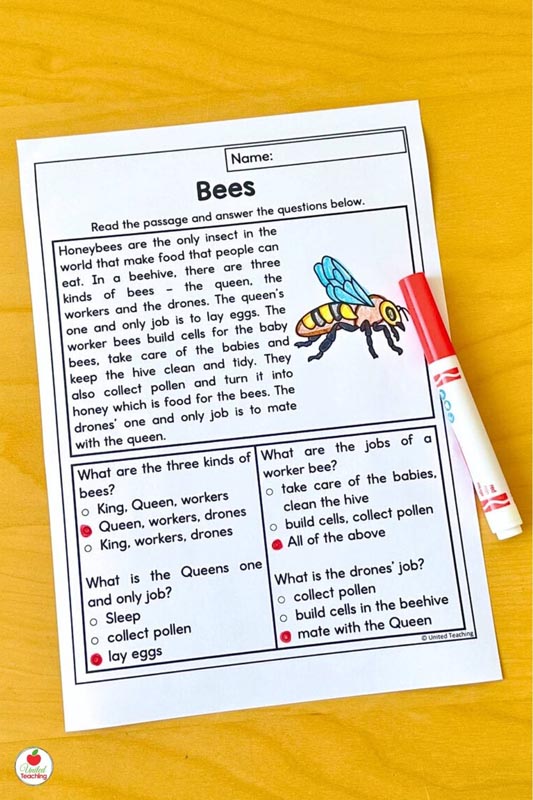
Provide research recording pages with clear sections: What does it look like? What does it eat? Where does it live? How does it move? These guiding questions help students focus their research and organize information logically.
Support student research with multiple resources at various reading levels. Include books with clear photographs, simple texts, and picture labels. Some students can read these texts independently, while others benefit from partner reading or listening to texts read aloud.
Create class books where each student researches one insect and contributes a page. These become shared reading materials that students love because they contain their own work. Students take pride in being published “authors” and enjoy reading their classmates’ research.
Activity 6: Directed Drawing for Observation Skills
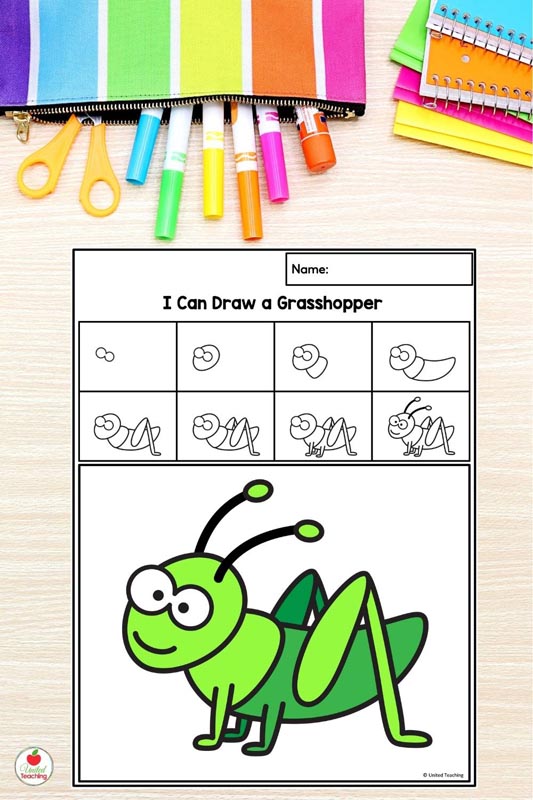
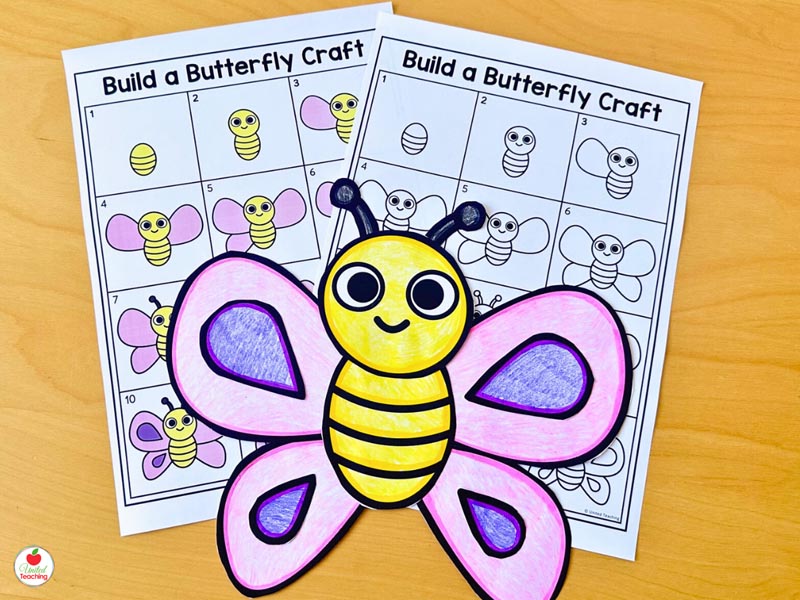
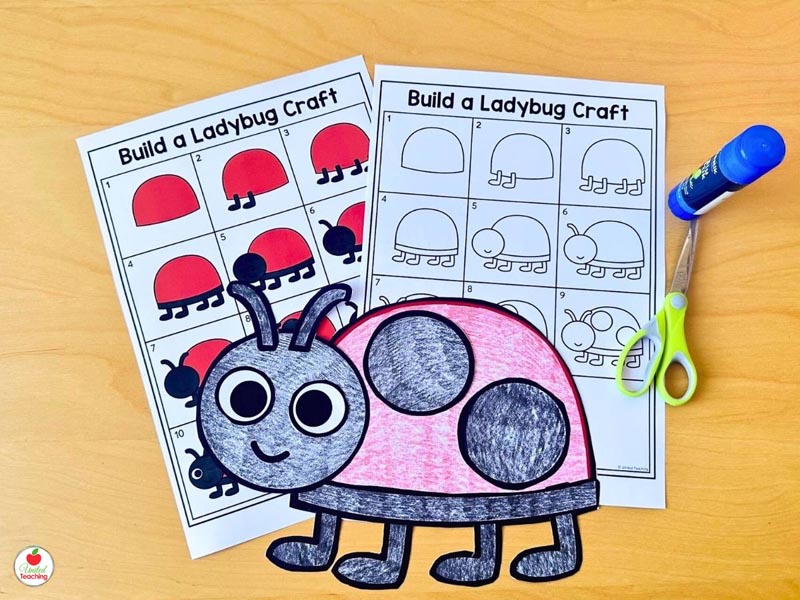
Drawing insects from observation develops fine motor skills while teaching students to look carefully at details. Directed drawing provides step-by-step instructions that make the process manageable for young students. This simplified approach makes drawing achievable for kindergarteners who might feel overwhelmed by trying to draw a complete, detailed insect.
After students master the basic insect structure, they can add details specific to different insects: butterfly wings with patterns, bee stripes, ladybug spots, grasshopper back legs for jumping. These details reinforce the characteristics that make each insect unique.
Use directed drawing as a way to check understanding. When students can accurately draw an insect’s six legs, three body parts, and antennae, they demonstrate their understanding of insect anatomy. Drawing becomes both an art activity and a formative assessment.
Activity 7: Hands-On Insect Crafts
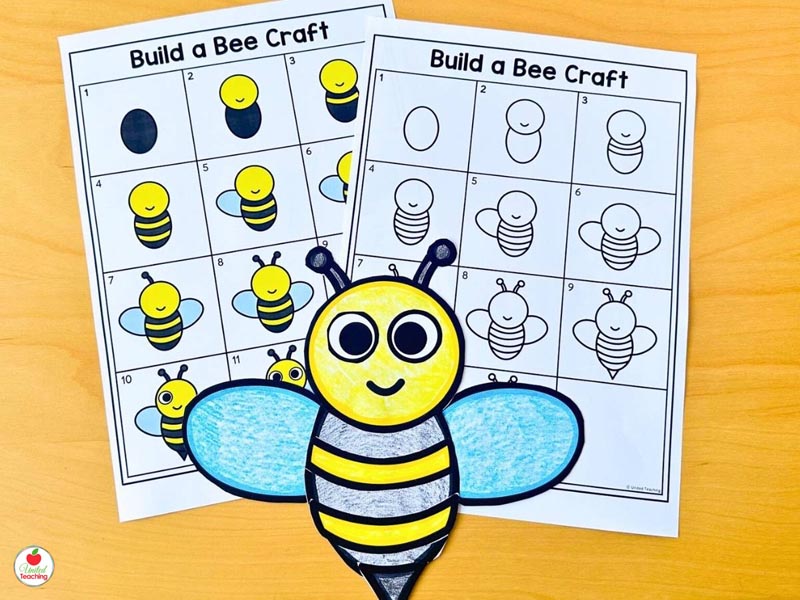
Craft activities engage students kinesthetically while reinforcing insect concepts. Building three-dimensional insects helps students understand body structure in a tactile way that complements visual learning.
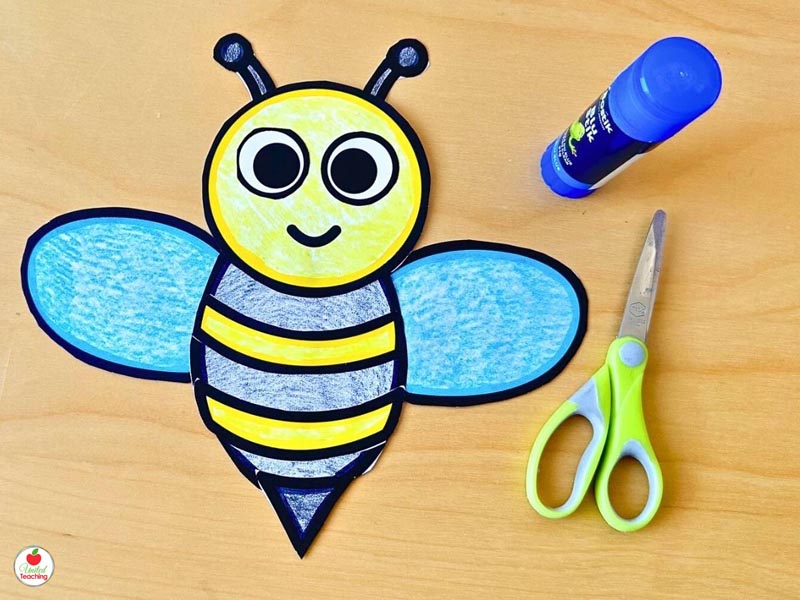
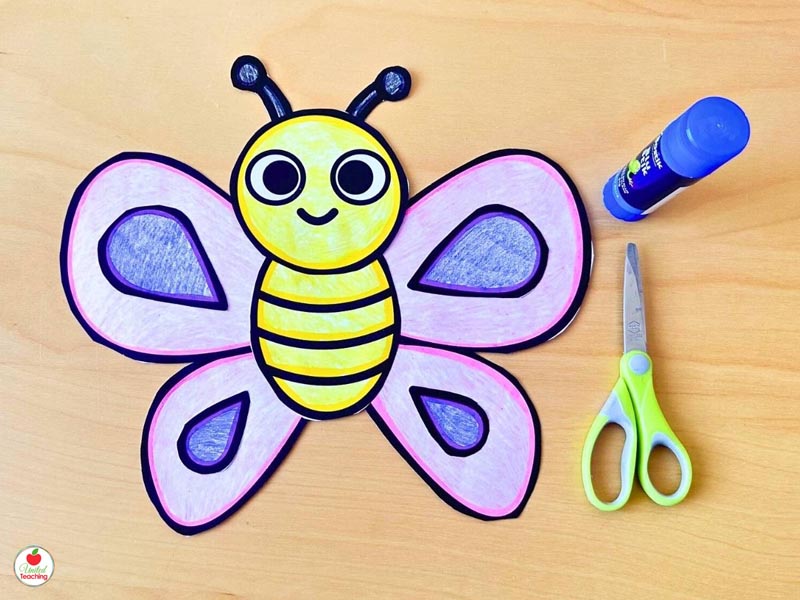
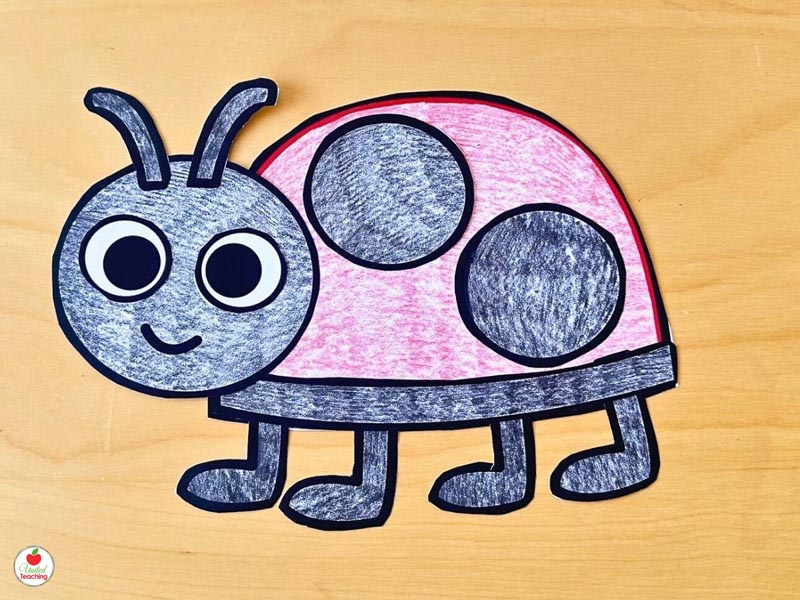
Provide craft templates that students can cut, color, and assemble. The assembly process, cutting on lines, following multi-step directions, gluing parts together, builds fine motor skills while students create.
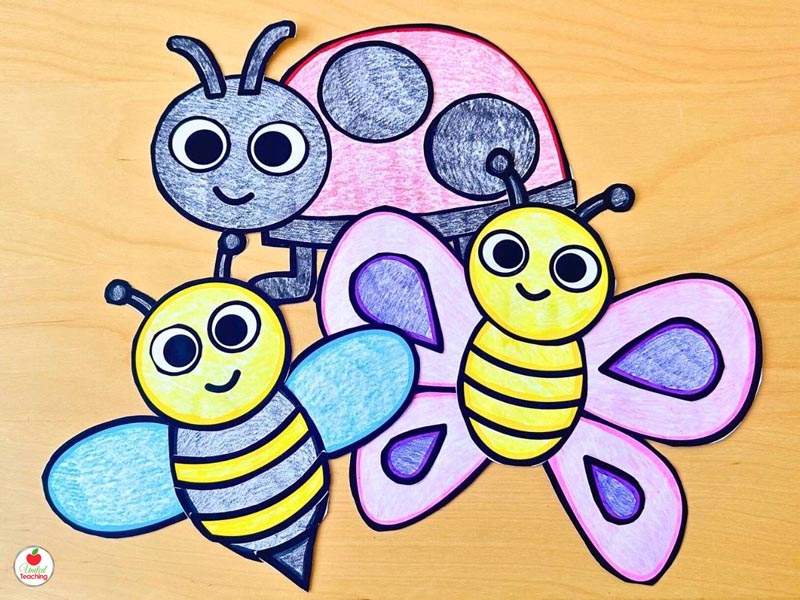
Connect crafts back to science learning by incorporating accurate anatomy. As students build a butterfly, review: “Remember, butterflies have six legs. Where should we attach them?” This integration ensures crafts are educational, not just decorative.
Display completed crafts as part of your classroom insect unit. Hang butterflies from the ceiling, create an ant hill bulletin board, or arrange bees around a paper hive. These displays celebrate student work while creating an immersive insect learning environment.
Use craft time for informal assessment. Observe whether students remember to include six legs, whether they can name body parts as they work, and whether they demonstrate understanding of the insect’s characteristics. These observations inform your teaching about what concepts students have mastered and what needs reinforcement.
Get Your Free My Book of Insects Printable Booklet
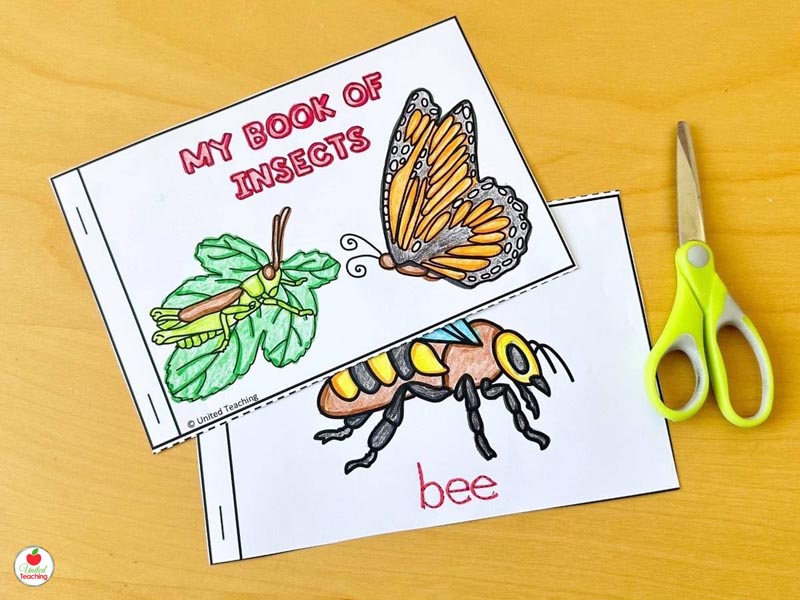
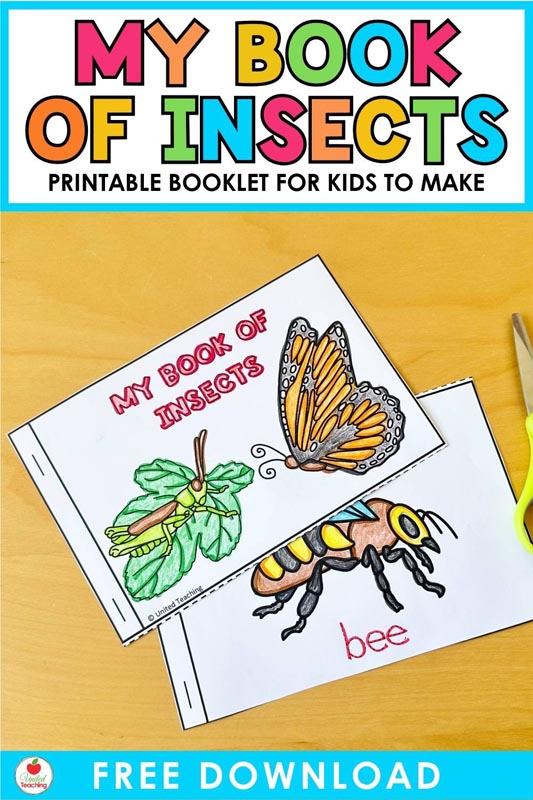
To help your students learn about insects, download the free My Book of Insects printable booklet. This booklet gives each student their own insect book they can create, personalize, and take home.
Here’s what’s included:
- Printable booklet pages – simple format designed for kindergarten learners to color and complete
- Multiple insect pages – butterflies, bees, ants, ladybugs, moths, ciccadas and grasshoppers for comprehensive coverage
- Easy assembly – staple pages together to create a take-home book students are proud to share
- Coloring opportunity – students personalize their books while reinforcing insect characteristics
This booklet works perfectly as a culminating activity for your insect unit. Students can complete one page per day as you study each insect, or work through the entire booklet at the end of the unit as review. The take-home format means families see what students are learning, and students have a reference they can revisit during outdoor insect observation at home.
Download your free My Book of Insects booklet now and give your students a memorable way to record their insect learning.
Planning Your Kindergarten Insect Themed Unit
Insect units work best when spread across 2-4 weeks, allowing time to explore each insect in depth rather than rushing through all five in just a few days. Consider teaching one insect per week, which gives students time to complete graphic organizers, life cycle studies, research, and crafts for each species.
- Week 1: Introduction and Butterflies – Teach insect characteristics, focus on butterflies and their complete metamorphosis life cycle
- Week 2: Bees and Pollination – Explore bees, discuss their importance as pollinators, compare bee life cycle to butterflies
- Week 3: Ants and Social Insects – Study ant colonies, introduce concept of social insects, compare to solitary insects
- Week 4: Ladybugs and Grasshoppers – Complete the unit with these two insects, comparing incomplete vs. complete metamorphosis
Integrate insect learning throughout your day. Use insect-themed books during read-aloud time, incorporate insect counting or patterns into math activities, and set up an insect observation station at your science center. This multi-faceted approach helps students see insects as a comprehensive topic, not just a science lesson.
Schedule time for outdoor insect observation if weather permits. Even a short walk around the playground or school garden allows students to observe real insects in their natural habitats. Bring clipboards for recording observations or take photos to discuss back in the classroom.
Teaching about insects in kindergarten builds a foundation for scientific thinking that students will use throughout their education. These seven activities (graphic organizers, life cycle learning, labeling, sorting, research, drawing, and crafts) provide comprehensive coverage that engages students while developing important skills across multiple subjects. Download your free My Book of Insects booklet and give your students a hands-on way to explore the fascinating world of insects this spring.
Want More Insect Activities?
If you want all the print and go activities, you can find the full Insect Activities Packet here: