


Winter brings a special kind of calm to the kindergarten classroom. The holiday excitement has settled, and students are ready to dig into deeper learning. By January, they have spent months building their letter and sound knowledge, and now they are ready to apply those skills in more complex ways. They need to blend sounds, read simple words, and practice sight words with growing confidence. The challenge is keeping that practice engaging when the weather keeps everyone inside and the energy in the room can feel unpredictable.
That is where winter literacy centers for kindergarten make all the difference. These activities give students the repetition they need to build phonics and reading skills while keeping the practice hands-on and fun. Snowmen, mittens, and polar animals turn phonics drills into games that students actually want to play again and again.
Why Winter Literacy Skills Matter
Kindergarten literacy instruction focuses on building the foundation for reading success.
Students need consistent practice with:
- letter recognition and formation
- phonemic awareness skills like syllable counting and sound isolation
- beginning, middle, and ending sounds
- blending CVC words and word families
- reading and writing high-frequency sight words
- recognising beginning blends and digraphs
When these skills are practiced in engaging, hands-on ways, students build the automaticity they need to become confident readers.
Winter is also the perfect time to increase expectations. Students know the routines, and they are ready for more complex literacy tasks. The key is finding activities that feel fun and approachable while still building critical skills.
Why Literacy Centers for Kindergarten Work
Literacy centers remain one of the most effective ways to give students meaningful reading practice.
Here is why they work so well:
- Centers allow students to practice multiple literacy skills in one rotation.
- Hands-on formats keep students engaged and actively learning.
- Students build independence while teachers work with small groups or provide targeted interventions.
- Repeated practice with familiar formats builds confidence and automaticity.
With the right winter literacy centers for kindergarten, you can keep students engaged while building the foundational skills they need to become strong readers.
Printable Winter Literacy Activities for Kindergarten
The best winter literacy centers are easy to prep, aligned with kindergarten standards, and engaging enough that students stay focused during independent practice.
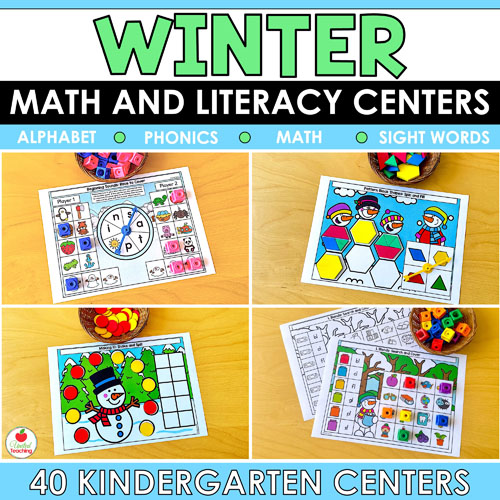
The activity ideas below come from the Winter Math and Literacy Centers for Kindergarten pack. It includes 40 total centers (math + literacy) with full-color and black-and-white options, plus worksheets for accountability and assessment.
This post focuses on the winter literacy centers.
Winter Alphabet and Phonemic Awareness Centers
Letter recognition and phonemic awareness are the building blocks of reading.
In winter, students can practice these foundational skills with activities that feel like play.
Activities included:
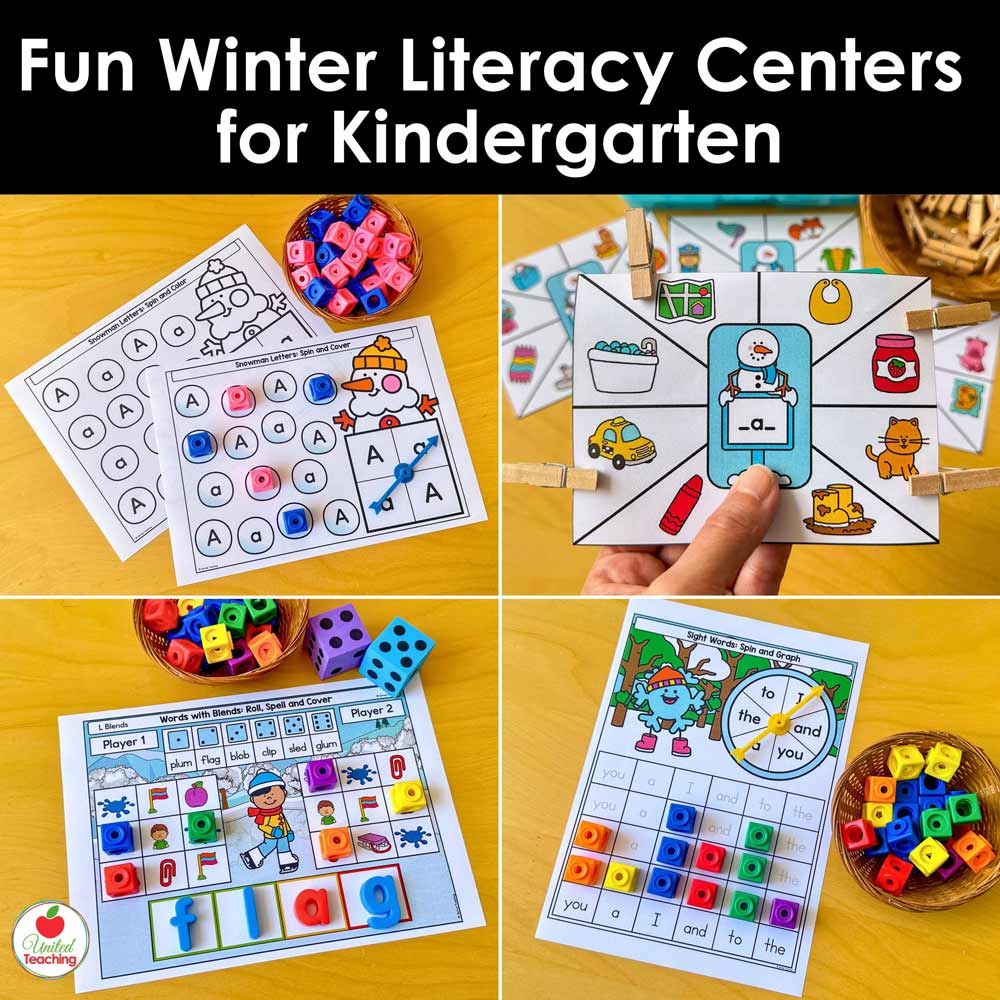
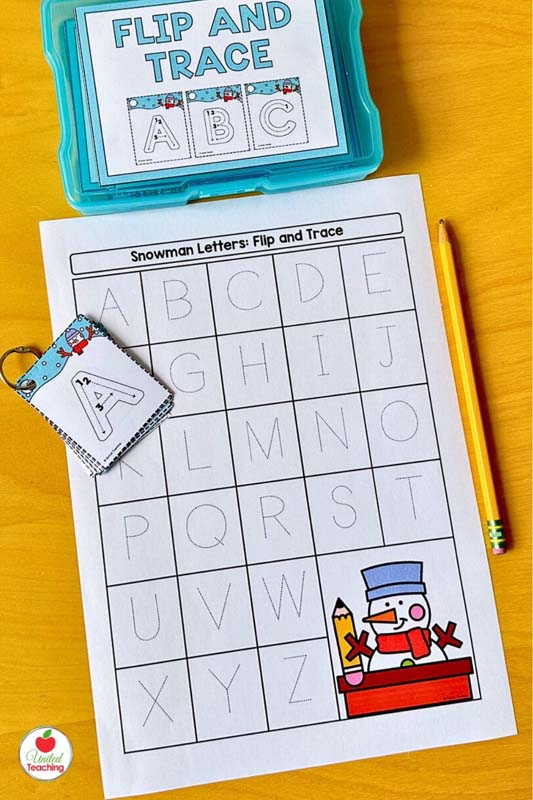
Alphabet Flip and Trace
Students flip a card to reveal a letter and trace the matching letter on the mat. Uppercase and lowercase options are included.
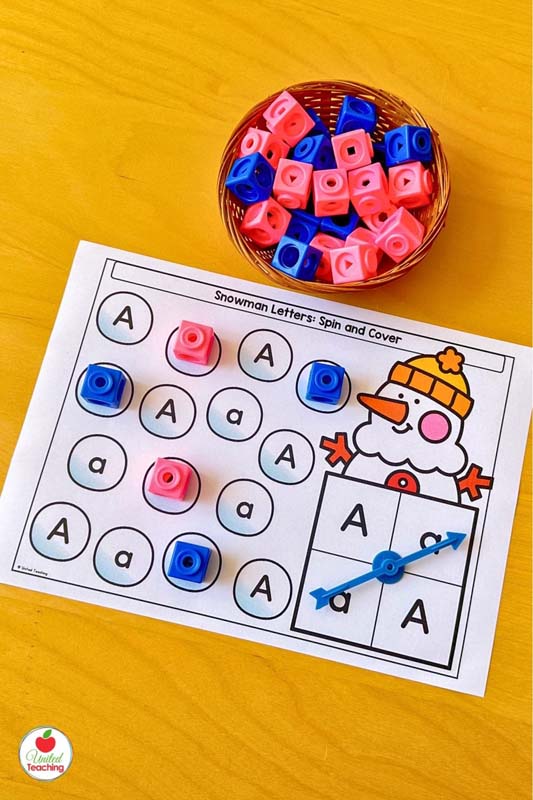
Alphabet Spin and Cover
Students spin the spinner and cover the matching uppercase or lowercase letter on the game board.
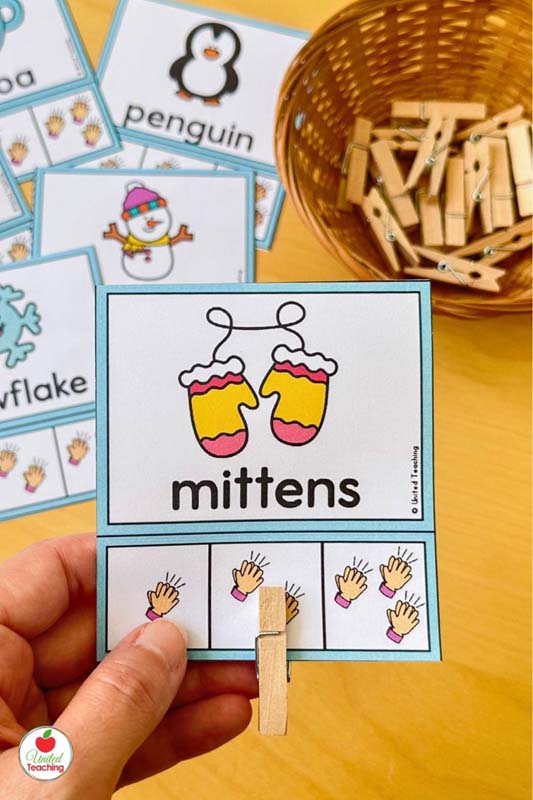
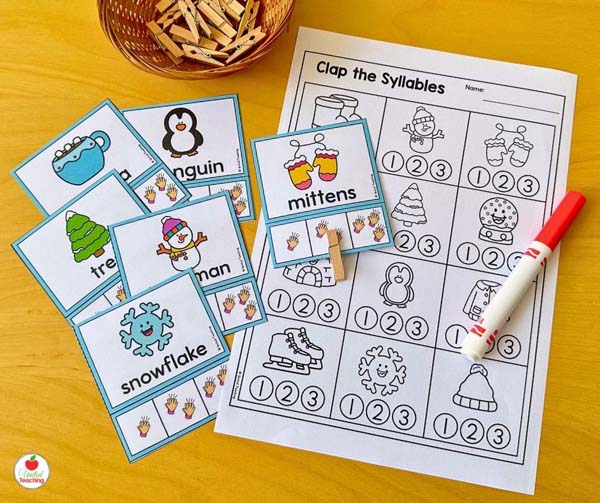
Clap the Syllables Clip Cards
Students clap and clip the number of syllables in each winter word. A recording sheet is included for extra practice.
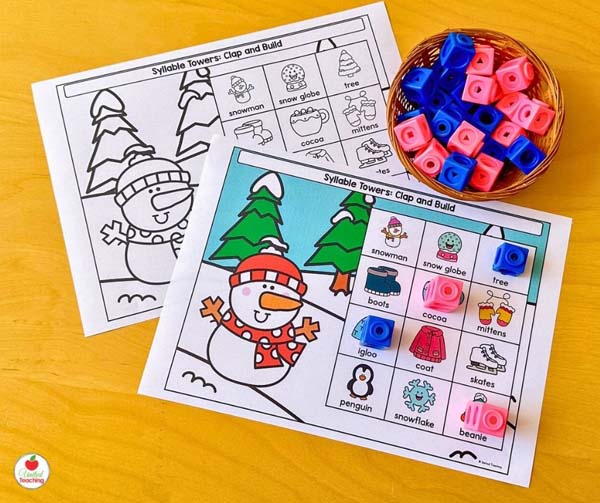
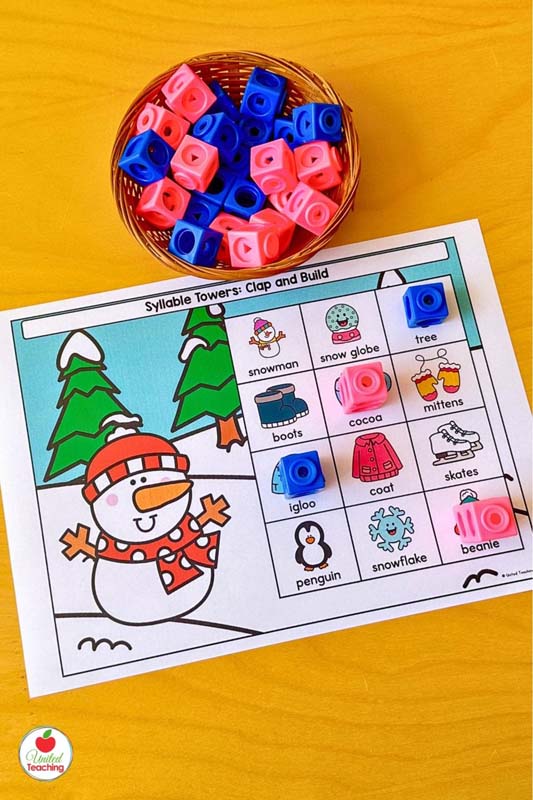
Syllable Towers: Clap and Build
Students clap the syllables in a word and build a linking cube tower to match the number of syllables.
Why teachers love them:
- Tracing mats support proper letter formation for students still building fine motor skills.
- Spin and cover games make letter recognition feel fast-paced and fun.
- Clipping cards strengthen hand muscles while reinforcing phonemic awareness.
- Syllable activities are multisensory and help students hear the parts of words.
- Recording sheets make it easy to check progress.
Winter Phonics Centers
Phonics instruction is where students learn to decode words and become independent readers.
Winter phonics centers give students hands-on practice with the sound patterns they are learning in whole group lessons.
Activities included:
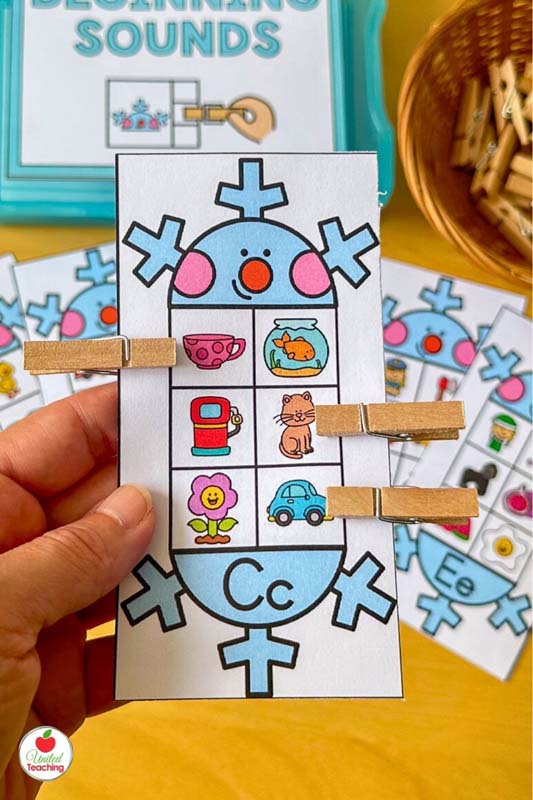
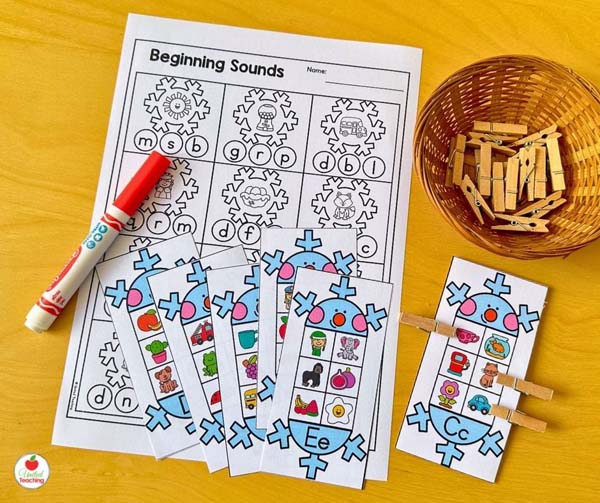
Beginning Sounds Clip Cards
Students identify and clip the beginning sound of each winter picture.
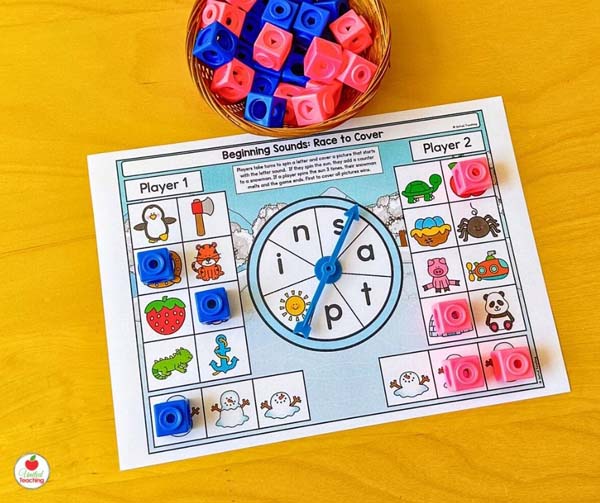
Beginning Sounds: Spin and Race to Cover (Partner Game)
Students spin a letter, say the sound, and race to cover a picture that starts with that sound.
Middle Sounds Clip Cards (Short Vowels)
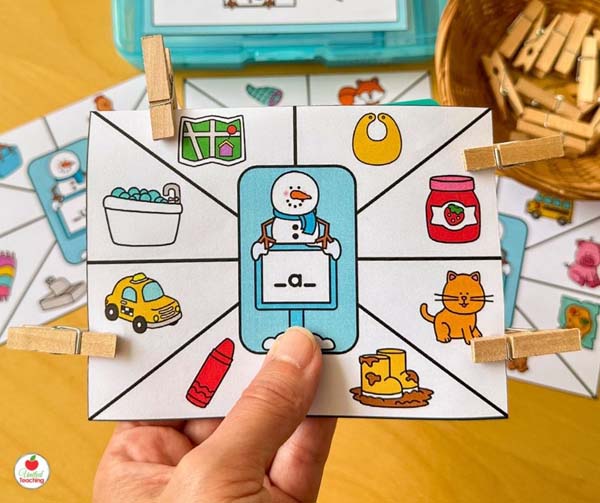
Students clip the pictures with the matching short vowel sound. A worksheet is included for additional practice.
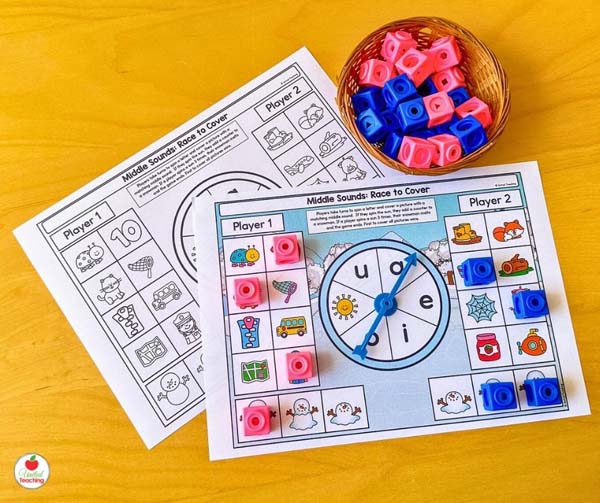
Middle Sounds: Spin and Race to Cover (Partner Game)
Students spin a short vowel, say the sound, and race to cover matching pictures.
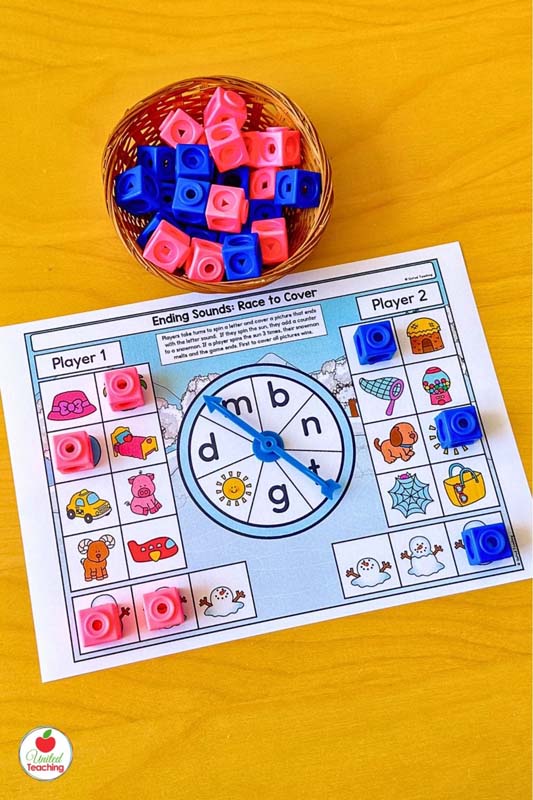
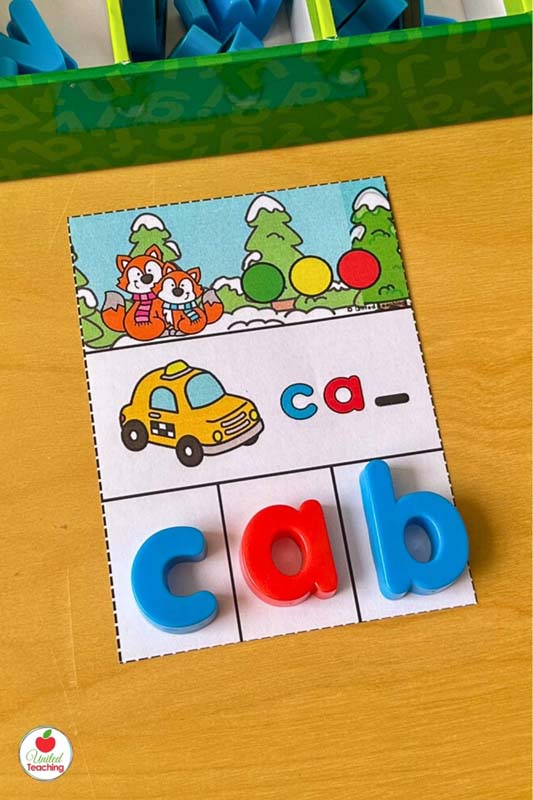
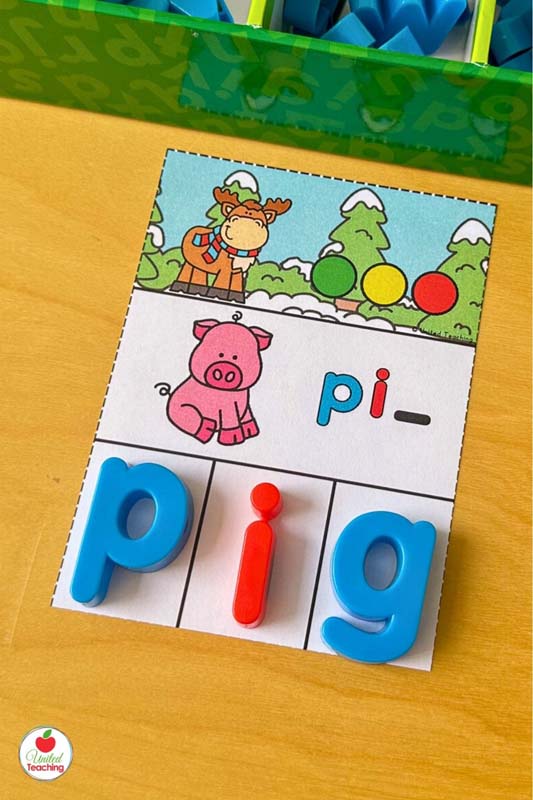
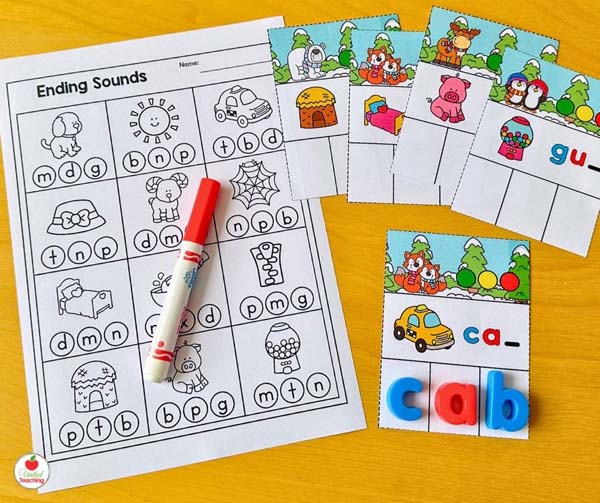
Ending Sounds Word Building Task Cards
Students build words by adding the correct ending sound. A recording sheet is included for accountability.
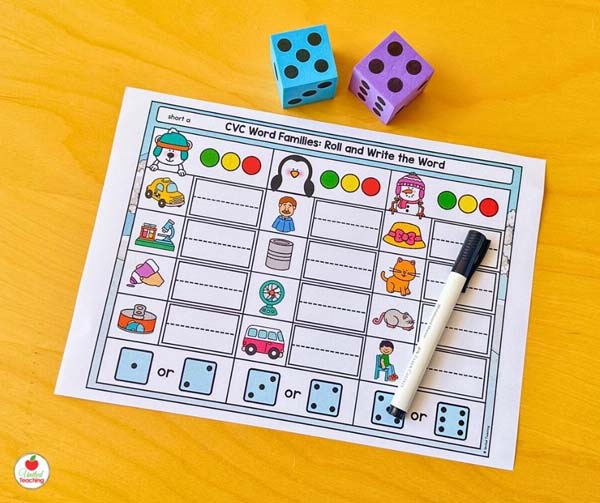
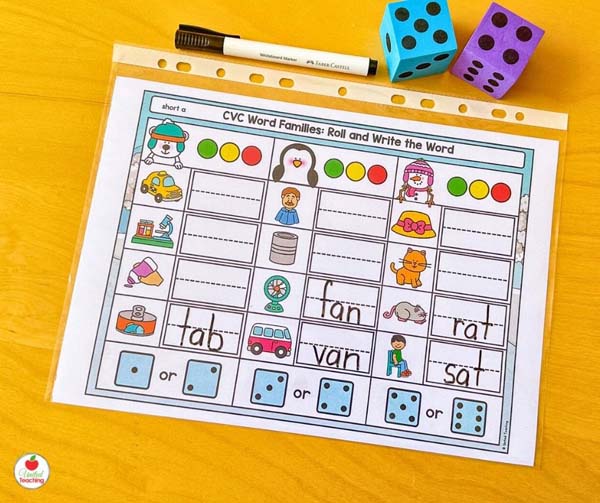
CVC Word Families Roll and Write
Students roll a die to determine the beginning sound and write a complete CVC word from the word family.
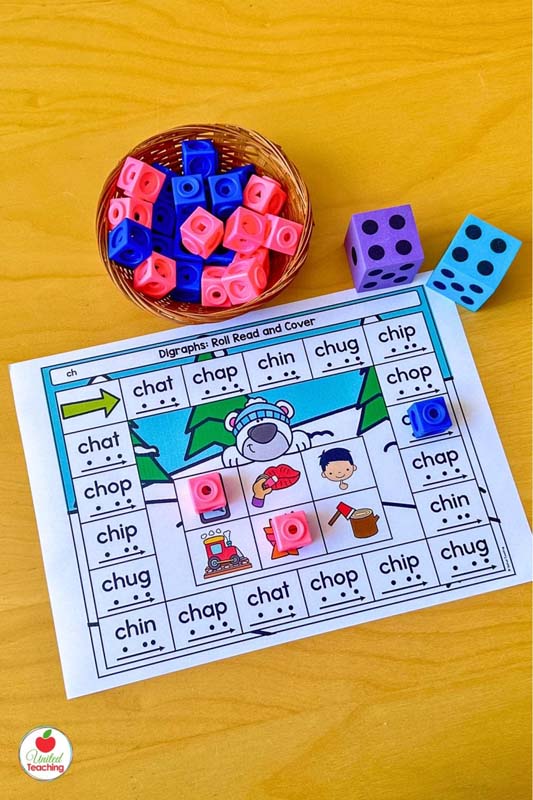
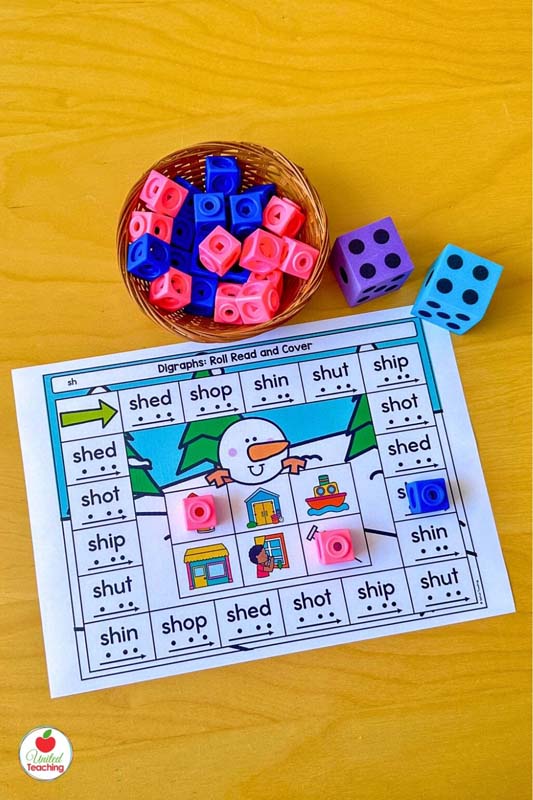
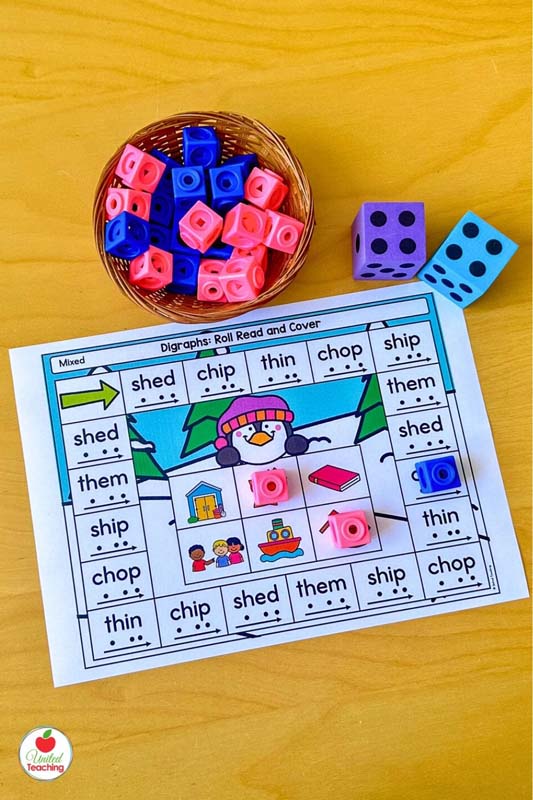
Beginning Digraphs Roll, Read, and Cover Game Boards
Students roll a die, read a word with a beginning digraph, and cover the matching picture on the game board.
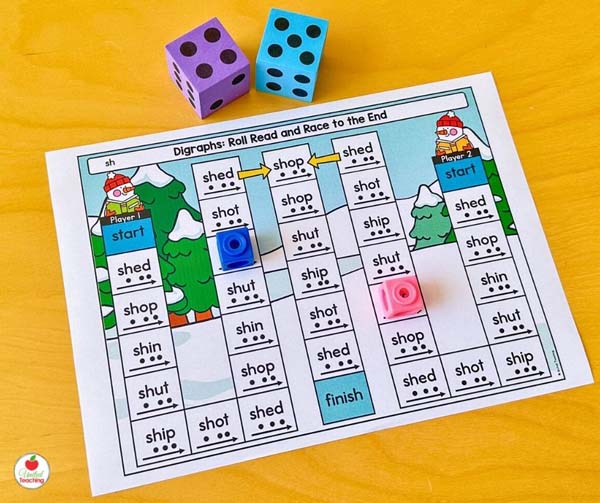
Beginning Digraphs Roll, Read, and Race to the End (Partner Game)
Students take turns reading words with digraphs and moving along the path to reach the end first.
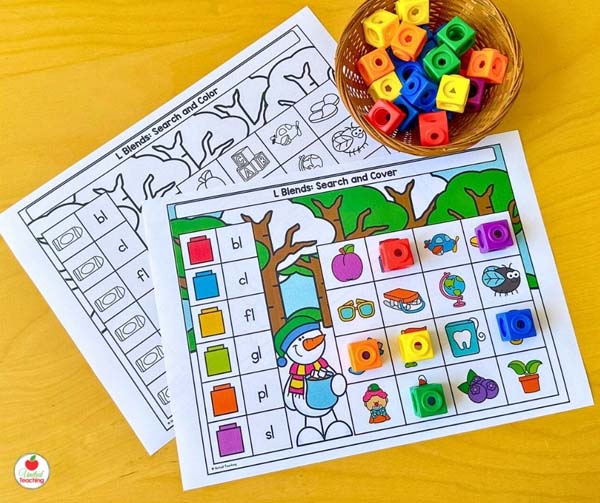
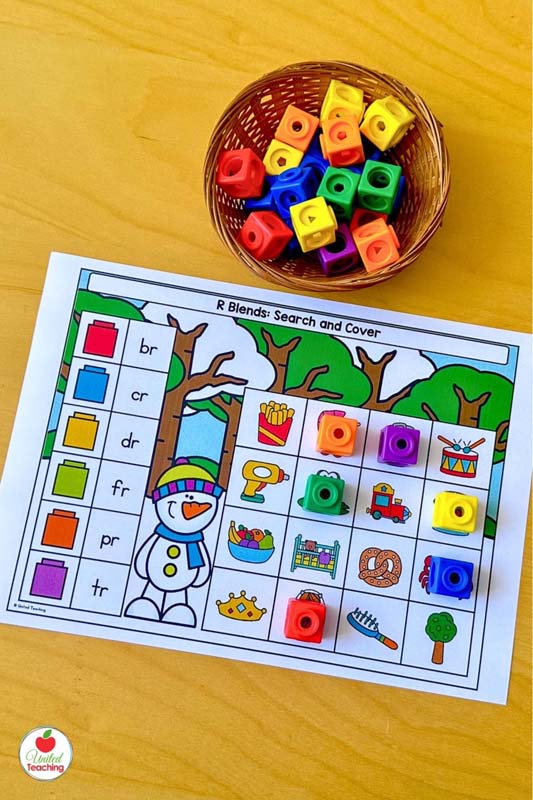
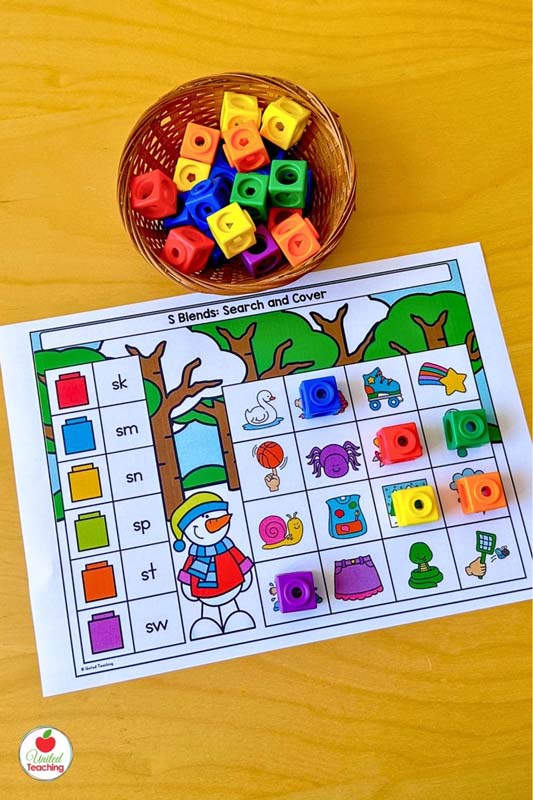
Beginning Blends Search and Cover
Students use a color code to search for and cover pictures with the matching beginning blend.
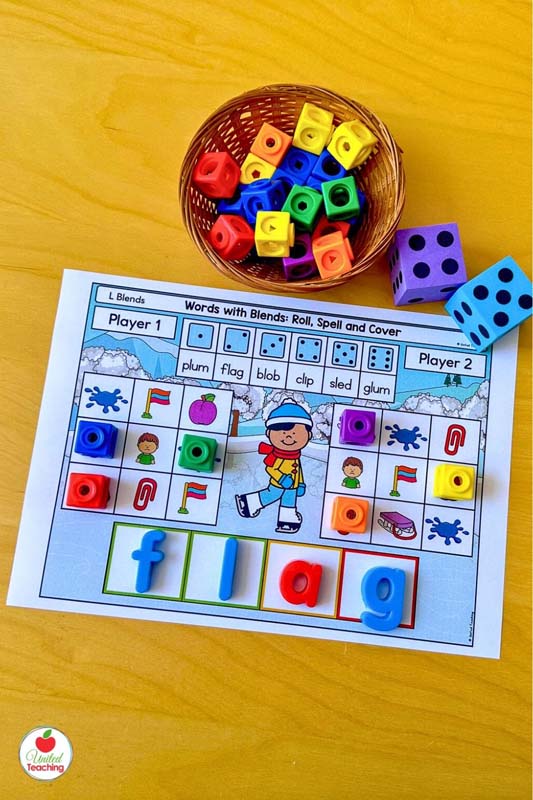
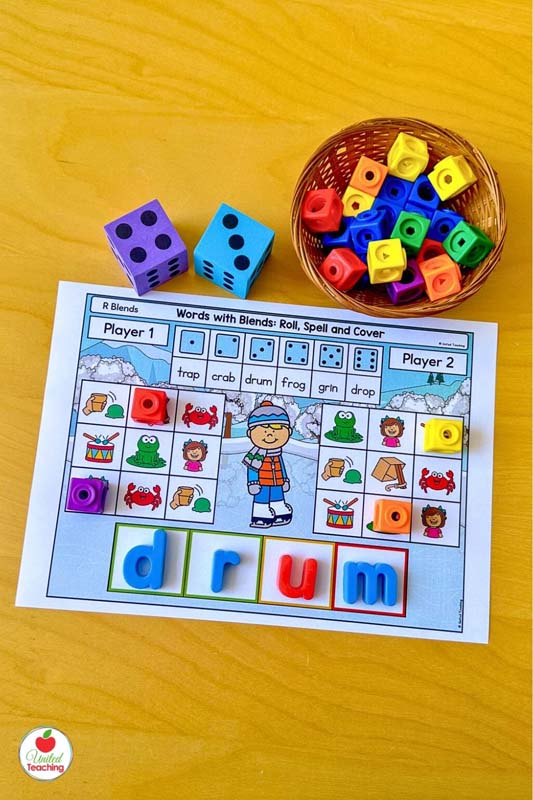
Beginning Blends Roll, Spell, and Cover (Partner Game)
Students roll a die, build the word with letter tiles, and cover the matching picture on the board.
Why teachers love them:
- Clip cards and partner games make phonics practice feel active and engaging.
- Students practice isolating sounds at the beginning, middle, and end of words.
- Word building activities help students understand how sounds combine to make words.
- Digraph and blend centers introduce more advanced phonics patterns in a low-pressure format.
- Recording sheets give teachers quick formative assessment data.
Winter Sight Word Centers
Sight word fluency is essential for reading success.
Winter sight word centers give students repeated practice recognizing and writing high-frequency words.
Activities included:
Pre-Primer Sight Words Spin and Graph
Students spin, read, and cover the matching sight word on the graph. The black-and-white version includes tracing practice.
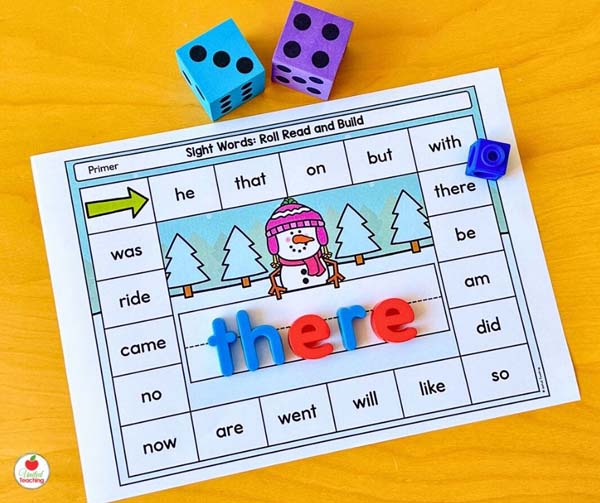
Primer Sight Words Roll and Build Games
Students roll a die, read the sight word, and build it with letter tiles or magnetic letters.
Why teachers love them:
- Spin and graph activities make sight word practice hands-on and visual.
- Roll and build games give students repeated exposure to high-frequency words.
- Tracing options support students who need extra handwriting practice.
- Partner formats add motivation and accountability.
Winter Fine Motor Skills
Fine motor development supports handwriting, letter formation, and overall classroom readiness.
Winter play dough mats sneak in valuable fine motor practice while keeping students engaged.
Activities included:
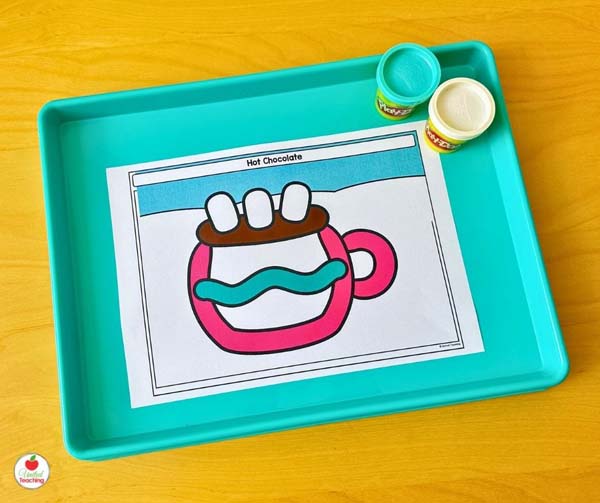
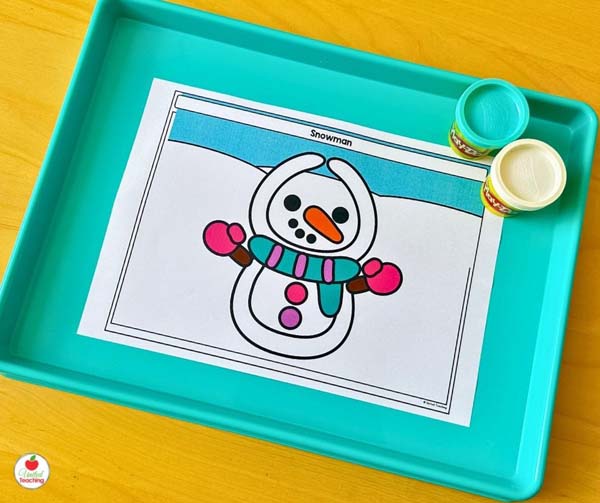
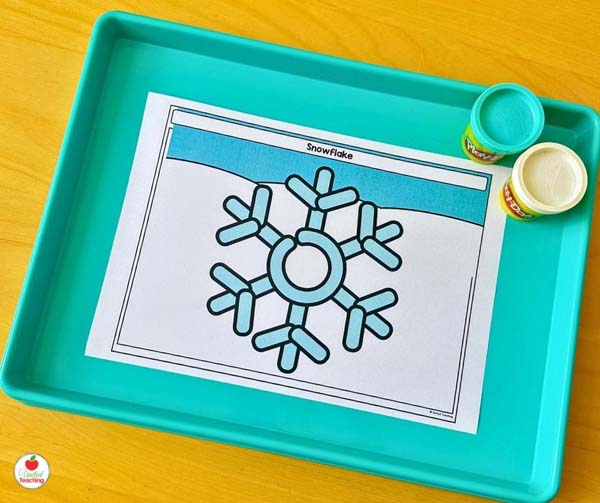
Winter Play Dough Mats
Students build winter objects like snowmen, snowflakes, cocoa mugs, and more using play dough.
Why teachers love them:
- Play dough strengthens the small muscles needed for writing.
- Winter themes keep students motivated and engaged.
- Mats are reusable and require almost no prep.
- Perfect for morning tubs, centers, or early finisher activities.
Fitting Winter Literacy Centers Into the Day
One of the best parts about winter literacy centers for kindergarten is how flexible they are.
Here are a few simple ways to use them:
- Literacy rotations: Set out 4–6 activities and rotate students through stations while you meet with guided reading groups.
- Morning tubs: Use clip cards, tracing mats, or play dough activities for a calm and productive start to the day.
- Small group instruction: Pull a center that matches your focus skill and work through it together with targeted support.
- Early finishers: Keep bins of sight word games or phonics activities ready for meaningful independent practice.
- Quick checks: Use recording sheets as exit tickets or informal assessments to monitor progress.
Keep the Winter Fun Rolling
If students enjoy these winter literacy centers, here are a few easy next steps:
- Pair them with the matching Winter Math Centers for Kindergarten post for a complete rotation of seasonal activities.
- Build sight word fluency with editable Winter Sight Word Games .
These related resources allow you to create a well-rounded winter learning experience across all your kindergarten centers.
Get the Winter Literacy Centers for Kindergarten
Winter is the perfect time to strengthen literacy routines and keep students engaged with hands-on reading practice.
These winter literacy centers for kindergarten help students practice letter recognition, phonemic awareness, beginning and ending sounds, CVC words, digraphs, blends, sight words, and fine motor skills using activities that feel like play.
For teachers who want winter literacy centers that are easy to prep and easy to use, the full pack is available here: