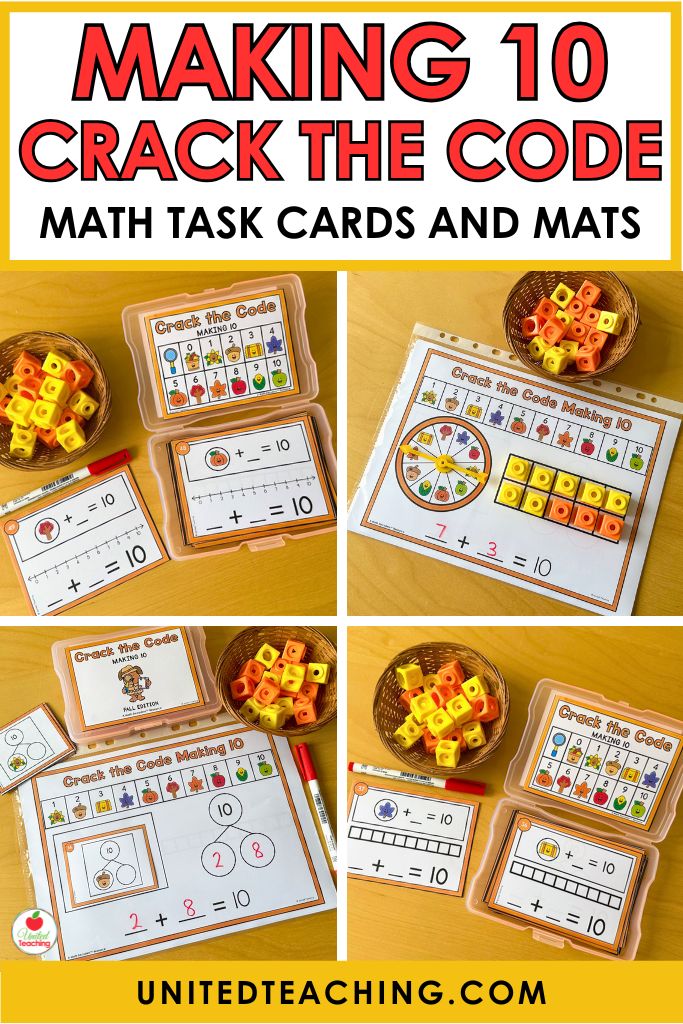





Every kindergarten teacher knows the struggle: you need make 10 practice that actually holds attention while building real math skills. We’ve all been there — students with glazed-over eyes during number bond practice, and that sinking feeling that half the class just isn’t getting it. Enter Make 10 Crack the Code Math Task Cards, the newest addition to the Math Decoders™ series. These fall-themed task cards transform ways to make ten into mini mysteries that kids can’t wait to solve. Students get the thrill of cracking a secret code, and you get purposeful, hands-on practice that builds automaticity. Today’s post dives into these autumn make ten math games and activities that turn ordinary number practice into undercover missions.
Why the Make 10 Strategy Matters (And Why Students Need Fluency Early)
Let’s be real: make ten isn’t just another math skill to check off your list. It’s the foundation that moves learners from slow counting to quick, confident mental math. When students truly know every combination of numbers that make 10, they unlock three game-changing benefits:
Lightning-fast computation: Number bonds like 6 + 4 and 9 + 1 become instant shortcuts for tackling harder problems like 16 + 4 or 14 – 6. This strategy helps students add and subtract within 20 with confidence.
Mental math confidence: Fact fluency with make ten combinations frees students from having to use their fingers, letting them focus their brain power on solving more complex math problems.
Flexible number sense: Breaking numbers apart and rebuilding them shows there’s more than one way to practice making ten — the kind of thinking that transforms mathematics from memorization to understanding.
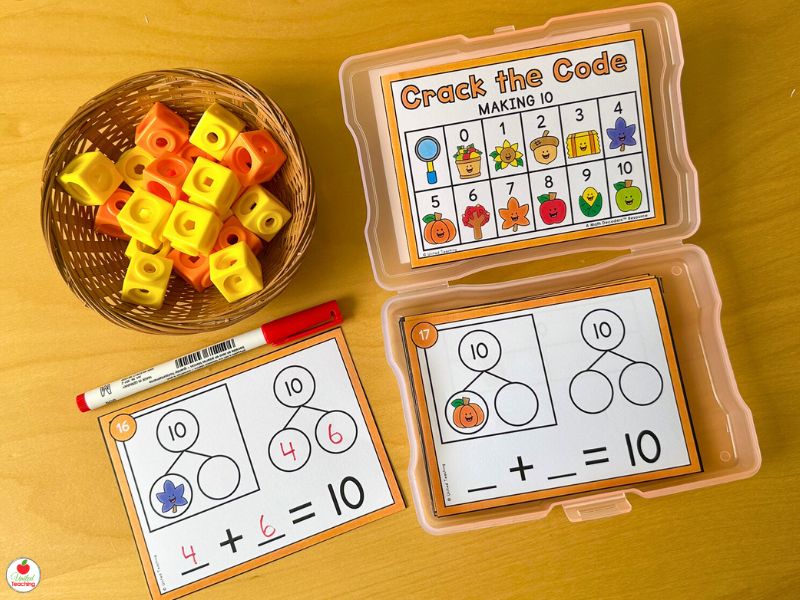
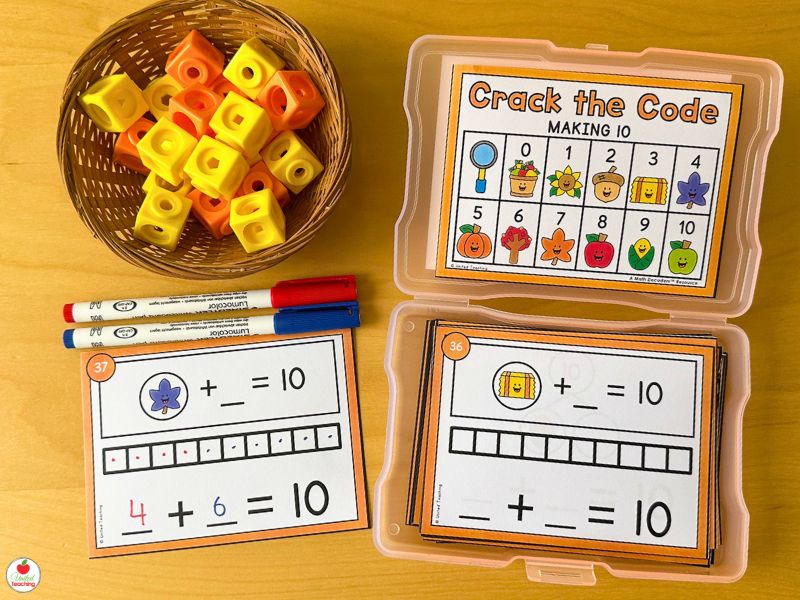
The make 10 math games reinforce this crucial strategy through multiple pathways: counting on, decompose numbers, ten frame work, and number lines. Students fill ten frames with math counters, hop along number lines, or use part-part-whole strategies to discover the magical pairs of numbers that add to make 10. This foundational skill becomes the secret weapon for subtraction, place value, and adding larger numbers later on.
Why Make Ten Math Games Belong in Your Classroom
Traditional worksheets? They can feel like pulling teeth. But swap those repetitive rows of equations for a mysterious code to crack, and suddenly even your most reluctant mathematicians are leaning in. Here’s what’s really happening behind the scenes:
Engagement goes through the roof: Matching pumpkin and leaf icons to numbers feels like a treasure hunt, not work. The “detective” element taps directly into their natural curiosity and makes practice making ten actually fun.
Independence blooms: The routine stays identical from deck to deck, empowering students to work solo.
Number sense sticks for real: Students fill the ten frame, decompose numbers, and write math facts — cementing the make a ten strategy without even realizing they’re doing repetitive practice.
Your prep stays minimal: Print, laminate, slide everything into a 5 × 7 photo box. Done. No cutting tiny pieces or hunting for missing components.
How the Make 10 Code Breaker Routine Works
This routine transforms every make ten fact into a mini mystery you’ll teach once and reuse all year. The beauty is in the consistency!
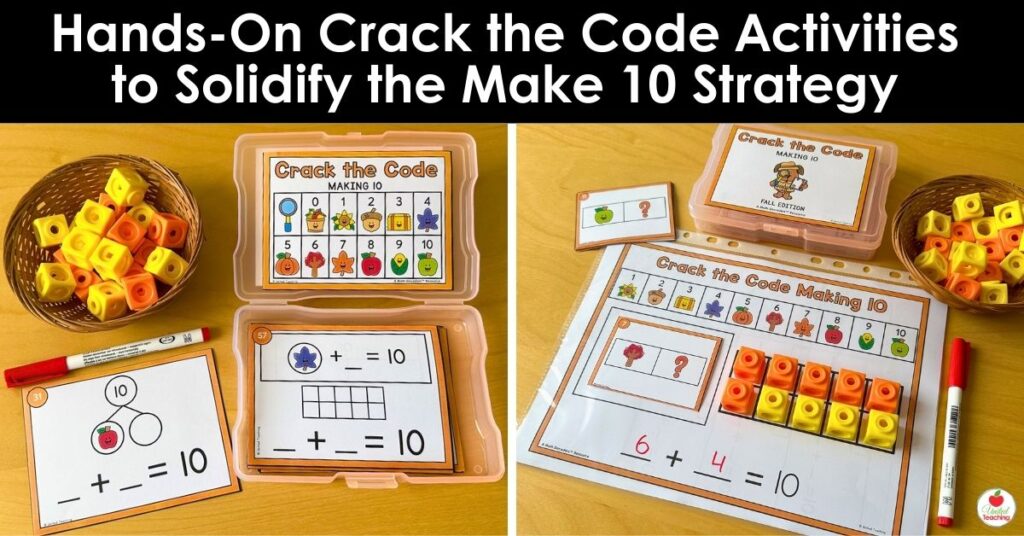
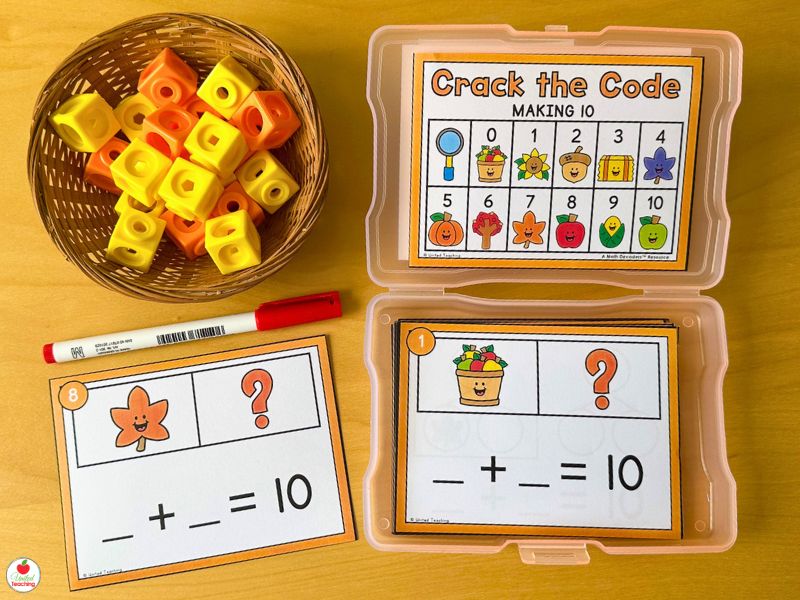
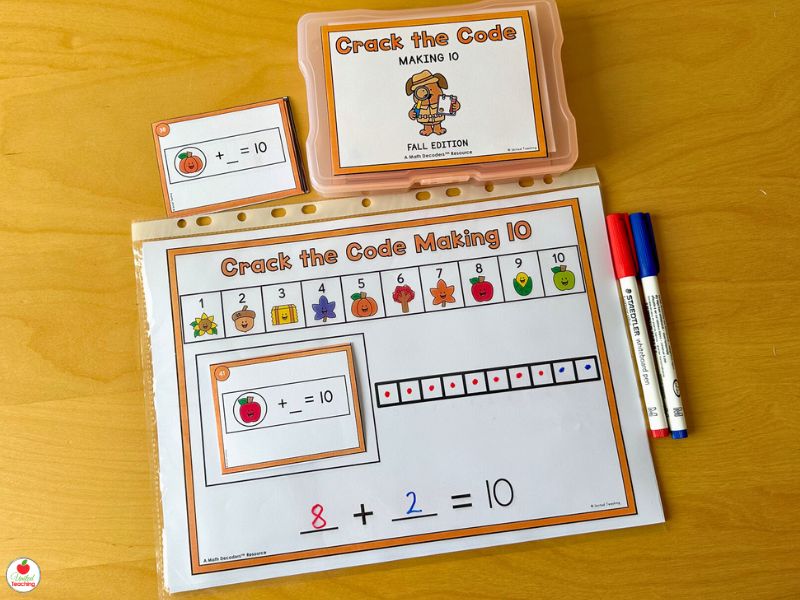
Find the Clue: Students match each fall picture—pumpkin, leaf, or acorn—to its corresponding number on the picture code chart.
Crack the Code: Here’s where they become real detectives! The numbers replace the pictures in the equation boxes, revealing a partially complete make 10 problem.
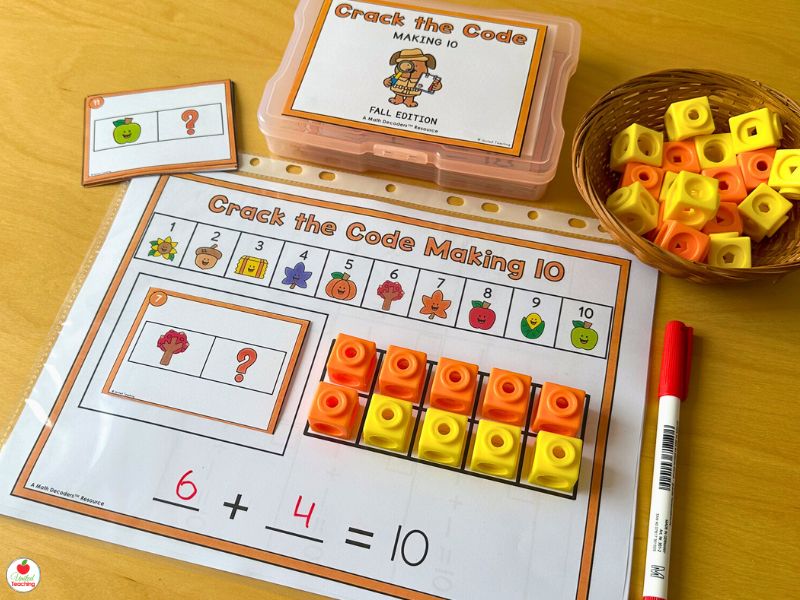
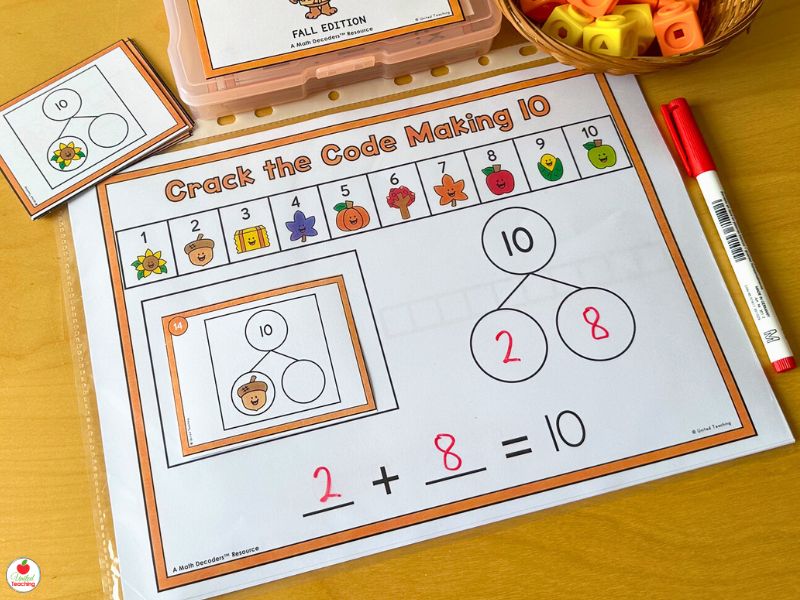
Write & Solve: Learners complete the equation and use built-in math strategies like ten frames and number bonds to show the two addends that compose 10. This bridges the gap between concrete and abstract thinking.
Record the Answer: The full addition fact gets logged on the recording worksheet, creating instant accountability and giving you perfect progress snapshots.
Teacher note: Once your students know these four steps, you’ll only swap decks — never directions. Model the first card on your whiteboard, and watch independence soar.
Hands-On Make Ten Activities That Build Fluency
Below is your quick tour of the Fall make 10 deck, ready to slip straight into your autumn centers and lesson plans.
The Crack the Code make ten activities include way more than just task cards. Each component builds fluency from a different angle, keeping the same “mystery” fresh all season long.
Full-Size Make a Ten Detective Mats
Oversized equation workspace: Plenty of room for those still-developing fine motor skills to record the missing addend and complete make 10 equations.
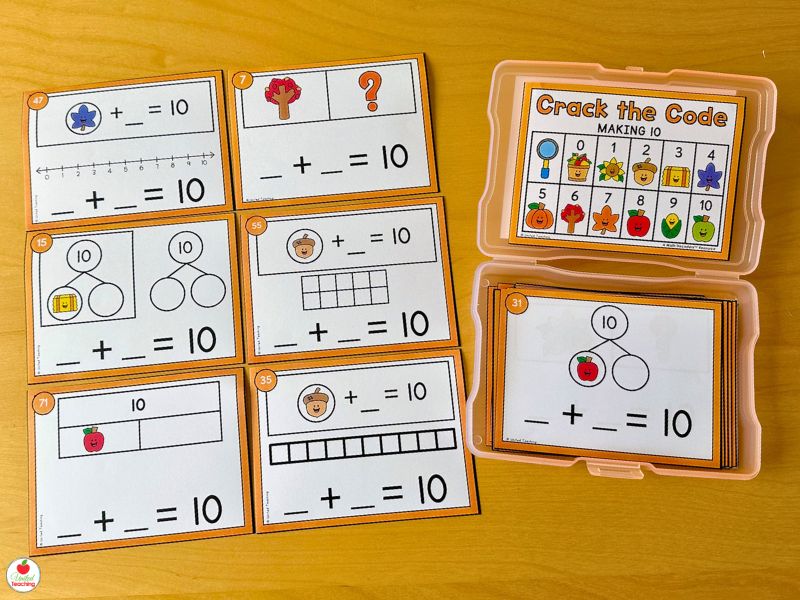
Built-in ten frame support: Addition strategies for finding missing addends — ten frames, number bonds, and number lines — appear right on the mat, giving students the scaffolds they need to practice making ten without you having to provide extra materials.
Math Task Cards That Make Practice Interactive
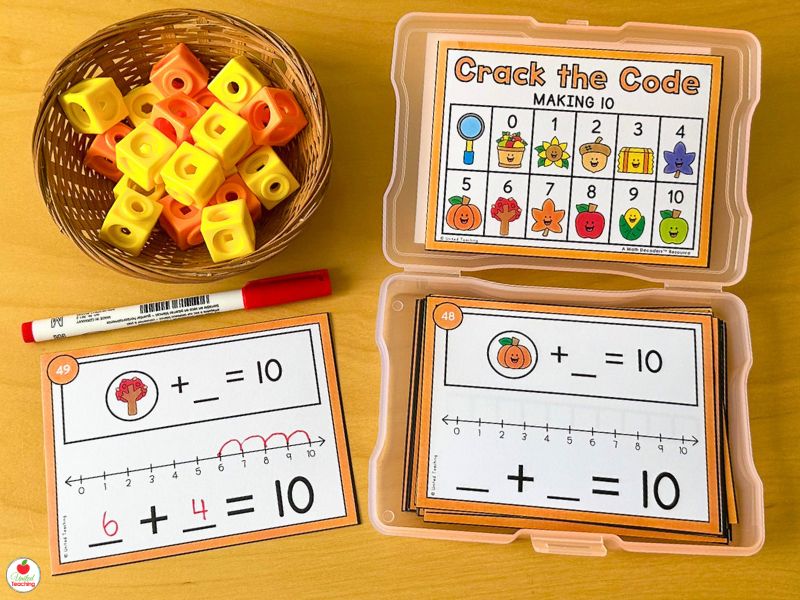
Quarter-page task cards: Four cards print on a single sheet; once trimmed, each slips neatly into a standard 5 × 7 photo box. Perfect for math centers or as a way to practice during transitions.
True grab-and-go storage: The entire fall deck—including a mini picture-code chart—fits inside one box, keeping centers tidy and totally portable.
Scaffolds at their fingertips: Ten frame visuals and number pair hints are located directly on the task cards, so students get support exactly when and where they need it to solve each combination.
Easy Ways to Make Ten Practice Fit Into Your Day
Not sure where to squeeze in one more math activity? These make 10 math games are incredibly flexible. Start here:
Morning tubs: Drop a handful of cards in morning work containers so children warm up independently while you handle attendance and lunch count — a calm, productive start that reinforces number fluency.
Post-lesson reinforcement: Pass out a puzzle right after your mini-lesson. Students prove the make ten strategy in a playful, hands-on way that feels like a reward, not more work.
Guided-math ready: Keep one deck at your teacher table for targeted support, another at an independent center — identical routine, different scaffolding levels for students.
Early-finisher lifesaver: Label it “Code-Breaker Corner” and redirect that “I’m done!” energy into meaningful practice that builds fact fluency.
Whole-class energizer: Project a single card on your interactive whiteboard as a one-minute warm-up before diving into new content. Great for common core alignment too.
Sub plan hero: The predictable four-step routine keeps your room running smoothly when a guest teacher steps in. Leave these, and your sub will actually thank you.
Ready to Start Make Ten Fun?
Here’s your simple 3-step launch plan:
Get the Math Decoders™ Make 10 Task Cards and model the crack the code routine as a whole group. The fall theme makes it perfect for autumn and builds on common strategies for making 10.
Pick your perfect fit: Start with make 10 combinations, or branch out to other skill decks like addition and subtraction when you’re ready to stretch your students.
Rotate seasonal themes: Autumn now, Halloween next, winter later — keep engagement sky-high all year without ever reteaching directions. Each deck of cards follows the same pattern.
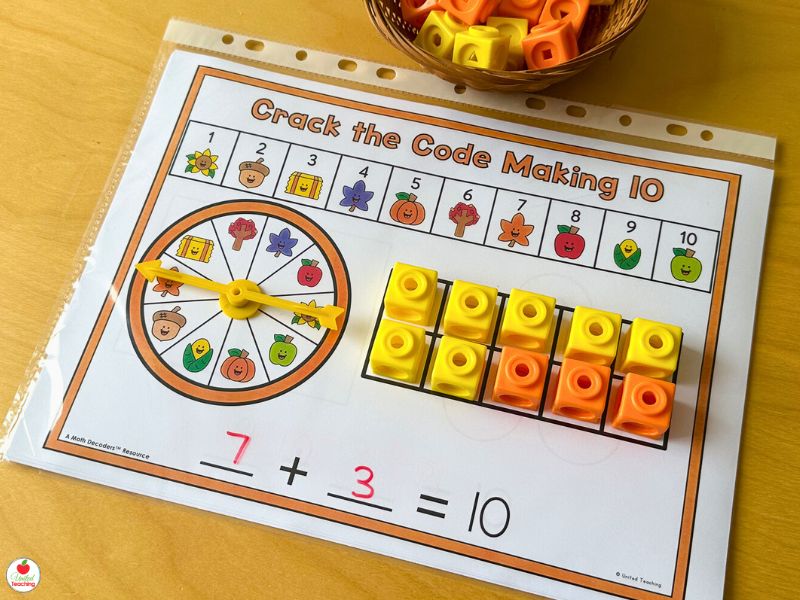
When students match picture clues to find the number needed to make ten, they aren’t just solving puzzles — they’re building the automaticity that fuels efficient addition, subtraction, and place-value reasoning. Use this as a way to practice that goes beyond traditional dice games or red and yellow counter activities. Slip the fall deck into morning tubs, math rotations, or early-finisher bins and watch math fluency grow day by day. Your students will master every combination to make 10 while having so much fun, they won’t even realize they’re working on complex calculation and subitizing skills that will help them fill the ten frame faster and reinforce their understanding of how to add, subtract, and compose numbers fluently.

Pin for Later