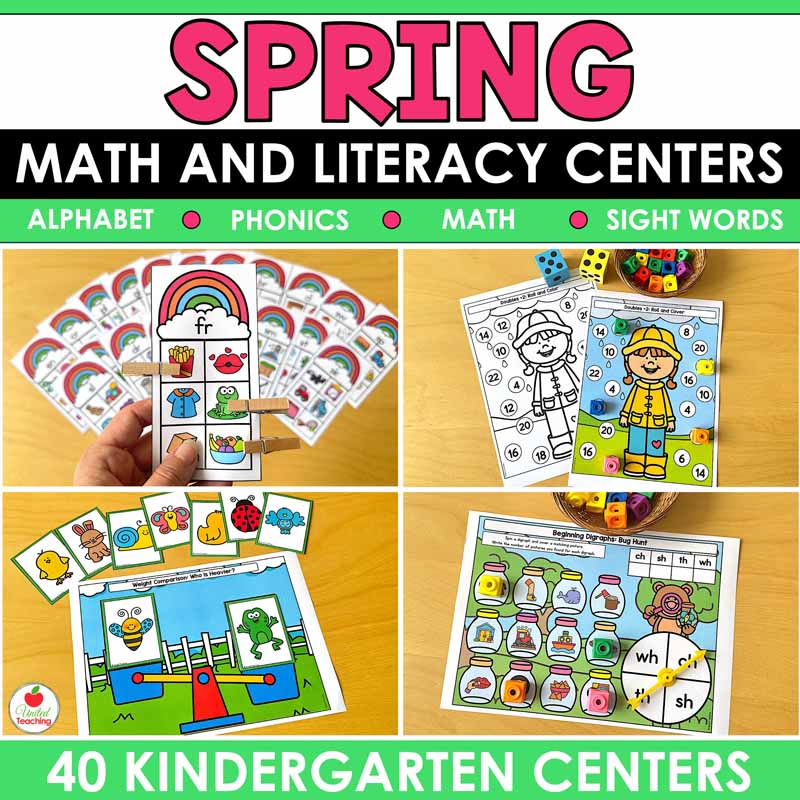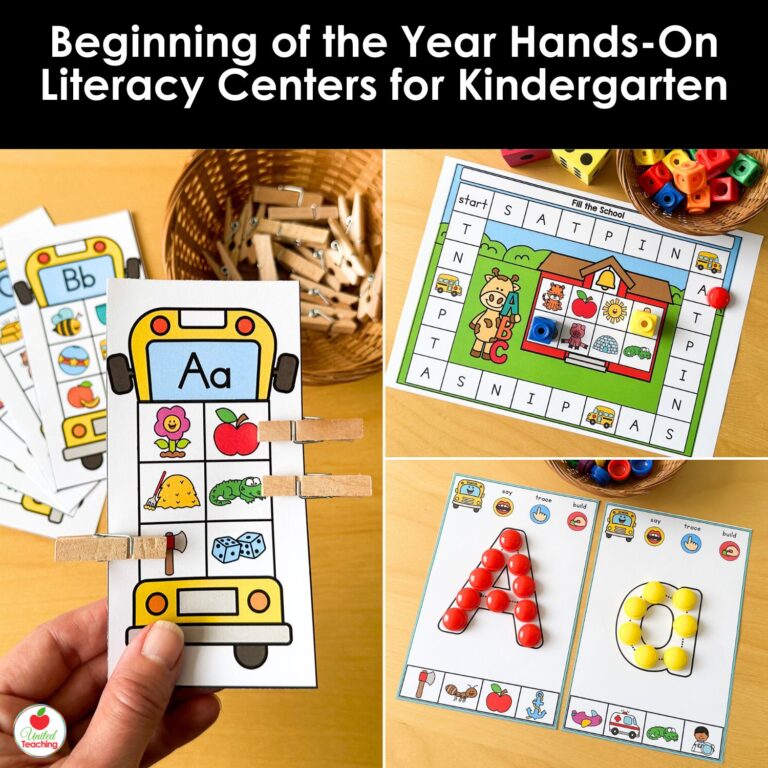




Spring is one of the most important stretches of the kindergarten year for literacy. Students who started the year not knowing all their letters are now blending CVC words. Students who were blending CVC words in September are now reading digraphs and blends. And you need centers that meet all of them without requiring hours of weekend prep.
These spring literacy centers for kindergarten cover the full early reading progression from alphabet and phonemic awareness through CVC words, digraphs, consonant blends, sight words, and grammar. All activities are aligned with a structured literacy approach: explicit, systematic practice in a hands-on format students can do independently.
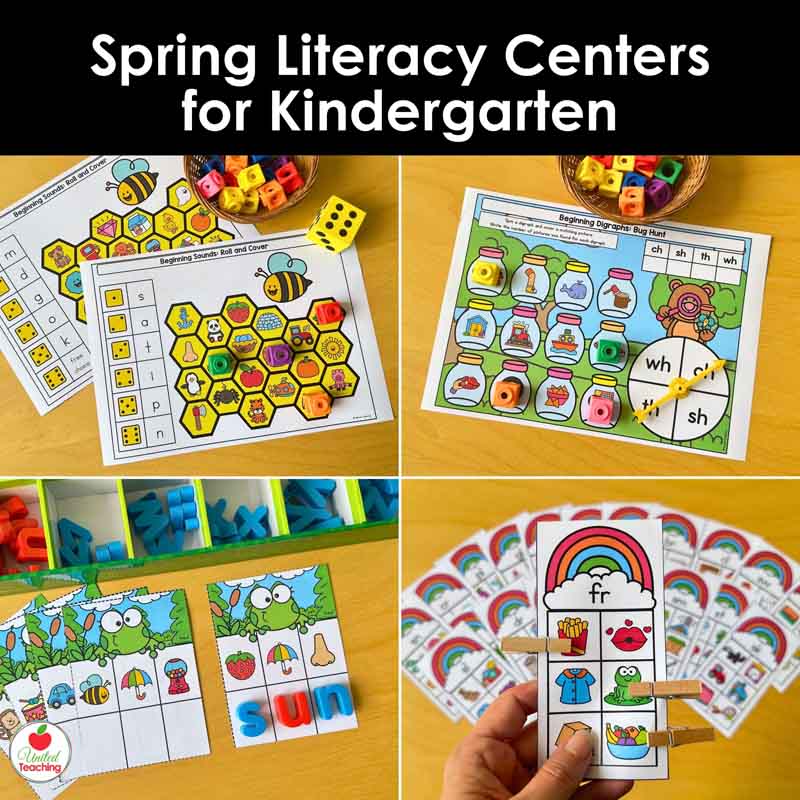
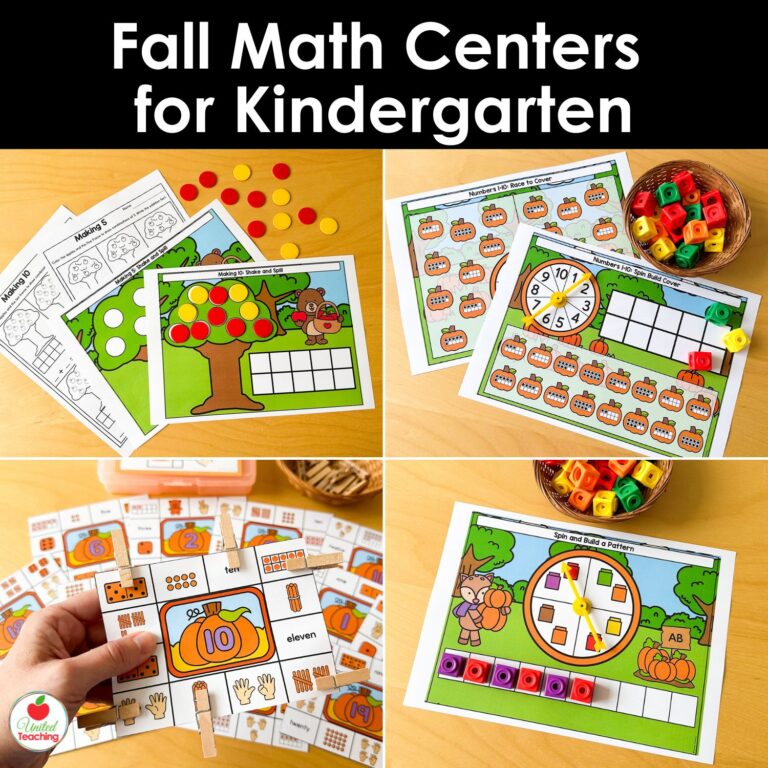
For the math side of your spring rotations, check out the companion post on Spring Math Centers for Kindergarten. Together, these two posts cover all 40+ activities available in the Spring Math and Literacy Centers packet.
Alphabet and Phonemic Awareness Centers
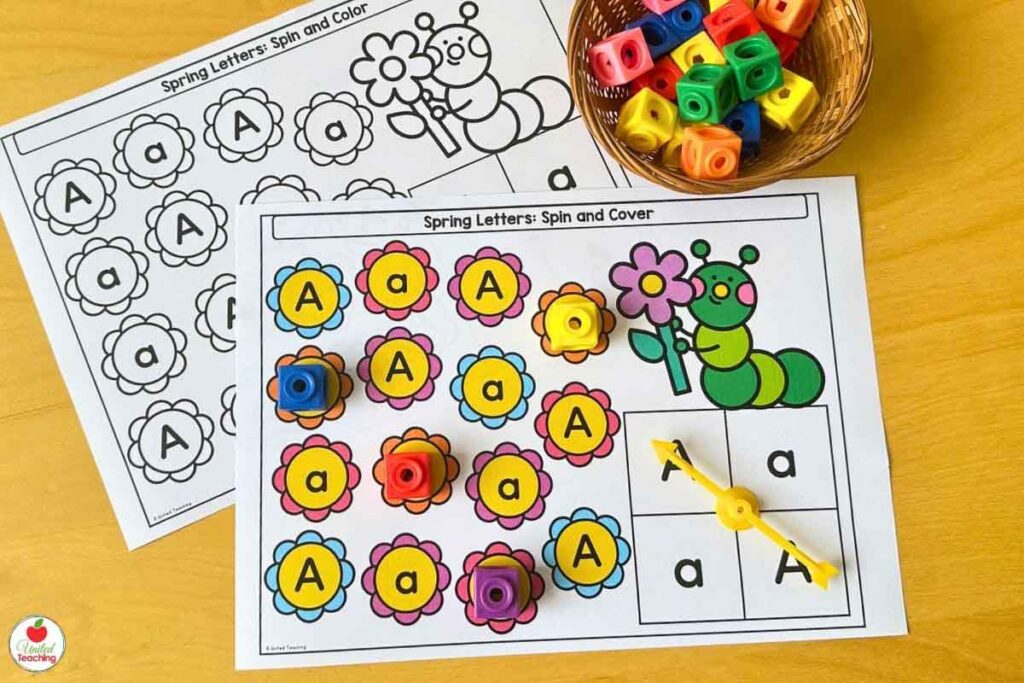
Alphabet Spin and Cover (Uppercase and Lowercase Letter Matching)
Letter recognition — particularly the ability to match uppercase and lowercase forms — is a foundational skill that some students still need to solidify well into spring. This spin and cover game keeps the practice low-stakes and fast-paced. Students spin a letter, find its match on the board, and cover it with a counter. The spring-themed board makes the activity feel current even for students who practiced letter matching all winter.
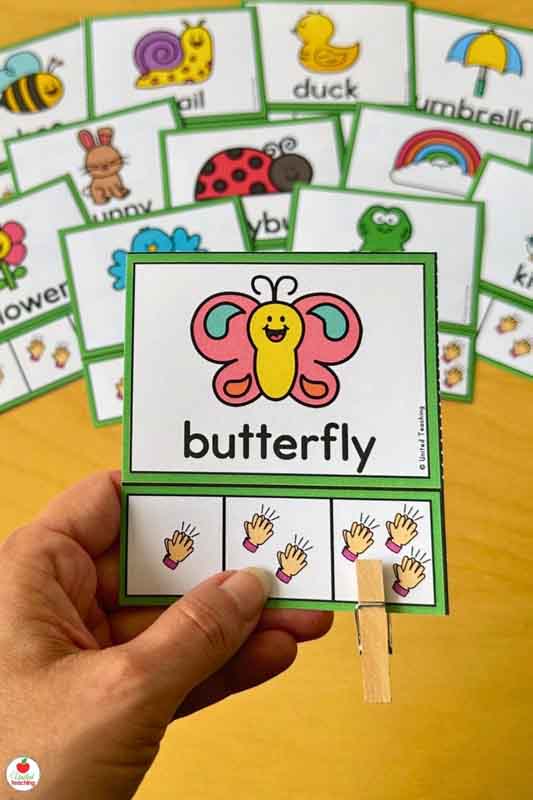
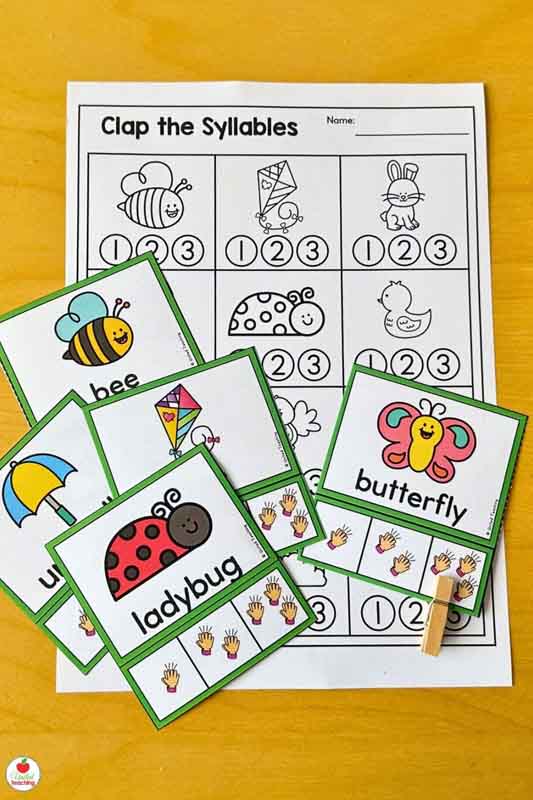
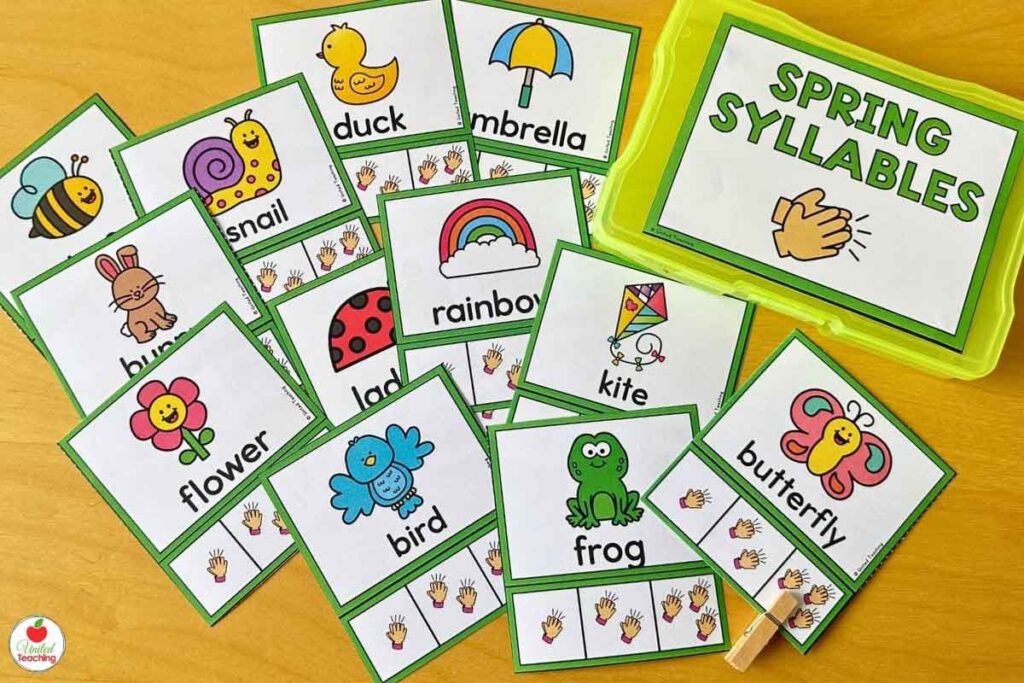
Clap the Syllables Clip Cards
Phonemic awareness — the ability to hear, identify, and manipulate the sounds in spoken language — is a key predictor of reading success, and syllable segmentation is one of the first phonemic awareness skills to teach. Students look at a spring-themed picture card, clap the syllables, and clip the matching number. A recording worksheet is included for accountability.
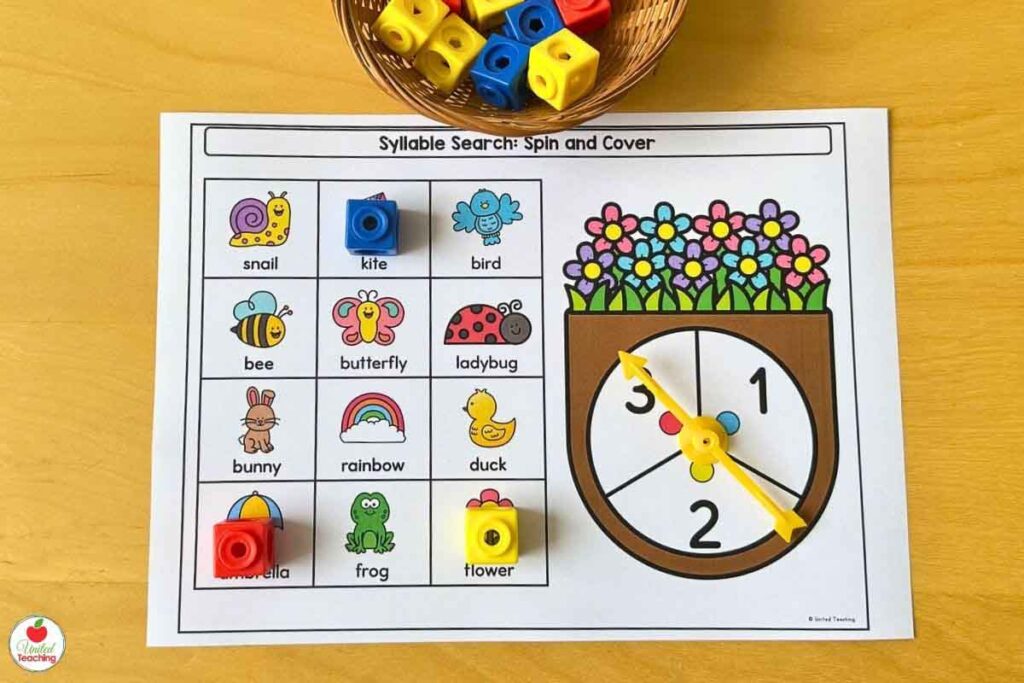
Syllable Spin and Cover
Students identify the number of syllables in spring picture words — butterfly (3), bee (1), flower (2) — and cover the picture on their mat using the color code. Both color and black-and-white mat versions are included.
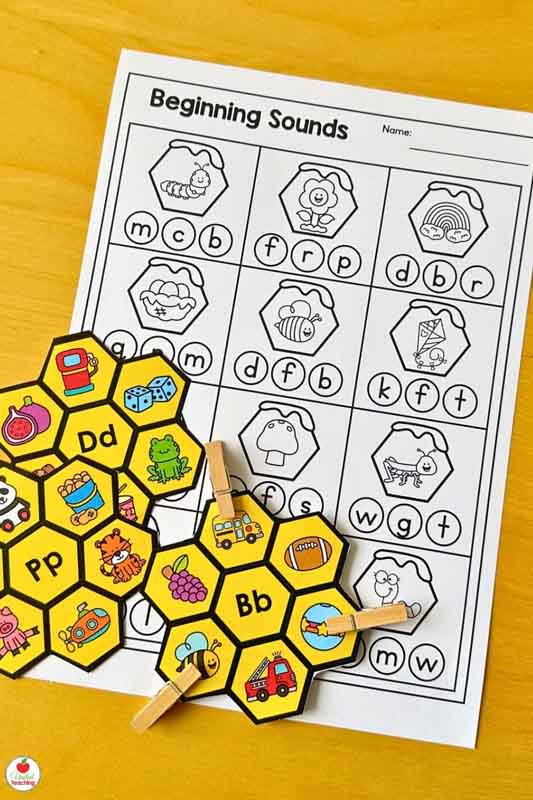
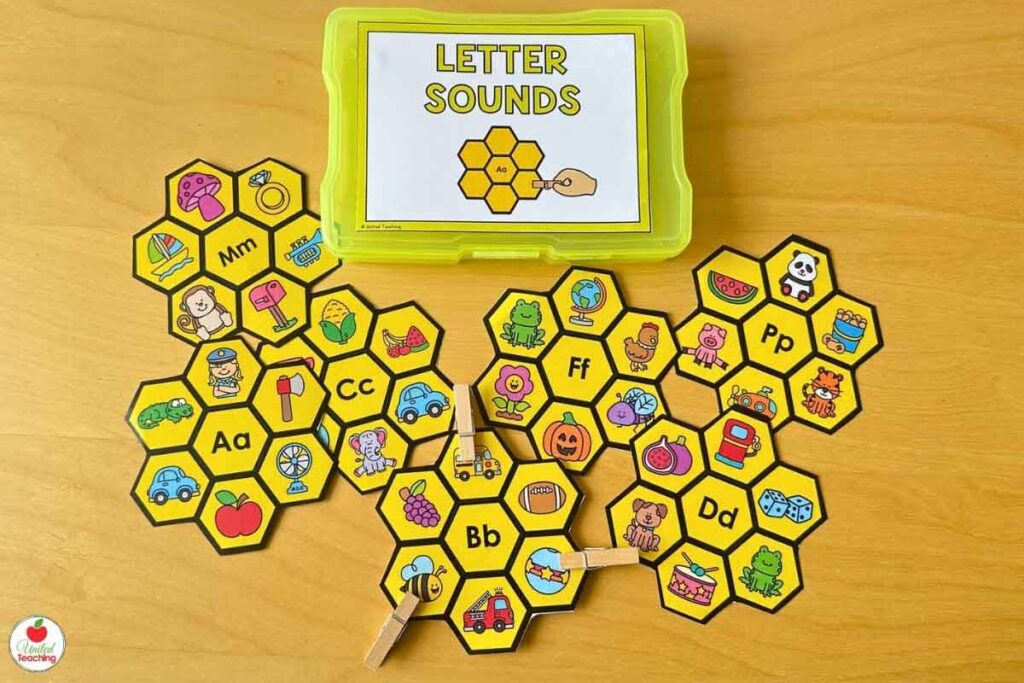
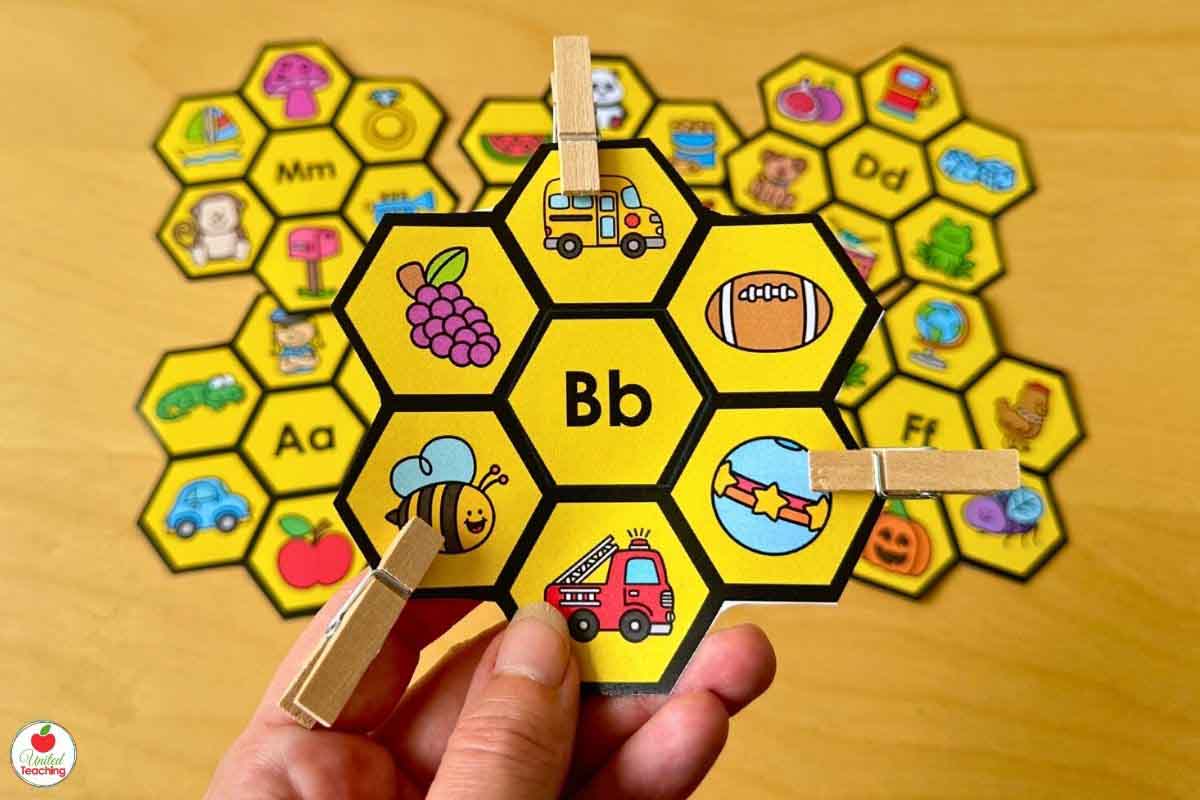
Beginning Sounds Clip Cards
Twenty-six clip cards give students practice identifying beginning sounds. Students clip the pictures to match the letter. A review worksheet is included so you can check students ability to identify beginning sounds.
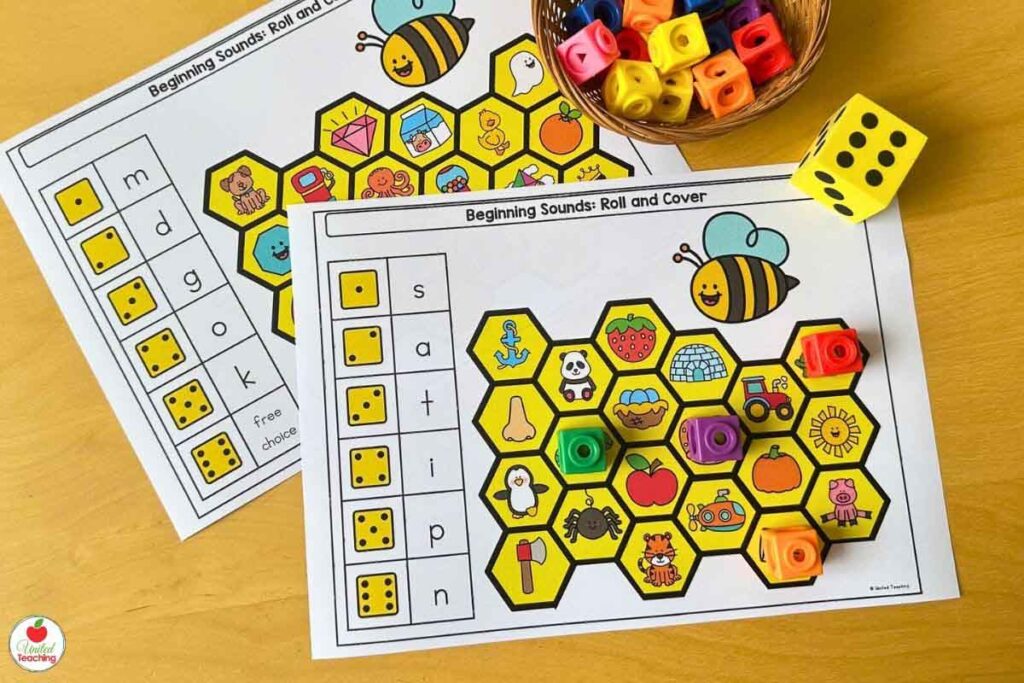
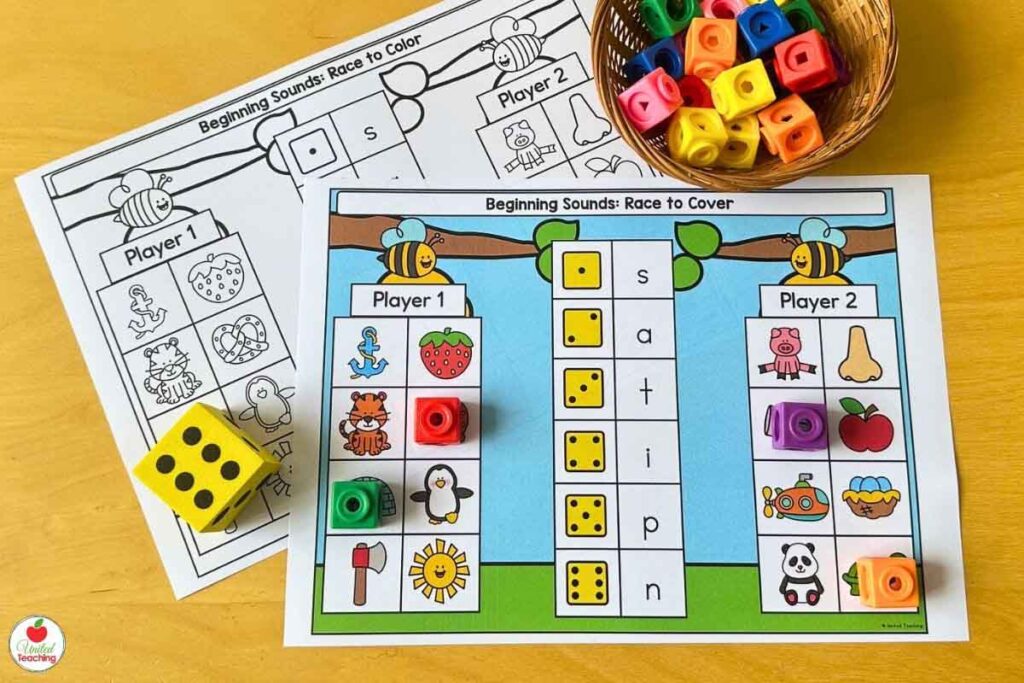
Beginning Sounds: Roll and Cover + Race to Cover
Two formats for beginning sounds practice — an individual roll-and-cover game and a partner race version. Having both formats available means you can differentiate by student readiness: students who are newer to beginning sounds benefit from the self-paced individual format, while students who have the skill and need fluency practice get more from the competitive race format.
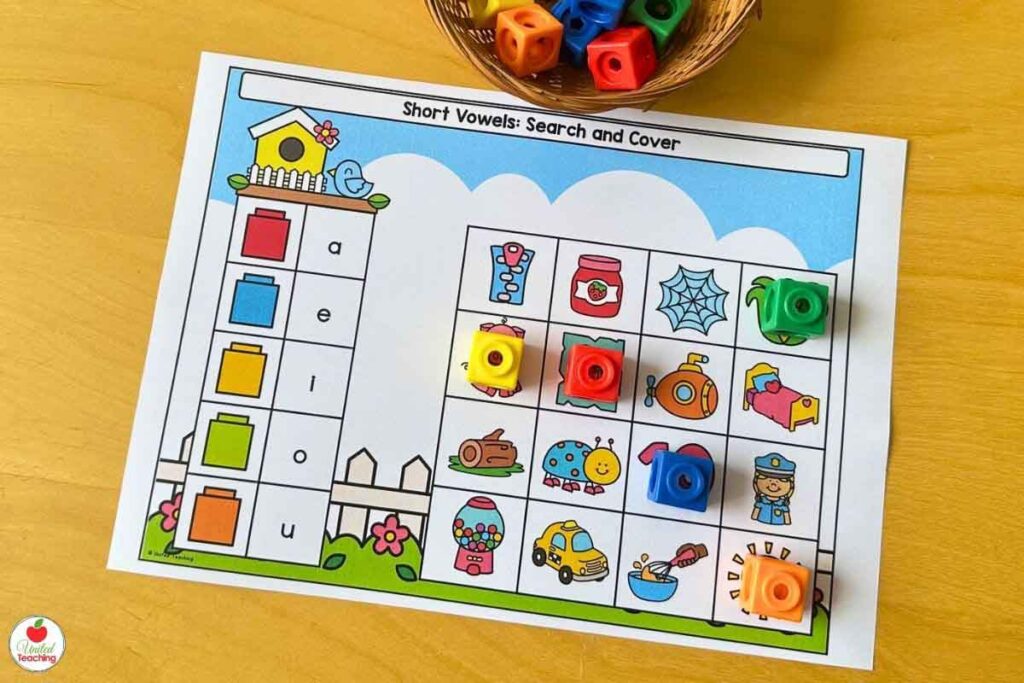
Short Vowel Sounds: Search and Cover
Students look at pictures and identify the short vowel sound in each word. This is an important bridge activity: students who can identify beginning and ending consonants but still confuse short vowel sounds need dedicated practice isolating the middle sound before they can decode CVC words fluently.
Phonics Centers
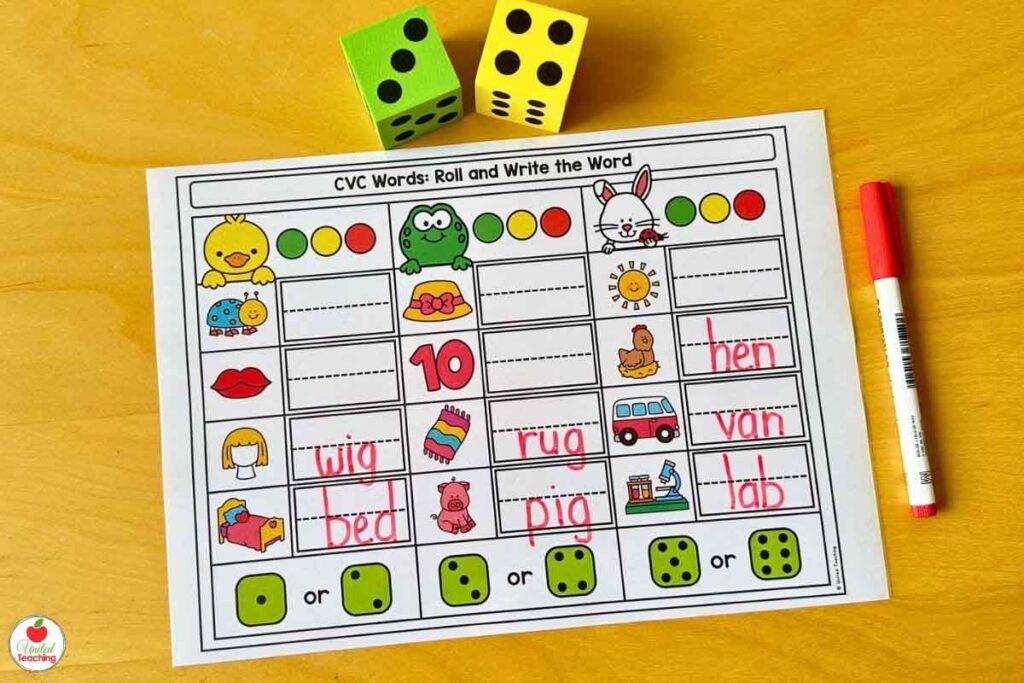
CVC Words: Roll and Write
Students roll a die, find the CVC word in the matching column, and write the word. The roll-and-write format keeps the students engaged as they practice encoding CVC words.
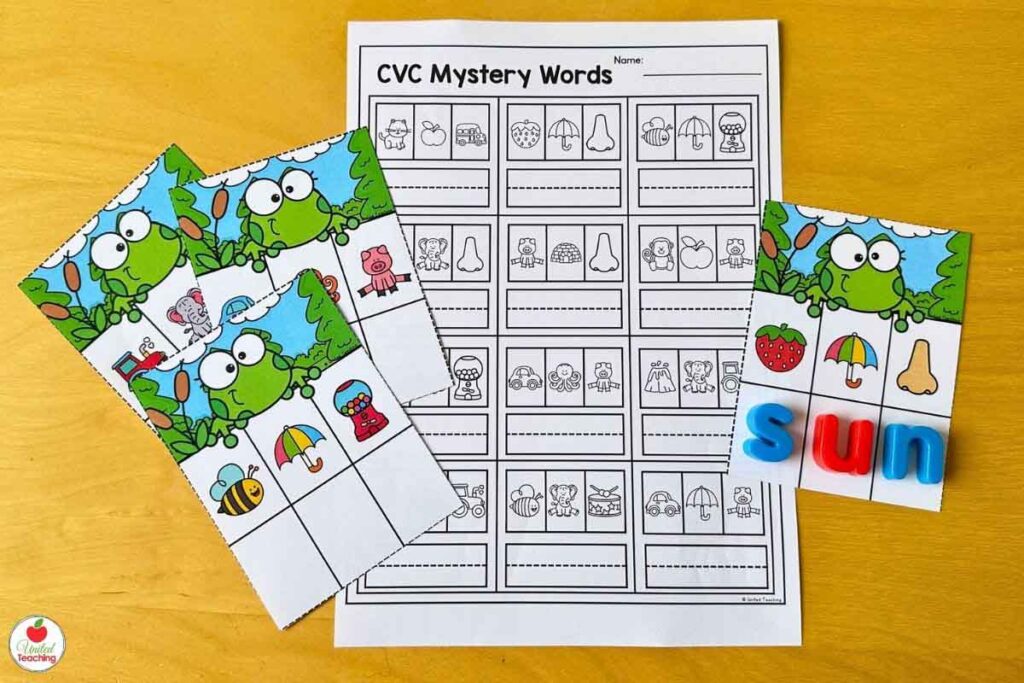
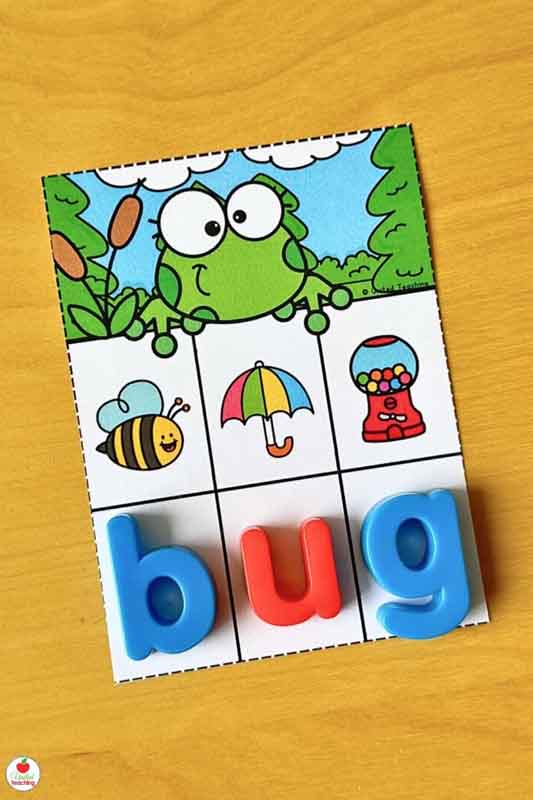
Mystery CVC Words
Students look at spring-themed picture clues and decode the CVC word by matching the beginning sound taht each picture represents. The mystery format adds engagement — students feel like they’re solving something rather than just reading words in a list. For students who are just starting CVC blending, using magnetic letters or letter tiles on the cards allows them to build the words physically before writing it.
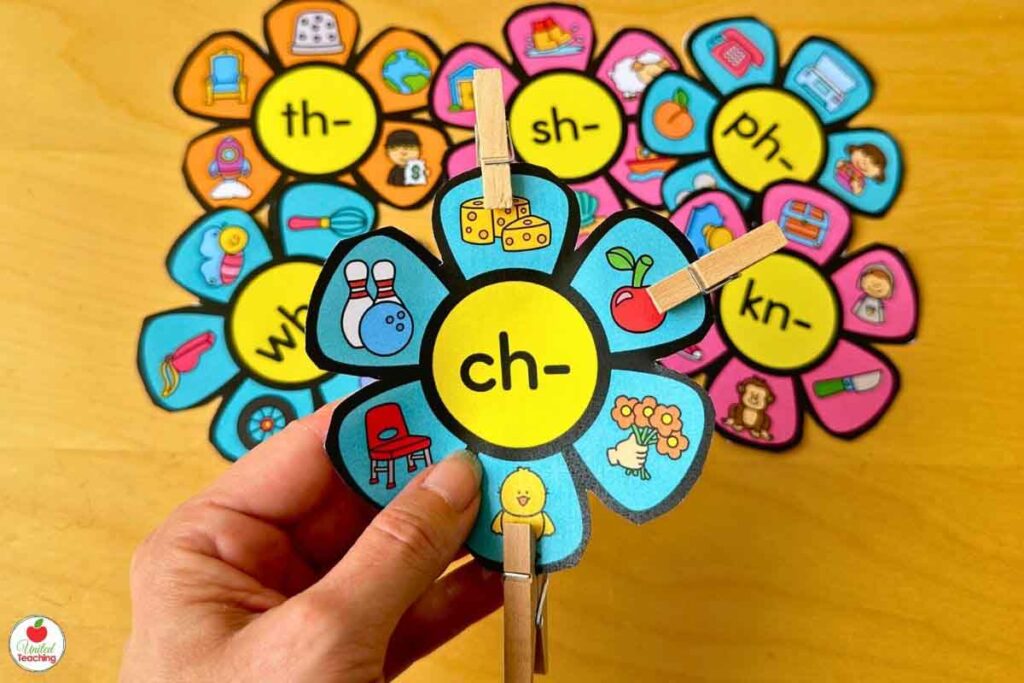
Digraph Clip Cards (Beginning and Ending Digraphs)
Digraphs (ch, sh, th, wh, and ending digraphs like -ch and -sh) require explicit teaching because they break the one-letter-one-sound pattern students have learned. These clip cards give students practice identifying digraphs in words — students look at the digraph and clip the matching pictures.
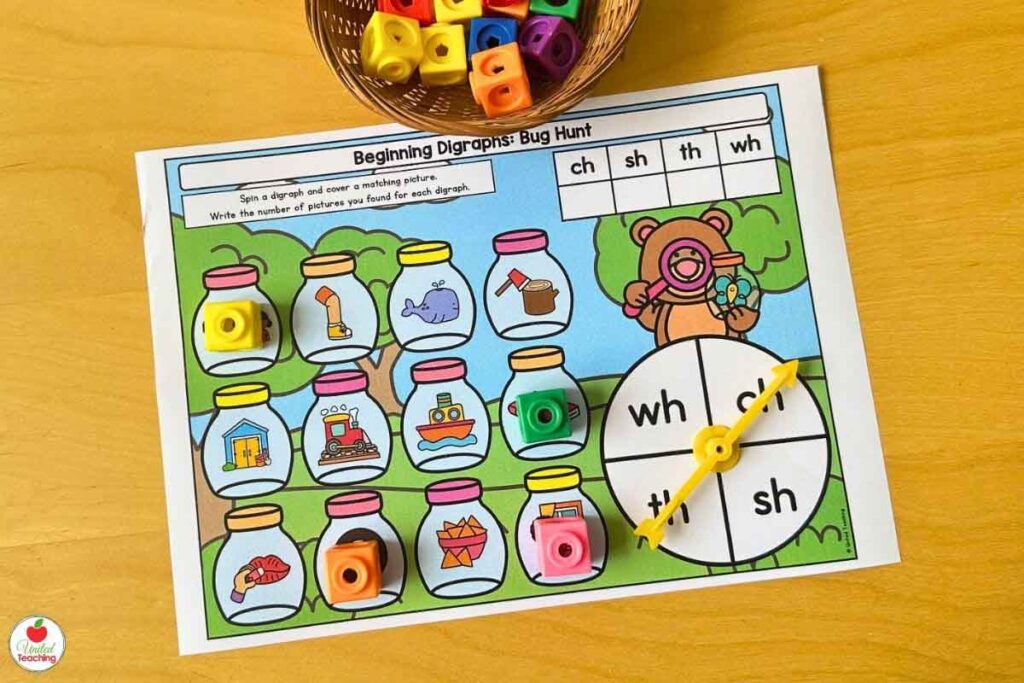
Beginning Digraphs: Spin and Cover + Race to Cover
Two practice formats for beginning digraphs — an individual spin-and-cover activity and a partner race. Students spin a digraph (sh, ch, th, wh), say the sound, then find and cover a picture that starts with that digraph. The spring-themed board keeps the activity fresh through weeks of rotation.
Differentiation tip: For students who are not yet secure on digraphs, use the individual spin-and-cover format and sit with them for part of the session to provide corrective feedback. Once they’re solid, move them to the partner race for fluency practice.
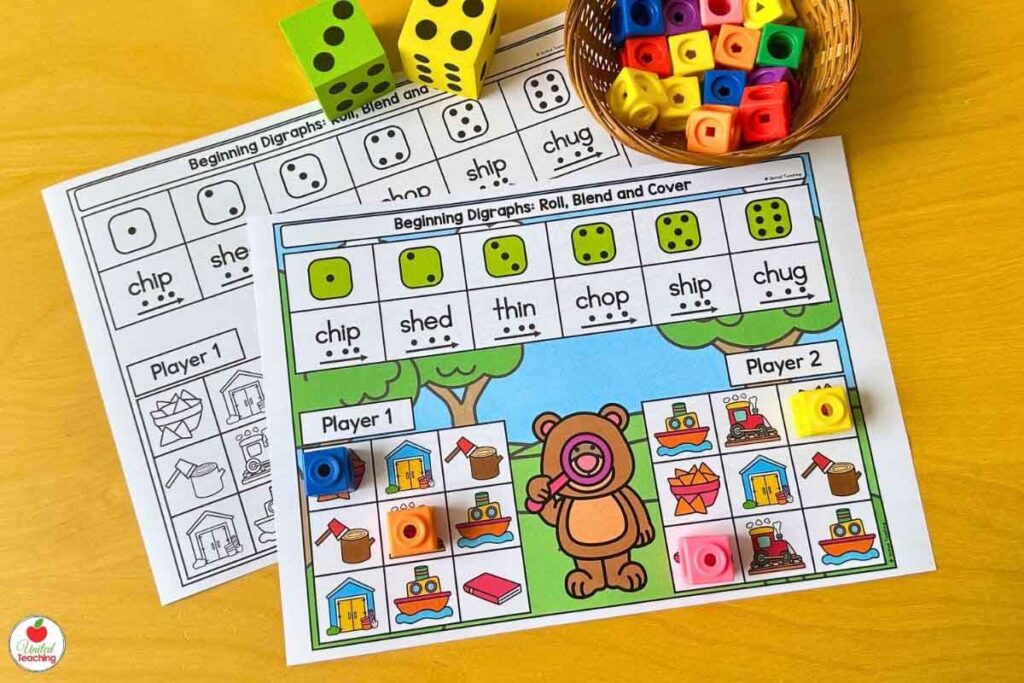
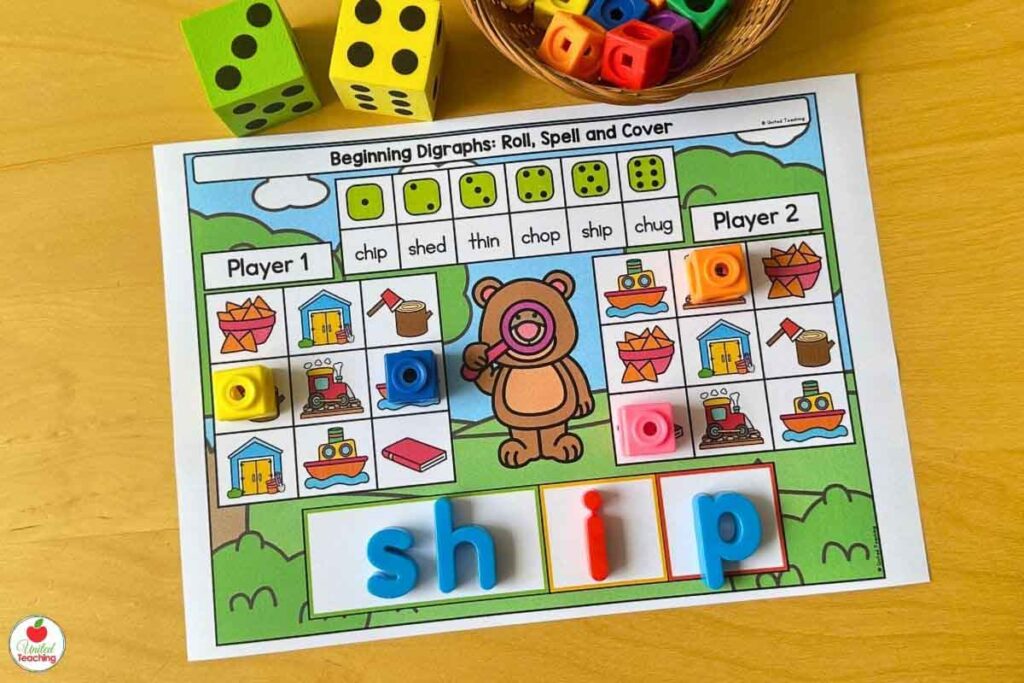
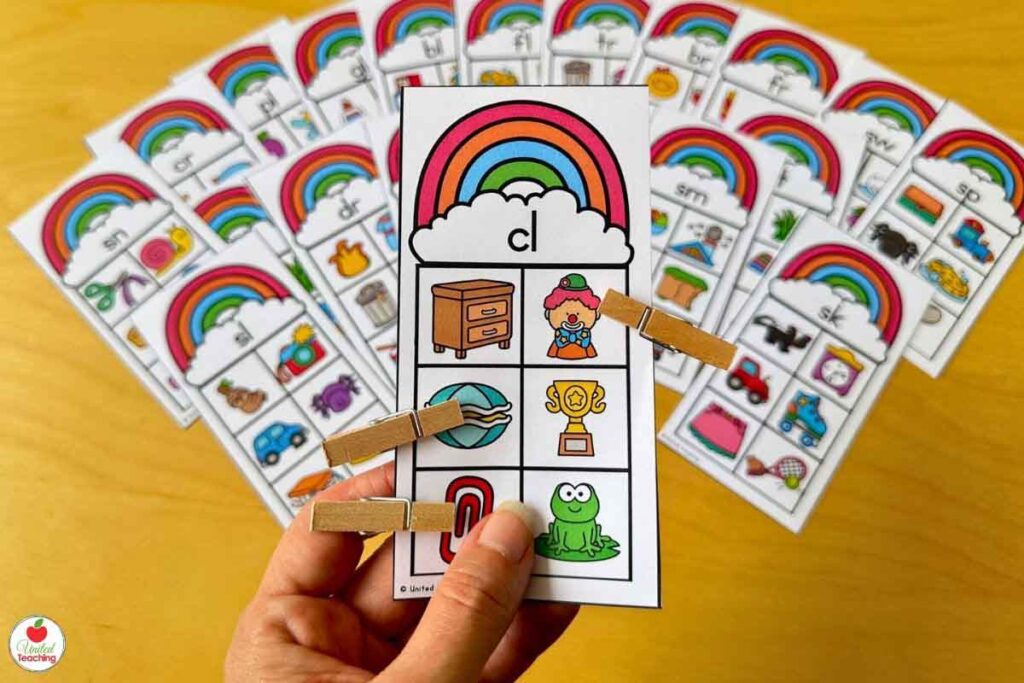
Beginning Blends Clip Cards (L Blends, R Blends, and S Blends)
Consonant blends (bl, cl, fl, sl, br, cr, fr, gr, sc, sk, sl, sm, sn, sp, st, sw) are one of the last decoding skills taught in kindergarten because they require students to blend two adjacent consonants before the vowel. These clip cards include L blends, R blends, and S blends, so you can introduce and practice each blend category systematically.
Beginning Blends: Roll, Read, and Cover
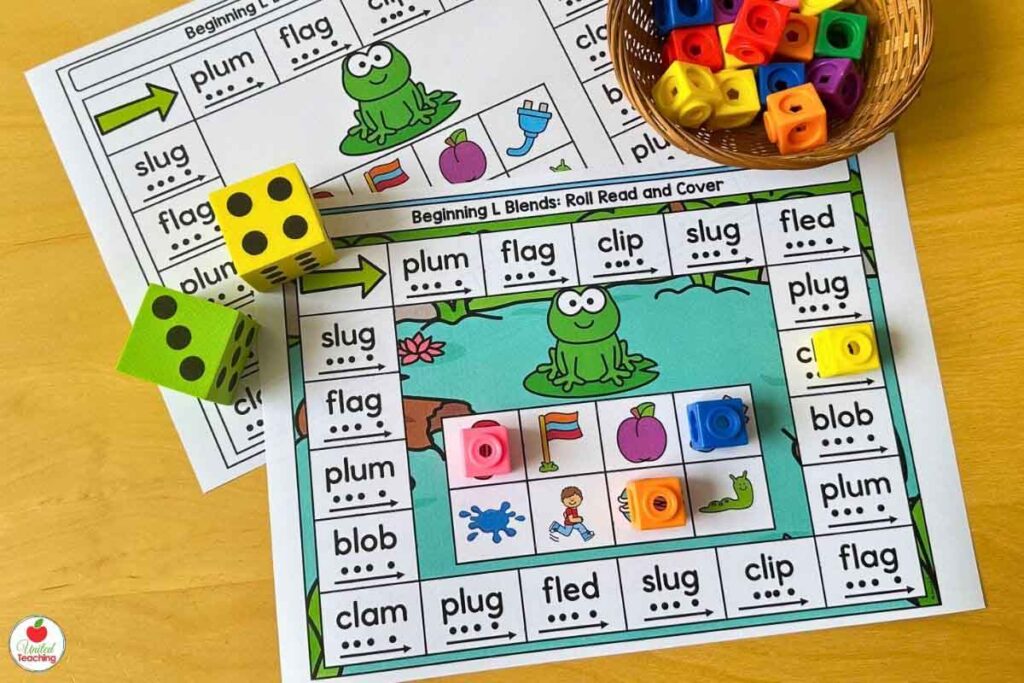
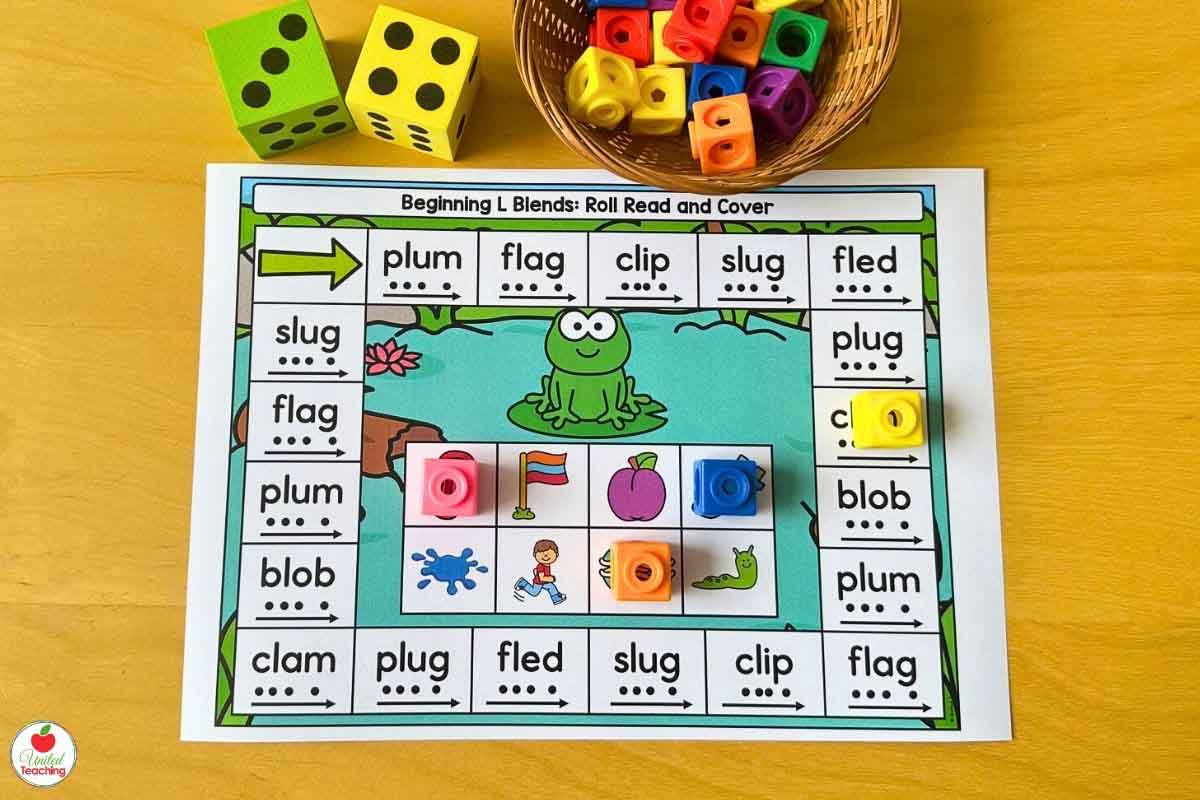
Students roll a die, read the blend word in the matching column, and cover it on their board. This format is valuable because students have to read the word — not just identify a sound in isolation. Fluent reading of blend words requires students to hold the blended onset in working memory while they decode the rime, which is a more complex task than it looks.
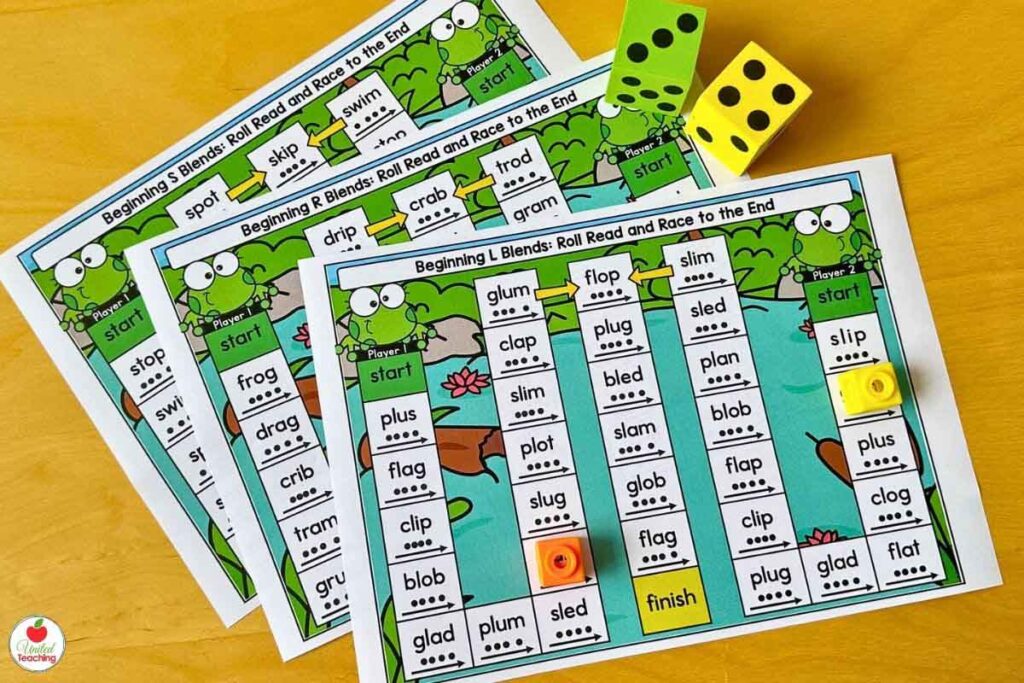
Beginning Blends: Race to the End
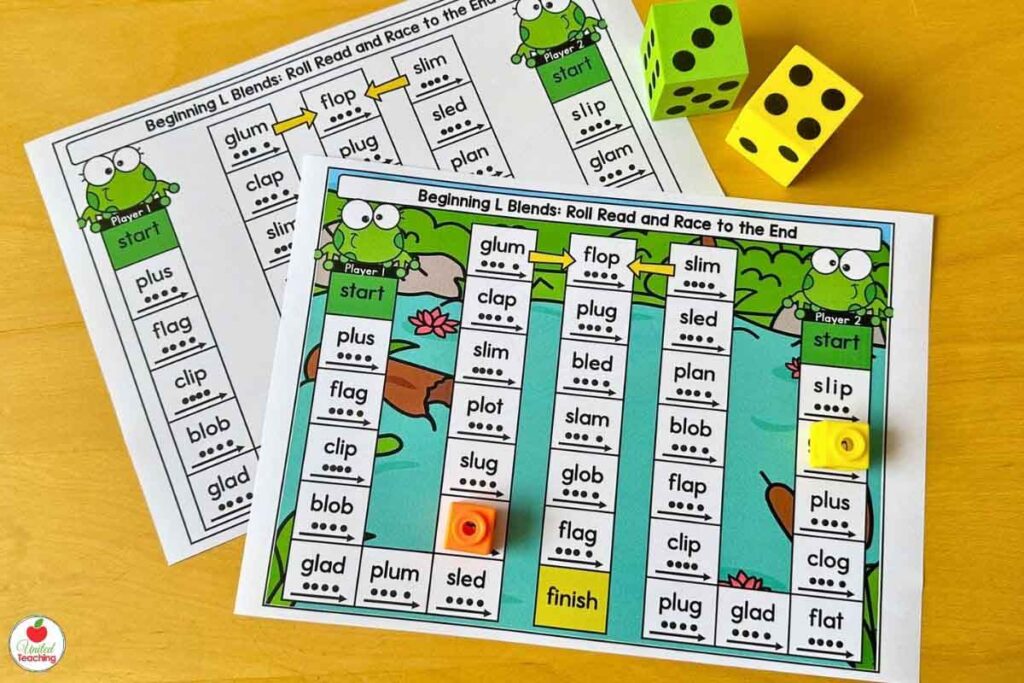
A partner board game where students roll, move their piece, and read the blend word on each space. The race-to-the-end format means students read significantly more blend words per session than a worksheet would generate — and they do it in a competitive format that keeps them engaged. Separate games for L blends, R blends, and S blends let you match the game to where each student is in the blend progression.
Sight Words and Grammar Centers
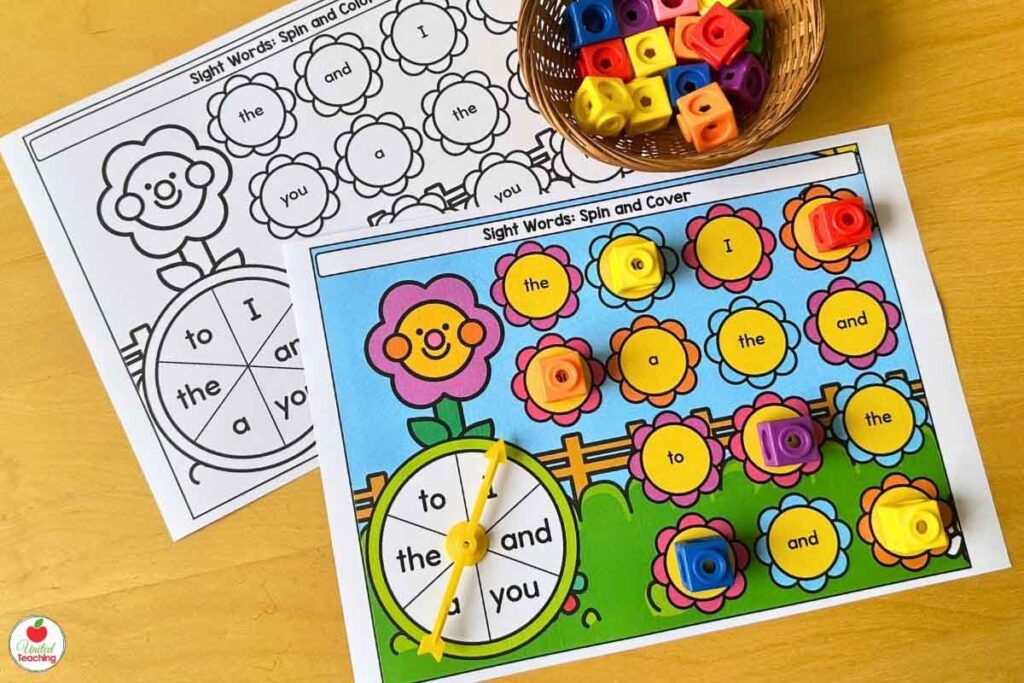
Pre-Primer Sight Words: Spin and Cover
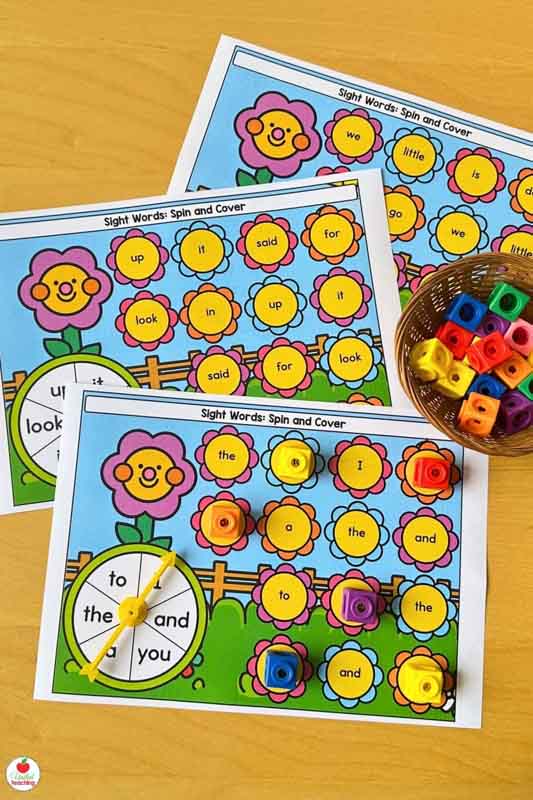
Sight words at the pre-primer level (the Dolch pre-primer list includes words like “the,” “a,” “and,” “I,” “it”) need frequent, varied practice because they don’t follow phonetic patterns students can decode. This spin-and-cover game gives students repeated exposure to pre-primer words in a low-stakes format — students spin a word, find it on their board, read it and cover it.
Primer Sight Words: Roll, Read, and Cover
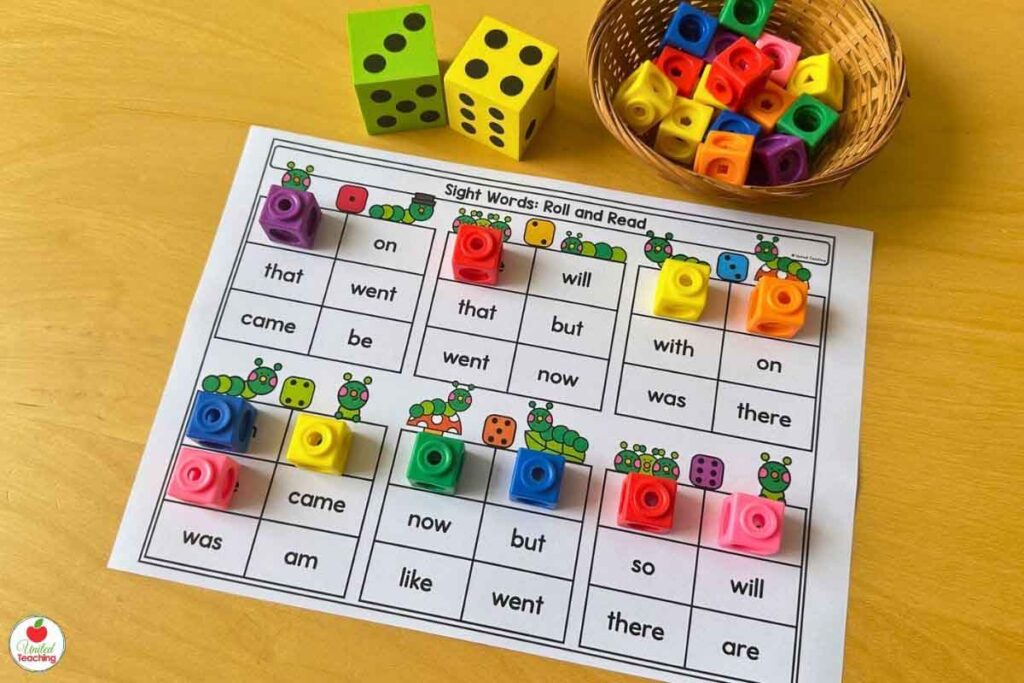
Primer sight words (like “are,” “at,” “be,” “came,” “do”) appear in the texts kindergarteners begin reading in spring. This roll-and-read format is appropriate for students who are ready to move beyond pre-primer sight words.
Punctuation Clip Cards
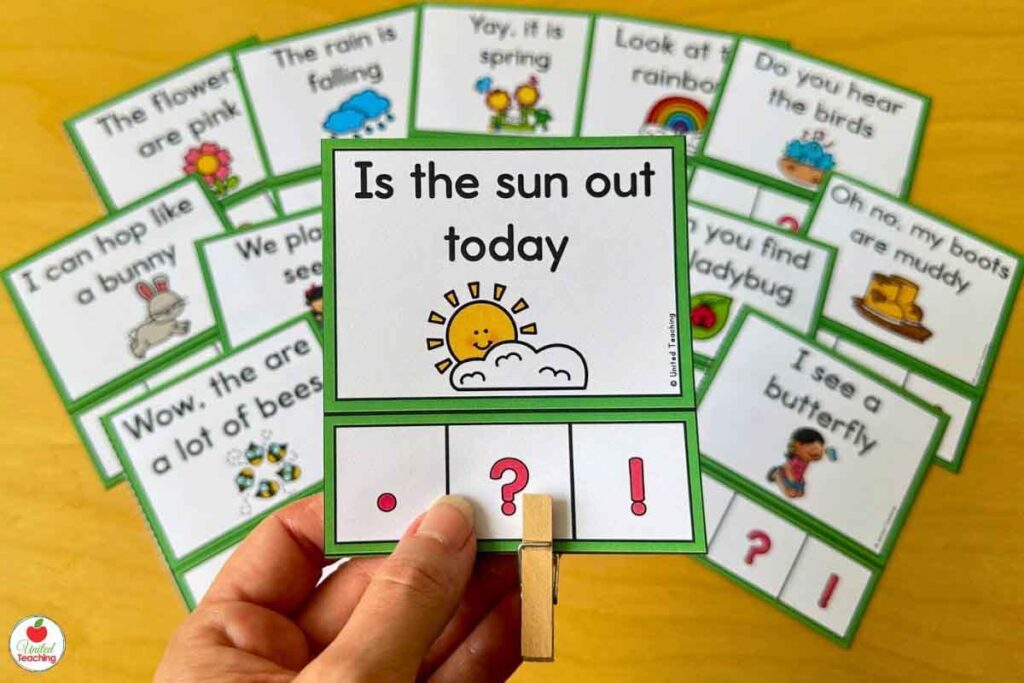
Students look at a sentence card and clip the correct end punctuation — period, question mark, or exclamation point. This is a grammar standard that’s easy to address through center work, and the clip card format makes it hands-on.
Froggy Prepositions
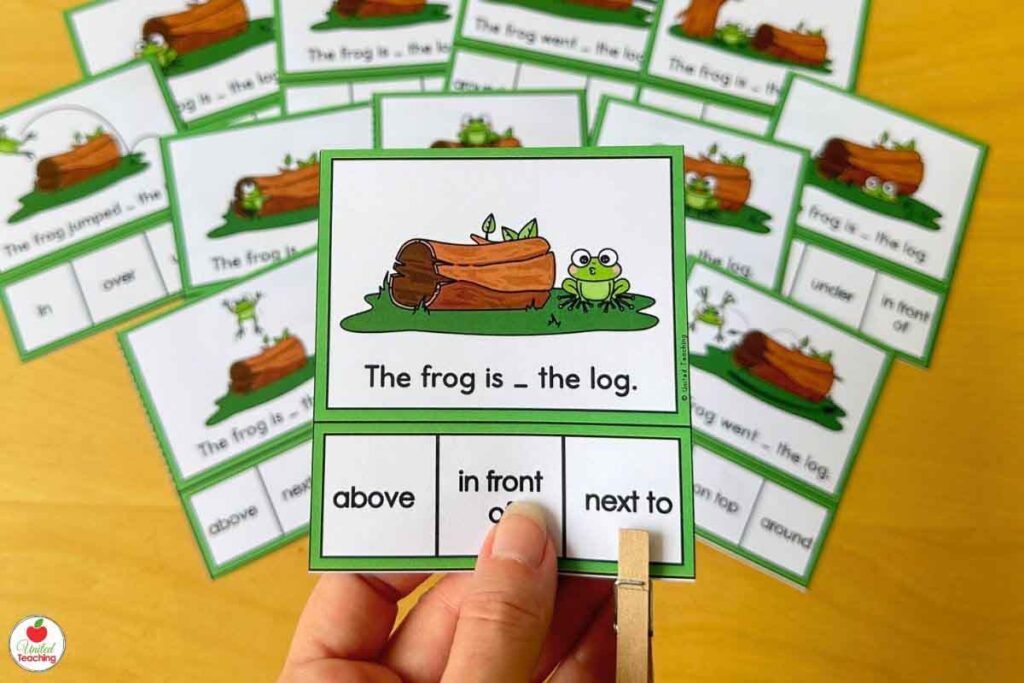
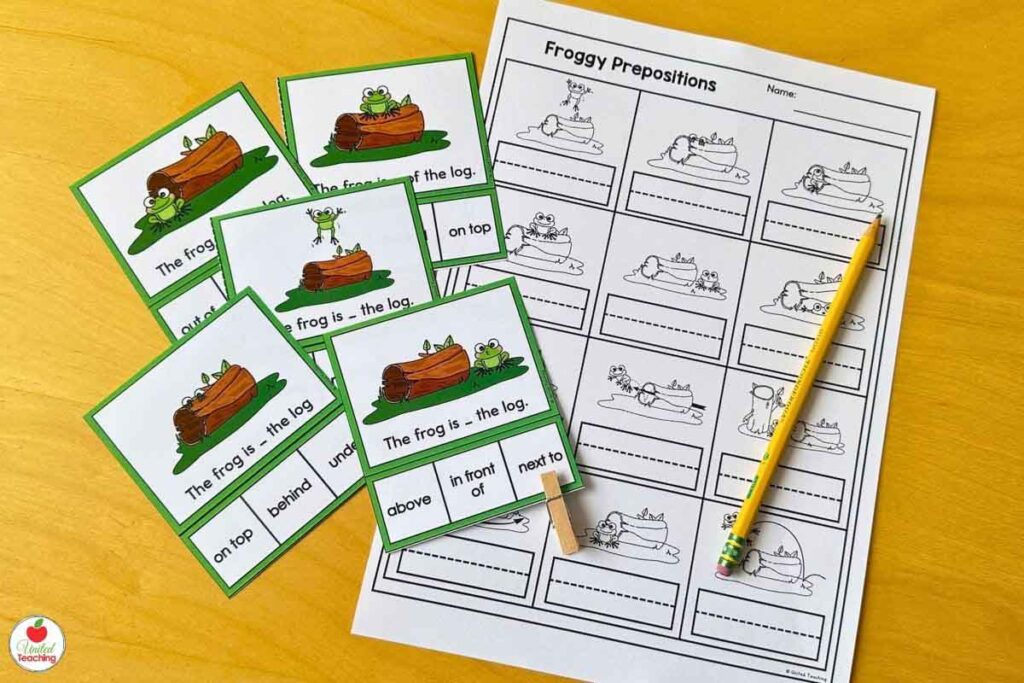
Students use spring frog-themed picture cards to practice prepositional phrases — the frog is on the log, under the log, beside the log. A recording worksheet is included. This is one of those centers that feels like play but builds genuine language comprehension. Students who don’t have secure knowledge of spatial prepositions will struggle with following directions, understanding text, and later, with reading comprehension questions that use positional language.
How to Use Spring Literacy Centers in Your Rotation
Introduce 2–3 new centers per week rather than all at once. Walk through each activity during your morning meeting or literacy block before students use it independently. For centers with recording sheets, show students exactly how to fill them in — even one minute of modeling prevents most of the “I don’t know what to do” interruptions later.
Cycle activities every 1–2 weeks based on student engagement and skill progression. Keep the games students are motivated by, and retire the ones that have run their course.
Differentiating across your class: Use the skill progression built into these centers to match activities to students’ current levels. Students who are still developing beginning sounds work with the alphabet and phonemic awareness centers. Those blending CVC words move into the phonics centers. Students ready for a challenge use the blend and digraph race games. The activities span enough of the early reading progression that you can usually find the right fit for every student in your class.
Every activity comes in color and low-ink black-and-white versions, so you can print color for your permanent centers and black-and-white for quick practice or to send home.
Wrapping Up
Spring literacy centers are most effective when they give students hands-on, independent practice with the skills you’re teaching directly, and when they cover enough of the early reading progression that every student in your class has something meaningful to do.
The activities above do exactly that, from alphabet and phonemic awareness through CVC words, digraphs, consonant blends, sight words, and grammar.