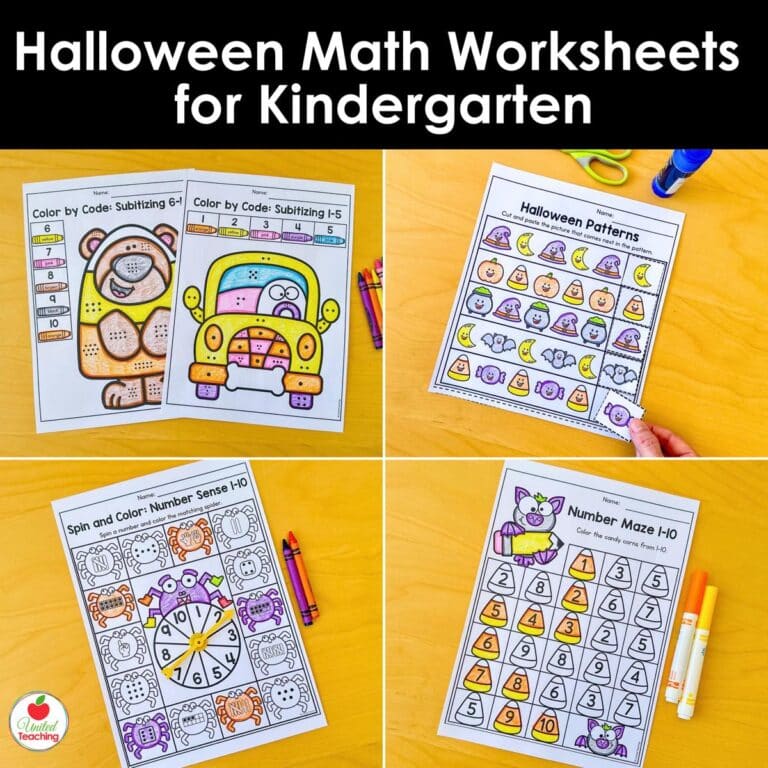





Valentine’s Day week in first grade means excitement, energy, and a packed schedule. Between parties, crafts, and shortened class periods, keeping math instruction consistent can feel nearly impossible. You need practice pages that students can start independently, complete successfully, and actually learn from without you spending your evening creating them.
That’s exactly what the Valentine’s Day Math Activities packet provides. With 51 ready-to-print worksheets covering numbers to 100, place value, addition and subtraction, plus time, shapes, fractions, and money, you’ll have focused math practice for the entire month of February. No prep, no guesswork, just print and go.
Why February Math Practice Feels So Hard
First grade math doesn’t pause for Valentine’s Day, but your regular routine certainly does. Short weeks, schedule changes, and extra activities make it tough to maintain the consistent practice students need to build fluency.
Creating themed worksheets from scratch eats up planning time you don’t have. Grabbing random Valentine pages online often means skills that don’t match what you’re teaching or directions so complicated that students need constant help.
The Valentine’s Day Math Activities packet solves both problems. Every page targets first grade standards with Valentine themes that motivate without distracting. The formats are simple and predictable, so students work independently while you handle the dozen other things February throws at you.
What Makes These Valentine Math Worksheets Different
These Valentine’s Day math worksheets for first grade keep students engaged without sacrificing skill development. This packet was designed specifically for the realities of February teaching.
Here’s what’s included:
- 51 no-prep worksheets covering essential first grade math skills
- Valentine themes (hearts, candy, Valentine cards) that students love
- Consistent, student-friendly formats that minimize reteaching
- Multiple skill levels so you can differentiate easily
- Flexible use for morning work, centers, early finishers, homework, and sub plans
Inside the Valentine’s Day Math Activities Packet
This packet gives you everything you need to keep math practice consistent throughout February, even when your schedule isn’t.
Numbers to 100 Practice
Students need regular work with two-digit numbers to build confidence and fluency. The packet includes:
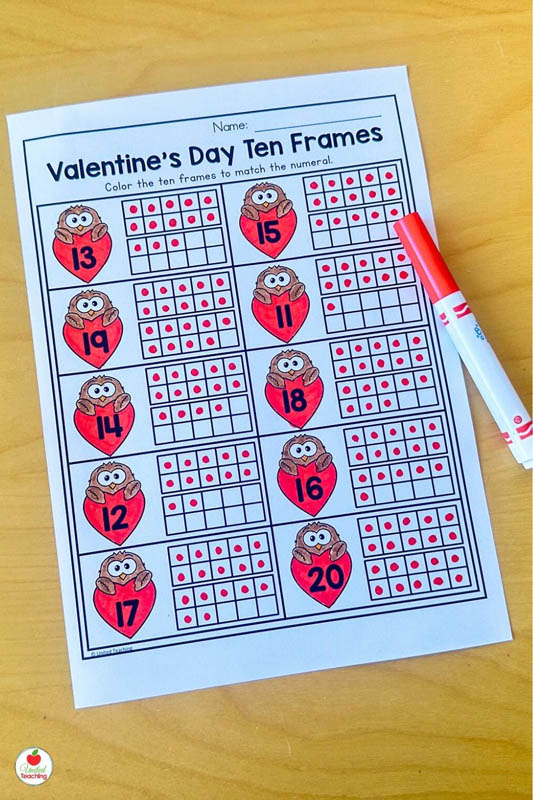
- Ten frames (1–20) – visual support for quantity recognition and counting
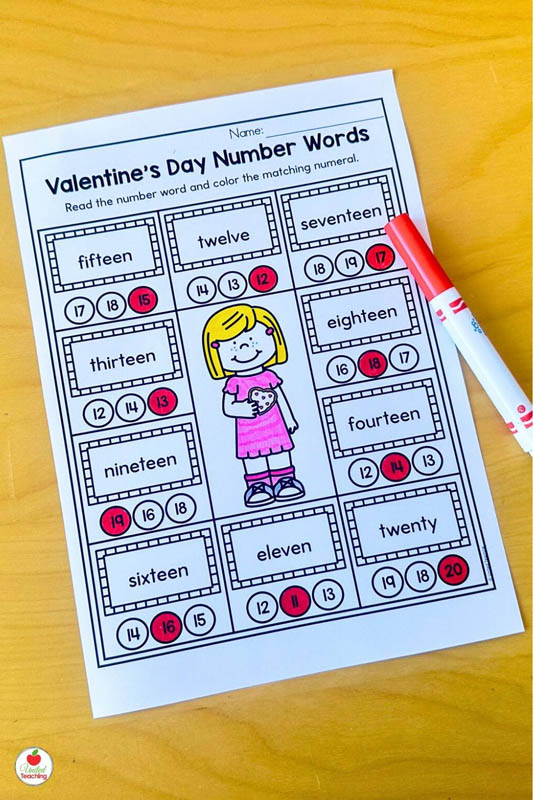
- Number words – reading and writing practice for number literacy
- Tally counting – connecting concrete counting to abstract numbers
- Number order – sequencing practice that strengthens number sense
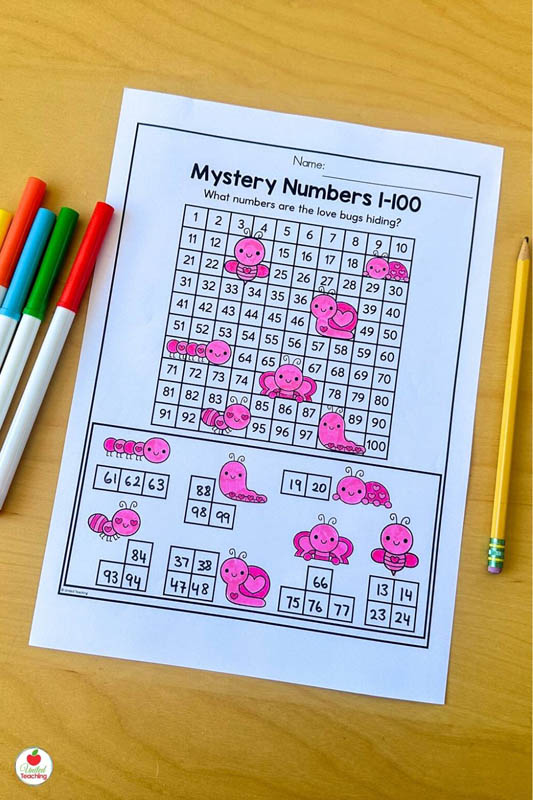
- Mystery numbers – engaging puzzles using place value clues
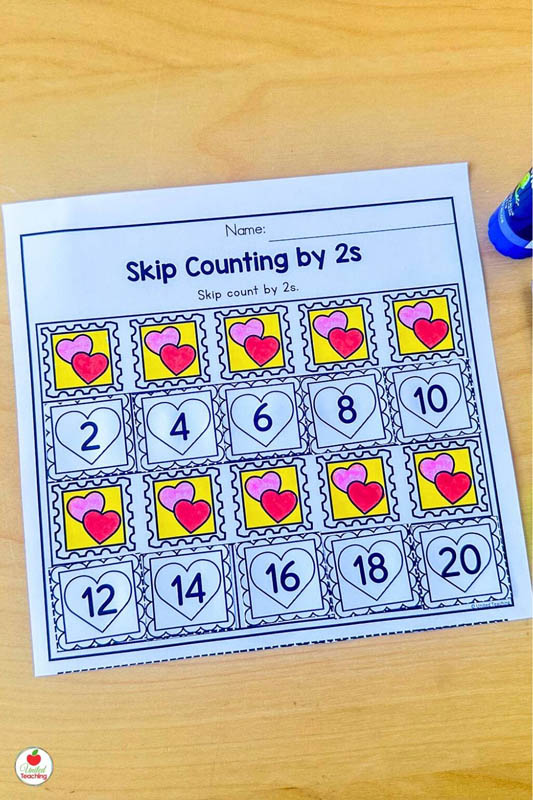
- Skip counting – patterns by 2s, 5s, and 10s to build flexible thinking
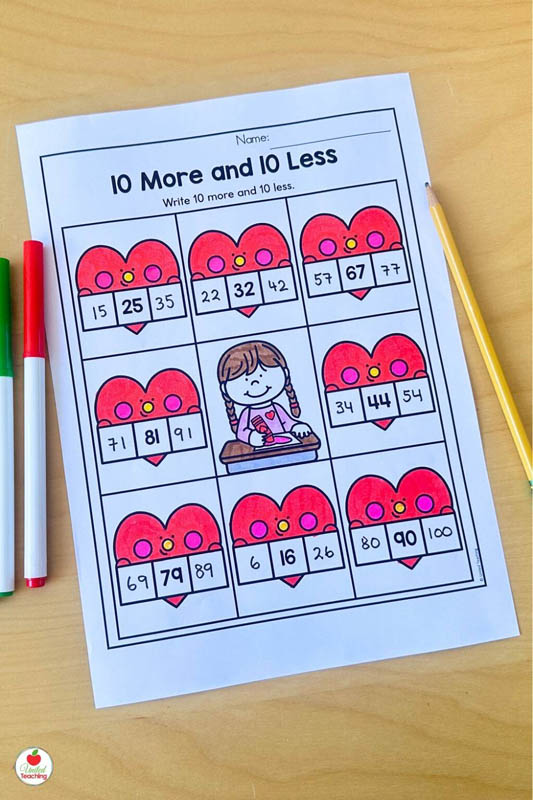
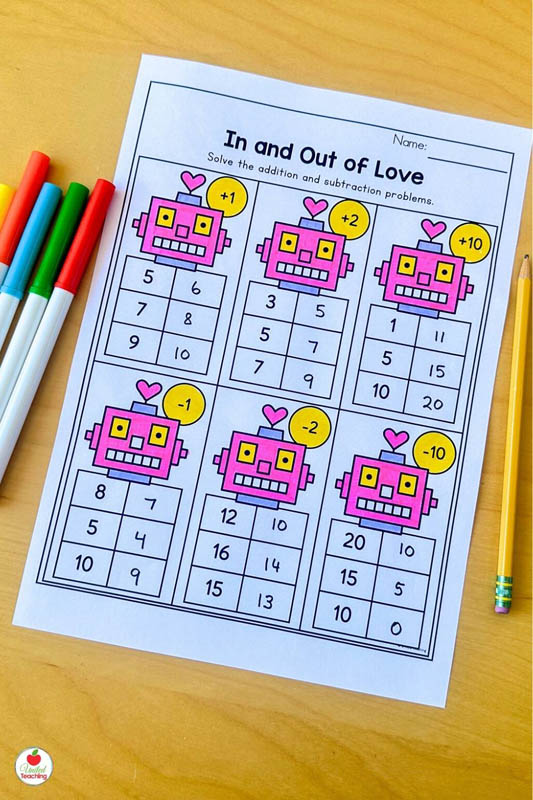
- More and less thinking – one more/one less and 10 more/10 less for mental math

Addition and Subtraction Fluency
Fluency develops through varied, repeated practice. These worksheets give students multiple entry points to the same skills:
- Number bonds – part-whole relationships that build conceptual understanding
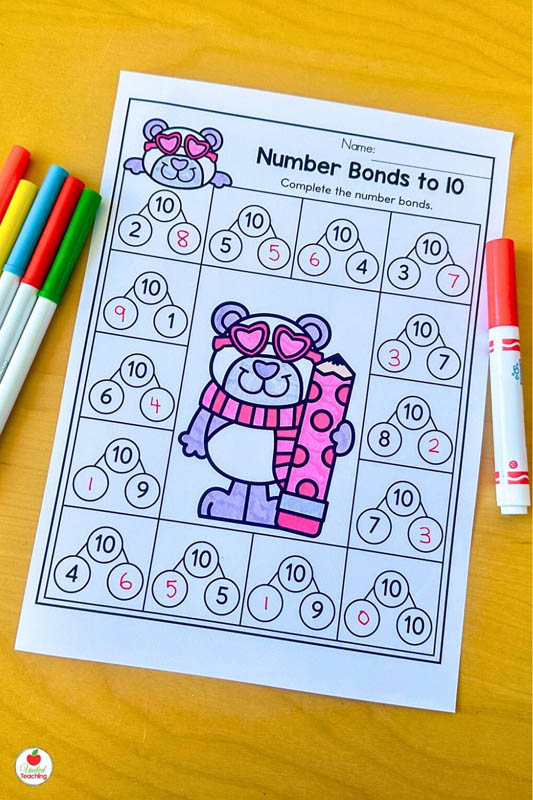
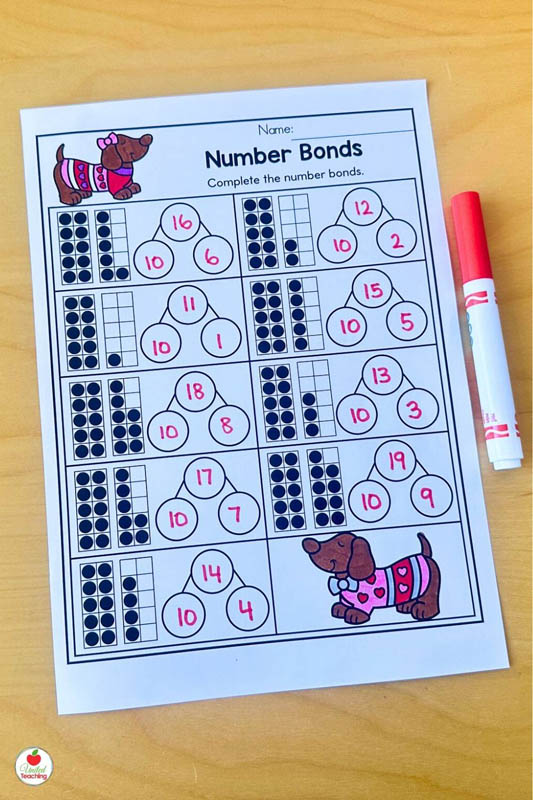
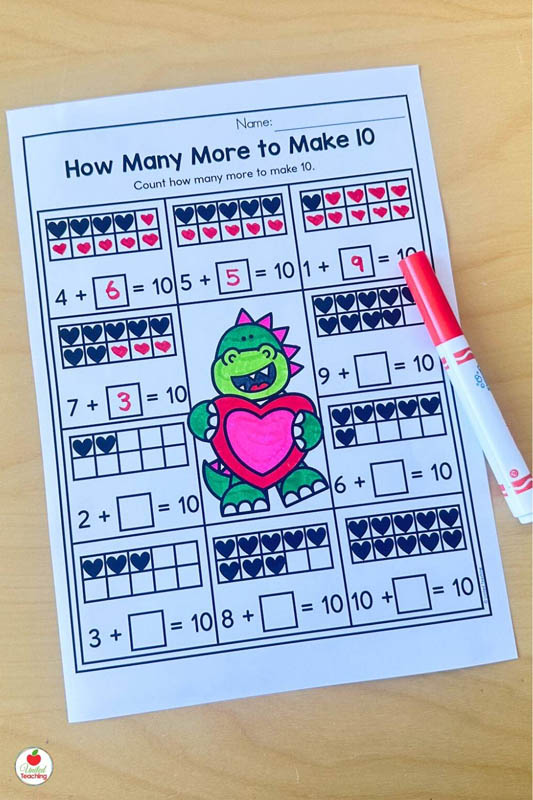
- Missing addends – problem-solving practice that deepens fact fluency
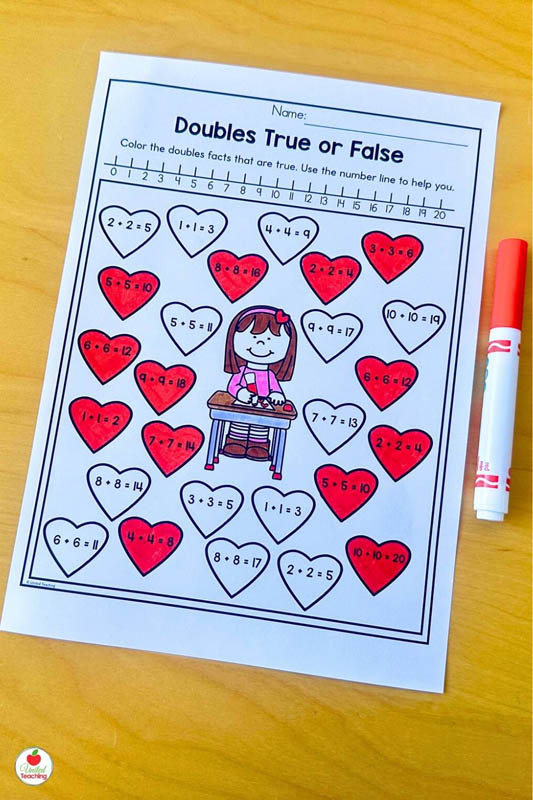
- Doubles and doubles-plus-one – strategy building for efficient computation
- Fact families – connecting addition and subtraction relationships
- Addition and Subtraction Practice – spin-and-add games, color-by-addition, and traditional practice

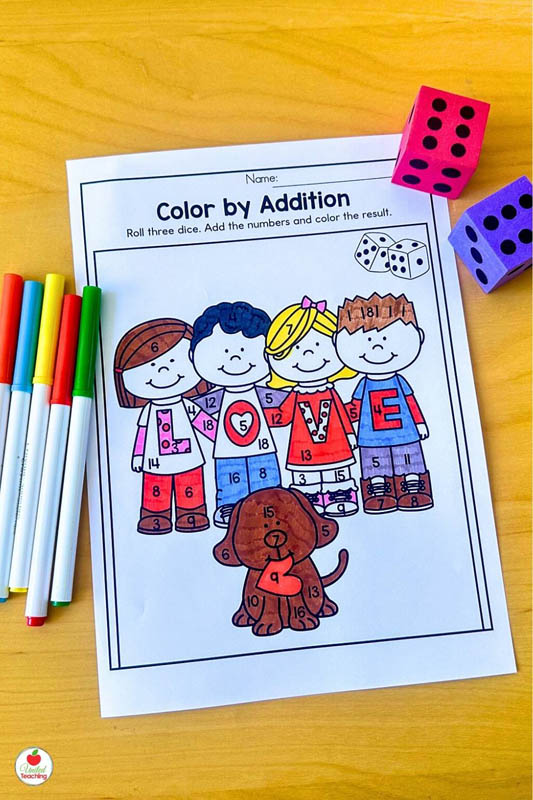
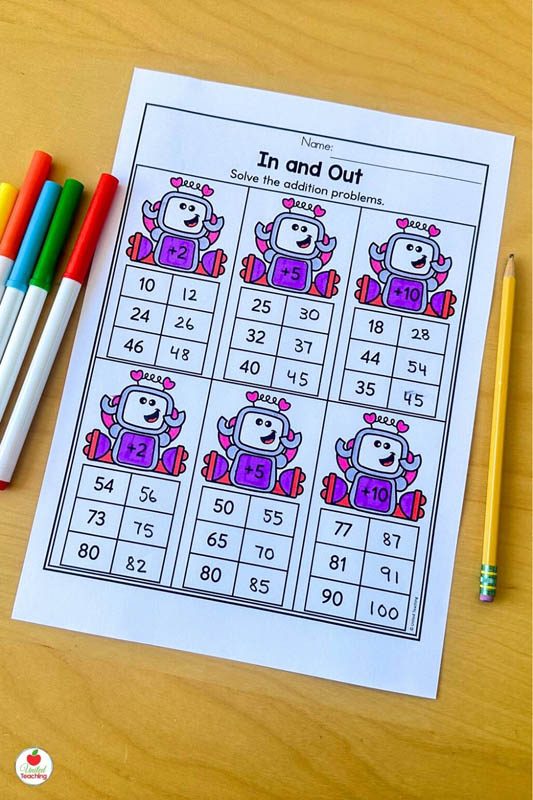
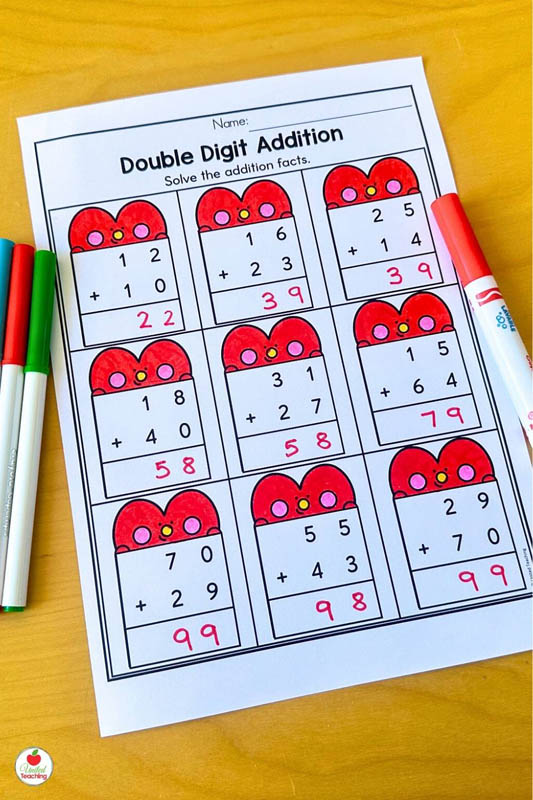
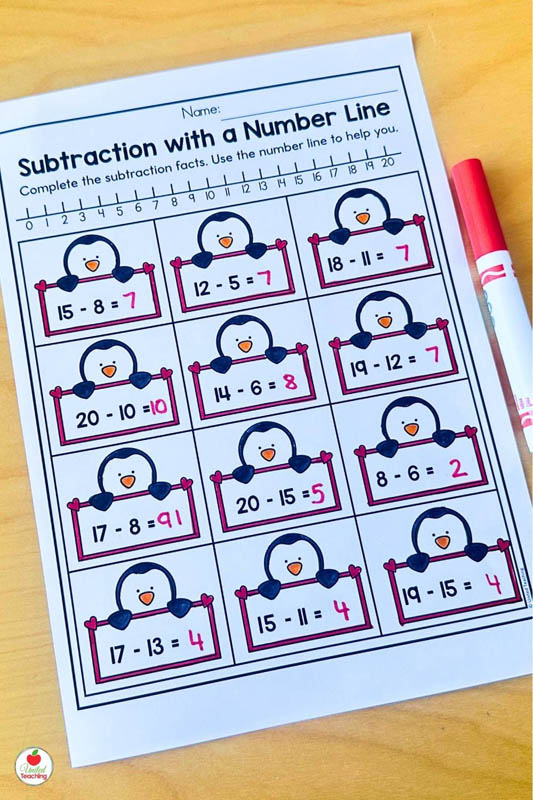
Place Value Understanding
Place value concepts stick when students repeatedly break numbers apart and recombine them. The packet provides:
- Base-ten models – visual representations of tens and ones
- Number bonds – decomposing two-digit numbers into place value parts
- Comparing numbers – greater than/less than practice with reasoning
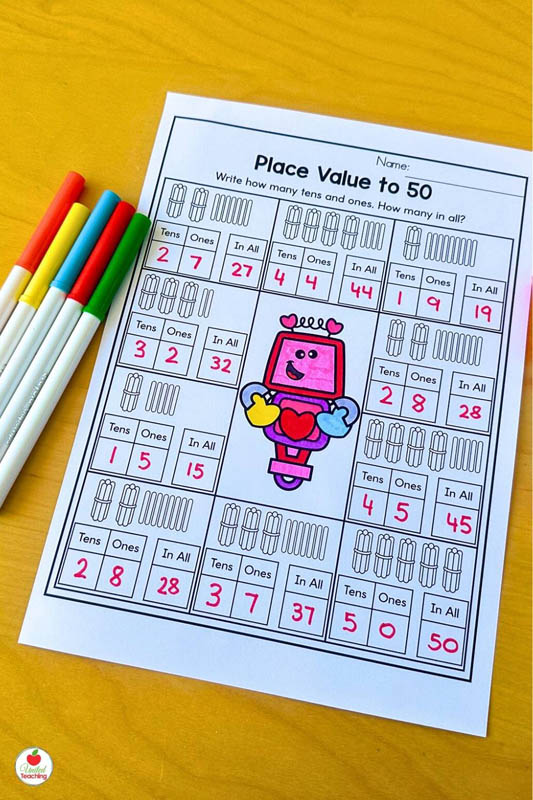
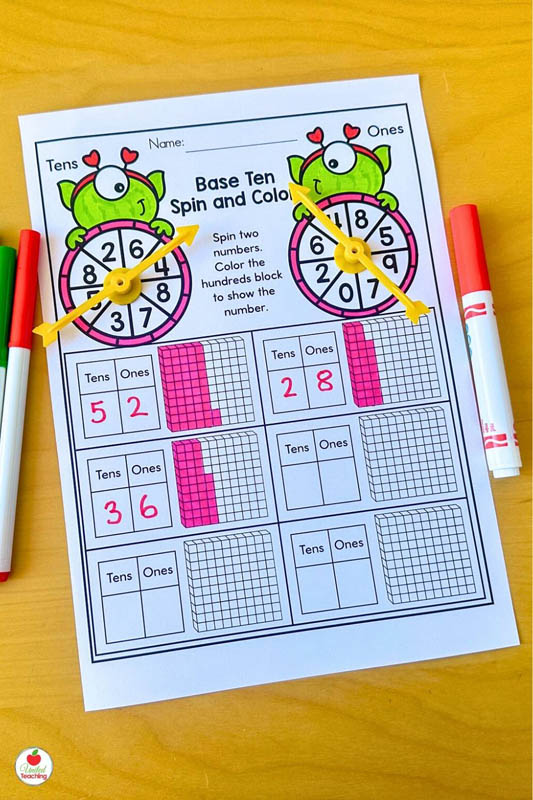
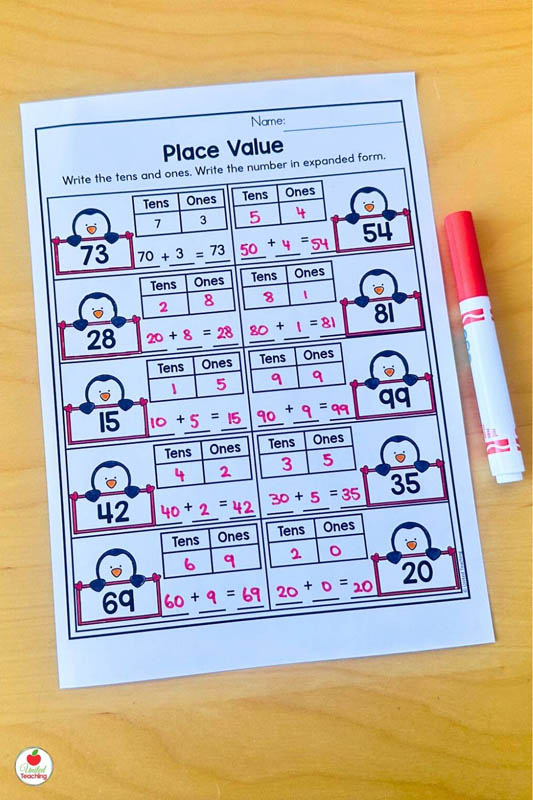
These pages work beautifully in centers when paired with base-ten blocks or counters.
Quick Review Topics
First grade covers time, shapes, fractions, and money in focused units. Without periodic review, students forget. These pages keep concepts fresh:
- Time to the hour – clock reading and matching practice
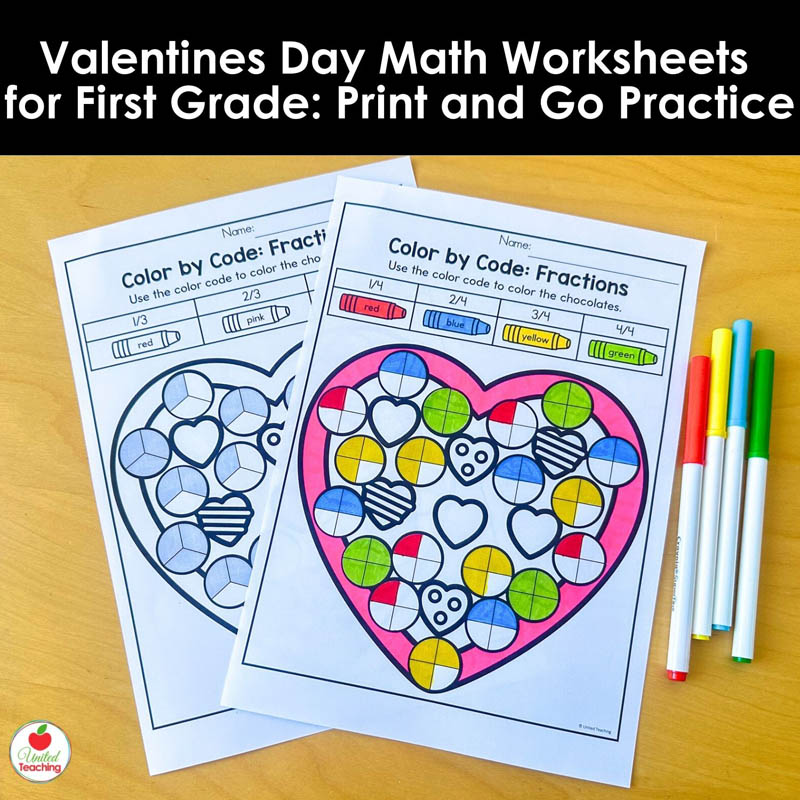
- Fraction color-by-code – visual practice with halves, thirds, and fourths
- 2D and 3D shapes – identification and property recognition
- Valentine shopping – money practice through simple buying scenarios
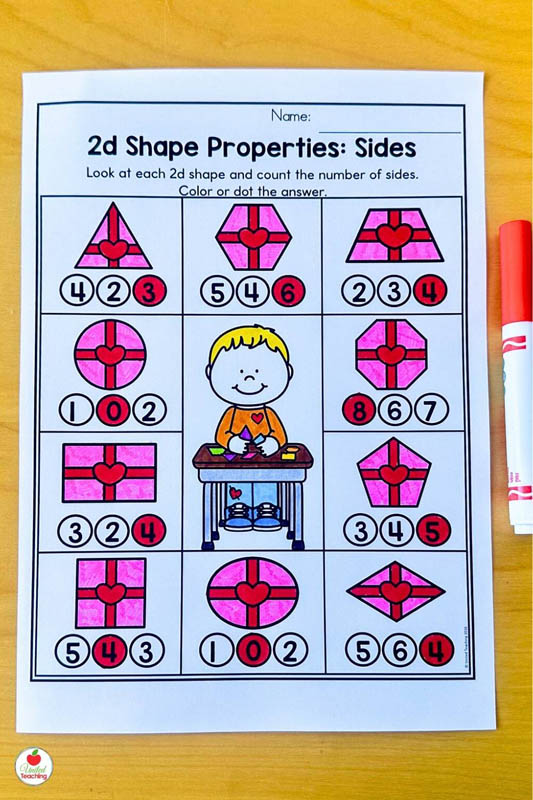
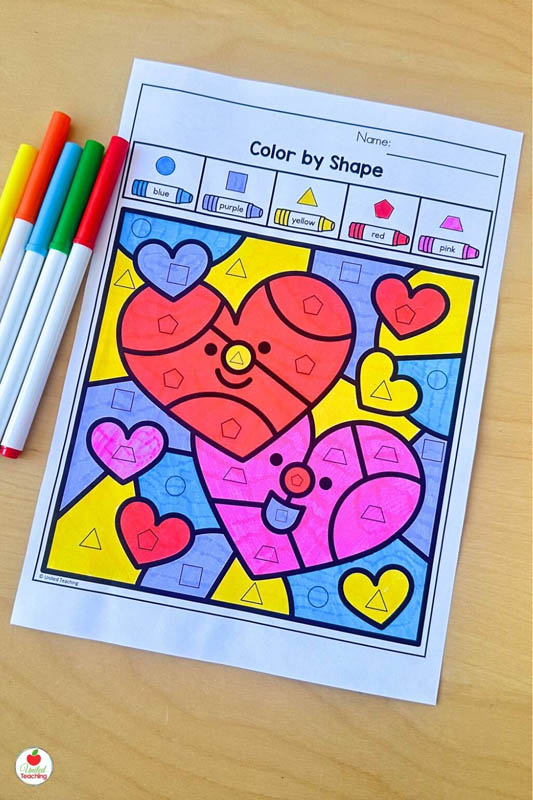
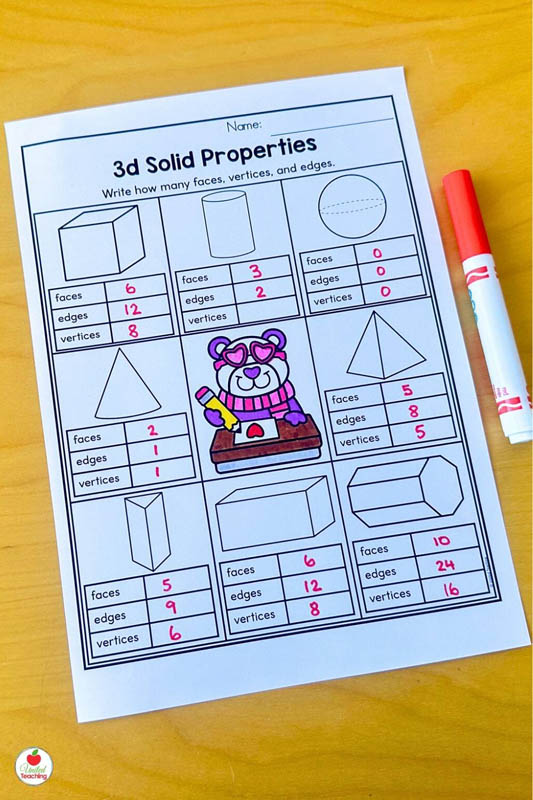
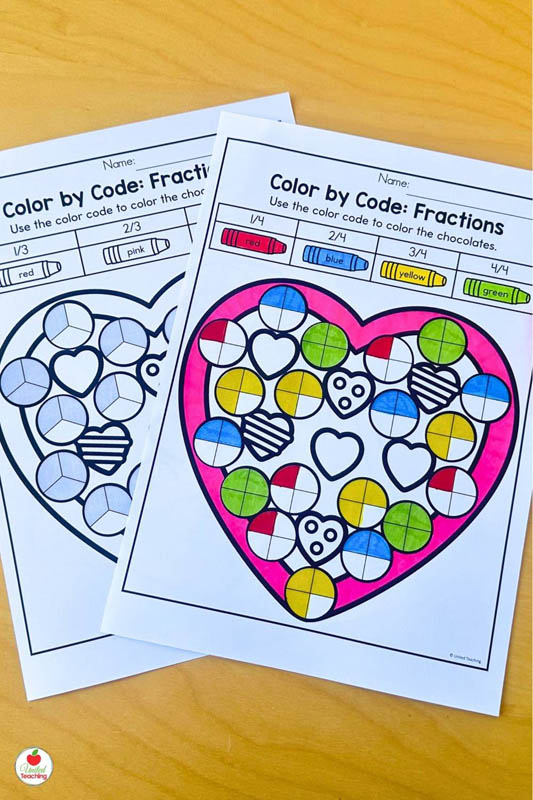
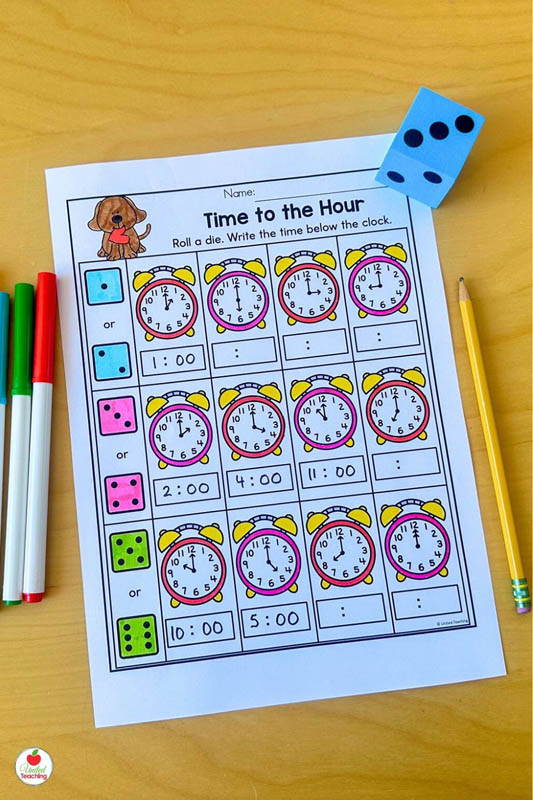
Use these as spiral review throughout February or pull them out when you have five minutes to fill.
Three Ways to Use Valentine’s Day Math Worksheets
The Valentine’s Day Math Activities packet becomes more valuable when it fits seamlessly into different parts of your day.
Morning Work That Starts Class Smoothly
Place one worksheet at each desk before students arrive. Choose skills students have already learned, then spend two minutes reviewing one strategy they might use. Students complete the page, check with a partner or answer key, and make corrections.
This routine eliminates the morning scramble and gives you time to take attendance, check folders, and prepare for the day while students engage in meaningful math practice.
Early Finisher Work That Extends Learning
Keep the packet in a labeled basket where fast finishers can grab a page independently.
This keeps early finishers productively engaged instead of waiting, wandering, or distracting others. You protect small group instruction time without creating extra management systems.
Low-Prep Center Option
Pair worksheets with manipulatives such as counters, number lines, or base-ten blocks. Add a partner-check step where students compare answers and discuss differences.
The packet provides the content; you provide the tools. No elaborate center rotations, no complicated prep. Just meaningful practice students can complete without constant teacher support.
Making the Most of February’s Unpredictable Schedule
Valentine’s Day week brings assemblies, parties, and shortened periods. A predictable worksheet routine protects math instruction without adding to your planning load.
Drop a five-minute warm-up on desks after announcements. Set up a math tub with worksheets and counters for independent work during transitions. Send one page home as quick, family-friendly practice.
The Valentine’s Day Math Activities packet gives you options instead of scrambling for something to keep students learning when the schedule falls apart.
Teacher Tip: Pair worksheets with simple manipulatives. Counters, a number line, or base-ten blocks help students model their thinking instead of guessing. This small addition transforms paper practice into active problem-solving.
Ready to Simplify Your February Math Planning?
You need Valentine’s Day math worksheets for first grade that students can complete independently while maintaining the skill focus your curriculum requires. The Valentine’s Day Math Activities packet provides 51 print-and-go pages covering numbers to 100, place value, addition and subtraction, plus quick reviews of time, shapes, fractions, and money.
No more evening prep sessions. No more grabbling together random pages that don’t quite fit. Just focused, engaging practice that keeps learning moving forward even during the busiest week of February.