


January can feel like the longest month in kindergarten.
The holiday buzz is gone, the weather is doing its thing, and students still need lots of practice with numbers, counting, and early problem solving. Teachers also need activities that do not take hours to prep. That is where winter math centers and activities for kindergarten can help.
They give students the repetition they need, but it still feels like play. Snowmen, snowflakes, and winter animals have a magical way of turning “one more math activity” into “Can I do this again?”

Why Winter Math Skills Matter
Kindergarten math is all about building strong foundations.
Students need many chances to:
- recognize numbers and quantities
- count with one-to-one correspondence
- use ten frames and number lines
- compare sets
- begin solving simple addition and subtraction
When those skills are practiced in lots of different ways, they start to stick.
Winter is also a great time to tighten up routines. The more predictable the center formats are, the more brain space students have for the math instead of trying to remember what to do next.
Why Math Centers for Kindergarten Work
Math centers are one of the easiest ways to build daily practice into the schedule without adding extra stress.
Here is why they work so well:
- Students rotate through different activities, so multiple skills can be practiced in one block.
- Students build independence while teachers meet with small groups.
- Hands-on routines keep learning active and help reduce off-task behavior.
- Consistent formats help students feel confident.
Printable Winter Math Activities for Kindergarten
The best winter math centers for kindergarten are low prep, skill-focused, and fun enough that students want to repeat them.
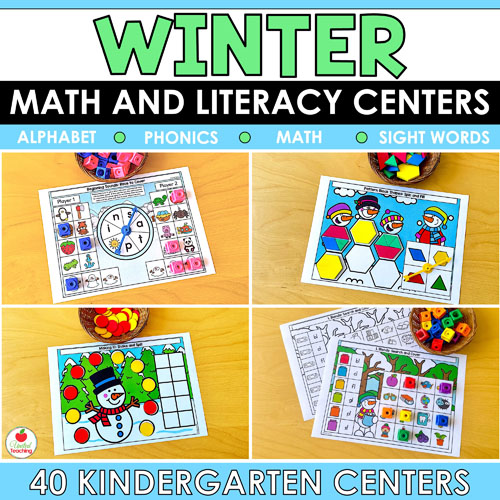
The math activities below come from the Winter Math and Literacy Centers for Kindergarten pack. It includes 40 total centers (math + literacy) with full-color and BW options, plus selected recording worksheets for quick checks and accountability.
This post focuses on the winter math centers.
Number Sense and Counting Winter Centers
Number sense is the heart of kindergarten math.
In winter, students can practice counting and ten frames with routines that feel like a game.
Activities included:
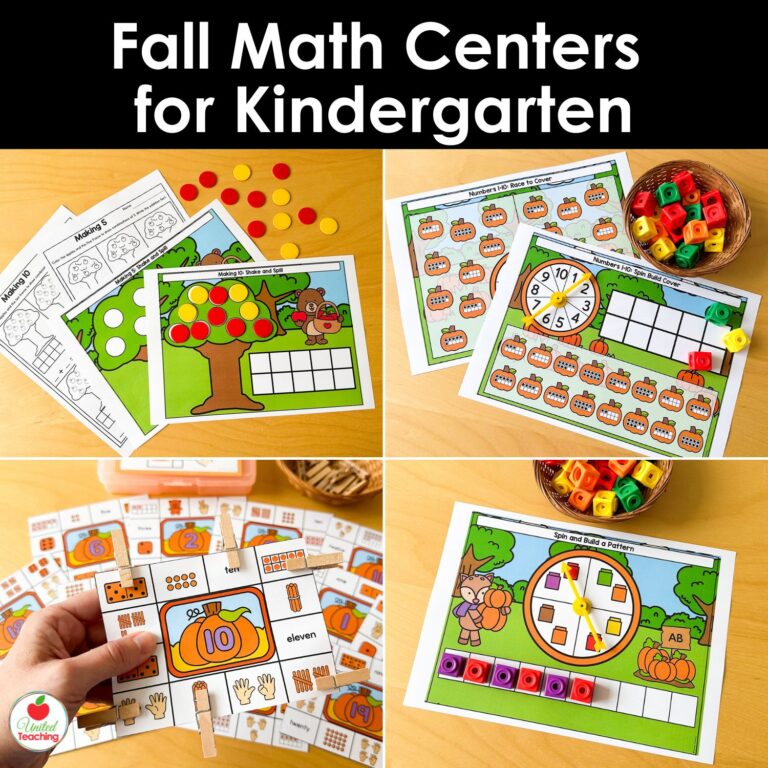
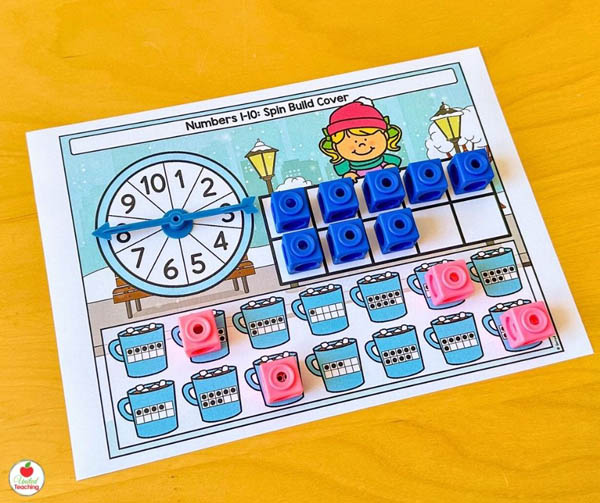
Numbers 1–10: Spin, Build, and Cover a Ten Frame
Students spin a number, build it on a ten frame with counters, and cover the matching number on the mat.
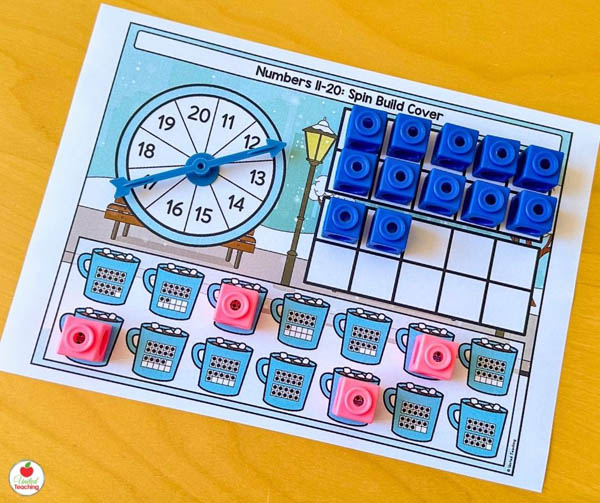
Numbers 11–20: Spin, Build, and Cover a Ten Frame
Students work with teen numbers by spinning, building the number with counters, and covering the correct ten frame.
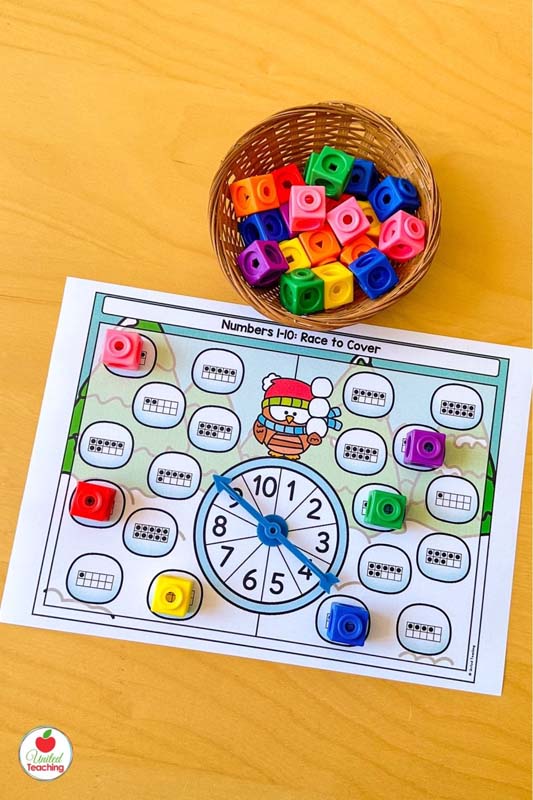
Numbers 1–10: Spin and Cover a Ten Frame Partner Game
Two students take turns spinning numbers and racing to cover matching ten frames on the game board.
Numbers 11–20: Spin and Cover a Ten Frame Partner Game
Partners practice teen numbers by spinning and covering ten frame images in a race-style format.
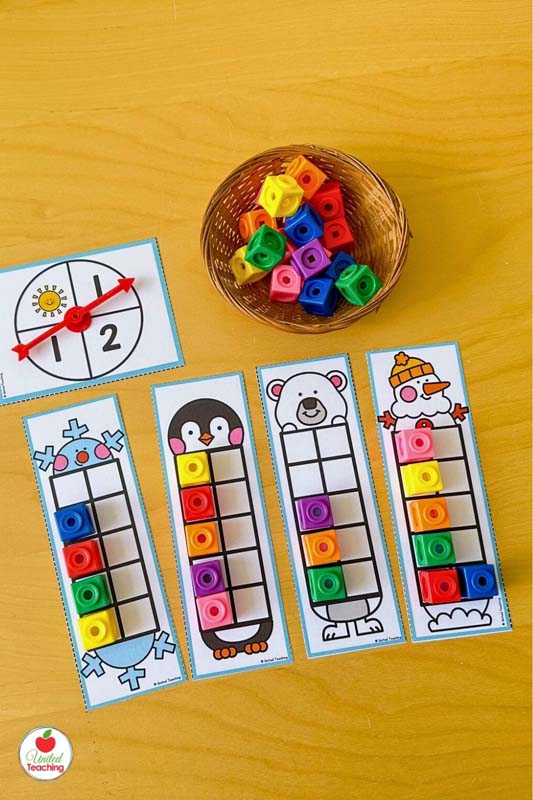
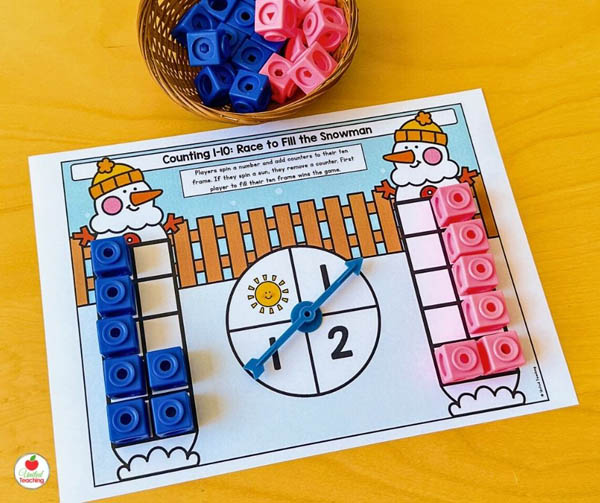
Roll and Race to Fill a Ten Frame Small Group Games
Students roll a die and place that many counters on their ten frame. The first player to fill the frame wins.
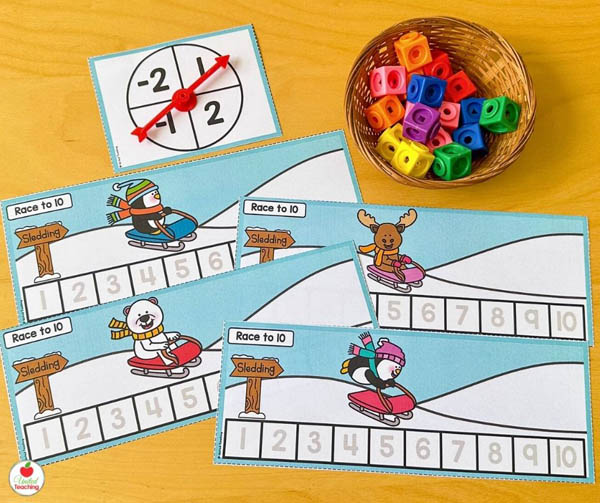
Spin and Race to 10
Students move forward and backward on a number line to reach 10.

Why teachers love them:
- Ten frames give strong visual support for counting and subitizing.
- Spin and roll formats keep practice quick and engaging.
- Partner games add motivation without extra prep.
- Students get lots of repetition without it feeling boring.
- Recording sheets are included for quick skill checks.
Comparing Numbers and Place Value Centers
Once students feel confident with numbers, they are ready to compare and build them in different ways.
Activities included:
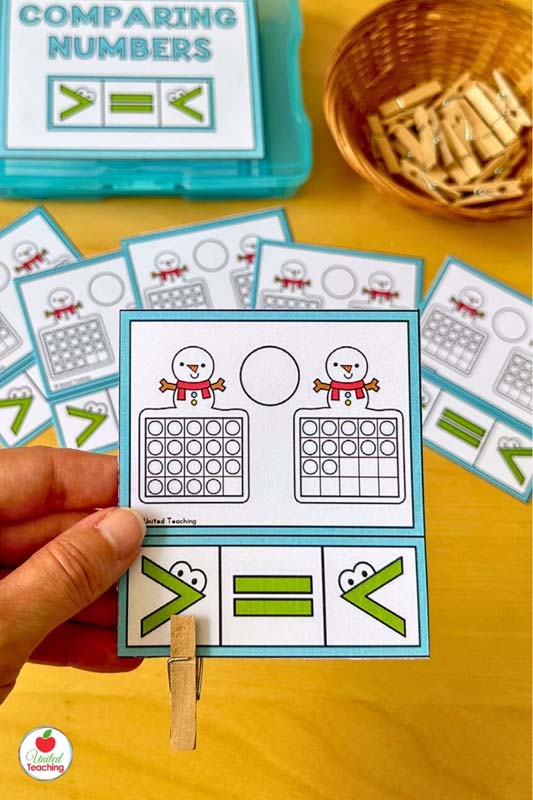
Number Comparison Clip Cards
Students compare ten frames and clip the correct symbol (greater than, less than, or equal to).
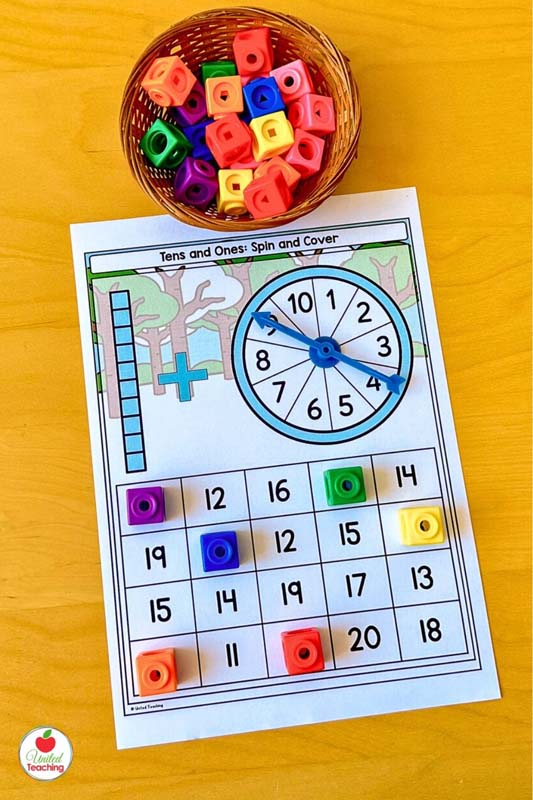
Tens and Ones Spin and Cover
Students build numbers 11–20 and cover the matching answers on the game mat.
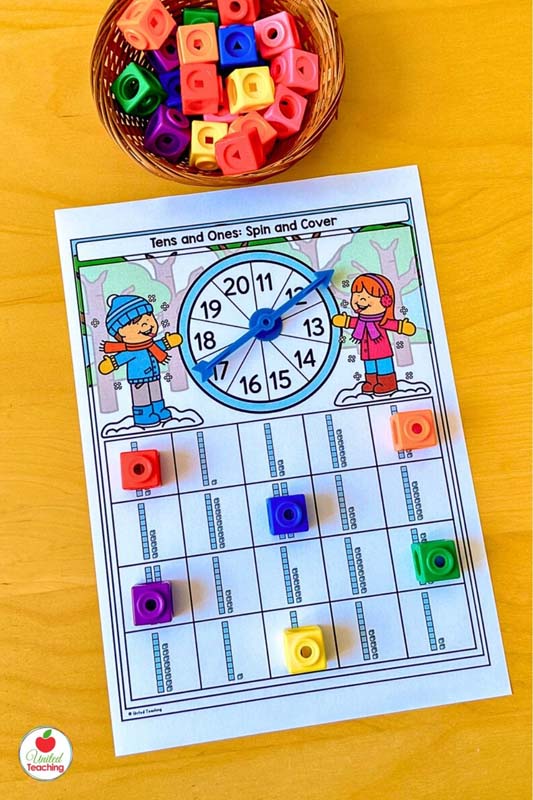
Tens and Ones Spin and Cover (Place Value Blocks)
Students spin a number and cover the matching representation using tens and ones blocks.
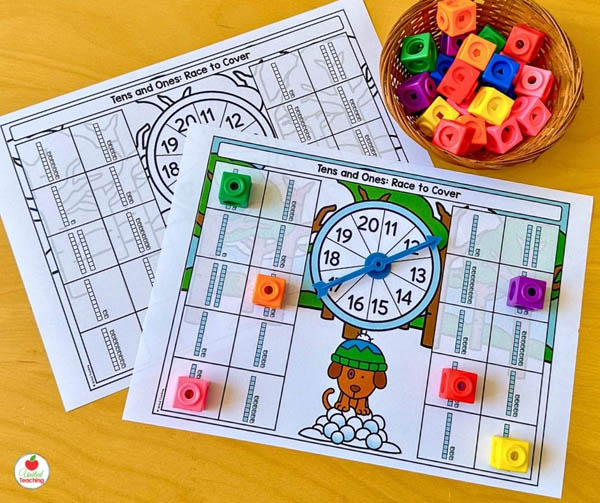
Tens and Ones Race to Cover Partner Game
Students take turns spinning numbers and racing to cover the matching tens and ones on the board.
Why teachers love them:
- Clip cards are simple, hands-on, and great for quick skill checks.
- Tens and ones practice feels more concrete with visual models.
- Partner formats keep students focused and moving.
- Designed for small groups or independent work.
Making 10, Addition, and Subtraction Winter Centers
Winter is a great time to keep building early fluency with number combinations.
It helps to keep the focus on understanding first, not speed. Visual supports help students feel successful while they practice.
Activities included:
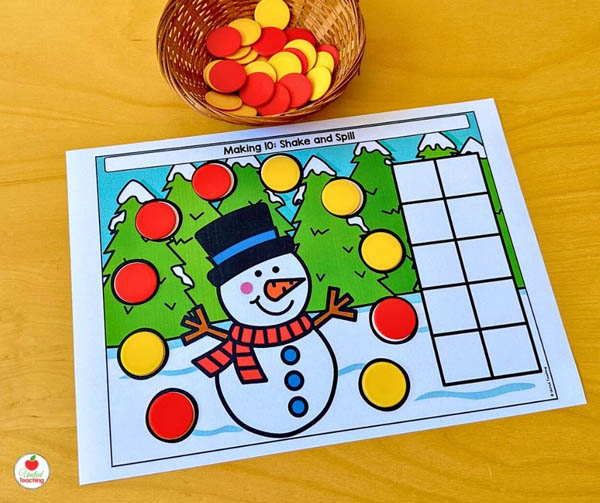
Making 10 Shake and Spill
Students spill counters and show different ways to make 10 on their recording mat.
Making 10 Partner Game
Students spin a number and find the missing part that makes 10.
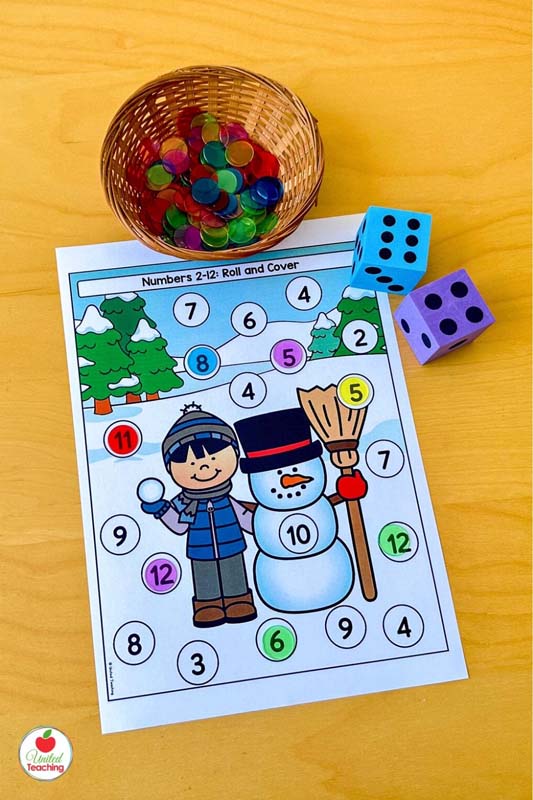
Addition to 12 Roll and Cover
Students roll two dice and cover the sum on a winter-themed game mat.
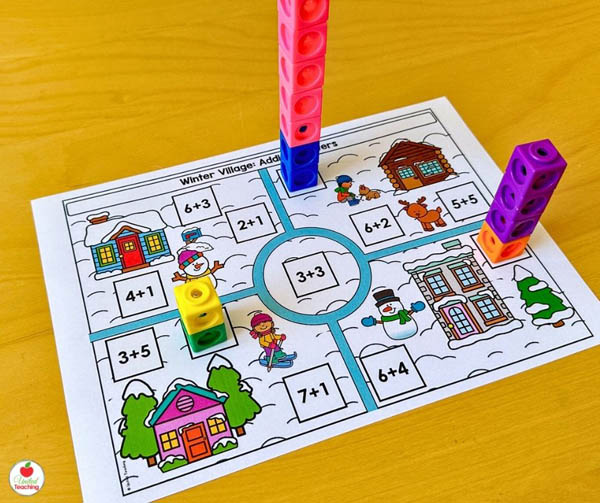
Winter Village Addition Towers
Students build addition towers with linking cubes and record their number sentences.
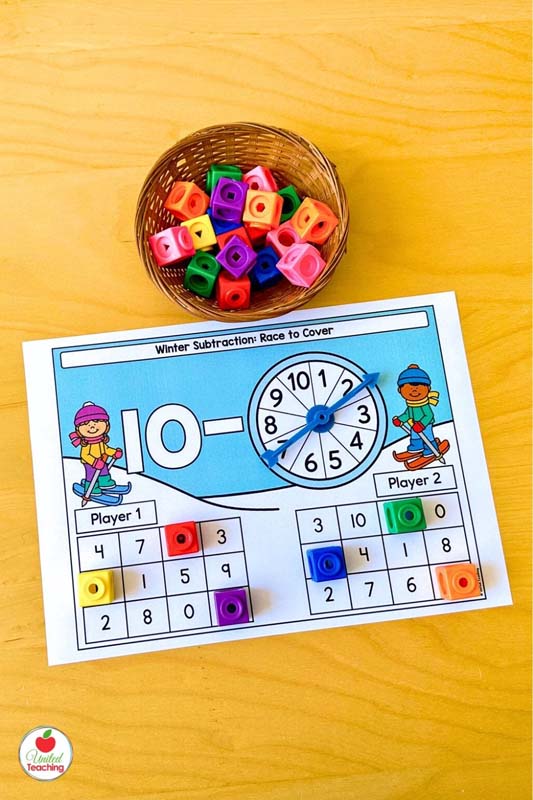
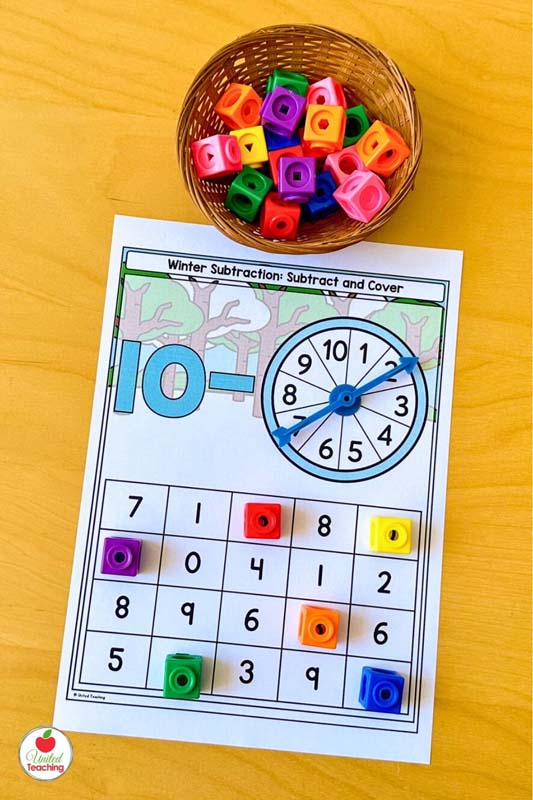
Subtraction from 10 Spin and Cover
Students spin a number, subtract it from 10, and cover the answer on the mat.
Subtraction from 10 Partner Game
Students spin, subtract from 10, and race to cover the matching answer.
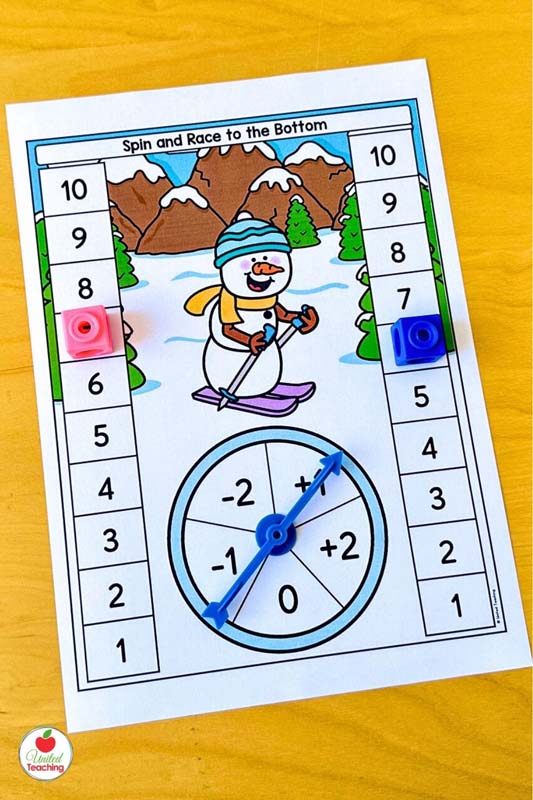
Race to the Bottom Partner Game
Students move up and down a number line to reach the bottom first using addition and subtraction.
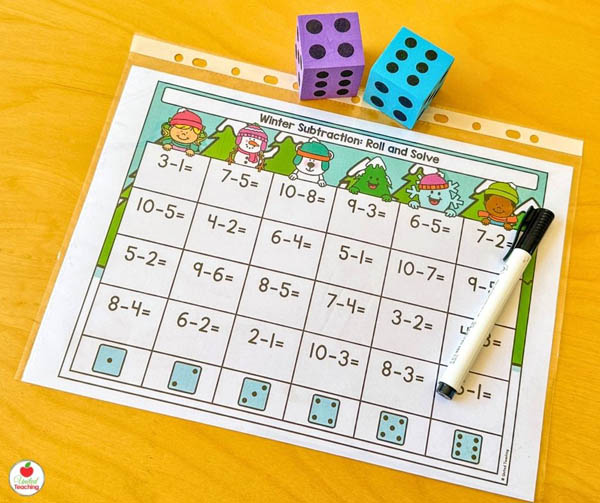
Winter Subtraction Roll and Solve
Students roll a number and solve the subtraction fact in the matching column on their worksheet.

Why teachers love them:
- Shake and Spill mats build strong part-part-whole understanding.
- Dice and spinners keep practice fun and low pressure.
- Linking cubes make addition visual and hands-on.
- Number lines and ten frames give built-in support.
- Recording sheets give students a chance to write the number sentences and show their work.
Shapes, Pattern Blocks, and Measurement Centers
Geometry and measurement can feel abstract for little learners. Hands-on winter centers make these skills click.
Activities included:
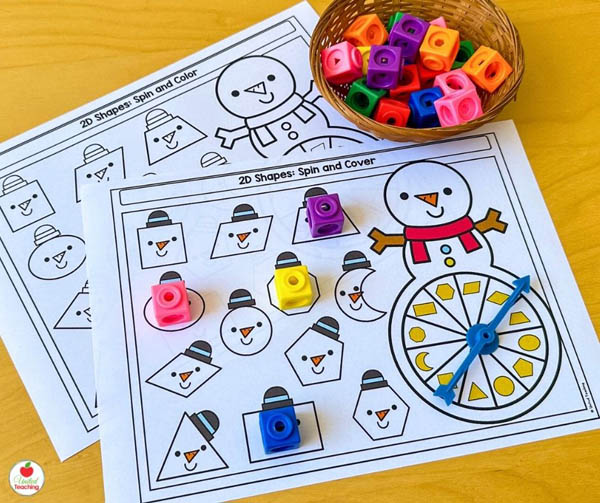
2D Shapes: Spin and Cover
Students spin and cover the matching 2D snowman shape on the game board.
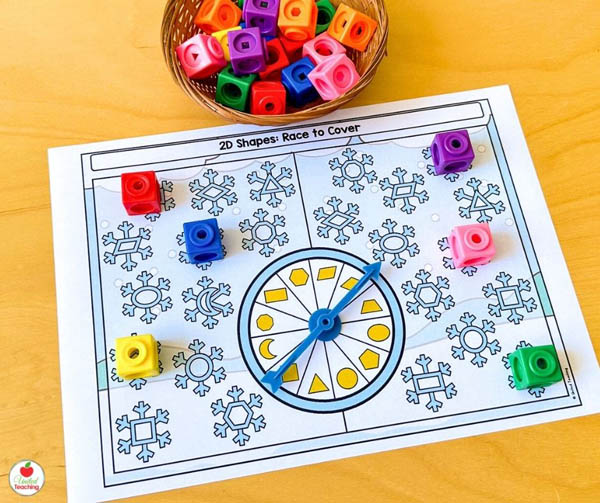
2D Shapes: Spin and Race to Cover
Students spin and race to match snowflake shapes in a partner format.
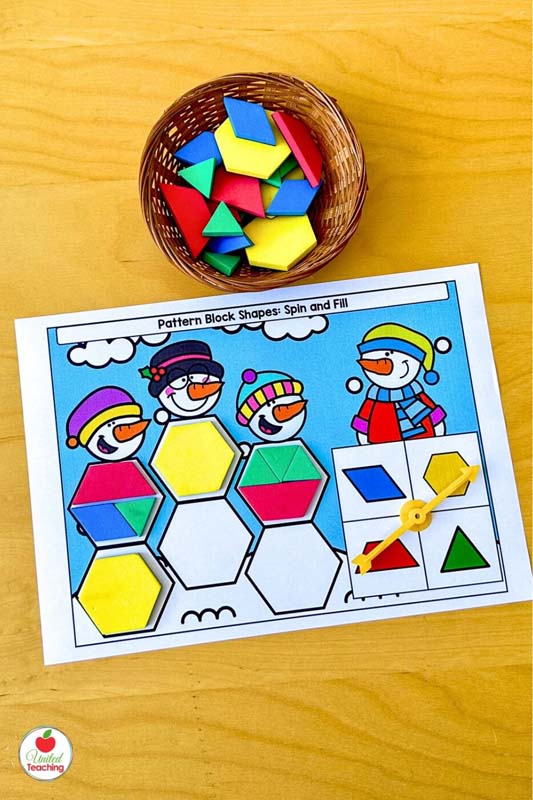
Snowmen Pattern Block Mats: Spin and Fill
Students spin a pattern block and fit the shapes to fill the snowmen pictures.
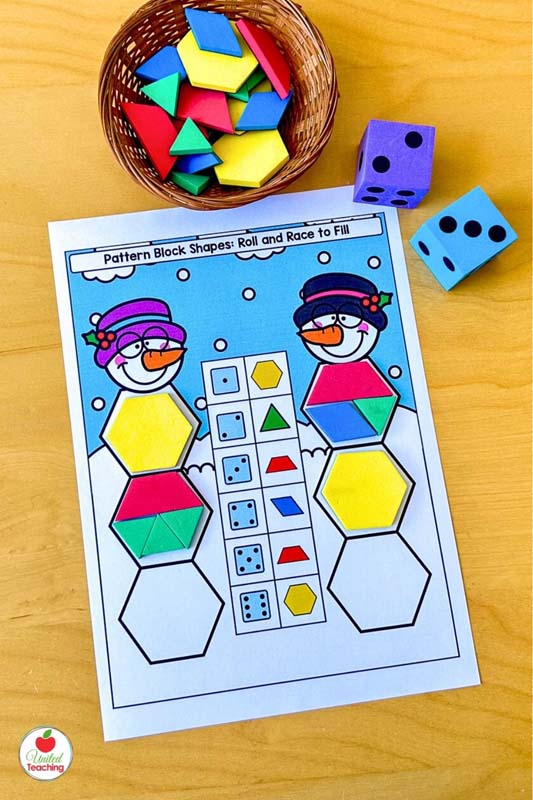
Race to Fill the Snowman Pattern Block Partner Game
Two players race to fill their snowman outline with pattern blocks first.
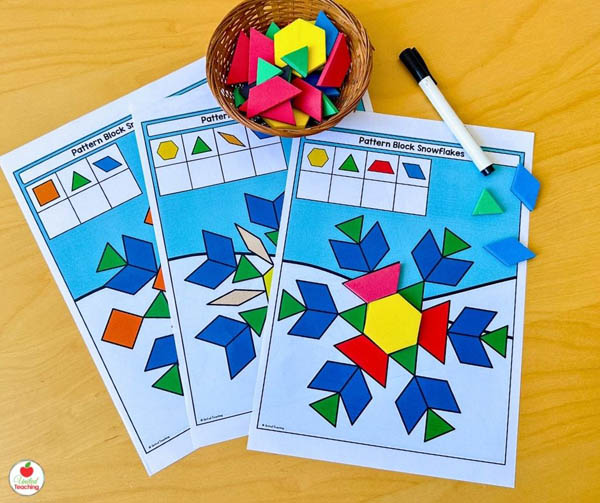
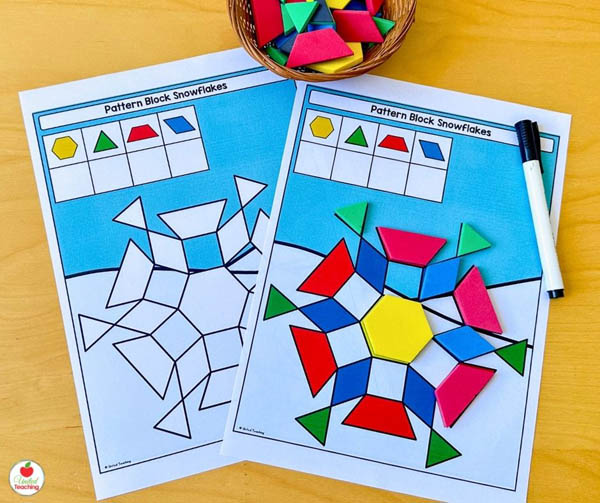
Pattern Block Snowflakes
Students build snowflakes with pattern blocks and count the shapes. Six different snowflake designs are included.
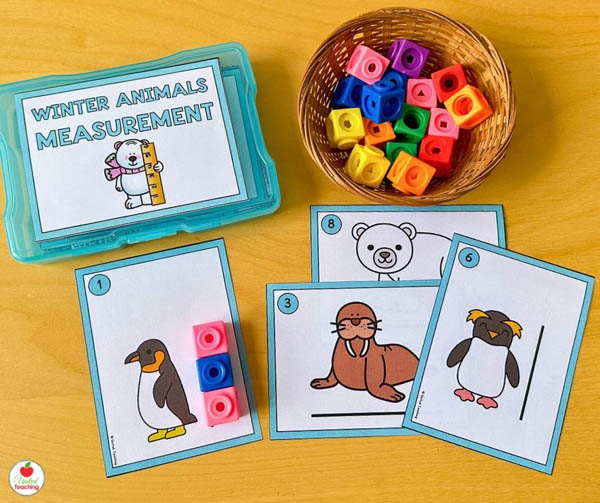
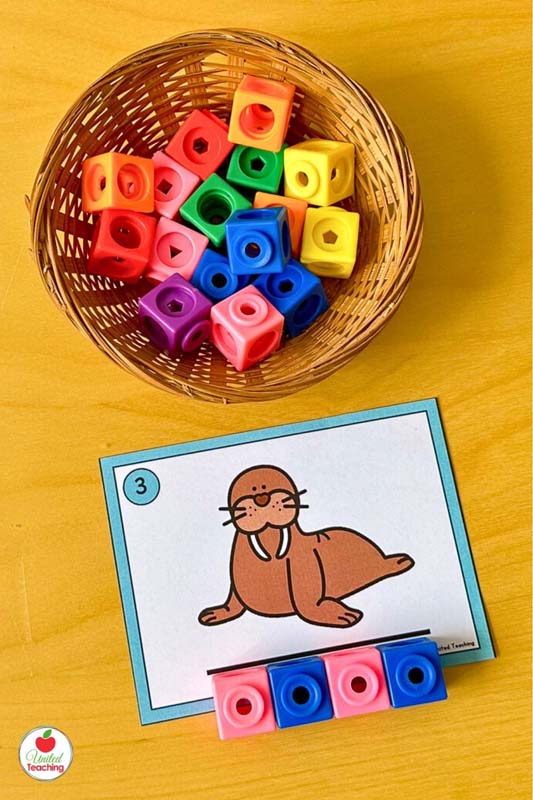
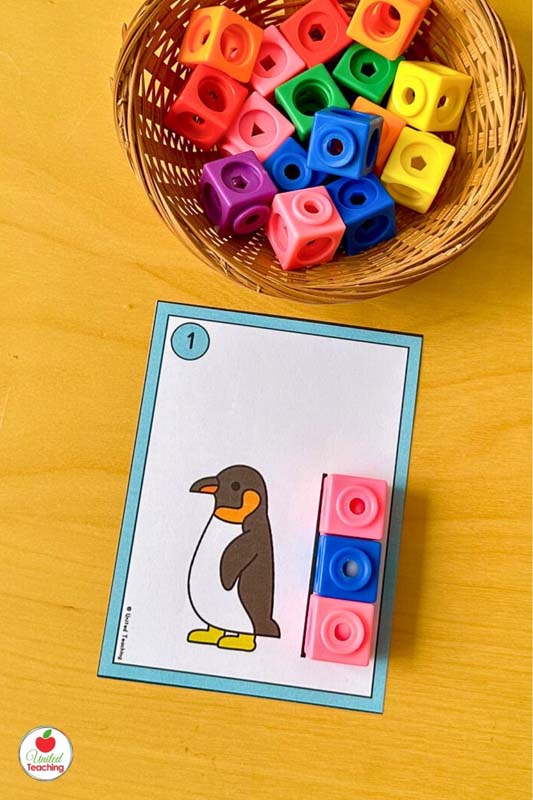
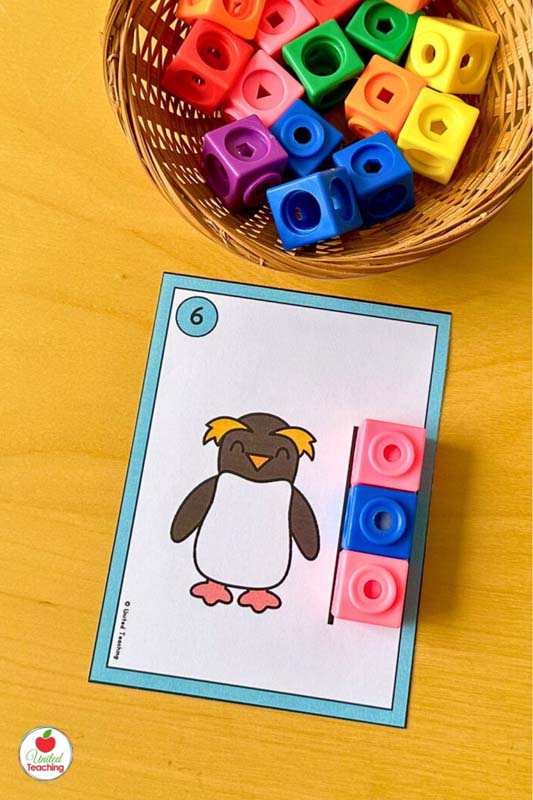
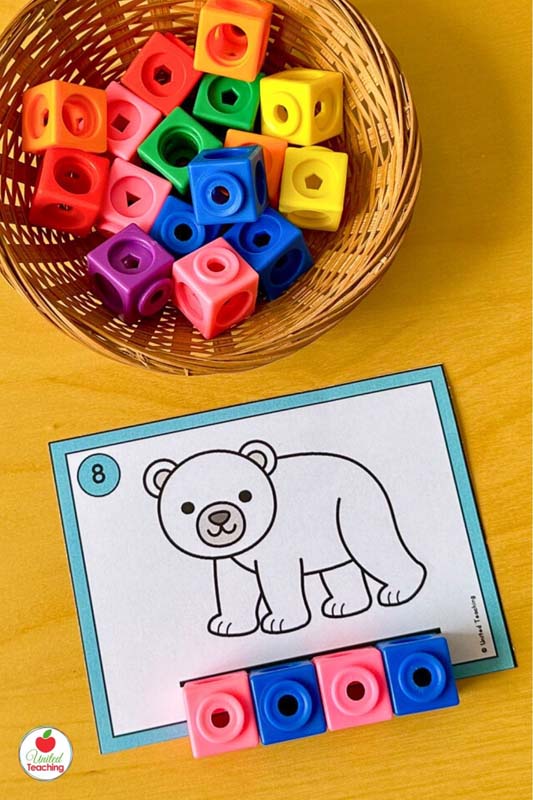
Polar Animal Measurement Task Cards
Students measure polar animals using non-standard units and record their findings on the worksheet.
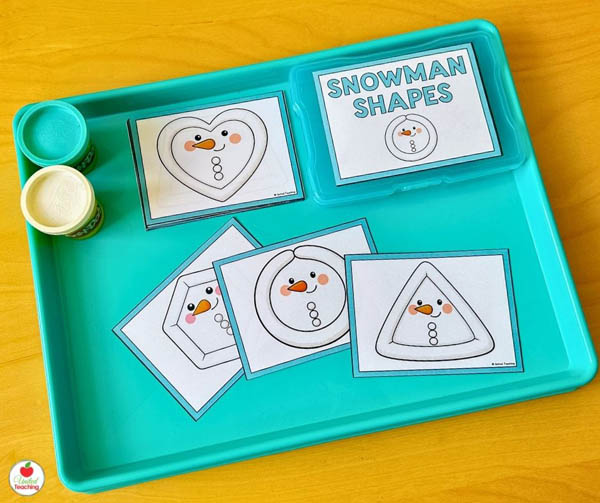
Snowman Play Dough Shapes
Students build common 2D shapes with play dough on themed mats.
Why teachers love them:
- Pattern blocks and play dough add fine motor practice.
- Shape centers are quick to set up and easy for students to repeat.
- Measurement feels doable with simple task cards and recording.
- Activities include vocabulary practice with shape names.
Fitting Winter Math Centers Into the Day
One of the best parts about winter math centers is how flexible they are.
Here are a few simple ways to use them:
- Math rotations: Set out 4–6 activities and rotate students through stations.
- Morning tubs: Keep clip cards, spinners, or pattern block mats ready for a calm start.
- Small groups: Pick one activity that matches the focus skill and teach it together.
- Early finishers: Keep a bin of low-prep centers ready for meaningful extra practice.
- Quick checks: Use recording sheets as an exit ticket or a fast assessment.
Keep the Winter Fun Rolling
If students enjoy these winter math centers, here are a few easy next steps:
- Pair them with the matching Winter Literacy Centers for Kindergarten post (coming next) for a balanced rotation.
- Add extra number sense practice with Winter Subitizing Activities.
- Build fluency with Math Decoders™ Winter Crack the Code resources.
Get the Winter Math Centers for Kindergarten
Winter is a great time to lock in routines and keep learning fun.
These Winter Math Centers for Kindergarten help students practice counting, ten frames, place value, early addition and subtraction, shapes, pattern blocks, and measurement using hands-on activities that feel like play.