


Has this ever happened to you?
Your students can tap out /c/ – /a/ – /t/ like little phonics pros. They stretch the sounds, fill in the sound boxes, and seem to totally get it. But then… you ask them to spell cat the next day and it’s like they’ve never seen the word before.
We’ve all been there.
The truth is, this isn’t a sign that something’s wrong with your teaching or your students. It’s just that early phonics is hard. Kids are doing all the expected things, tapping, stretching, using sound boxes, but the spellings just aren’t sticking yet.
If we don’t slow down and give students a way to really connect sounds to letters, those words keep slipping away.
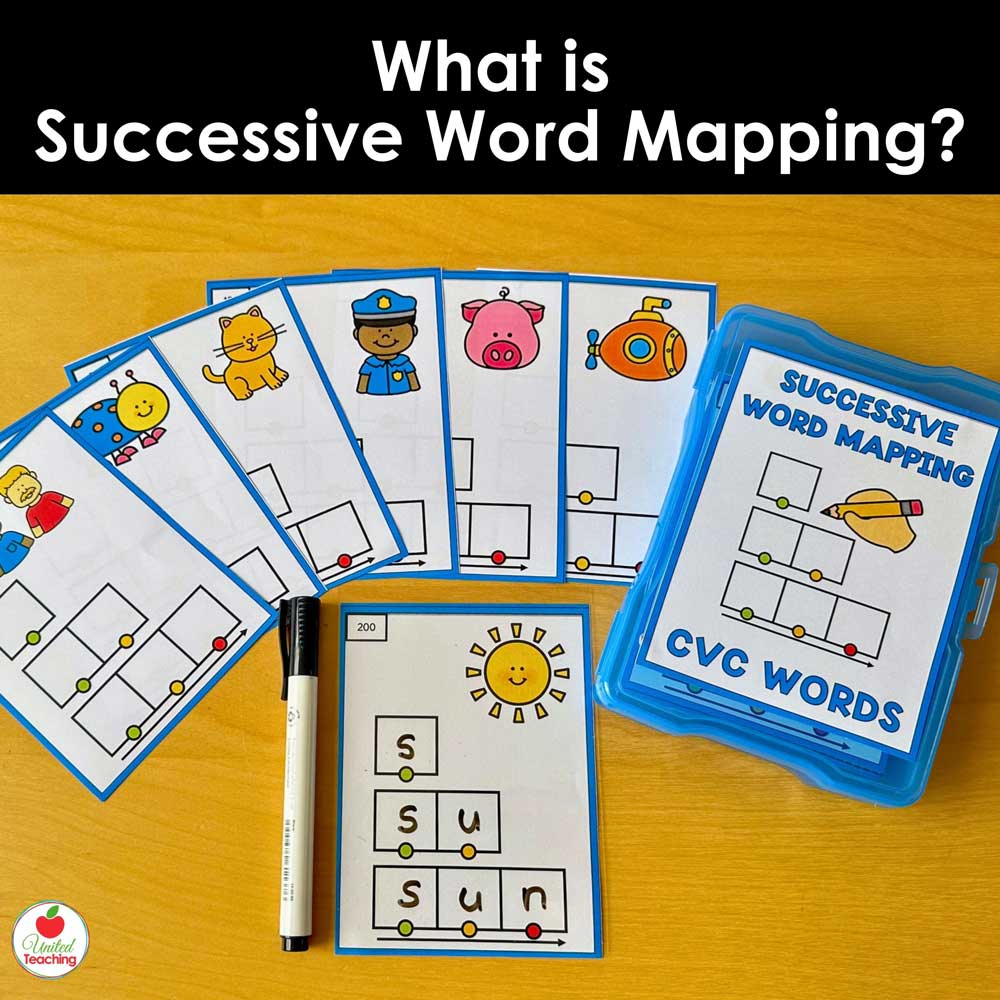
That’s why successive word mapping is such a game-changer. It’s a simple, repeatable routine that blends word mapping with pyramid-style spelling, and it gives young learners the scaffolded practice they need to actually remember the words they’re working on.
Once the routine is established, it can be used with any phonics pattern across the year. No reinventing the wheel. Just consistent, effective practice.
So… What Actually Is Successive Word Mapping?
In simple terms, it’s a short routine that combines word mapping with word pyramid style spelling practice.
Here’s the flow:
- Start with a picture
- Say the word and tap the sounds
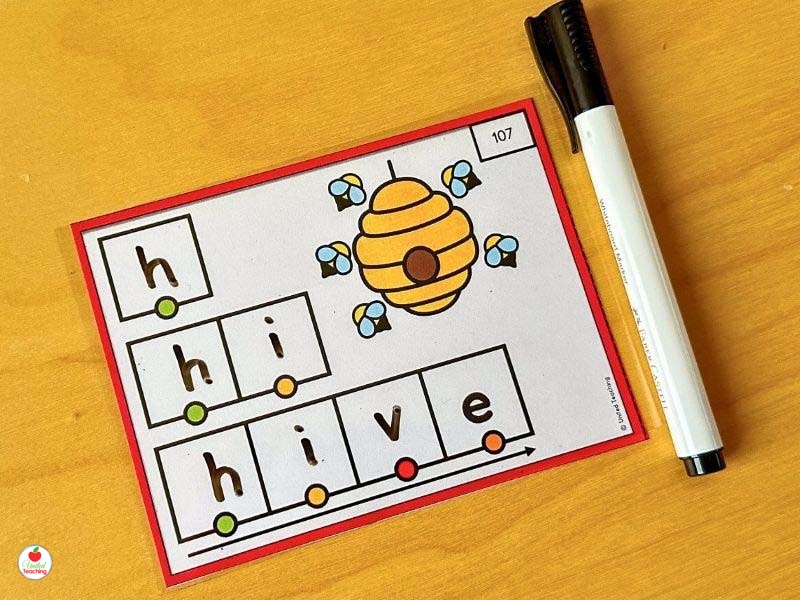
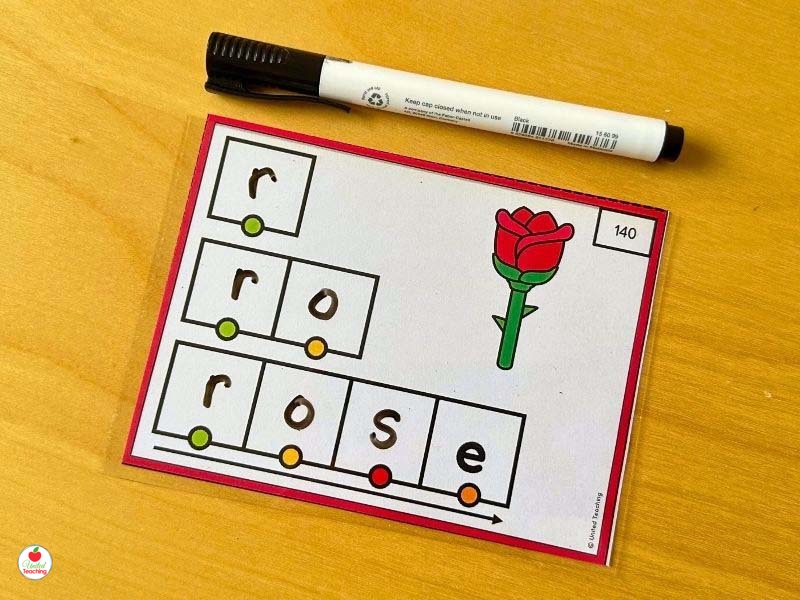
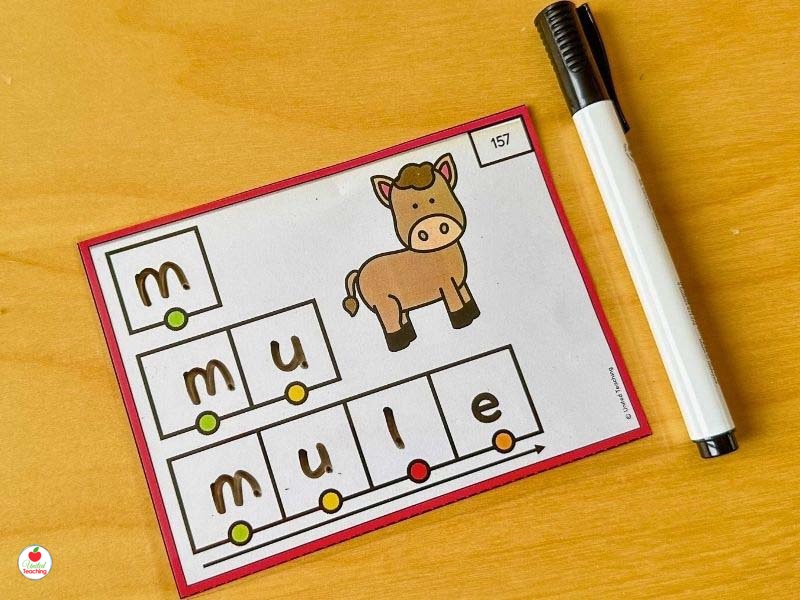
- Map the first sound in a phoneme-grapheme box
- Add one new sound on each line
- Read and write the whole word on the final line
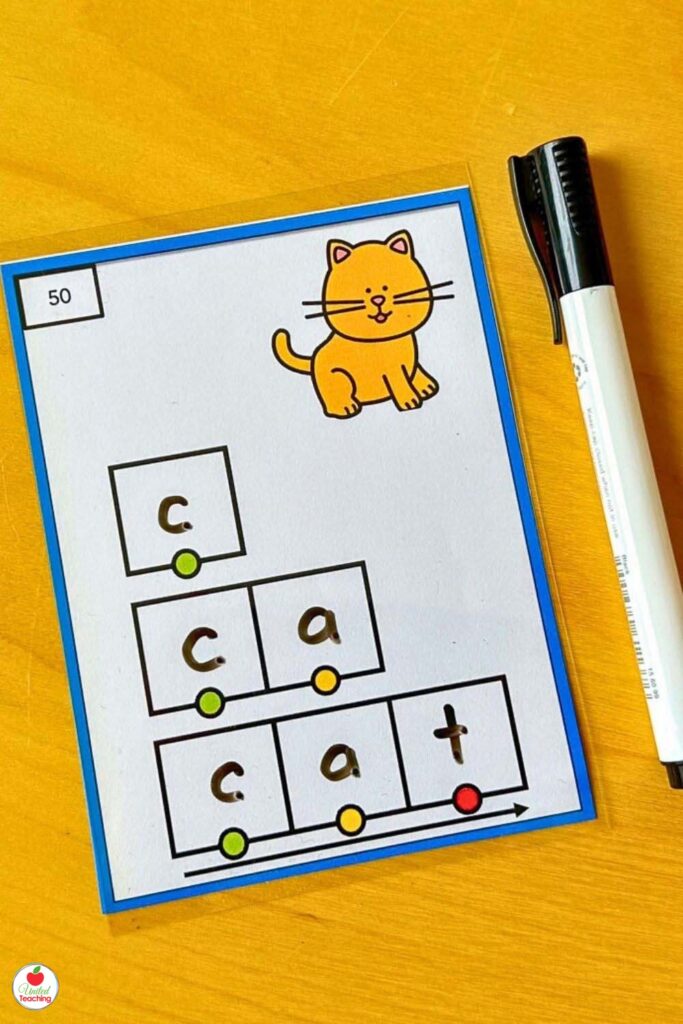

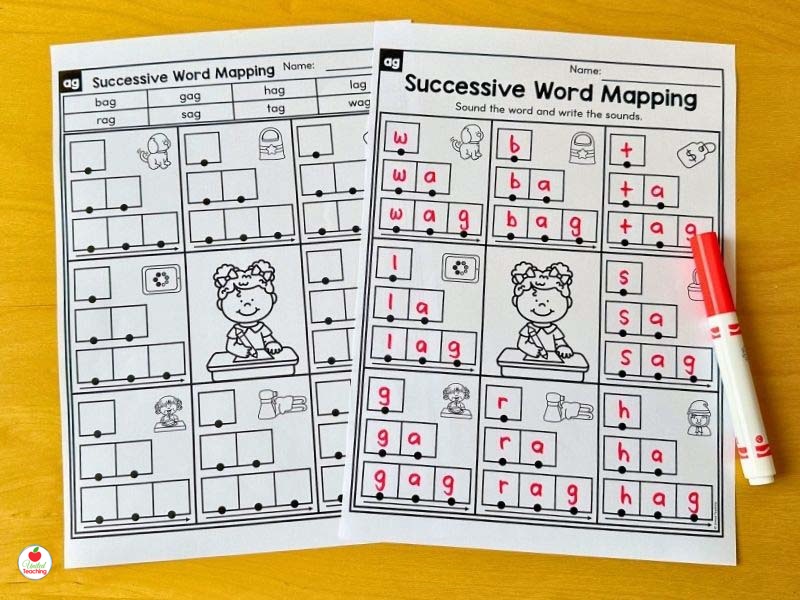
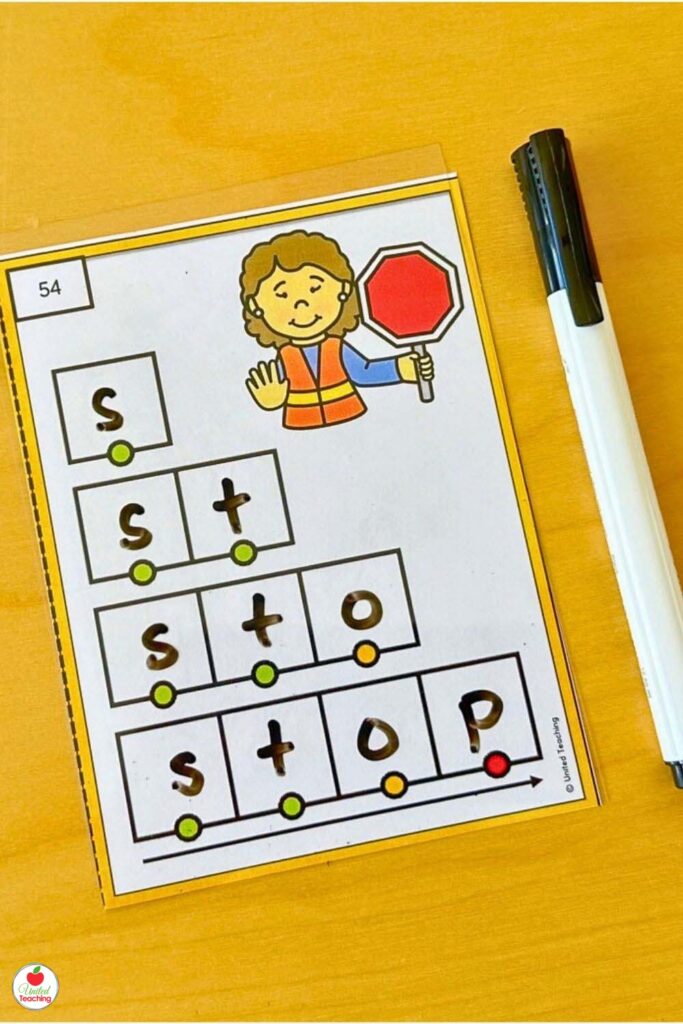
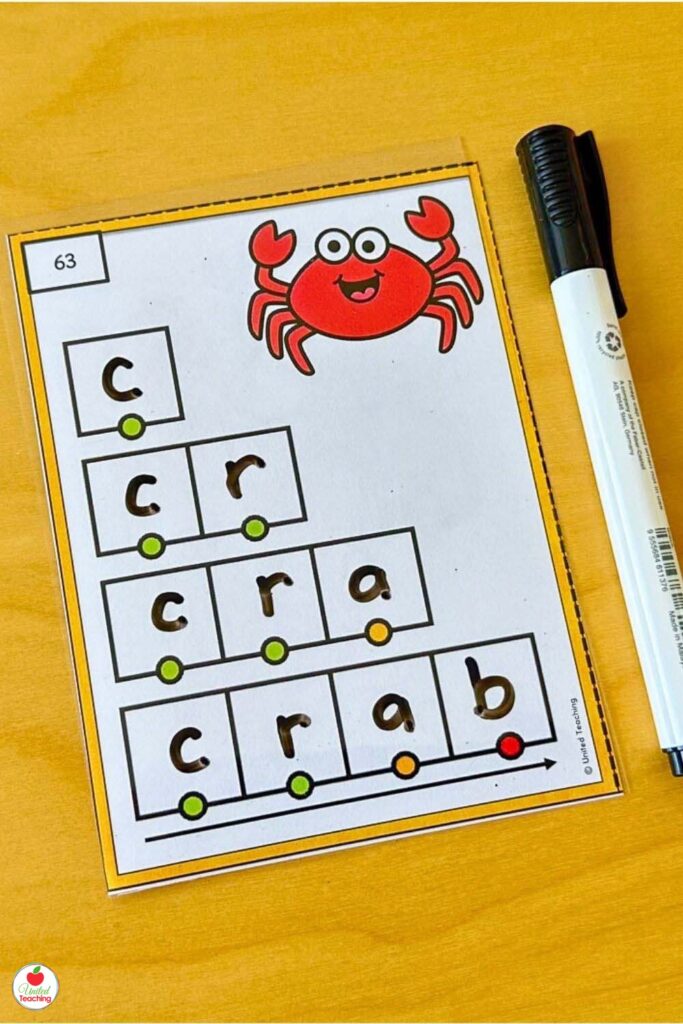
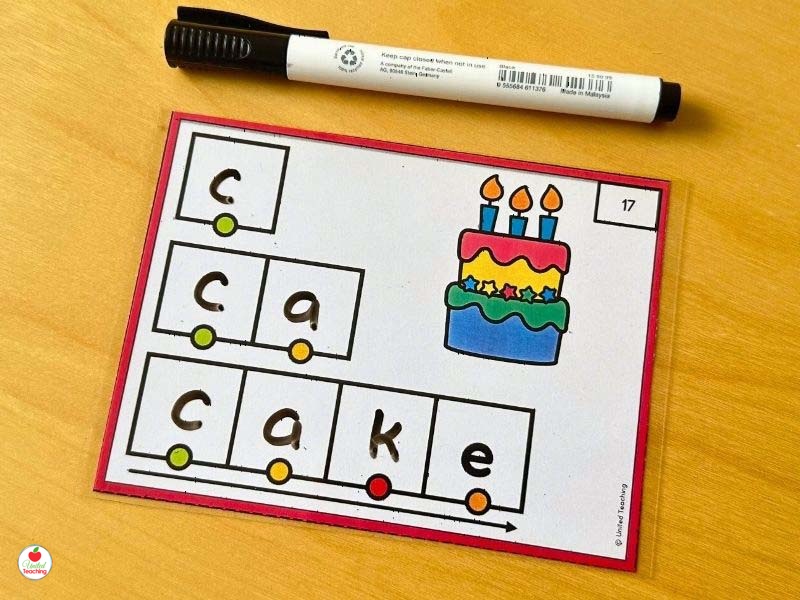
Unlike a random letter pyramid, the focus stays firmly on phonemes (sounds) and the graphemes (letters) that represent them. Each line shows the word growing, sound by sound, in clear sound boxes arranged in a step pyramid.
Instead of guessing and hoping the spelling sticks, students build strong sound-letter links step by step.
Why This Works (The Science of Reading Connection)
From a Science of Reading perspective, successive word mapping supports phoneme-grapheme mapping, orthographic mapping, and the connection between decoding and encoding.
Here’s why it’s so effective:
Sound-letter links are made visible
Students remember words more successfully when they connect the sounds they say with the letters they write. Successive word mapping slows the process down and makes those links explicit. Each phoneme sits in its own box, so students are less likely to blur, skip, or merge sounds.
Cognitive load is reduced
Holding an entire word in working memory can be tough for young learners. In this routine, students focus on one new sound at a time. Previous lines stay on the page as a scaffold while the word is built. This reduces cognitive load and lets attention settle on the new element being added.
Orthographic mapping is supported
A key goal in early literacy is for students to orthographically map words, storing them in long-term memory so they can read and spell them automatically.
With successive word mapping, students:
- See the word represented by a picture
- Say the word and tap the sounds
- Map each phoneme into a box with its matching grapheme
- Read and write the word several times in a row
This repeated, focused practice provides strong support for orthographic mapping and helps words stick more effectively than a single, rushed attempt.
Reading and spelling are linked
Reading and spelling are closely connected skills, but classroom routines can sometimes separate them. With successive word mapping, students build the word and then read it. The same sound-letter links are used for both decoding and encoding. One simple routine reinforces that connection and keeps phonics instruction tightly aligned.
How to Teach Successive Word Mapping
This routine works best when introduced slowly and kept consistent. Using task cards with prepared pictures and step pyramid mapping boxes makes it easy to model and keeps the focus on the learning rather than drawing boxes.
Step 1: Model the routine whole class
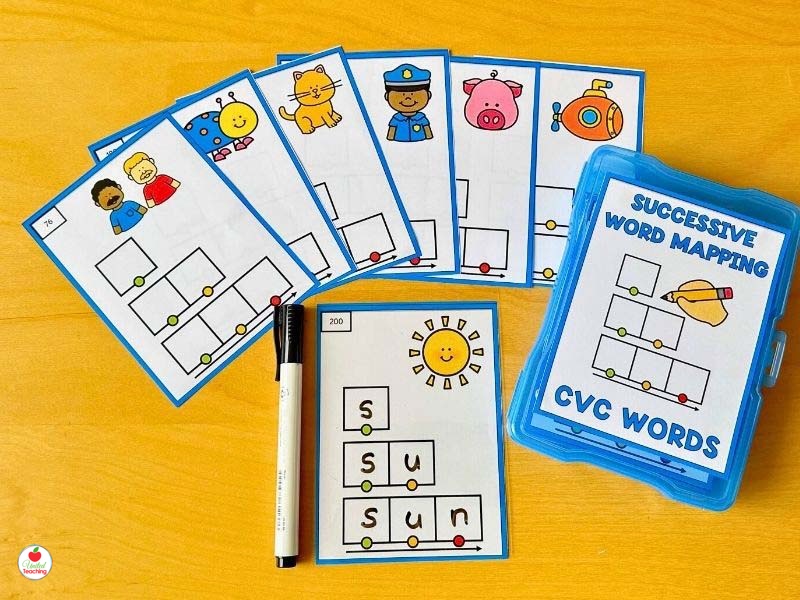
Choose a task card, let’s say sun.
Show the picture and briefly discuss it. Say the word together: sun.
Ask: “What sound do you hear at the beginning? In the middle? At the end?”
This step tunes students’ ears to the sounds before moving to print.
A simple teacher script might sound like this:
“We’re going to map the word sun. Say it with me: sun. How many sounds can we hear in sun? Tap them on your fingers. Now we’ll build the word, one sound at a time, in our sound boxes.”
Step 2: Tap and map the sounds
Have students tap the sounds on their fingers: /s/ – /ŭ/ – /n/.
Point to the first row of the step pyramid on the task card. Say the first sound: /s/. Write s in the first box.
Ask students to do the same on their worksheets.
Step 3: Build the word line by line
On the next row of the pyramid:
- Point to the two boxes
- Rewrite s in the first box
- Add u in the second box
On the third row:
- Point to all three boxes
- Rewrite s and u
- Add n in the last box
At each step, the class says the sounds together. Students are consistently seeing, saying, and writing.
Step 4: Blend and read the final word
On the final row, point to each box and blend the sounds: /s/ – /ŭ/ – /n/… sun.
Students then:
- Read the word together
- Write the full word on the line underneath
- Use the word in a quick oral sentence, like “The sun is hot.”
Step 5: Practise with a few more words
Repeat the routine with one or two additional task cards while still guiding the whole class. Once everyone understands the flow, the activity can be:
- Moved into small groups
- Used as a literacy centre
- Revisited as a warm-up or exit ticket
The aim is for successive word mapping to become a short, predictable routine that fits smoothly into everyday phonics practice.
Easy Ways to Use This Across the Year
Once students are comfortable with the routine, it can be reused with a wide range of phonics skills.
Some possibilities:
Phonics mini lessons – Use one or two task cards to introduce or review patterns like CVC words, magic e words, digraphs, or blends
Literacy centres – Set out task cards with matching worksheets for independent or partner practice
Guided reading and small groups – Choose task cards that match the current focus, like short a CVC words, sh words, or blends with magic e
Warm-ups and exit tickets – Map a single word using a task card before or after a phonics lesson
Intervention – Use successive word mapping task cards with a small group needing extra support to connect sounds to spellings
Because the structure stays the same, only the task card sets need to change as the phonics sequence progresses.
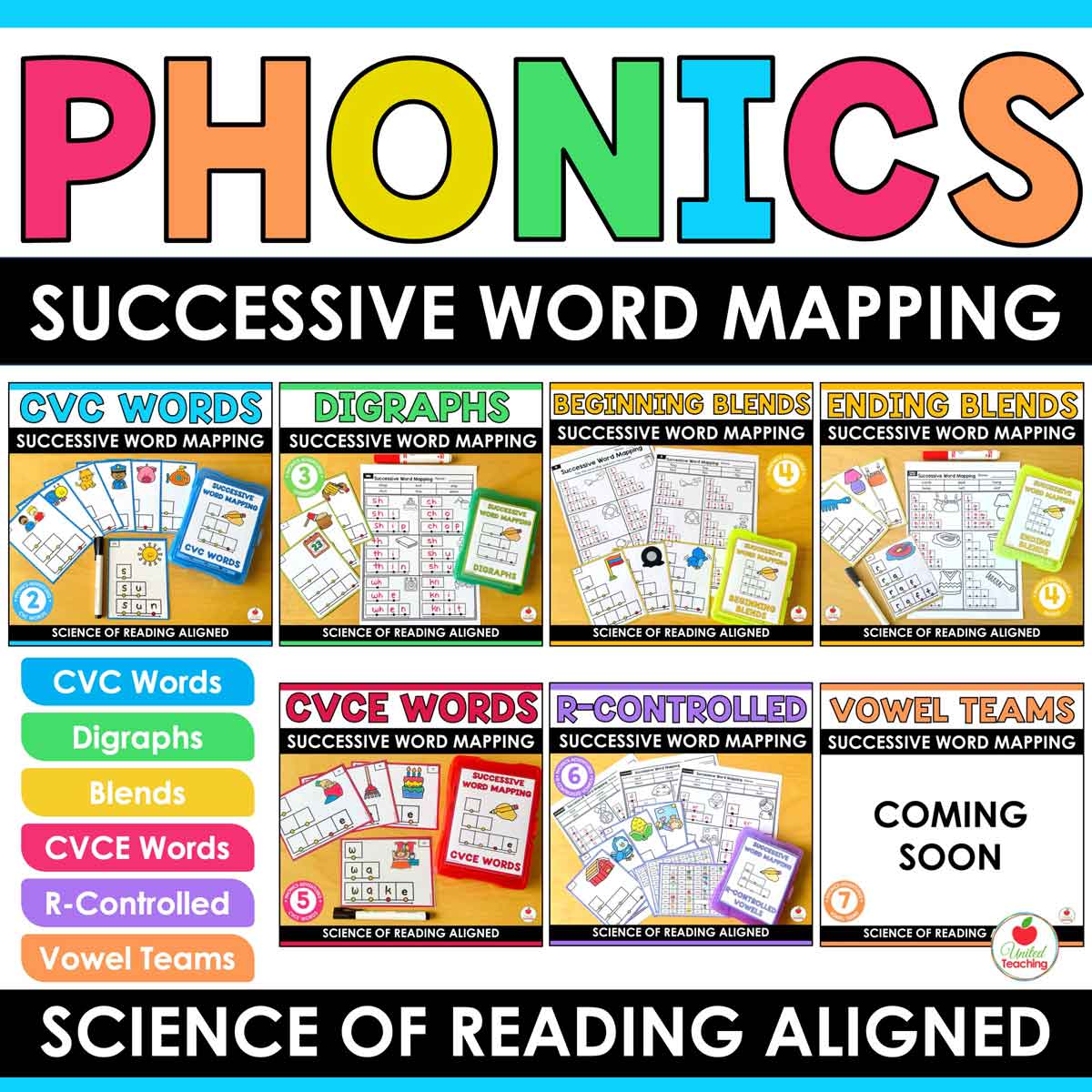
Classroom-Friendly Resources for Successive Word Mapping
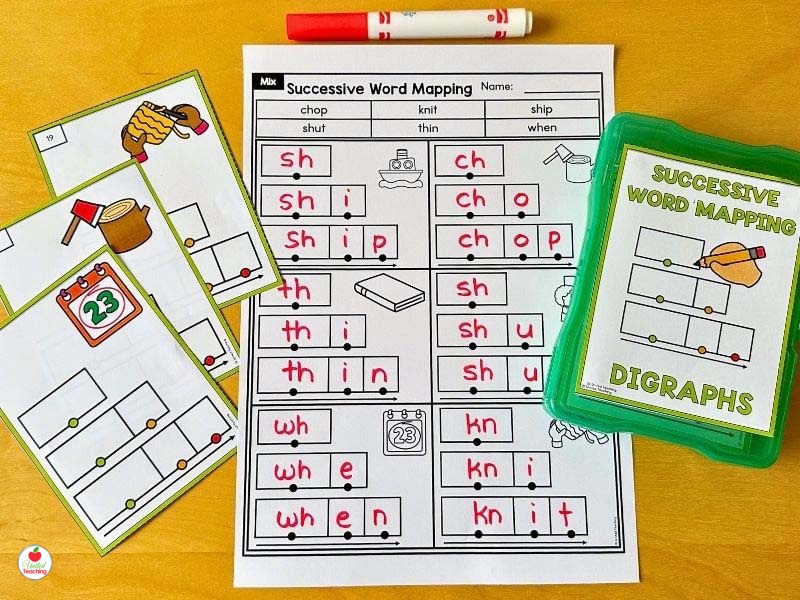
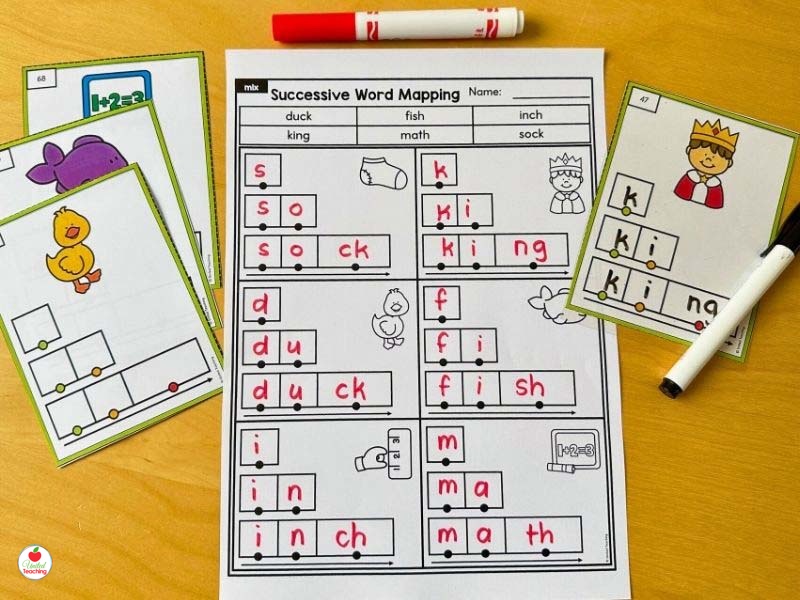
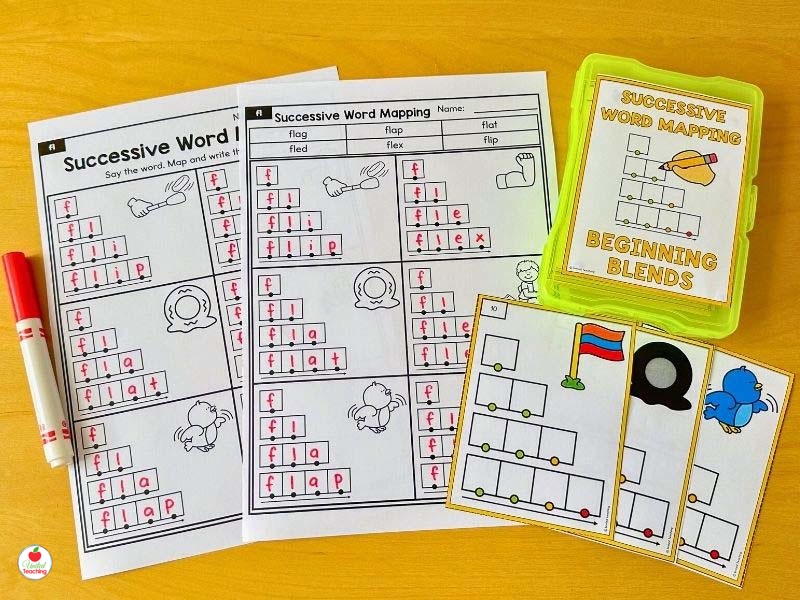
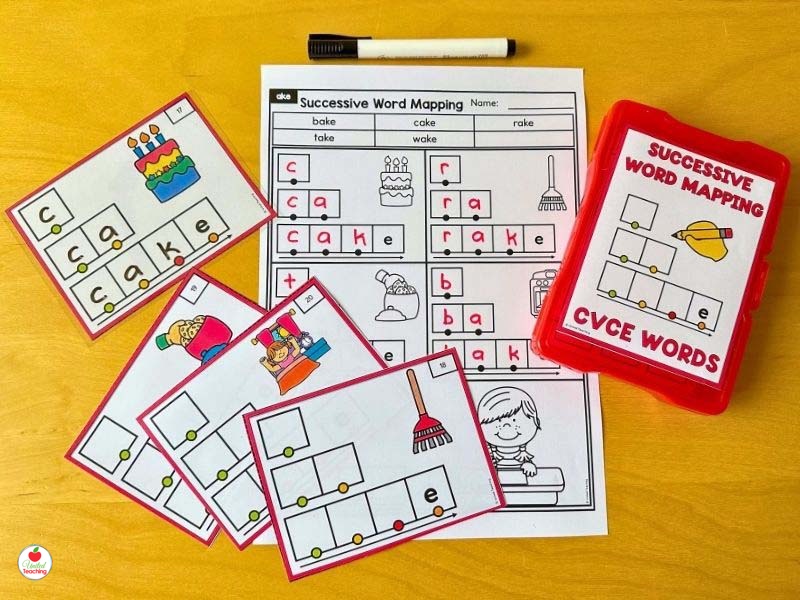
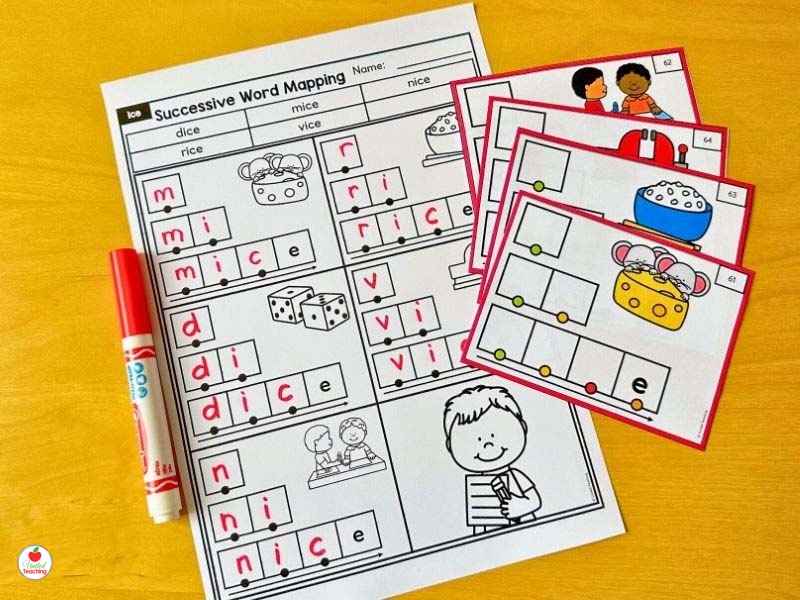
The successive word mapping routine can be used across the year as students move through different phonics patterns. Each task card set includes prepared pictures and step pyramid mapping boxes, along with matching worksheets for recording.
Here’s what’s available to match common phonics sequences:
- CVC Words Successive Word Mapping – ideal for initial short vowel work and early blending practice
- Digraphs Successive Word Mapping – focuses on common beginning and ending digraphs like sh, ch, th, and wh
- Beginning Blends Successive Word Mapping – covers L, S, and R blends, along with blends plus magic e patterns
- Ending Blends Successive Word Mapping – covers common ending blends such as ck, lk, ft, and so on.
- CVCE Words Successive Word Mapping – supports the shift to long vowels with magic e
- R-Controlled Vowels – coming soon
- Vowel Teams – coming soon
These can be used for whole class modelling, small group instruction, or independent centres, without requiring teachers to create word lists, find pictures, or draw mapping templates each week.
When aligned with a clear phonics scope and sequence, successive word mapping task cards can simply be rotated to match the skills currently being taught.
Final Thoughts
Successive word mapping isn’t a complicated program. It’s a small, repeatable routine that can sit neatly inside the phonics instruction already happening in your classroom.
When students build words sound by sound in mapping boxes, they:
- Slow down and really hear each phoneme
- See clearly how sounds connect to spellings
- Gain the repetition needed for orthographic mapping
- Grow more confident reading and spelling those words independently
For classrooms aiming to make phonics lessons feel more cohesive and help more students remember the words they practise, successive word mapping is a simple, high-impact routine worth including.
It fits easily within existing phonics lessons.
Quick Summary for Busy Teachers
What it is: A short routine that combines word mapping and pyramid spelling so students build and read the word step by step.
Why it works: It reduces cognitive load, highlights sound-letter links, and supports orthographic mapping.
When to use it: Phonics mini lessons, small groups, centres, warm-ups, exit tickets, and intervention.
How to start: Model with a few CVC task cards and matching worksheets, then move the routine into small groups and centres.
Next step: Choose a small set of task cards, introduce the routine slowly, and observe how students talk about the sounds and letters.
If you’re ready to try successive word mapping without the prep work, task cards and worksheets for CVC words, CVCE words, digraphs, and blends are ready to use and easy to slot into an existing phonics block.