




Making October the Perfect Time for Math Fact Fluency Practice
Your kindergarteners are buzzing with Halloween excitement, and you need math activities that work with that energy—not against it. Math Decoders™ transform building math fact fluency into an engaging code breaking adventure. These puzzle-style math activities capture your students’ attention while giving them meaningful practice with math facts, turning what could be distraction time into productive learning.
The best part? Your students will feel like they’re playing, not working on math fact practice.
Why Math Fluency Matters in Kindergarten
Math fact fluency is the ability to recall basic math facts quickly and accurately. In kindergarten, you’re laying the foundation for all future math learning. When your students begin developing math fact fluency with addition and subtraction, they’re building confidence that will support learning for years to come.
According to Jennifer Bay-Williams, author of Figuring Out Fluency in Mathematics Teaching and Learning, math fact fluency isn’t about rote memorization or timed tests—it’s about understanding and flexibility. Your kindergarteners need time to explore math facts, see patterns in addition and subtraction facts, and make connections. The goal is to help students develop fact fluency through understanding, not pressure.
What building fact fluency looks like in kindergarten and first grade:
- Recognizing numbers and basic fact problems without counting on their fingers
- Understanding number relationships and using number bonds to show part-part-whole relationships
- Using fact strategies and math strategies to figure out the answer
- Feeling confident when solving math problems
When you make math fact fluency practice fun and low-pressure, you’re helping your students develop a positive relationship with math facts that can last a lifetime. Students who experience math fact fluency early show improved fluency in mental math and problem solving later. They don’t know the facts through memorization alone – they understand the mathematical relationships behind them.
Why Math Games Work Better Than Flash Cards
Let’s be honest – traditional flash cards and drill sheets can feel boring, especially for five and six-year-olds who learn math best through play. Math games like Math Decoders™ Crack the Code activities give you all the practice benefits of building math fact fluency without the worksheet fatigue or math anxiety.
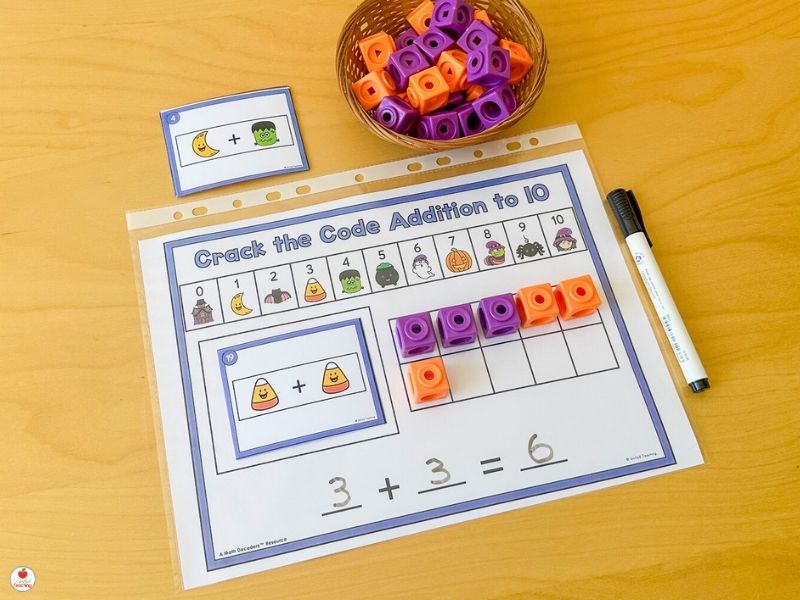
Each activity turns practicing math facts into a secret code to crack. Students match Halloween pictures to numbers to solve basic addition and subtraction problems. It feels like a game, but they’re getting valuable fact fluency practice with every puzzle.
Why kindergarten and first grade teachers love these math games:
- They’re engaging: Kids love solving mysteries while they practice math facts
- They build independence: Perfect for math tasks at centers while you work with small groups
- They’re reusable: Laminate these printable resources once and use all October long
- They’re differentiated: Works across grade levels and ability groups
- They provide extra practice: Students get facts practice without memorization pressure
Your students get the repetition they need to memorize math facts without the boredom that comes with traditional methods. These math games help you see student work and assess math fact fluency easily.
Halloween Math Activities to Build Math Fact Fluency
These themed Math Decoders™ target the specific math skills your kindergarteners need: building math fluency with basic addition and subtraction, and understanding fact families. Each packet comes ready to print with everything you need for your math curriculum.
What’s included:
- Colorful task cards for fact fluency practice
- Halloween symbol code keys
- Recording worksheets (perfect to assess math fact fluency)
- Full-sized mats for hands on practice
- Storage label for easy organization
- Visual strategy supports for teaching math and number relationships
Halloween Addition Math Decoders™
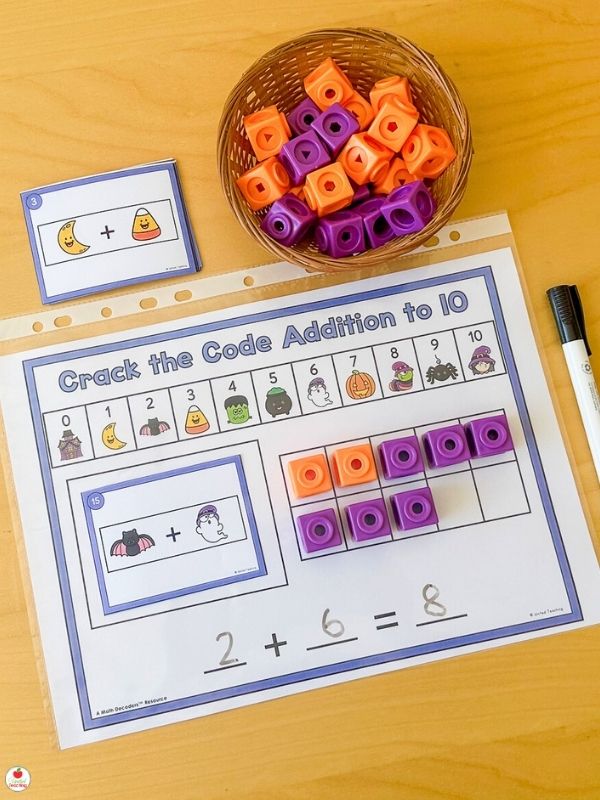
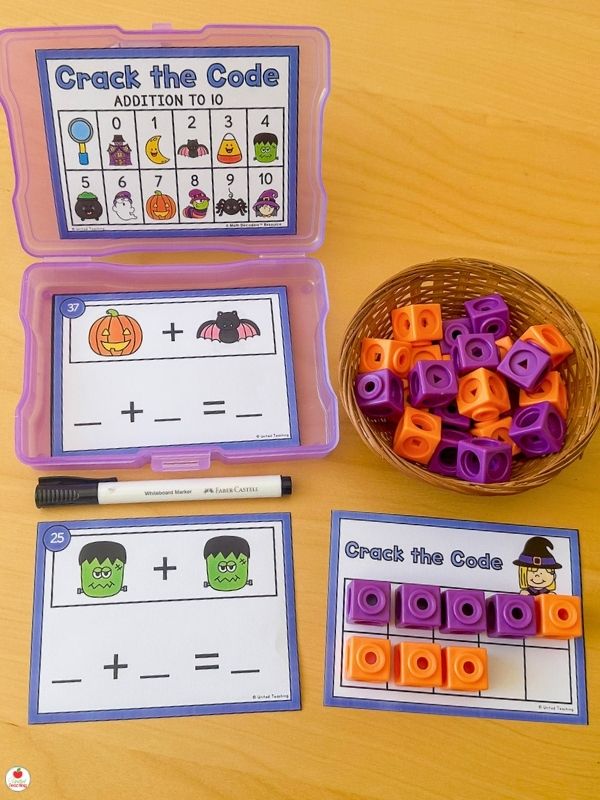
Your kindergarteners will practice basic addition and develop math fact fluency while decoding spooky addition facts. Each card shows Halloween pictures that match numbers on a code key. Students figure out which numbers go with which pictures, solve the addition facts, and write the answer.
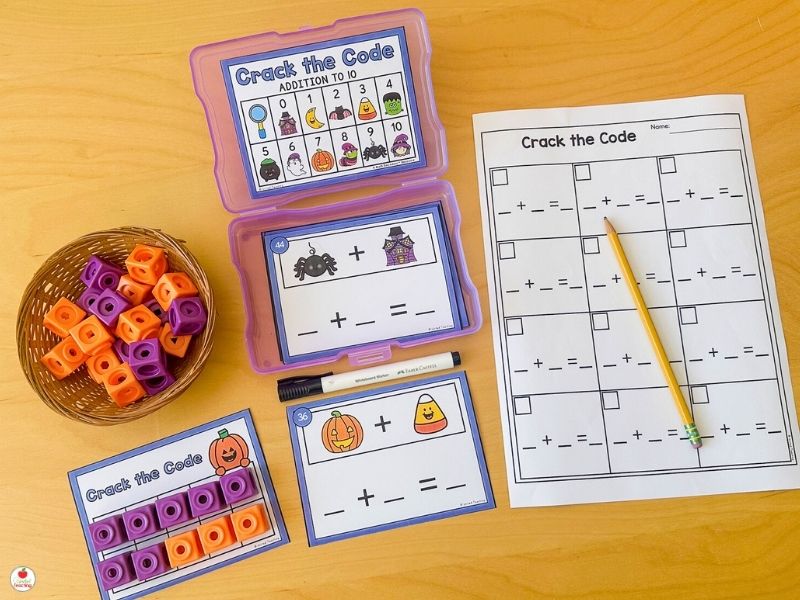
Perfect for building math fact fluency because:
- Halloween puzzles make learning fun while students learn math facts
- Problems stay within 10 (developmentally appropriate for first grade and kindergarten)
- The format builds fact strategies like counting on
- It encourages math talk with partners
Teacher tip: Start by modeling one card together during your math lesson. Once students know and understand the format, they can work independently at centers to develop fluency.
Halloween Subtraction Math Decoders™
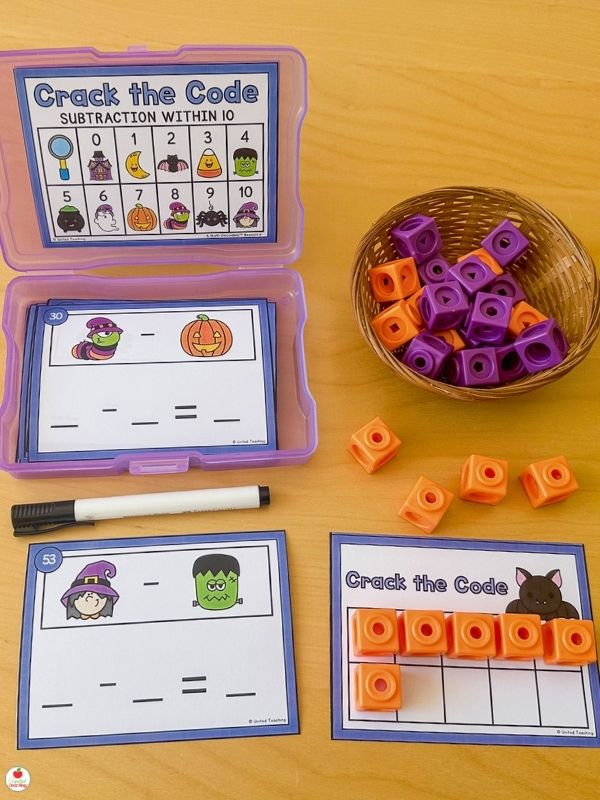
Subtraction can be tricky for kindergarteners, but these math games make building math fact fluency approachable. Using the same code breaking format, students decode symbols to reveal subtraction facts, then find the answers.
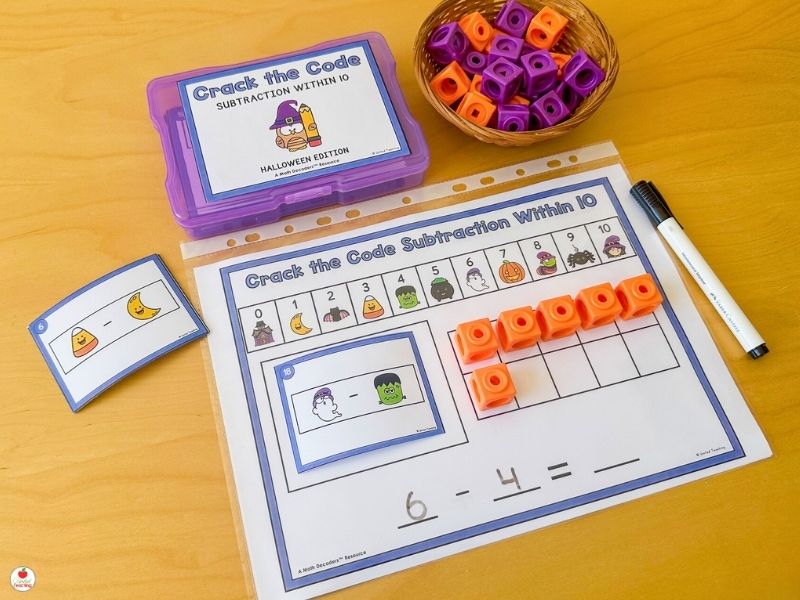
Perfect for math fact fluency practice because:
- Helps students understand basic fact relationships in a playful way
- Builds the foundation for fact families and addition or subtraction flexibility
- Keeps subtraction facts simple and concrete (within 10)
- Gives students multiple chances to memorize facts without pressure
- Works great alongside counting manipulatives
When students practice subtraction facts this way, they don’t experience the math anxiety that comes from timed tests or flash cards. They’re able to recall facts more naturally because they’ve learned them through understanding.
Teacher tip: Let students use counters or cubes alongside the decoders if they need them. The goal is developing math fact fluency through understanding, not speed.
Halloween Fact Families Math Decoders™
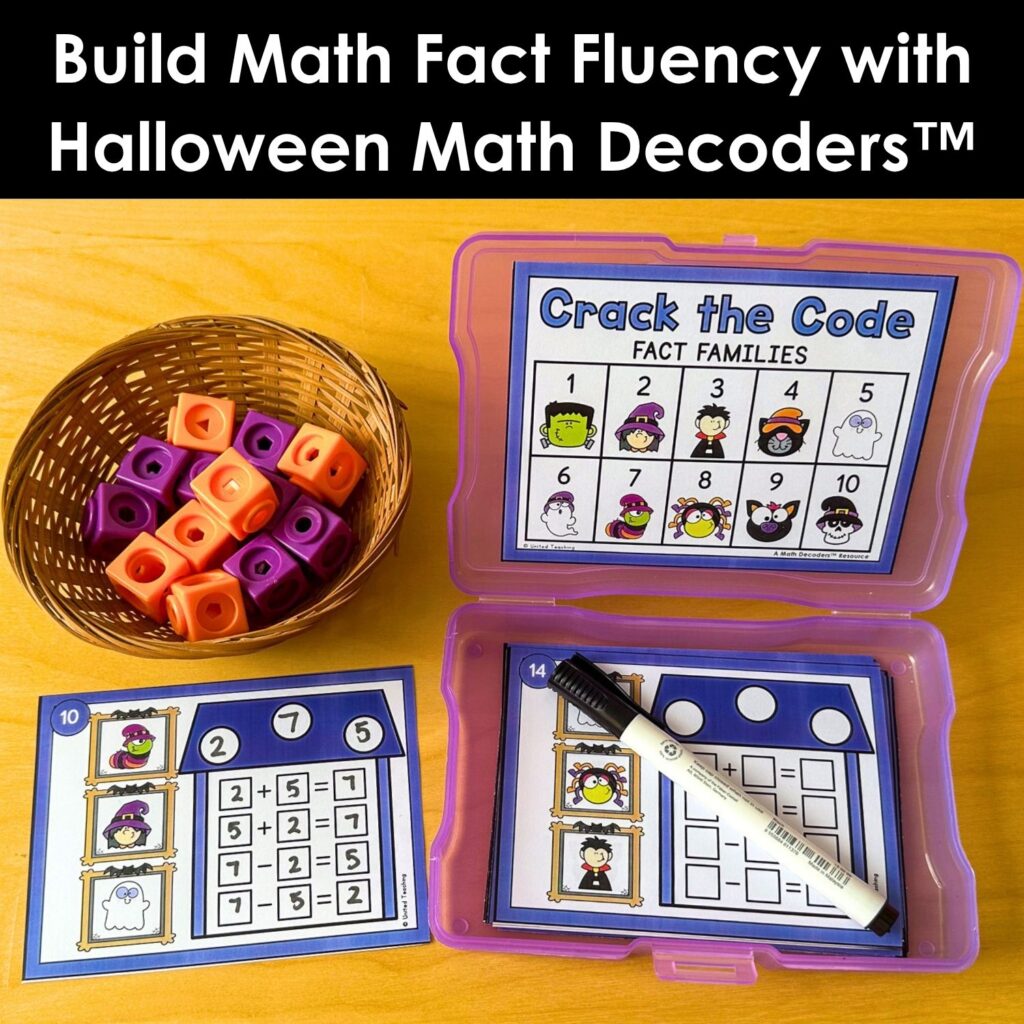
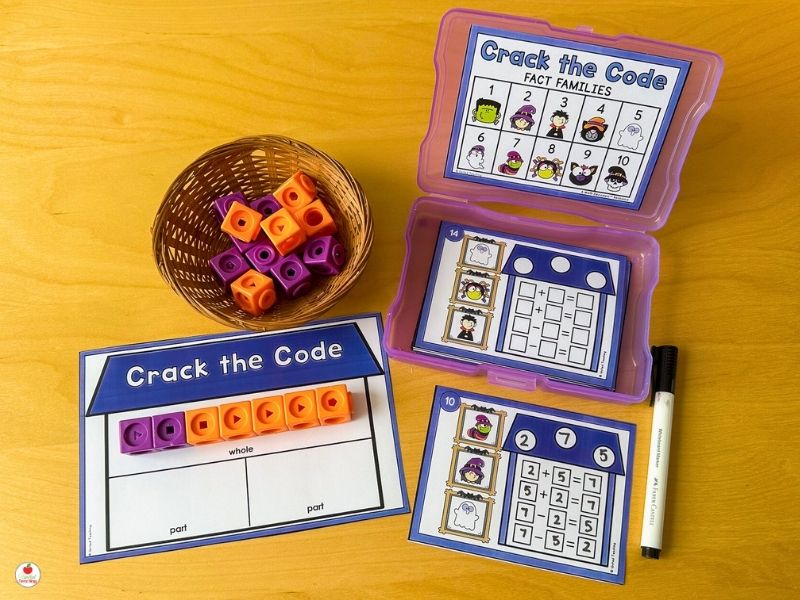
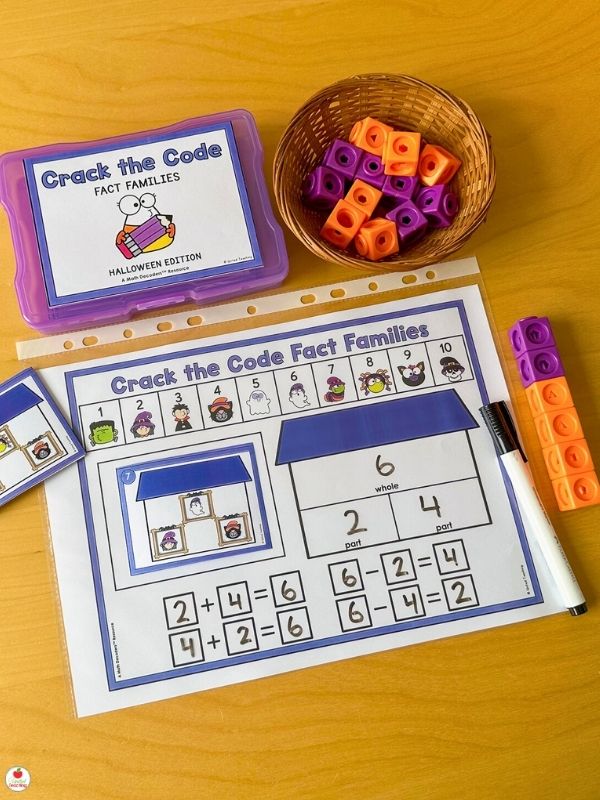
Fact families help your kindergarteners see how number relationships connect addition and subtraction. When they understand that 2, 3, and 5 go together (2+3=5, 3+2=5, 5-3=2, 5-2=3), they’re building powerful math fluency.
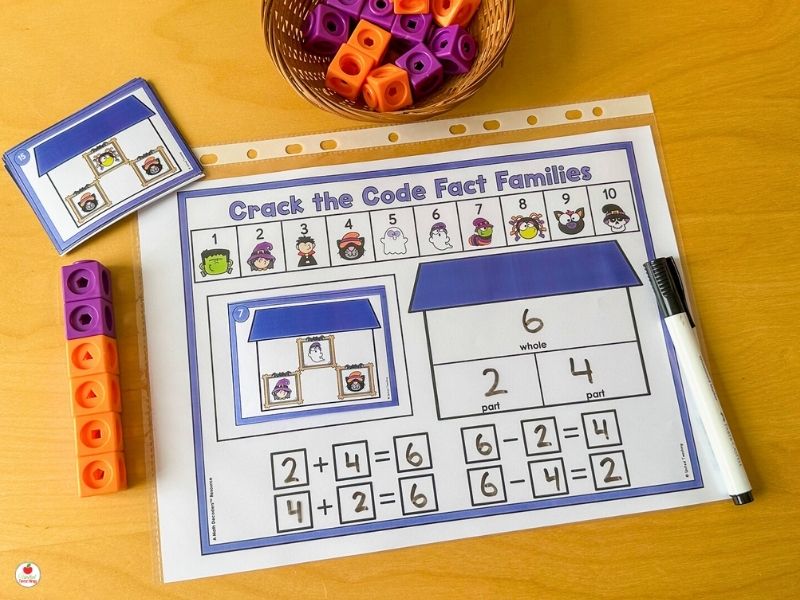
In each puzzle, students decode symbols to identify three related numbers that form a fact family. Once the numbers are revealed, they write four corresponding equations that show the addition or subtraction relationships. Using part-part-whole mats, students visually connect the relationships between numbers and develop stronger number sense. This activity strengthens reasoning, helps students recall math facts, and supports committing facts to memorythrough visual connections.
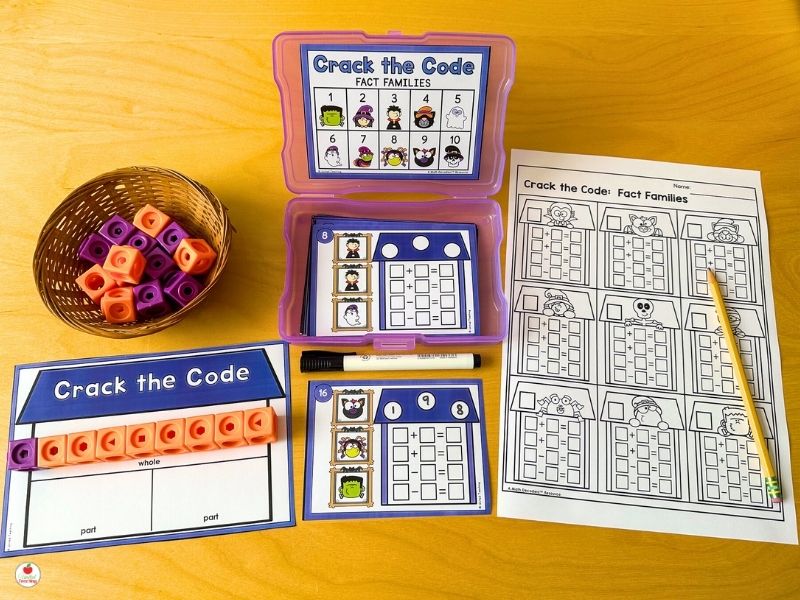
Perfect for building fact fluency because:
- Makes abstract math facts concrete and visual
- Shows the relationship between addition facts and subtraction facts
- Builds flexible thinking—a key component of math fact fluency
- Encourages students to see patterns in basic math facts
Understanding fact families is crucial for math fact fluency. When students know the facts in a family, they actually know four addition and subtraction facts instead of just one. This is one of the most effective strategies to teach math facts and help students achieve math fact fluency faster. These activities help commit facts to memory through understanding rather than through experiencing math anxiety from timed tests.
Teacher tip: Use these fact family cards during small group instruction first. Once students grasp the concept, they can explore independently to develop math fact fluency at their own pace.
How to Use These Math Games in Your Kindergarten Day
These math fact fluency practice activities fit seamlessly into your already packed kindergarten schedule:
Math Centers: Set up a Math Decoders™ center where students work on building math while you pull small groups
Morning Work: Give early arrivers a quiet, engaging way to practice math facts to start the day
Small Group Instruction: Use them to target specific math skills with students who need extra practice or challenge
Fast Finisher Activities: Keep early finishers meaningfully engaged with math fact practice instead of just “keeping busy”
Friday Fun: Use them as a special end-of-week activity when you need something structured but enjoyable
Home Connection: Send a few cards home in take-home folders so families can support learning and help students memorize math facts
The printable format means minimal prep – just print, laminate for durability, and you’re ready to go. Each set of task cards become a tool for building math fact fluency all month long.
Keeping Math Fact Fluency Fun All Year
Once your kindergarteners love the decoder format (and they will!), you can use seasonal versions throughout the year. The familiar structure helps students develop fluency while new themes keep them interested.
Fall leaves, winter snowflakes, spring flowers – your students will look forward to each new set while continuously building math fact fluency and working toward automaticity with basic fact recall. This consistent approach helps students recall math facts naturally and builds the foundational math skills they’ll need in later grade math.
Why this approach to teaching math works:
- Familiar routines build confidence as students learn math facts
- Seasonal themes maintain engagement during fact fluency practice
- Consistent practice helps students commit math facts to memory naturally
- Low-pressure format reduces math anxiety and helps students develop positive math learning attitudes
- Students associate practicing math facts with fun, not stress
- Provides ongoing opportunities to assess math fact fluency through student work
When your kindergarteners enjoy math fact practice, they’re building confidence and math skills that will support their math performance for years to come. This simple math foundation makes it easier when they encounter multiplication facts and division in later grade levels.
How to Assess Math Fact Fluency in Kindergarten
Assessment doesn’t have to mean fluency assessments or timed tests. With Math Decoders™, you can assess math fact fluency naturally by observing student work and looking at their recording sheets.
What to look for when you assess basic fact fluency:
- Are they using math strategies independently?
- Can they complete the puzzles independently?
- Does their student work show understanding of addition and subtraction facts?
These math games and activities give you a clear window into whether students are developing basic fact fluency or if they need extra support. The recording worksheets become documentation for your math education records and help you identify which students need additional teaching math interventions.
Your kindergarteners deserve math fact fluency practice that is fun. Math Decoders™ give you simple ways to teach basic math facts while honoring how five and six-year-olds learn best – through play, exploration, and just a little bit of Halloween magic. These math games help students develop math fact fluency without the stress of memorization, timed tests, or endless flash cards. As students progress and become fluent, they’re building the confidence to tackle more complex mathematical thinking in future grade levels.
Explore the full Math Decoders™ collection to keep building fact fluency all year long.