




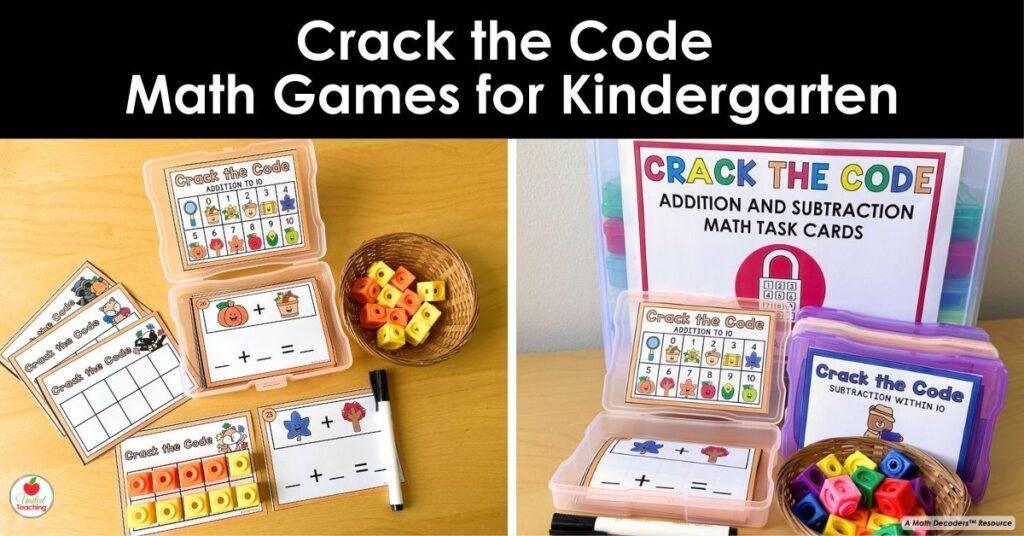
Every kindergarten teacher needs a secret weapon for math time — something that feels like play and actually builds number sense. We all know the kindergarten wiggle factor is real, and holding the attention of 20+ little learners for a math lesson requires a dash of magic. Enter Crack the Code Math Games for Kindergarten, part of the Math Decoders™ series. These printable math task cards turn plain equations into bite-size mysteries kids can’t wait to solve. They get the thrill of being a detective, and you get meaningful, focused practice on core skills. Today’s post spotlights the addition and subtraction decks, but bookmark this page: it will grow as new skills and seasonal themes roll out.
Why Crack the Code Math Practice Belongs in Your Classroom
Let’s be real: traditional worksheets can be a battle. Young learners thrive on curiosity and purpose. Swap a repetitive drill sheet for a code to crack, and suddenly even reluctant mathematicians lean in. The puzzle format taps directly into their natural desire to solve problems and make sense of the world.
Here’s what’s happening behind the scenes as they play:
- Engagement Soars: Students translate a picture clue into numbers, write the equation, and solve the math fact. The “secret code” element feels like a game, not work.
- Independence Grows: The simple, repetitive routine empowers them. Once they know the steps, they can work independently, building confidence and freeing you up to pull a small group.
- Foundational Skills Stick: This isn’t just about answering 2+3. Students are practicing number recognition, one-to-one correspondence as they use the ten frames, and understanding the very structure of an equation.
- The Prep is Gone: You gain quiet, on-task practice without creating more prep for yourself. Just print, laminate, and go.

How the Math Decoders™ Code-Breaker Routine Works
This section walks you through the four simple steps you’ll teach once and reuse all year. The beauty is in the consistency!
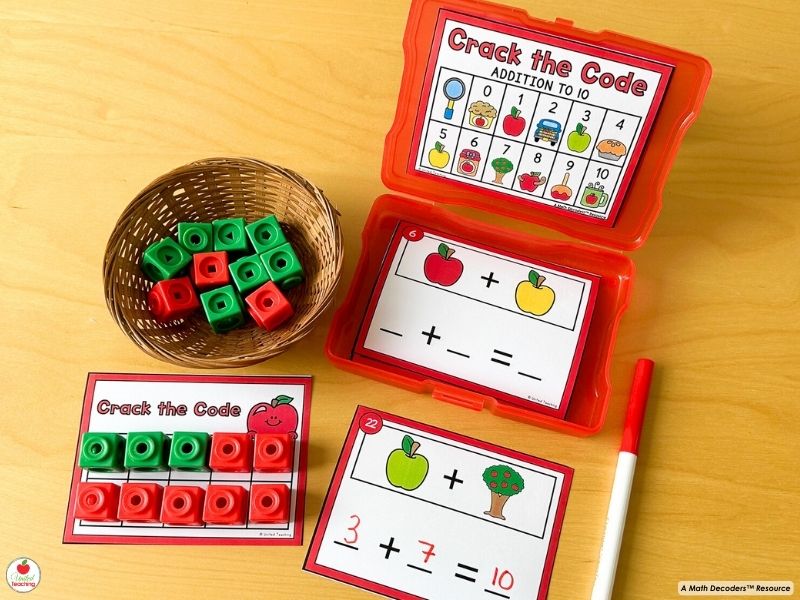
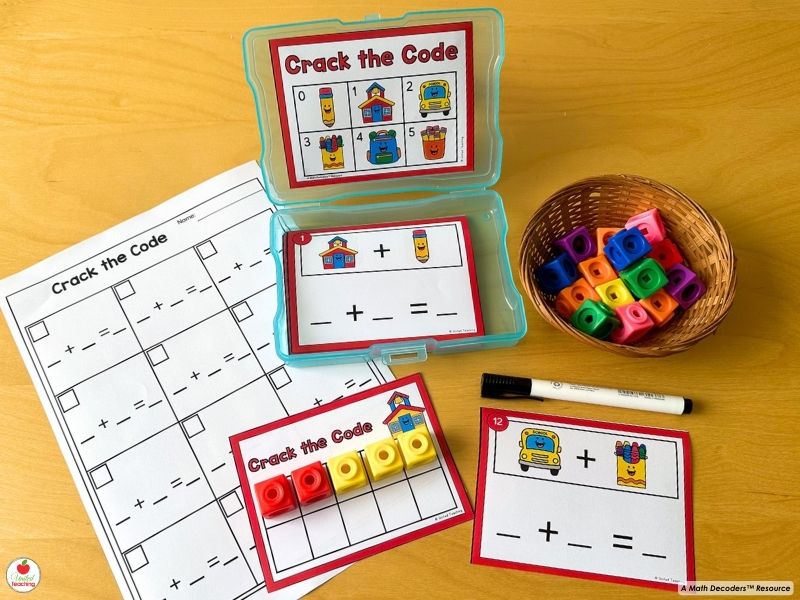
- Find the Clue. Using secret codes, students look for the number matching the picture clue. Students match each picture (like an acorn or a pumpkin) to its corresponding number on the picture code key.
- Crack the Code. They become detectives! They decode the puzzle by substituting the numbers into the empty boxes of the equation spaces.
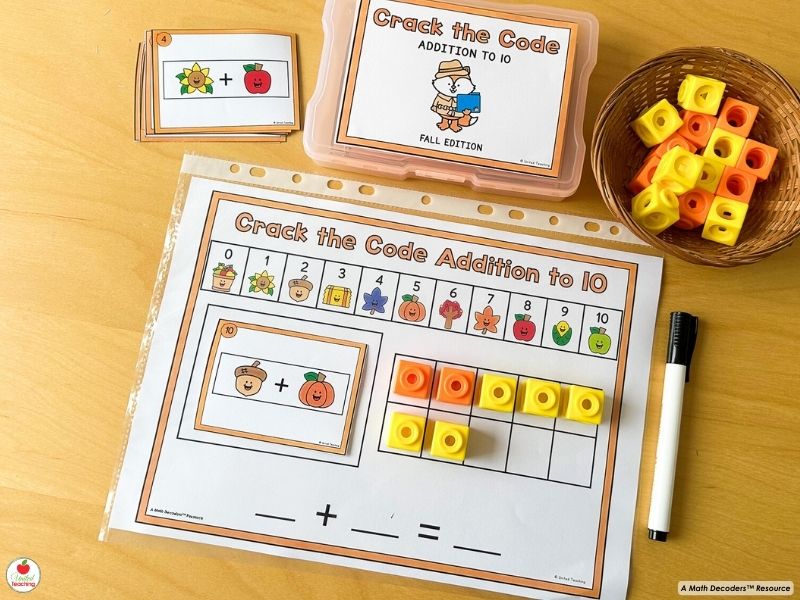
- Write and Solve. Learners record the full equation and use the built-in ten frames if they need concrete support to solve the math puzzle. This step bridges the gap between the picture code and the final number sentence.
- Record Answers. Students can record their final equations and answers on the provided worksheets. This creates accountability and gives you a perfect snapshot for checking understanding.
Teacher note: Once kids know the routine, you’ll only swap decks — not directions — saving endless reteach time. Model it once on a document camera, and you’re set for the year.
Printable Crack the Code Addition and Subtraction Puzzle Task Cards
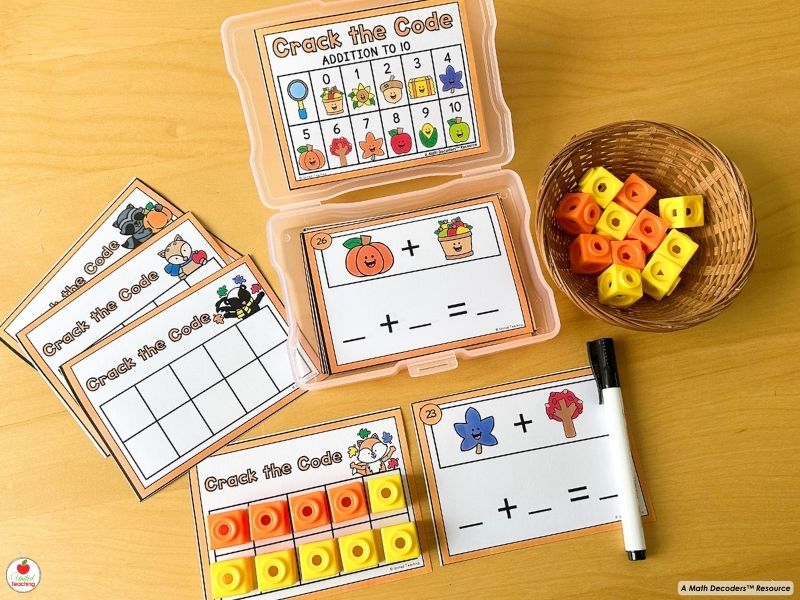
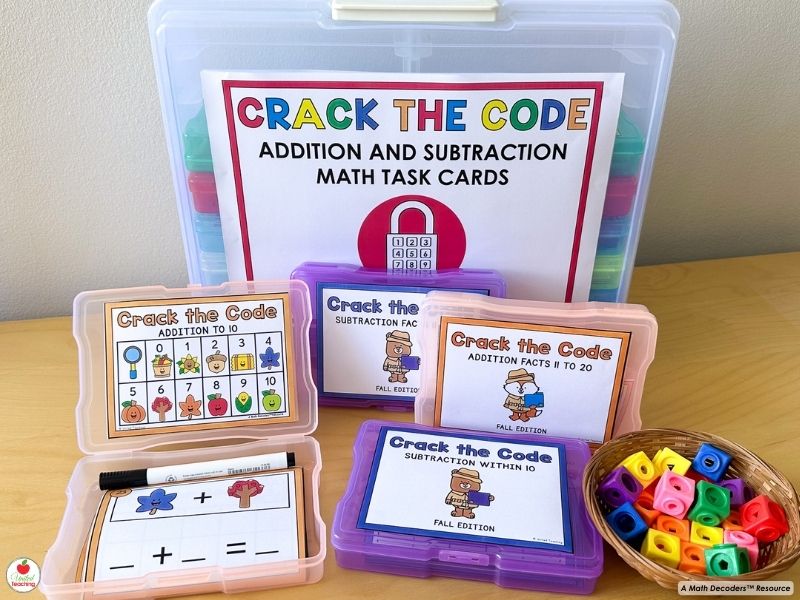
Below is a quick tour of the Fall edition decks that are ready to slot straight into your Fall centers and teaching plans. (Apple versions follow the same routine, so you can swap themes without re-teaching.)
Fall Addition Within 10
This deck pairs bright autumn pictures with single-digit equations — ideal for the first few weeks of school when you’re cementing addition within 10 math facts. Slip the cards into morning tubs or a math center and let students “unlock” sums while you take attendance or grab your coffee. It’s the perfect gentle start to their day.
Fall Subtraction Within 10
Same cozy fall theme, but now the code cracks open subtraction facts. Students use the ten-frame scaffold to see the “take away” action before they write each equation and solve the subtraction problems. The ten-frame isn’t just a box; it’s a visual story of subtraction, making the abstract concept of ‘less’ totally concrete. It’s a smooth bridge from concrete counters to abstract symbols and a handy rotation for guided-math groups that need extra subtraction practice.
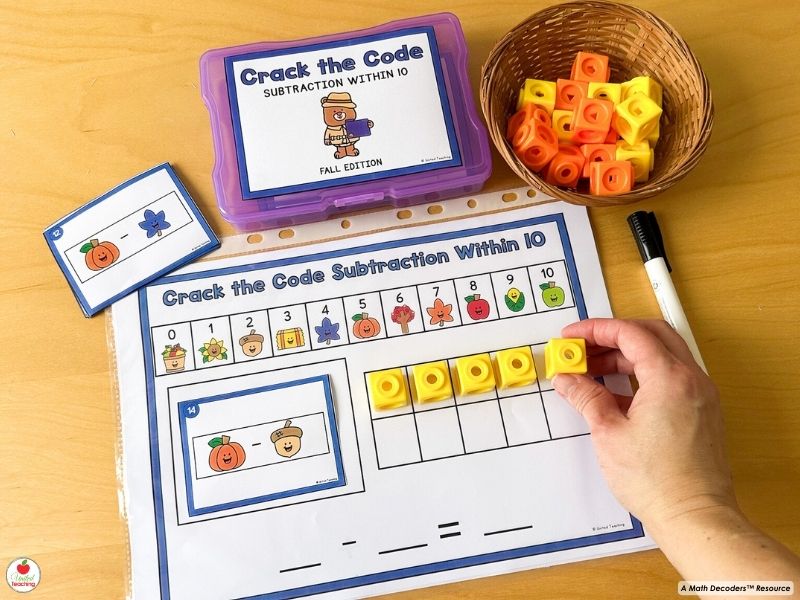
Stretch Goals: Add and Subtract Task Cards for Facts 11–20
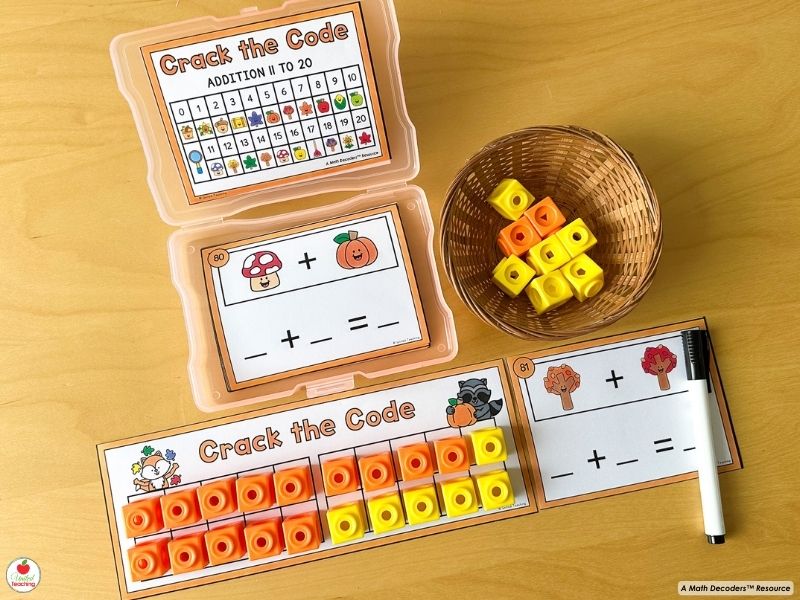
When your class is ready for a challenge, grab the 11–20 decks (addition and subtraction). The puzzle feel stays the same, but the numbers jump, nudging kids toward more advanced strategies. This isn’t just about bigger numbers; it’s about smarter thinking. The puzzles naturally guide students to see a number like 14 not as a single block, but as a friendly 10 and a 4. This is perfect for enrichment tubs or quick teacher-table warm-ups later in the term to build that crucial “make-a-ten” foundation for mental math.
Teacher hint: Keep the “Addition 10” and “Subtraction 10” decks side-by-side in one basket. After students finish an addition card, invite them to pick a subtraction card and notice the inverse relationship — built-in fact-family talk with zero extra prep.

Differentiation Made Easy
Mixed-ability classrooms need options; here’s how Crack the Code makes that painless.
- Swap the deck — keep the structure. Have some students working on facts within 10 while others are tackling 11–20 in the very same center. Since the routine is identical, there’s no confusion.
- Scaffolds built-in. Ten frames and recording sheets can be used with each deck, letting each learner choose the support they need. Encourage students to bring mini-erasers or counters to the ten frames for an extra tactile experience.
- Partner Power. Pair students to work on a card together. The conversation they have while solving the code — “The apple is a 5, so I’ll write 5 here!” — is pure math-talk gold.
- Instant data. Those recording worksheets double as work samples you can file for RTI, parent conferences, or report-card comments. It’s a quick, clear way to show progress on IEP goals or curriculum standards.
Fitting Crack the Code Math Practice Into Your Day
Not sure where to squeeze in one more activity? These cards are flexible. Start here.
- Morning tubs: A calm, independent start while you take lunch count. It’s a perfect “soft start” that’s still packed with learning.
- Post mini-lesson: Reinforce today’s skill with immediate, hands-on practice that feels like a reward.
- Guided-math rotations: One deck at the teacher table for targeted instruction, another at an independent station — same concept, different support levels.
- Early-finisher basket: Label it “Code Breaker Station” and redirect that “I’m done!” energy productively.
- Whole-Group Warm-up: Project a single card on your interactive whiteboard and solve it together as a quick, engaging entry into your math lesson.
- Sub plans: One routine + self-checking cards = a smooth day for any guest teacher. Leave a set of these, and you can practically guarantee your sub will thank you.
Ready to Start Code-Breaker Fun?
The easiest way to get started is to grab the free Math Decoders™ Back to School Crack the Code sampler. This school themed set of Addition to 10 task cards is perfect for introducing the routine to your whole class.
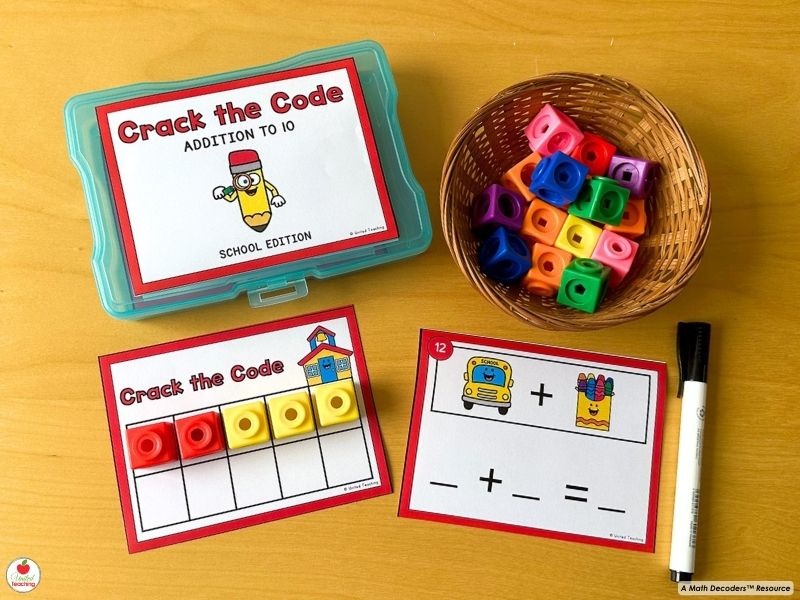
Here’s your simple 3-step launch plan for math fun:
- Download the free sampler and model the four-step routine as a whole group. The school theme makes it an easy fit for the first weeks of kindergarten.
- Pick the deck that fits your class right now — Addition and Subtraction Within 10 for daily fluency practice, or 11–20 when you’re ready to stretch your growing mathematicians.
- Rotate seasonal themes (Halloween, Winter, and more coming soon!) to keep engagement high all year long, without ever needing to reteach directions.
With one quick low prep resource, you’ll have a center, morning work, or small-group activity that makes math feel like a puzzle kids can’t wait to solve.
Crack the Code Resources, Seasonal Bundle and Print and Go Packets
Shop the full Math Decoder’s Resources Here and watch your students math skills grow as they become confident code breakers — one puzzle at a time.
- Crack the Code Math turns everyday equations into kid-approved puzzles that boost engagement.
- One repeatable routine = true print and go practice with almost zero prep.
- Fosters Independence: The predictable routine empowers kids to work confidently on their own.
- Built-in scaffolds + recording sheets make differentiation and data collection simple.
- Works for centers, morning tubs, small groups, or early finishers — wherever you need focused math time.
- Addition and subtraction decks are live now, and future skills will link back to this post.
Crack the Code Math Decoders™ Resources
- Free Crack he Code Math Task Cards – School Themed Addition Sampler
- Crack the Code Math Task Cards Seasonal Bundle
- Crack the Code Math Task Cards – Addition to 10 Fall
- Crack the Code Math Task Cards – Subtraction within 10 Fall
- Crack the Code Math Task Cards – Addition to 10 Apple-Themed
- Crack the Code Math Task Cards – Subtraction within 10 Apple- Themed
- Crack the Code Math Task Cards – Addition Facts 11-20 Fall
- Crack the Code Math Task Cards – Subtraction Facts 11-20 Fall
Math Decoders™ is a trademark of United Teaching. © 2025 United Teaching. All rights reserved.