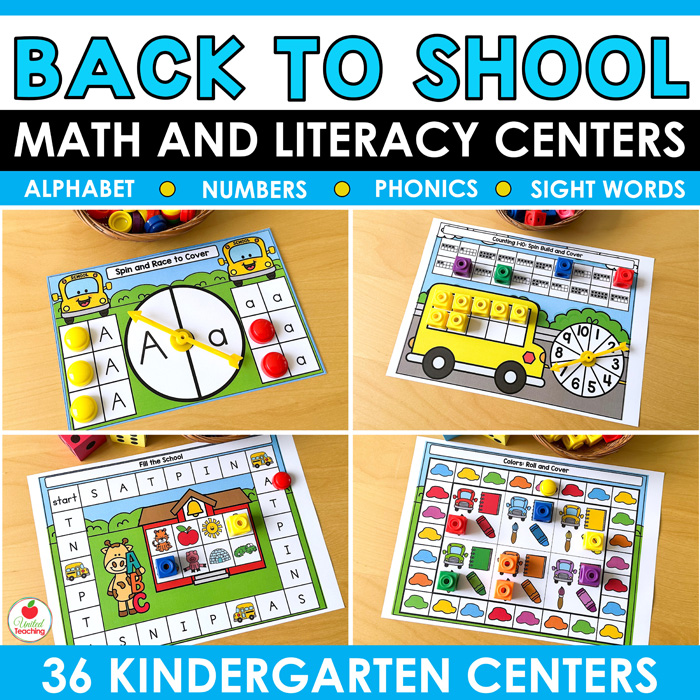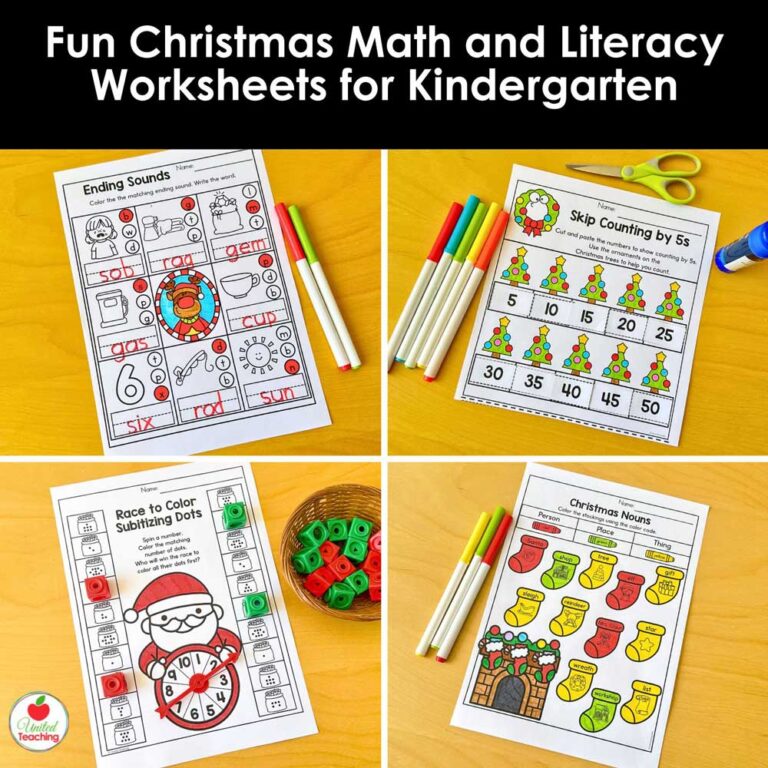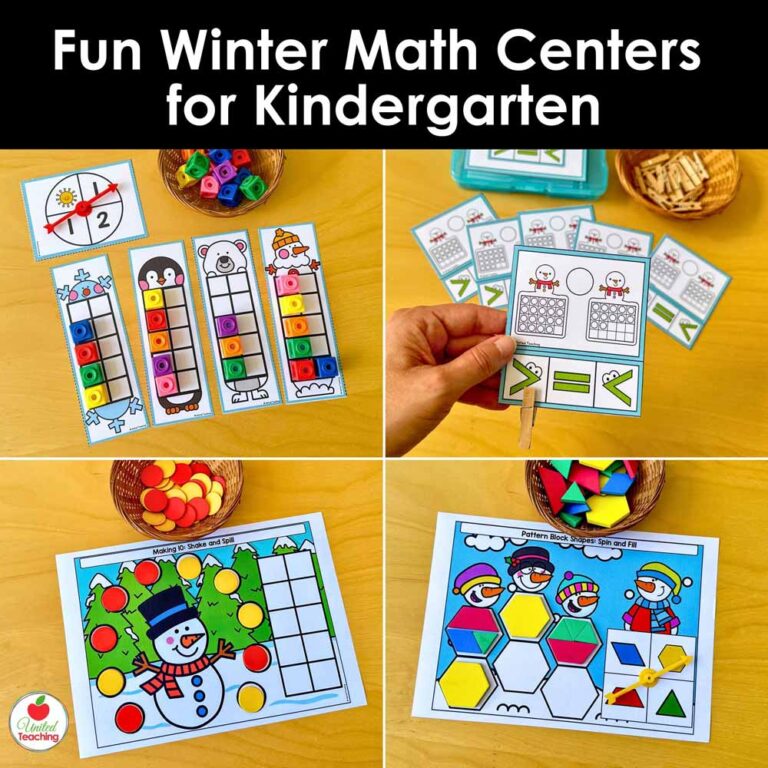




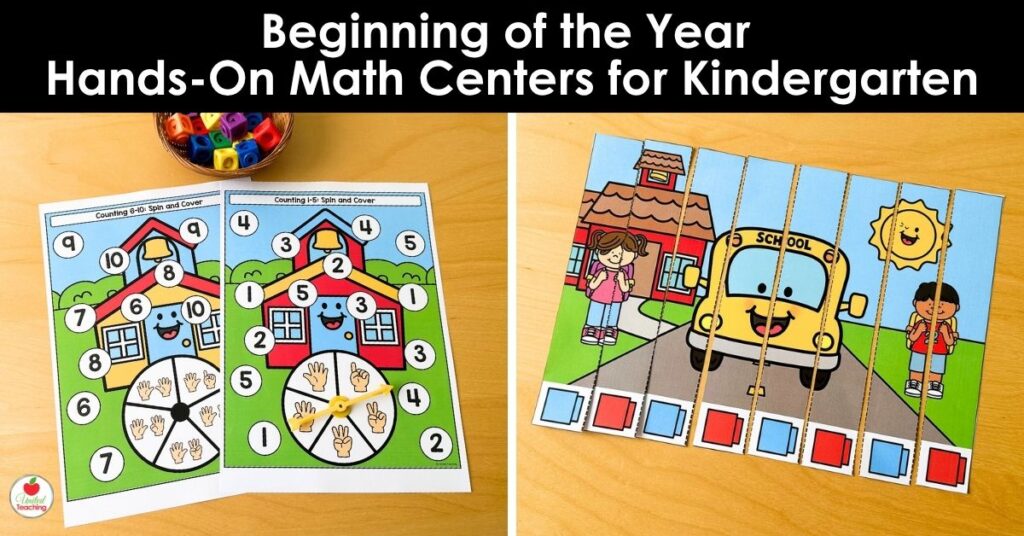
Starting the year with clear, engaging routines sets the tone for everything that follows. Early math experiences—especially hands-on, game-based practice—help students build number sense, confidence, and independence. In the first week of kindergarten, centers should feel welcoming, predictable, and purposeful. That’s where beginning of the year math activities shine: they introduce procedures, reinforce foundational skills, and give teachers a quick read on where students are. The printable centers below are designed for the beginning of the year so they’re simple to model, easy to manage, and satisfying for little learners. Slip them into morning tubs, math stations, or first week of kindergarten activities to jumpstart math success.
Why Kindergarten Math Centers Matter in the First Weeks
In August and September, kindergarteners are building stamina, learning how to share materials, and discovering what math looks like at school. Centers create short, meaningful bursts of practice that repeat across the week so students can master routines and skills.
Well-chosen center activities promote math skills such as number recognition, counting, subitizing, shape awareness, and sorting—core goals for beginning of year kindergarten activities. The right mix of math centers in kindergarten turns review into independence-building practice while keeping prep low and engagement high.
Why Hands-On Games Work
Concrete tools and manipulatives (dice, cubes, ten frames) make invisible ideas and math concepts visible. Quick spins, rolls, and covers produce many correct responses in a short time—perfect for early success. Partner play also builds language, turn-taking, and problem‑solving.
Printable Math Activities & Games for the First Weeks
Numbers to 10: Spin, Count, and Build Number Sense
Give students fast, visual practice with numerals, sets, and finger patterns. These beginning of the year math activitiesare low-prep and easy to differentiate.
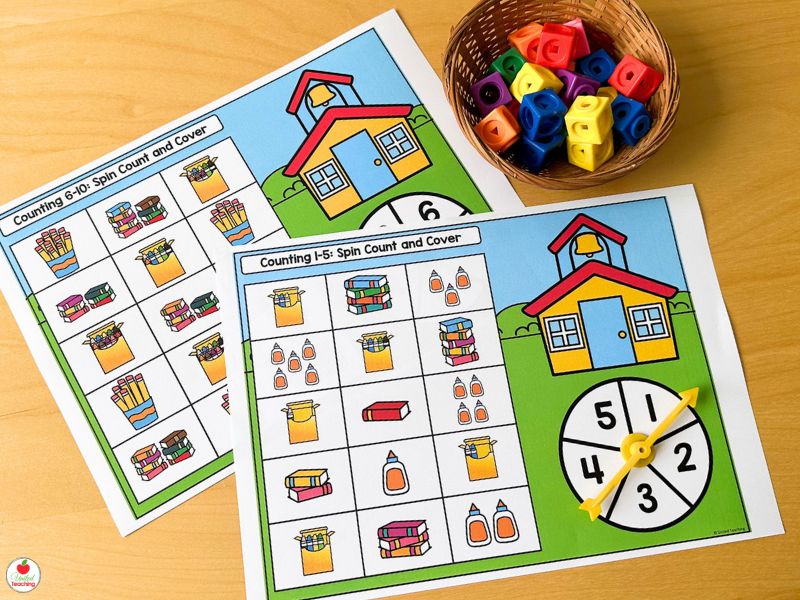
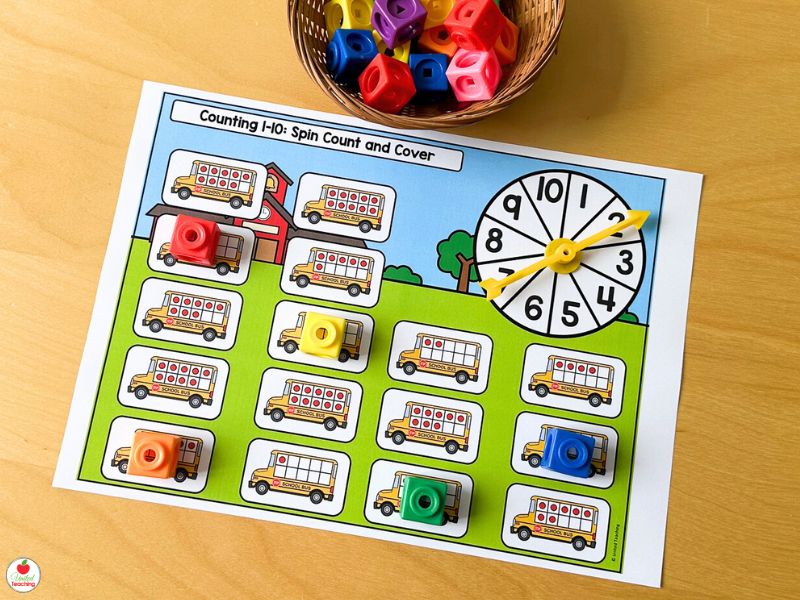
- Number Spin, Count and Cover Mats – Spin a number, then cover the matching set. Powerful for numeral–quantity connections.
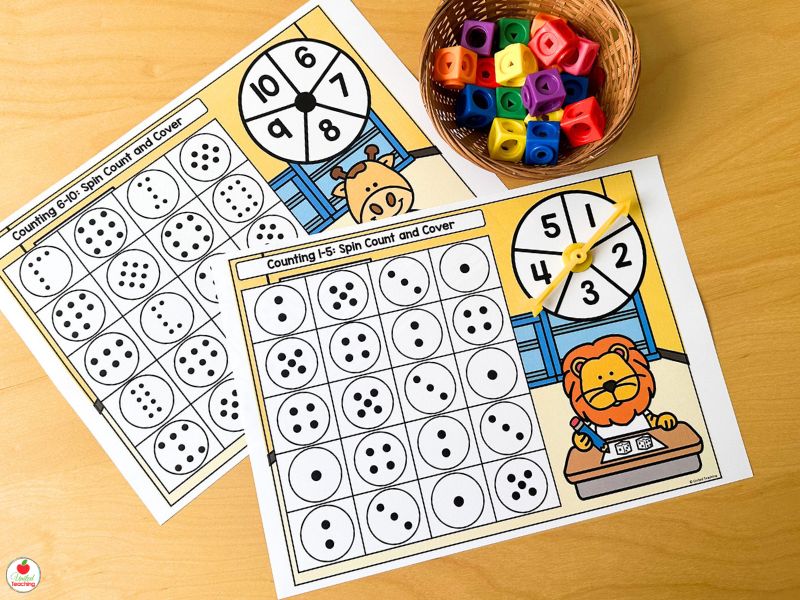
- Subitizing Dots Spin and Cover Mats – Rapidly match dot patterns to numbers; builds instant recognition.
- Spin and Cover Finger Counting + Number Mats – Link finger patterns, numerals, and sets for flexible counting.
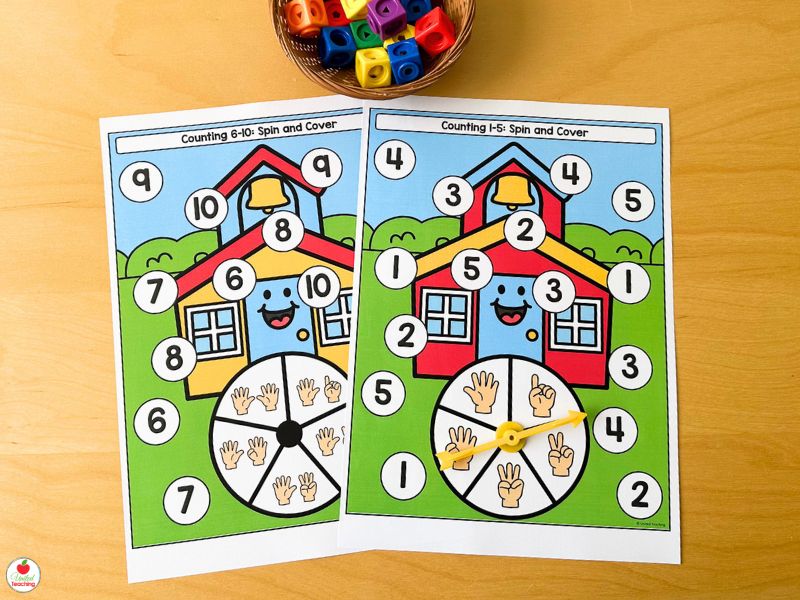
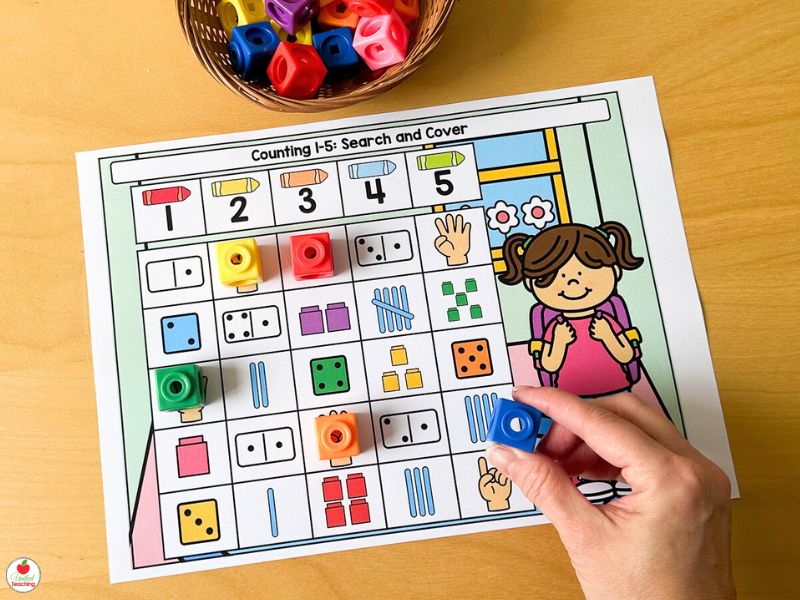
- Number Search and Cover Mats – Find and color-code different number representations; strengthens visual scanning.
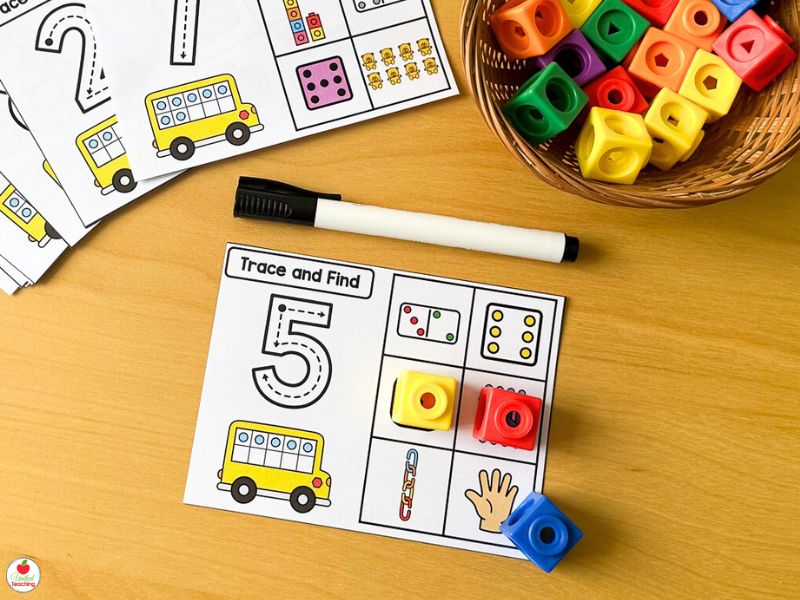
- Number Trace and Find Task Cards – Trace the numeral, then cover matching representations; great for fine-motor and recognition.
Ten Frames & Early Addition Thinking
Ten frames organize quantity and prepare learners for composing and decomposing numbers. Use these during the first week of kindergarten activities and revisit all fall.
- Spin, Build, and Cover a Ten Frame – Spin, build on the bus ten frame, then cover a match on the board; concrete and visual.
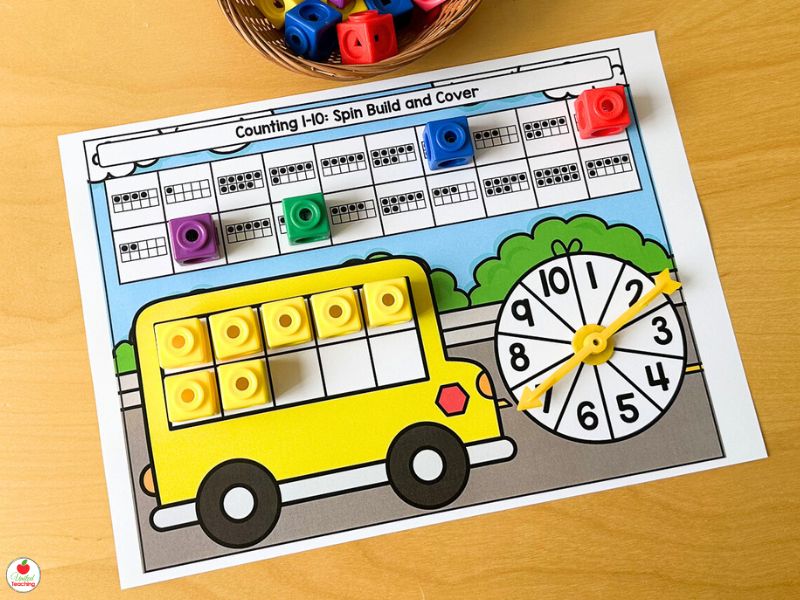
- Spin and Cover a Ten Frame Mat – Fast-paced matching builds fluency with structured sets.
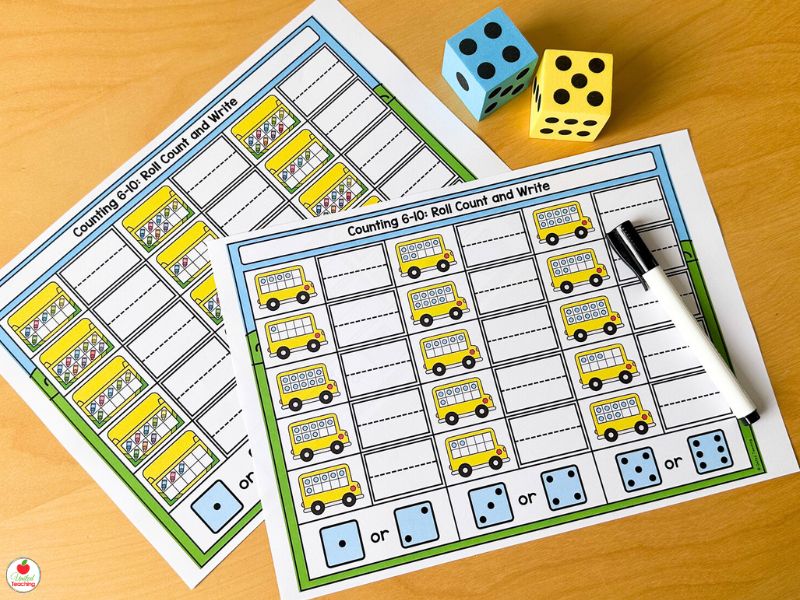
- Roll, Count and Write Mats – Roll a die, count, and record; quick informal assessment for number writing.
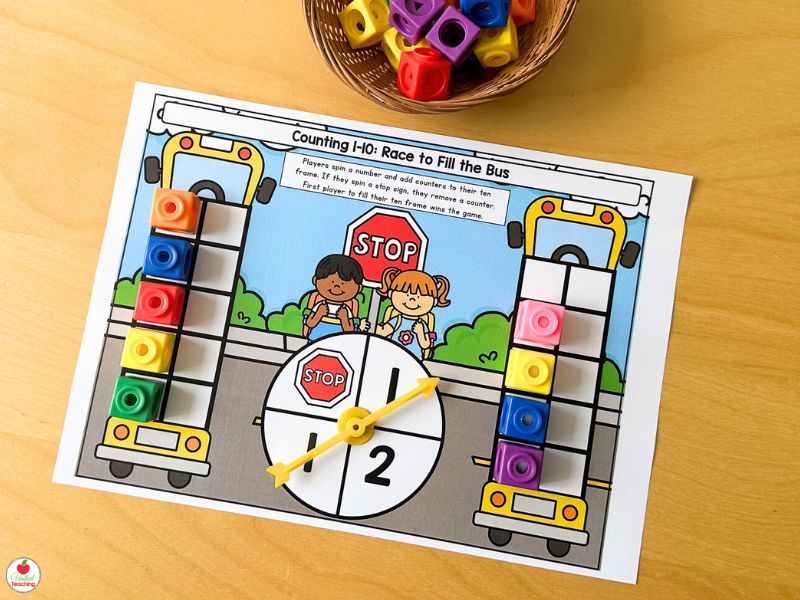
- Race to Fill the Bus (Ten Frame Game) – Add a cube each turn; land on a stop sign and remove one. First to fill wins—built-in motivation.
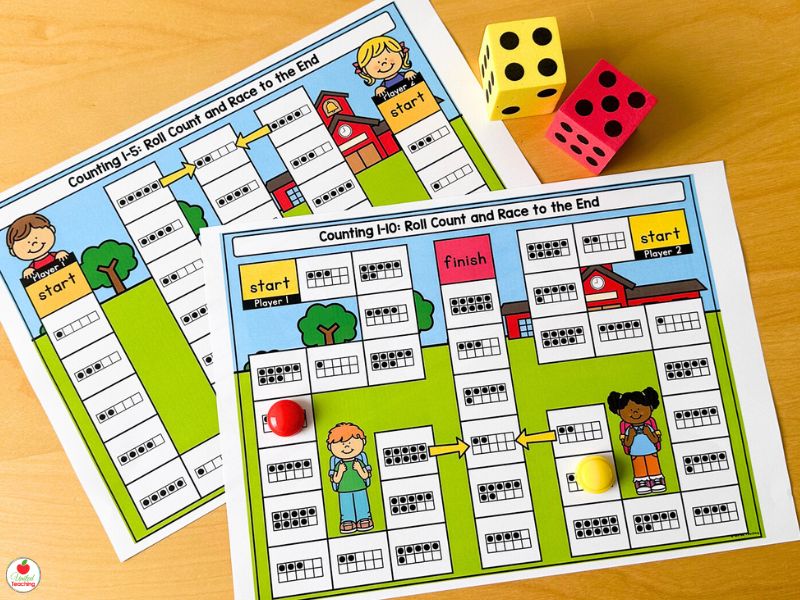
- Roll, Count and Race to the End – Say “how many” on each ten frame to move forward; perfect for math talk in pairs.
Shapes & Patterns: Geometry from Day One
Geometry at the beginning of the year is all about noticing, naming, and building. Short rounds keep the pace brisk and the wins frequent.
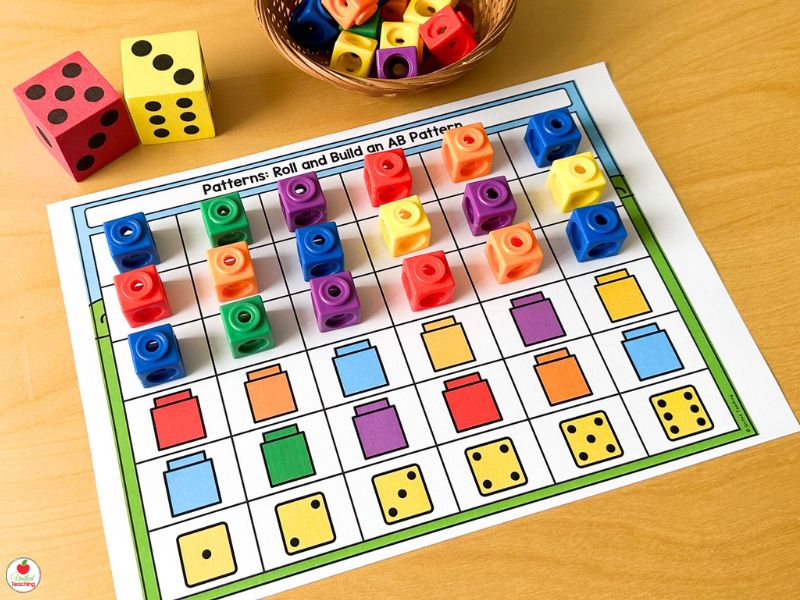
- Roll and Build a Pattern – Continue AB/ABC patterns by stacking cubes; strengthens predicting and attention to sequence.
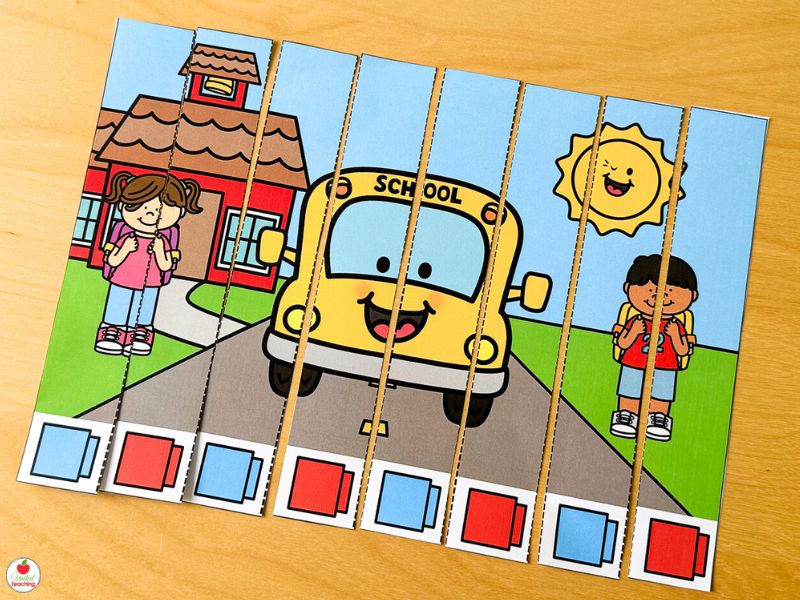
- Pattern Puzzles – Complete picture puzzles while building patterns; combines logic with fine-motor practice.
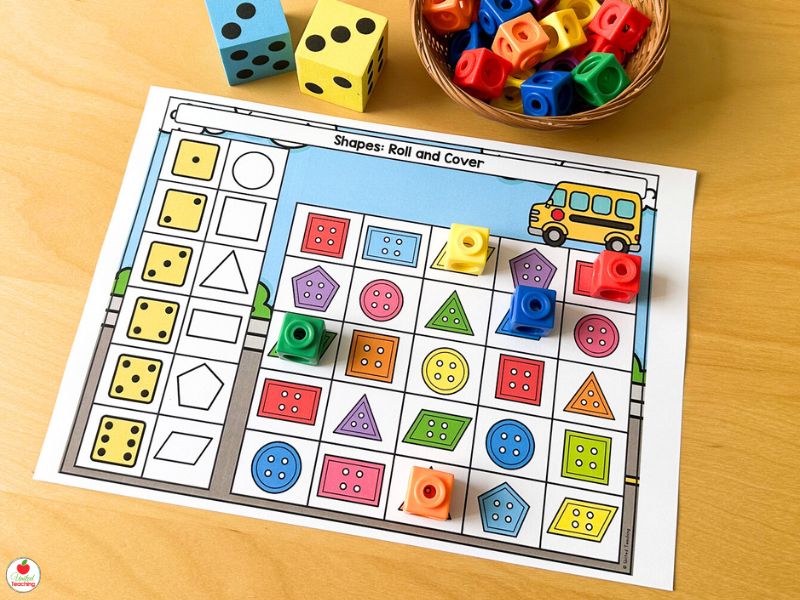
- Roll and Cover a Button Shape – Identify and cover matching shapes; ideal for vocabulary and classification.
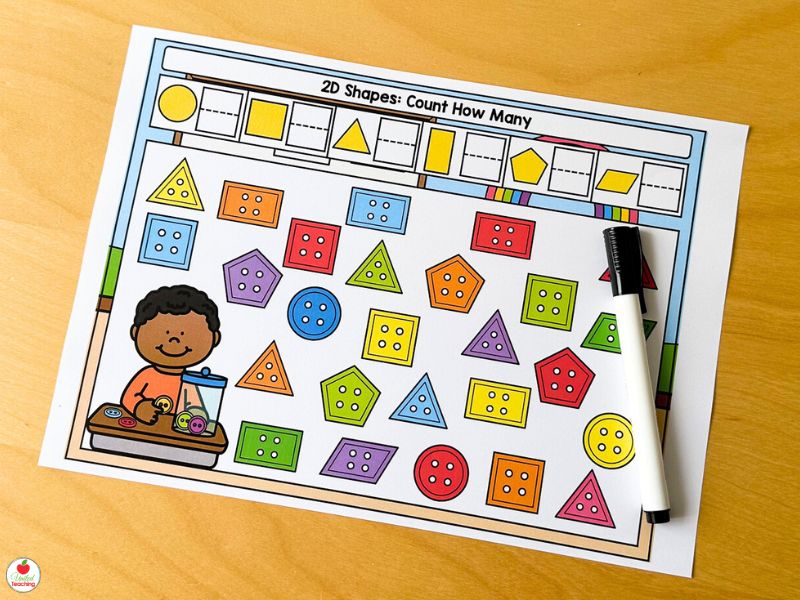
- 2D Shapes: Count How Many – Tally and write how many of each shape; integrates counting with geometry.
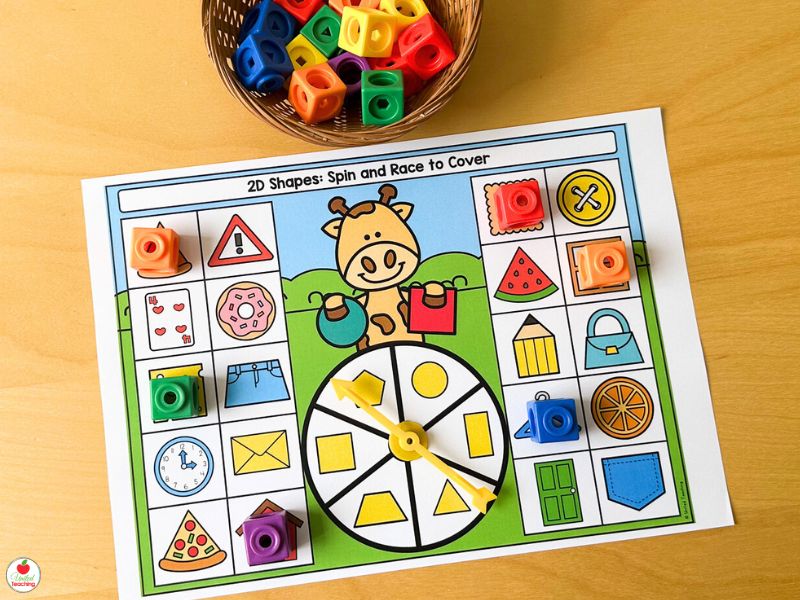
- 2D Shapes in the Real World: Spin and Race to Cover – Match shapes to real-world items; connects learning to everyday objects.
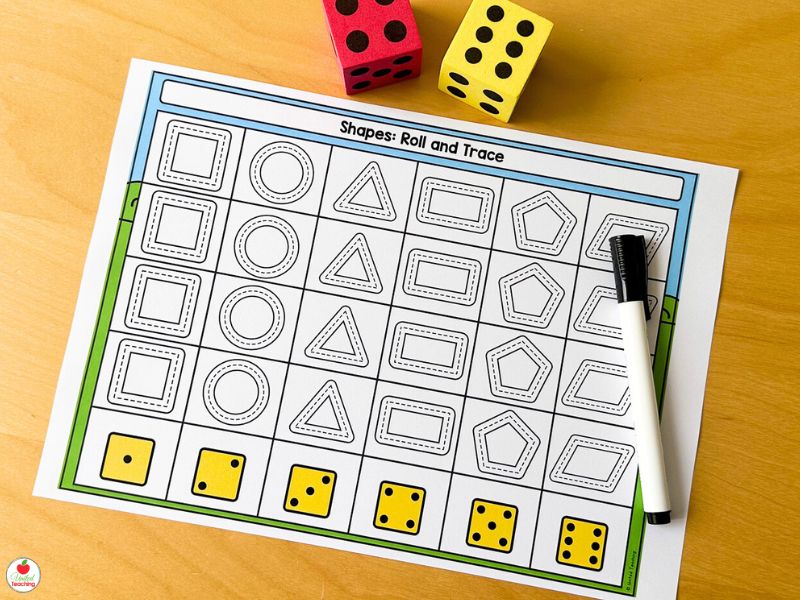
- Roll and Trace a 2D Shape – Trace in the matching column; great for grip, control, and shape formation.
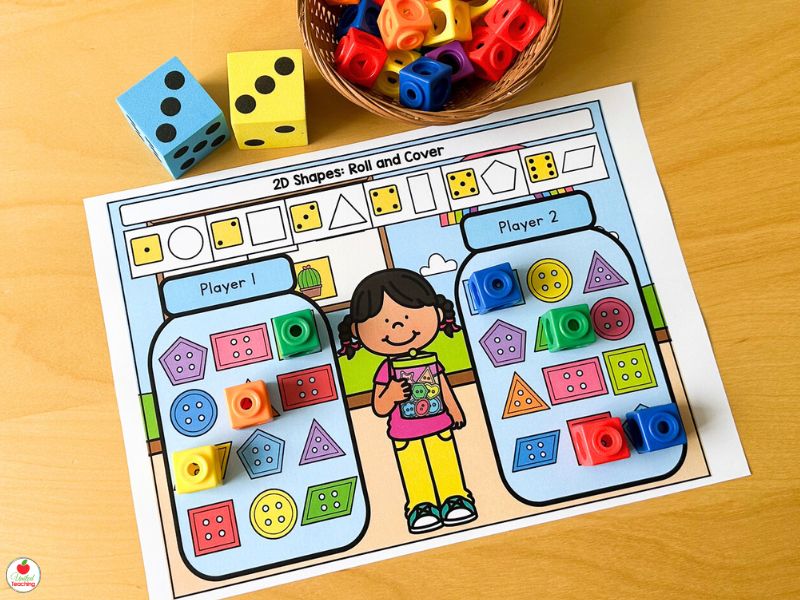
- 2D Shape Roll and Race to Cover Partner Game – Friendly competition supports quick identification and stamina.
Sorting & Early Data Skills
Sorting is a natural entry point for kindergarten beginning of the year activities. Students compare, classify, and explain their thinking while practicing color and size words.
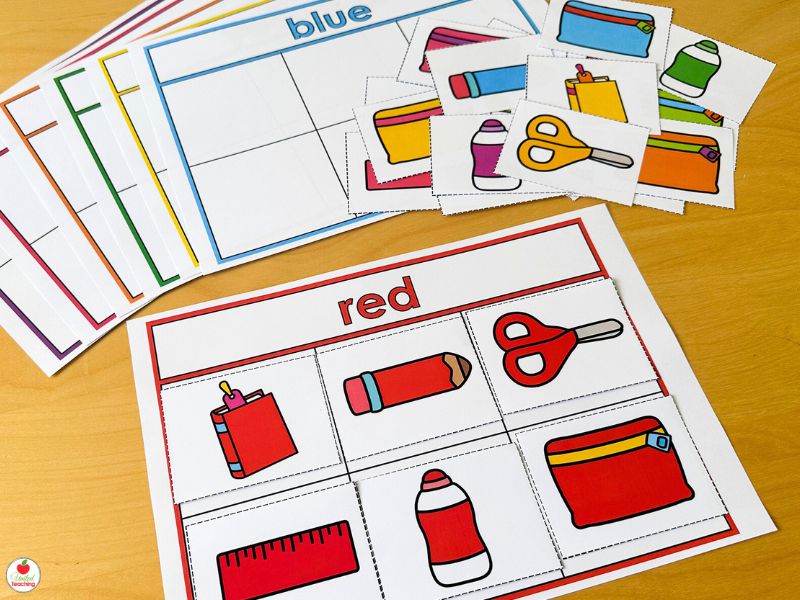
- Color Sorting Mats – Sort school supplies by color; efficient for training center routines.
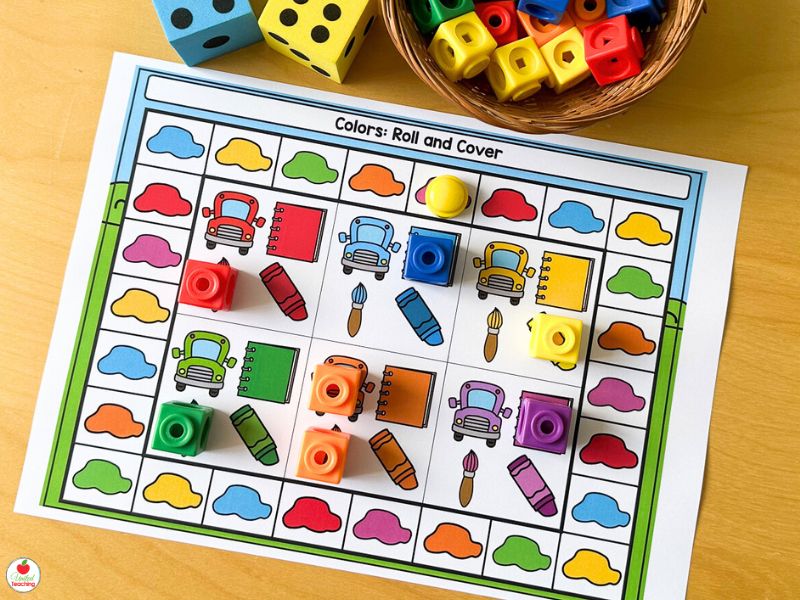
- Color Matching Board Game – Roll, move, and cover a matching-colored object; turn-taking with instant feedback.
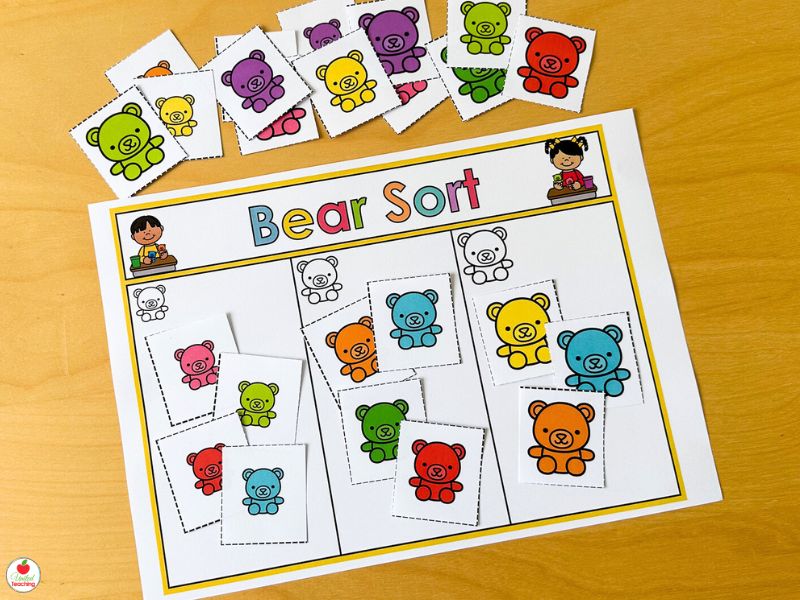
- Bear Size Sorting Mat – Sort by size (small/medium/large); strengthens comparison language.
Fitting Math Centers Into the Day
Successful Beginning of the Year Math Centers for Kindergarten are short, clear, and repeatable. Launch with whole‑group modeling, then rotate in small groups for 8–12 minutes per center. Laminate the math games and keep materials in labeled tubs and use picture directions so students can reset independently.
- Morning tubs / soft start: Calm, predictable practice as students arrive.
- After a mini‑lesson: Reinforce the day’s skill with one aligned center.
- Math center rotations: Run 2–3 centers while meeting a small group.
- Early finishers: Offer one quick “spin and cover” option students know well.
- Check for understanding: Pull a mat for a 2‑minute conference or exit task.
Start the Beginning of the Year with Hands-On Math Centers for Kindergarten
Set your centers up for success with printable games that are simple to teach and satisfying to play. Explore the Back to School Math and Literacy Centers for Kindergarten to grab the math mats featured here and launch strong math block routines from day one.