



Description
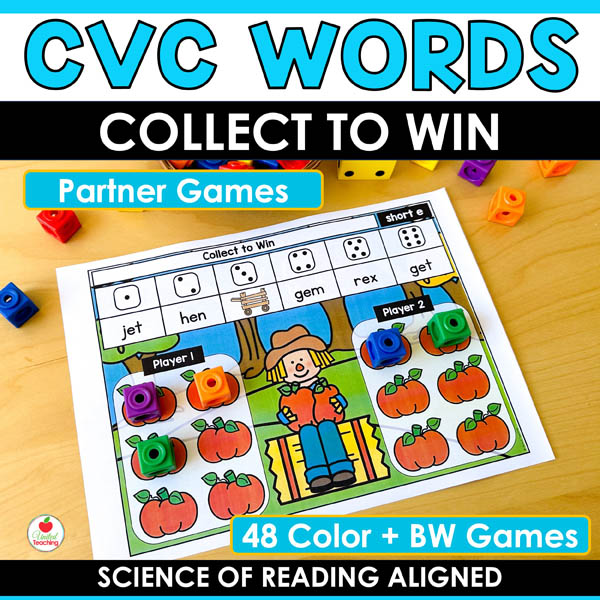
Turn CVC practice into friendly competition. These 48 partner games have students race to read words, collect items, and win.
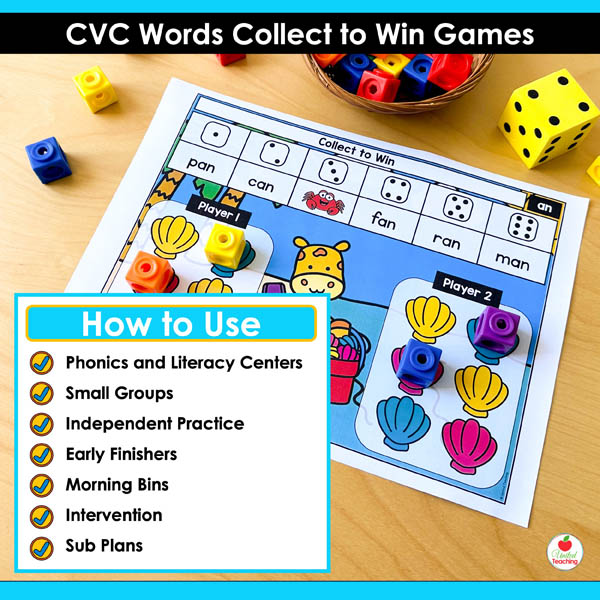
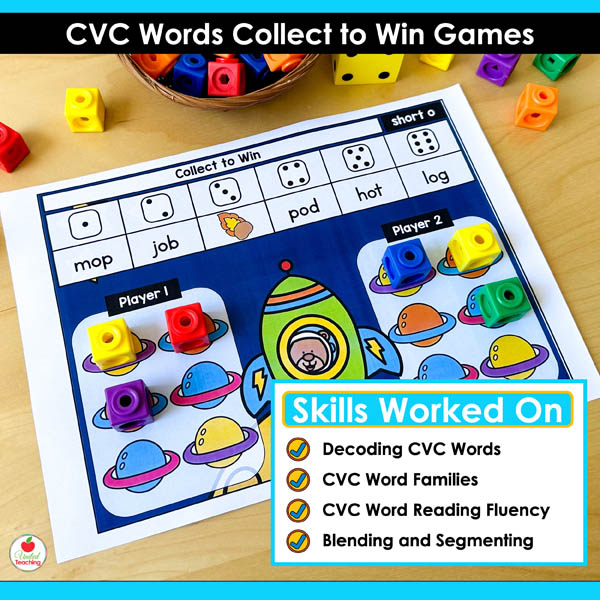
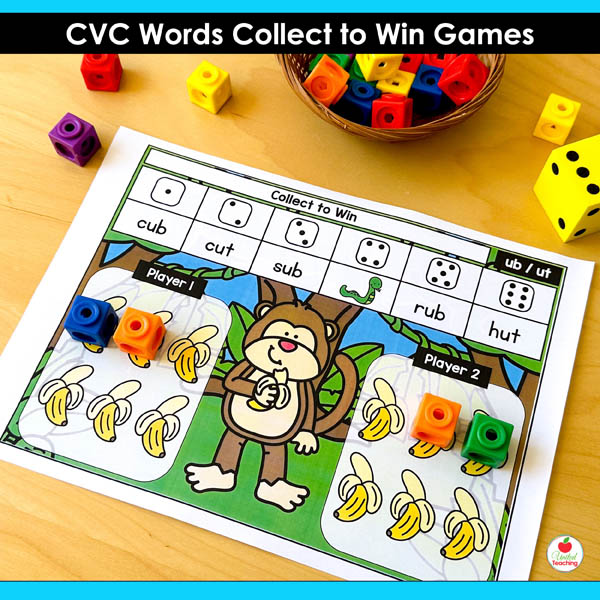
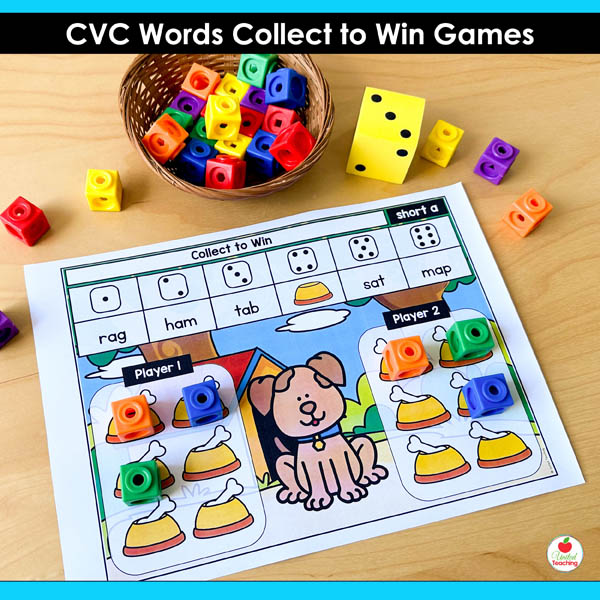
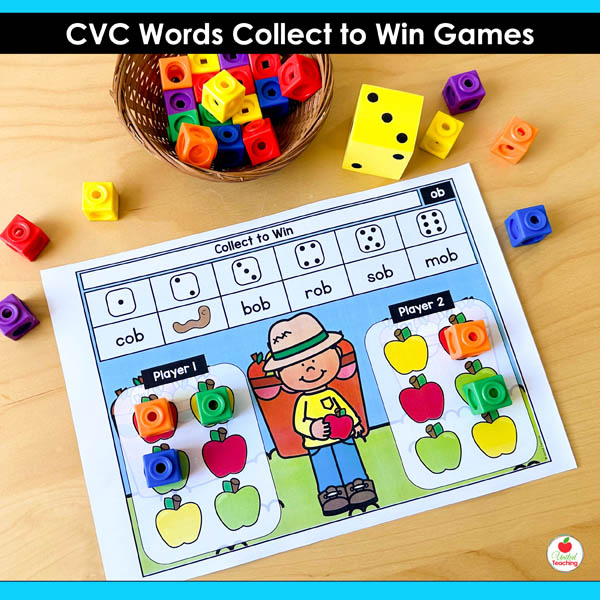
The CVC Words Collect to Win Partner Games are competitive two-player games targeting all CVC short vowel patterns. Students take turns rolling, reading CVC words that match the number rolled, and collecting items on their individual boards. The gameformat adds motivation while building decoding accuracy and fluency.
What’s Included
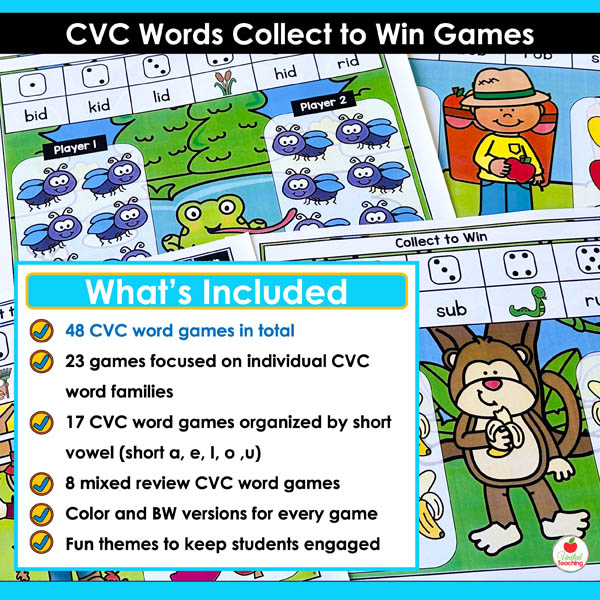
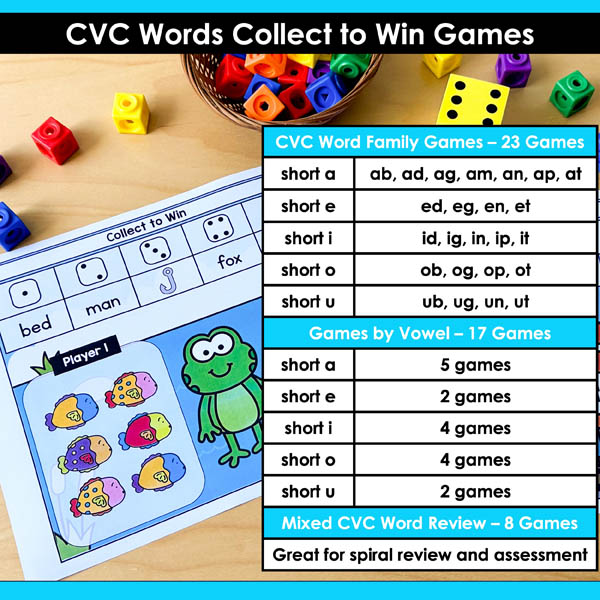
This resource gives you 48 ready-to-use partner games organized by skill focus:
-
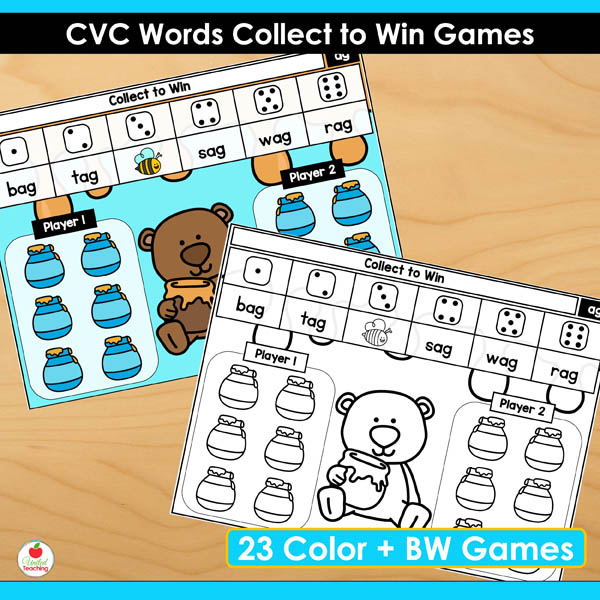
23 Word Family Games: One game for each CVC word family (-at, -an, -ap, -ad, -ag, -et, -en, -ed, -eg, -it, -in, -ip, -ig, -id, -ot, -op, -og, -ob, -ug, -un, -up, -ut, -ub)
-
17 Short Vowel Games: Isolated practice for each vowel sound
-
8 Mixed CVC Games: Review games combining multiple word families and vowels for spiral practice
Each partner game includes color and black-and-white versions.
Why This Works
Partner competition drives engagement in ways solo practice cannot. Students want to beat their partner, so they stay focused on reading accurately through multiple rounds. The individual boards mean both players are actively involved throughout the game. Even when it’s not their turn, students watch their partner decode words, providing models and keeping both players engaged.
Students roll a die and immediately know which word to read based on the number. This structure keeps the game moving quickly while still requiring accurate decoding on every turn. Partners hold each other accountable. If one student misreads a word, the partner often catches it, creating natural peer feedback.
How to Use
-
Literacy Centers (partner stations)
-
Small Group Instruction (pairs within the group)
-
Intervention Time (partner accountability)
-
Partner Play During Independent Work
-
Early Finishers
-
Take-Home Games (siblings or parent-child)
Start with word family games when introducing CVC patterns. Progress to short vowel games for focused vowel discrimination. Use mixed CVC games for review and fluency maintenance.
Ideal For
Students learning to decode CVC words and those who benefit from the motivation of friendly competition.
-
Kindergarten and 1st grade teachers: Partner literacy centers, paired phonics practice
-
Reading interventionists: Partner accountability during CVC fluency building
-
Special education teachers: Structured partner games with peer support
-
Homeschool families: Sibling games or parent-child phonics practice
Get these 48 competitive games and watch students push each other to read accurately. Print, grab some dice and counters, and let the friendly competition begin.