


Early reading takes off when students can quickly connect a letter to its sound—that split-second recognition is what turns guessing into real decoding. In a busy kindergarten classroom, the best way to build that letter and sound recognition is through an engaging game that delivers lots of correct reps with zero drudgery. These alphabet games for letters and sounds give you meaningful practice that feels like play, so students focus, participate, and build recognition letter names and corresponding letter sounds.
Why games for letters and sounds work (and save your sanity)
The right letter sound games turn attention and energy into practice that sticks. Instead of coaxing students through another worksheet, you can lean on play to get more reps, better engagement, and clearer data.
- More practice, less pushback: Students take turns, roll, spin, and match; you get dozens of correct trials without losing momentum.
- Differentiation built in: Keep a tight set of uppercase/lowercase letters or widen the range as fluency grows; swap in picture prompts for initial sounds.
- Movement aids memory: Rolling dice, tracing letters, and moving counters connect motor action to sound–symbol mapping—great for listening skills and focus.
- Stress-free assessment: While students play the game, you can note who can link a letter sound to the corresponding letter—informal assessment without a test.
- Low prep, high mileage: Print once, slide into protectors, and reuse all year; rotate boards to keep things fresh.
Teacher Tip: When students call out the letter sound, have partners echo it before placing a counter. That tiny routine doubles practice without adding time.
What the alphabet activities look like in action
Each activity targets a core phonics skill—from matching letter names to hearing beginning sounds—and keeps the learning playful and quick.
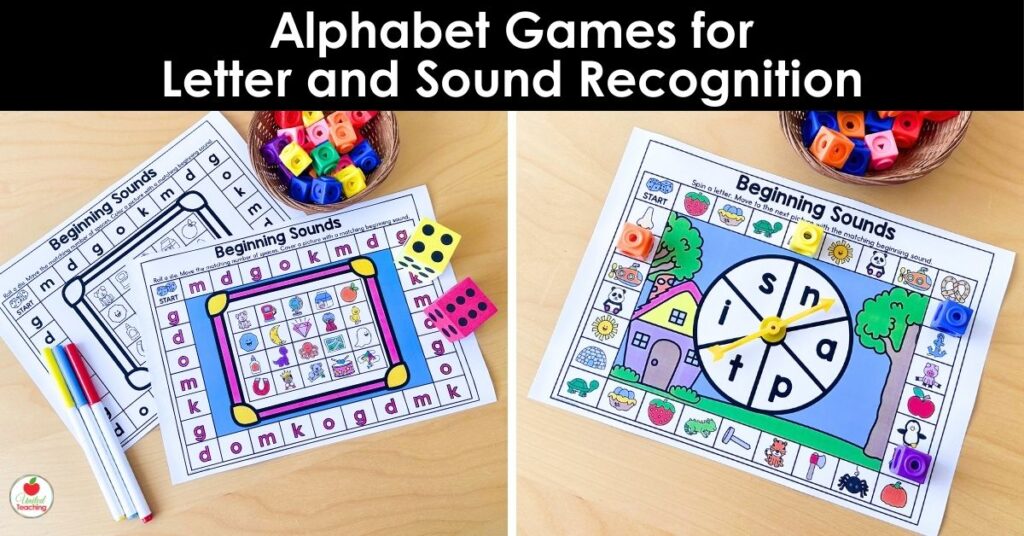
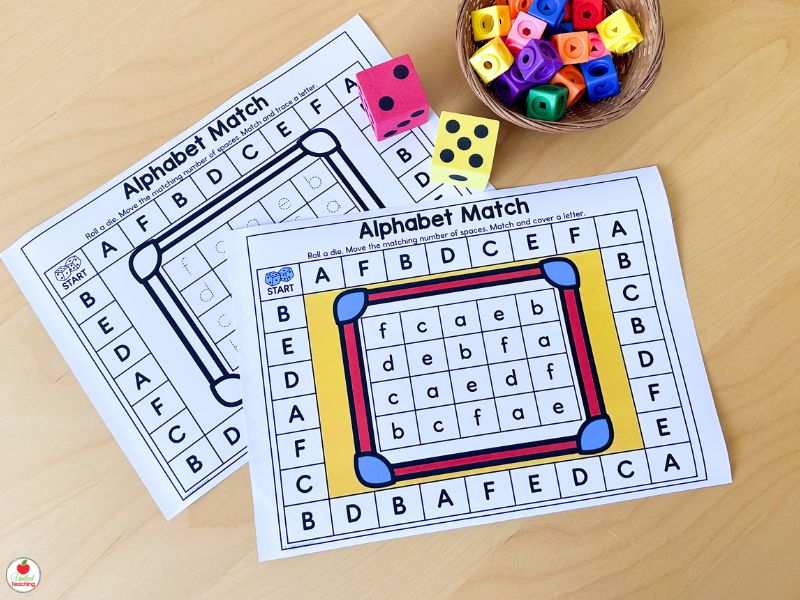
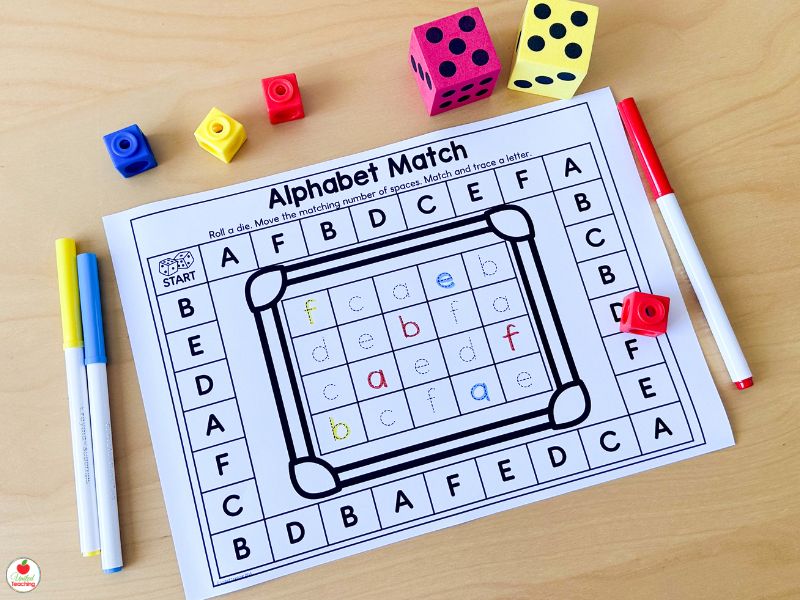
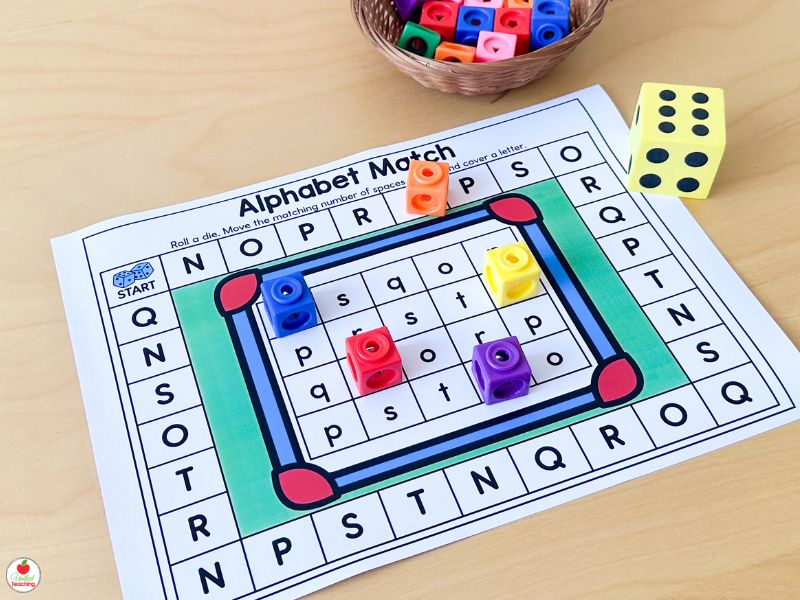
- Alphabet Letter Match Dice Board Games: Students roll a dice and match the letter they land on with another letter on the board. They practice letter names, lowercase letters and uppercase letters, and forms while strengthening fine-motor control with a marker or counter.
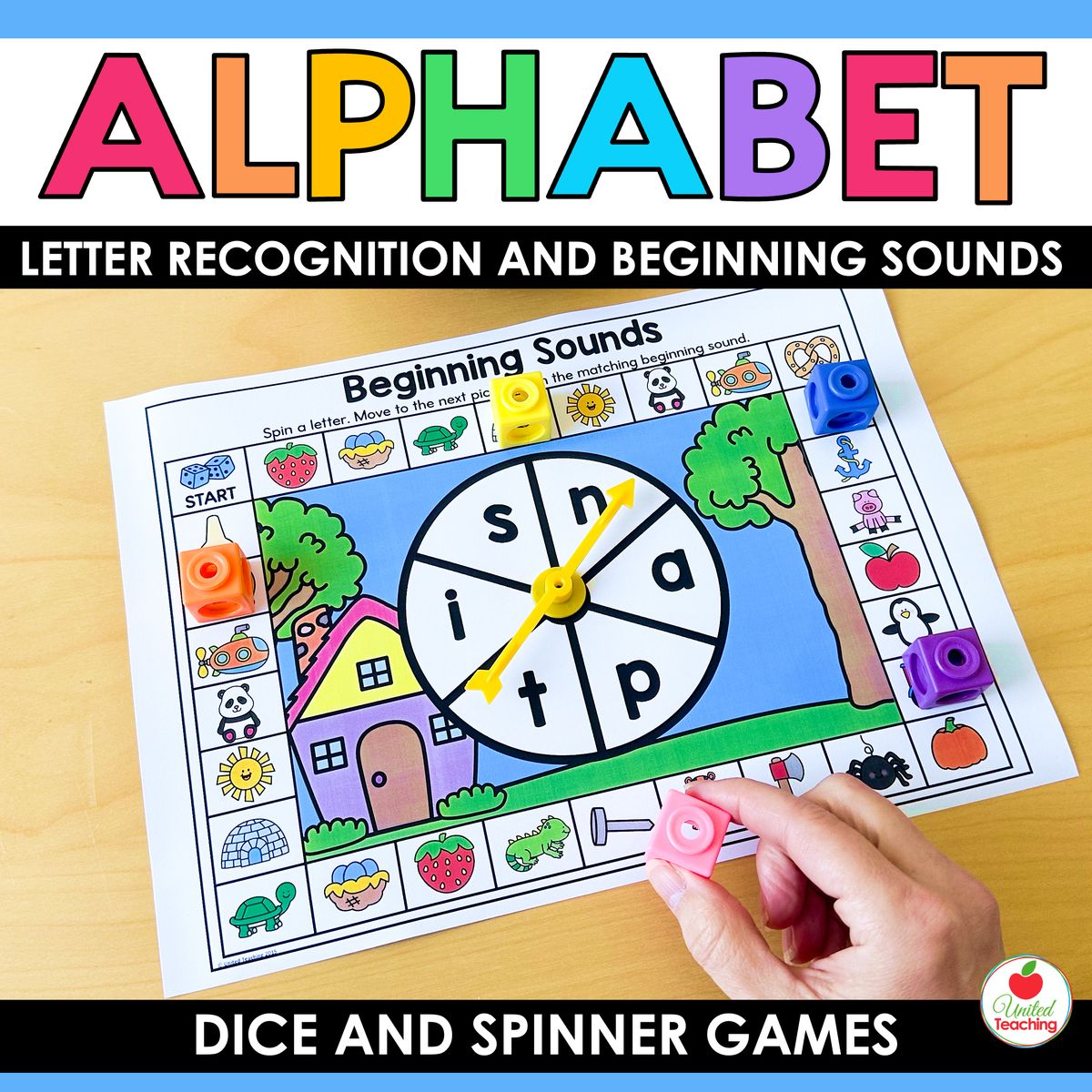
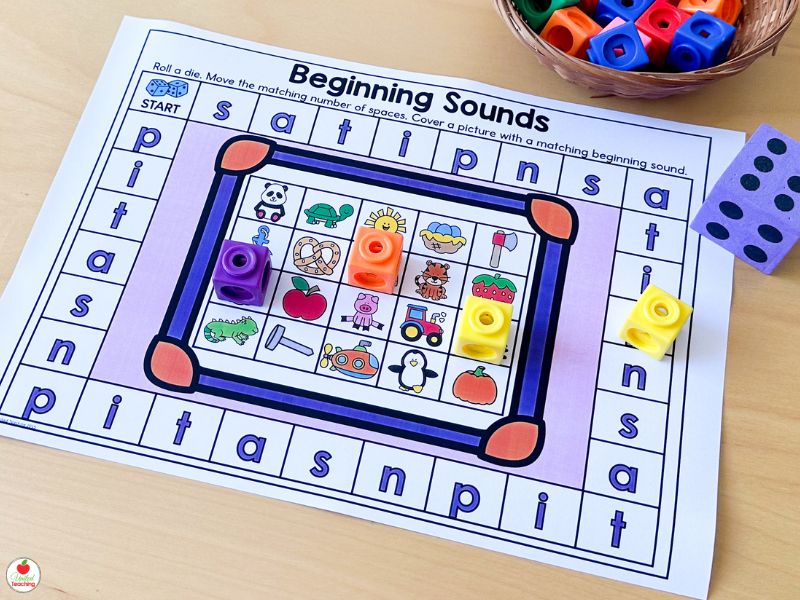
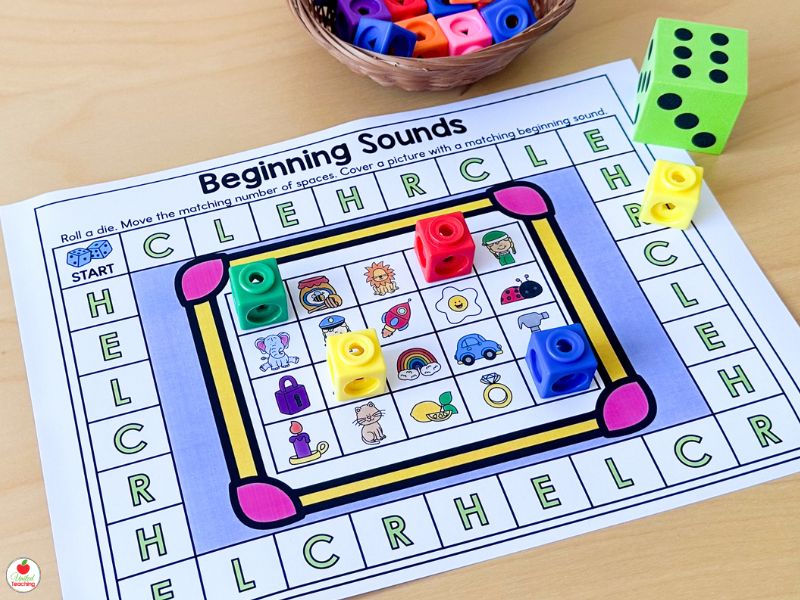
- Beginning Sound Matching Dice Game Boards: Learners identify the initial sound in a picture and match the item to the correct letter—a concrete bridge from sound to print.

- Beginning Sound Bump Games: The beginning sounds game boards can be used as bump games. The aim is for students to cover the highest number of pictures with the matching beginning sound. If another player lands on the same sound, they can bump the other player and remove their counter. A player cannot be bumped if they have 2 counters stacked on a picture.
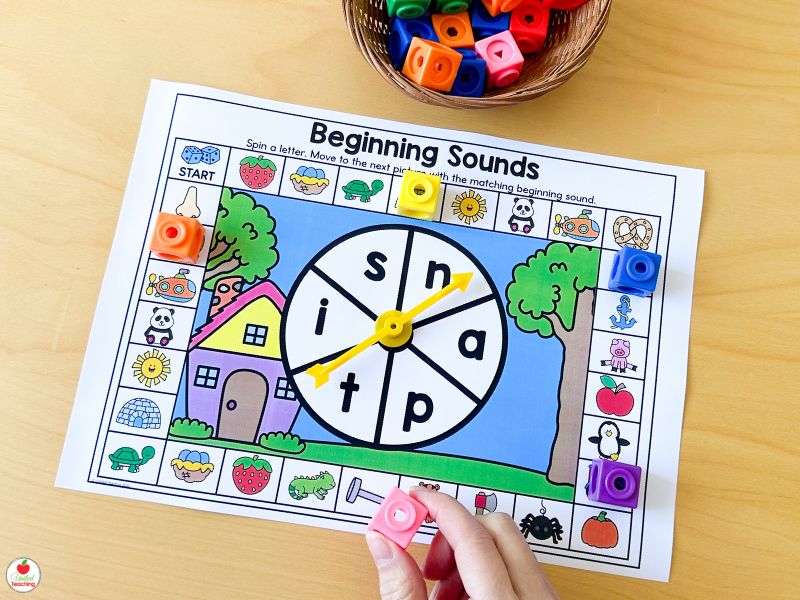
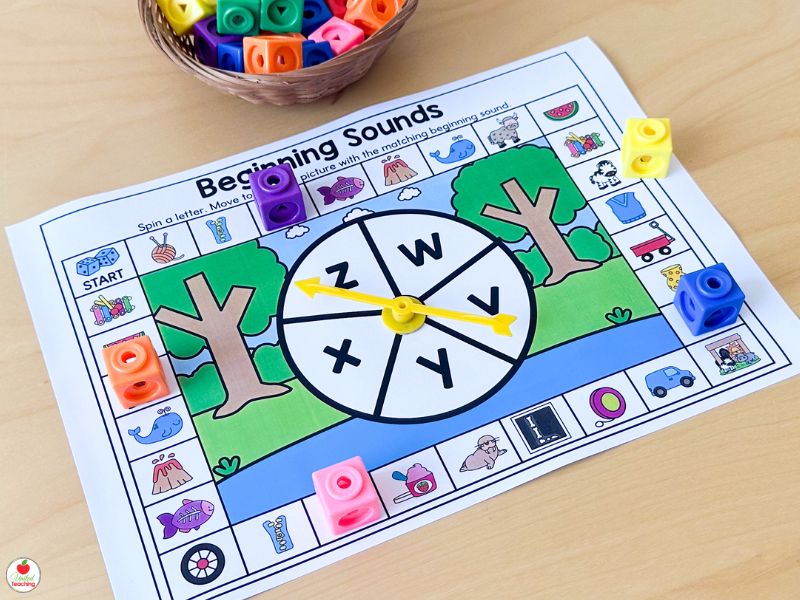
- Beginning Sound Matching Spinner Game Boards: A fast game for kids that builds letter sound recognition. Students spin a letter and move their counter to the next picture with the matching beginning sound. Nominate how many laps students have to complete before the game ends.
Teacher Tip: If you want to nudge vowel practice, add a quick “vowel check” prompt before a move: “Is it a vowel or consonant?” Simple, effective, and no extra materials.
Kindergarten literacy center ideas (hands-on, low-prep)
These games slip into your day wherever you need focused, independent work. Rotate them so every child meets the same skill in different ways.
- Morning tubs: Quiet starts that still count. Students roll and read, trace, and tidy in under 10 minutes—perfect for building routine.
- Small group instruction: Focus on a set of letters or beginning sounds while others run a center independently. Tighter control for the kids who need it most.
- Home connection: Send a black-and-white game board with a dry erase pocket for take-home review. Families love the quick format.
Teacher Tip: Keep a shallow tray of manipulative counters (buttons, bears) beside the boards. The tactile input boosts attention and makes the activity feel new.
Benefits you’ll notice beyond letter sound recognition skills
Yes, these are educational sounds games, but they also tidy up classroom logistics and behavior. The routines you set now will carry you through the year.
- Confidence and motivation: Fast wins help reluctant learners lean in; kids ask to “do the spinner one” again.
- Social growth: Partners practice turn-taking, cheering, and fair play—big SEL wins inside a literacy activity.
- Fine-motor strength: Tracing, placing, and moving support pencil grip and neat work.
- Data you can act on: You’ll quickly see who can practice matching sounds to letters, who confuses a certain letter, and who’s ready for more challenge.
Teacher Tip: Keep a mini checklist (make it editable) to quickly mark “got it/needs review” during play. It’s fast, visible progress.

Simple prep and print tips (for long-lasting use)
A few small choices mean your resources survive heavy use and stay crisp all year.
- Durability: Cardstock and laminate or slip into heavy sleeves.
- Quick storage: Keep each board with a collection of counters and a spinner arrow in a zip pouch—grab-and-go for subs or centers.
- Flexible sets: Start with just a few games; add more each Friday to build momentum without overload.
- ABC warm-ups: Do a 30-second letter review before play. That tiny habit builds recall across all letters of the alphabet.
Teacher Tip: Label pouches by abc ranges (A–F, G–L, etc.). It speeds cleanup and supports independent choice.
Phonics assessment that doesn’t feel like testing
You don’t need a clipboard marathon to know who’s ready to move on. Use the games themselves as a window into progress.
- Quick targets: Listen for automatic naming and accurate letter sound production. Can they link sound to picture?
- Spot checks: After a round, ask students to circle 2–3 letters that still feel “tricky.” That self-report is gold.
- Notes that travel: Jot mini observations on your editable checklist and you’re set for conferences or RTI.
A gentle next step for teachers
If you’re looking for some fun yet purposeful games to help teach names and sounds, these Alphabet Dice and Spinner letter sound games are a great way to build automaticity without adding to your planning. You’ll streamline routines, calm transitions, and give every child meaningful practice—with zero fuss.
- Fits anywhere: morning tubs, center rotations, or small group instruction.
- Supports everyone: narrow or extend sets, focus on initial sounds, or push fluency for speed.
- Teacher-friendly: print once, store neatly, and reuse all year.
When practice is playful, kids ask to do it again. That’s the secret. And that’s why these letter sound activities work.